


Happy spoOoOoky Halloween! 🎃
Halloween is all about dressing up in a spooky (or silly) costume inspired by our favorite characters and monsters. 👹 But for some species, Halloween is every day!
Our Critter Corner this month celebrates some of the best natural Halloween costumes our critter neighbors wear all year long.
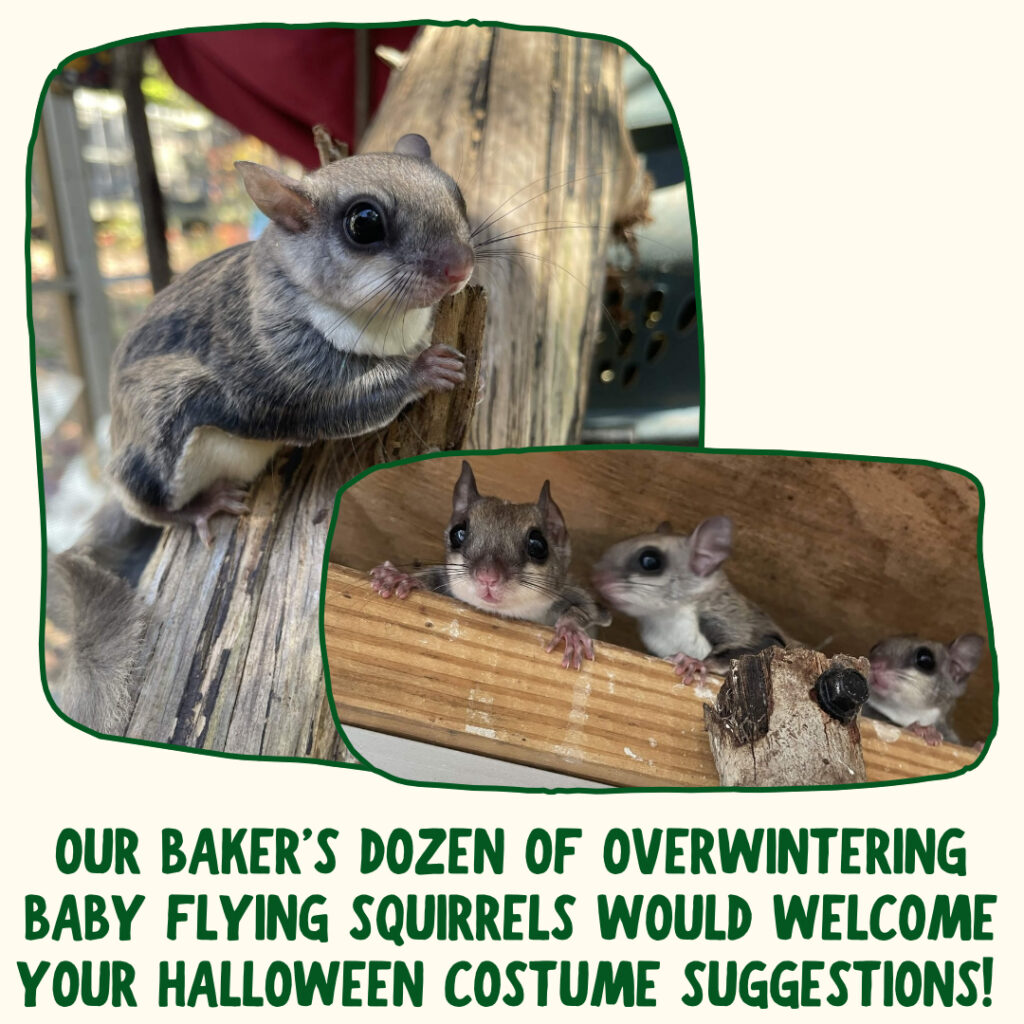
Most of our wild neighbors use some level of crypsis. No, not cryptids. 👻 Crypsis is an umbrella term for strategies that help an organism avoid detection. You’ve heard of camouflage, in which an animal’s external appearance helps it blend into its physical environment. Camouflage is a form of visual crypsis. But only some animals that use camouflage do so in a way that makes them appear scarier.
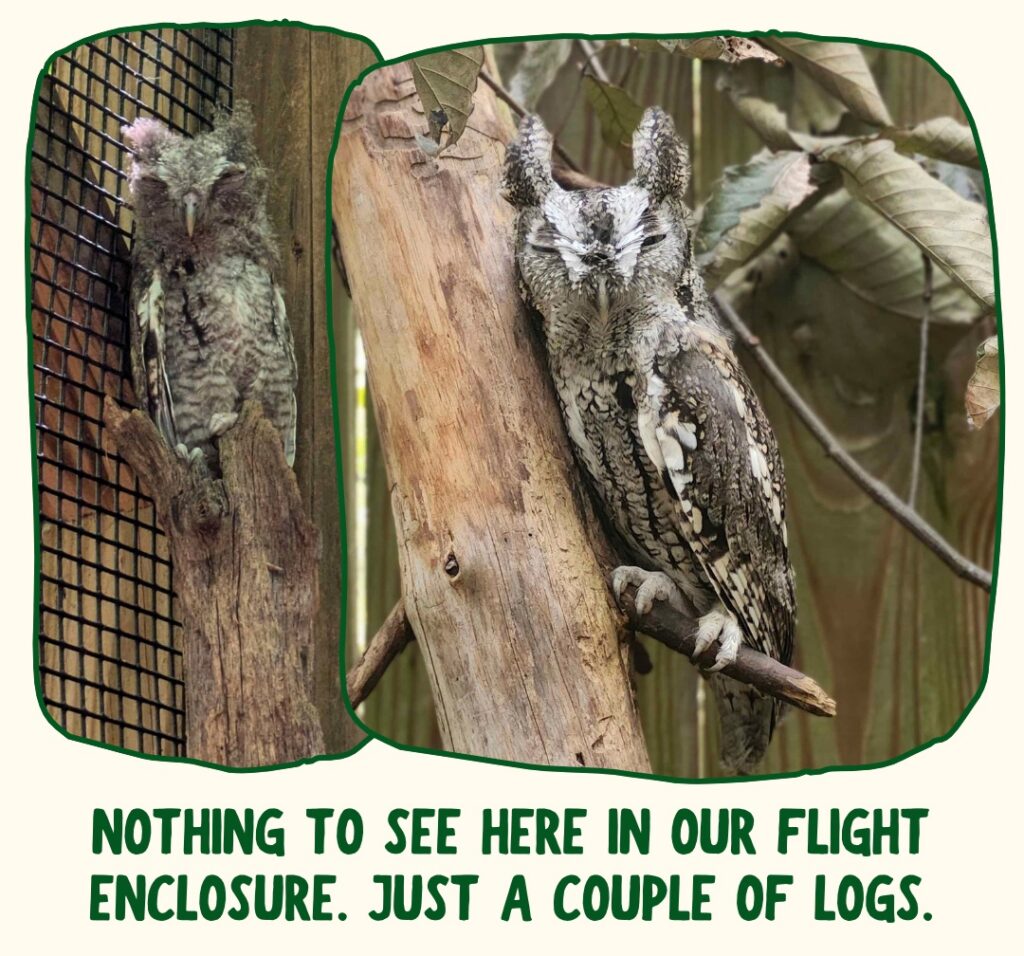
Take the Eastern Screech-Owl, for example. These pint-sized owls are camouflage masters, as our owl release update above shows. Their intricate gray or reddish-brown feathers help them blend into tree bark, making a roosting owl surprisingly difficult to spot. They’ll close their glowing yellow eyes too, so it’s even harder to see them. 👀
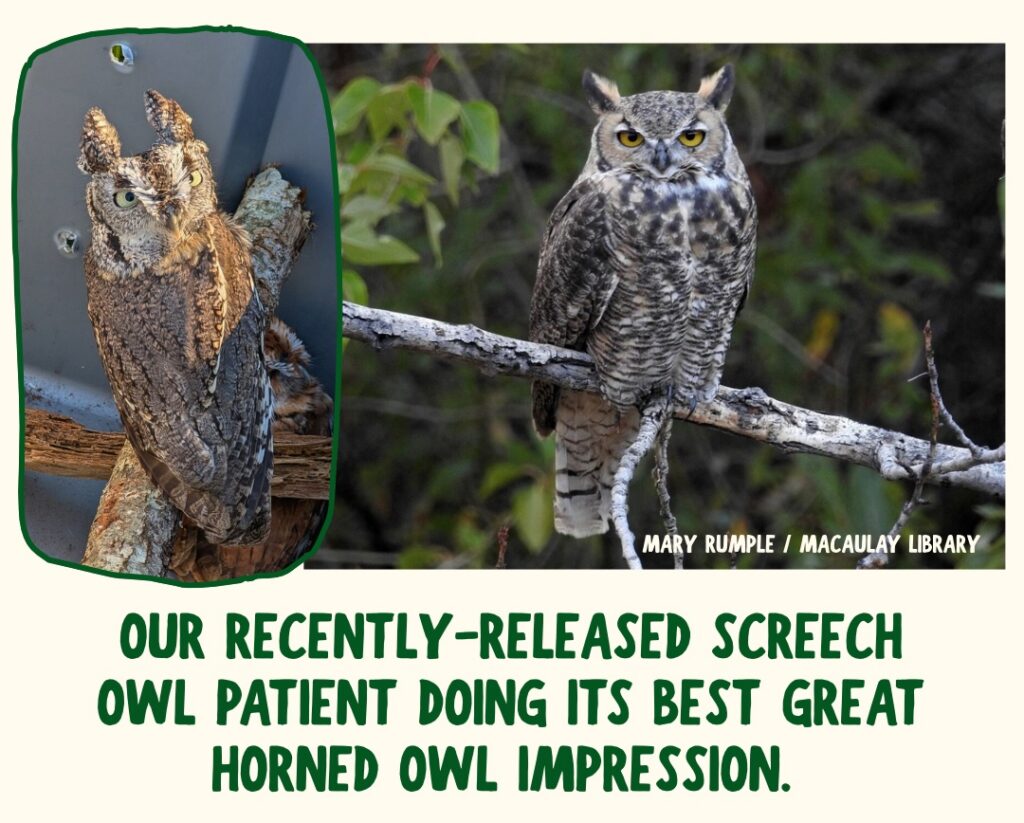
But when threatened, these little owls do their best to make themselves spookier! 🧟♂️ They raise their ear tufts, called plumicorns (cutest name ever?!). Doing so not only breaks up the outline of their body, making them look like a branch on the tree, but it also can make them look more intimidating if a fellow critter spots them anyway. After all, another king of the forest sports notable plumicorns: the Great Horned Owl!
Another example of visual crypsis is the Spicebush Swallowtail caterpillar. As wee fellows, these caterpillars resemble bird droppings. It ain’t a glamorous costume, but it’s effective. Most living creatures aren’t looking to snack on another critter’s feces, after all. (We apologize to all of the native dung beetles reading this. It’s nothing personal. 🪲)
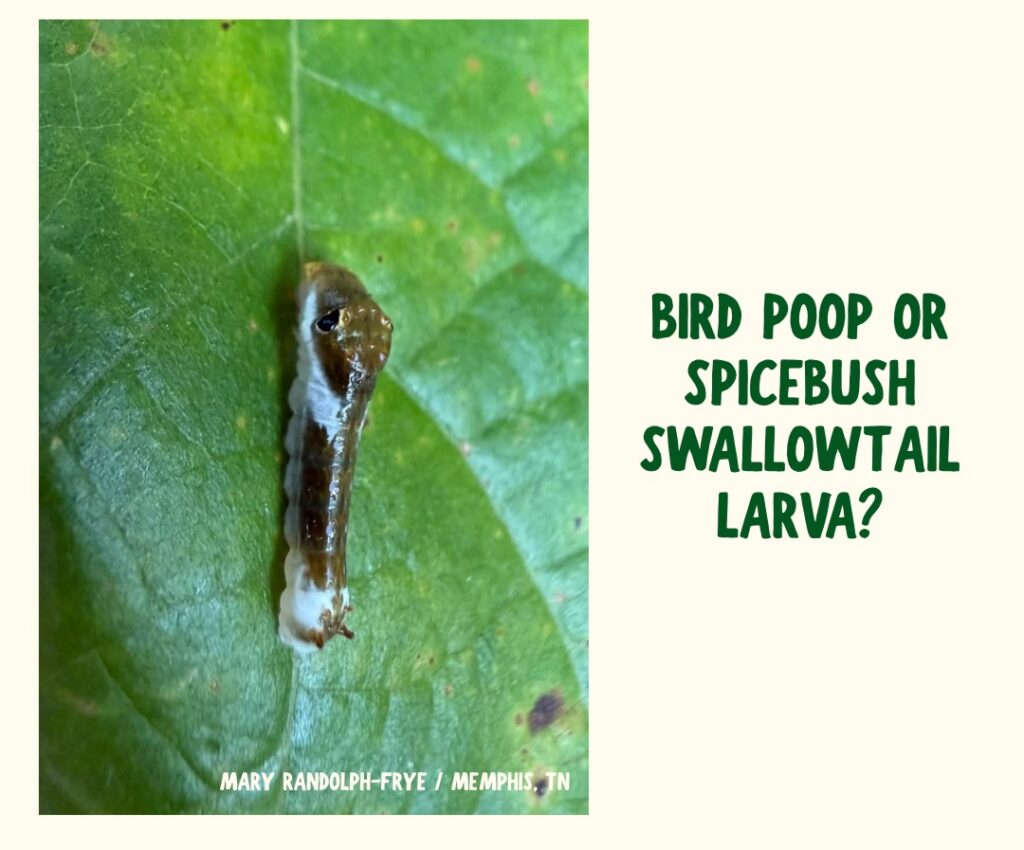
But fascinatingly, Spicebush Swallowtail Caterpillars undergo a ✨costume change✨ as they mature! They become a classic example of Batesian mimicry, which is a form of ecological mimicry where a non-toxic species has evolved to look like a toxic or more dangerous species to help keep potential predators away. Older Spicebush Swallowtail Caterpillars develop a lime green color, large eyespots, and a swollen head and thorax. They even have a forked, tongue-like organ called an osmeterium that they can flick out from their head. To the untrained predator’s eye, they look less like a tasty caterpillar and a whole lot more like an intimidating native green snake! 🐛🐍
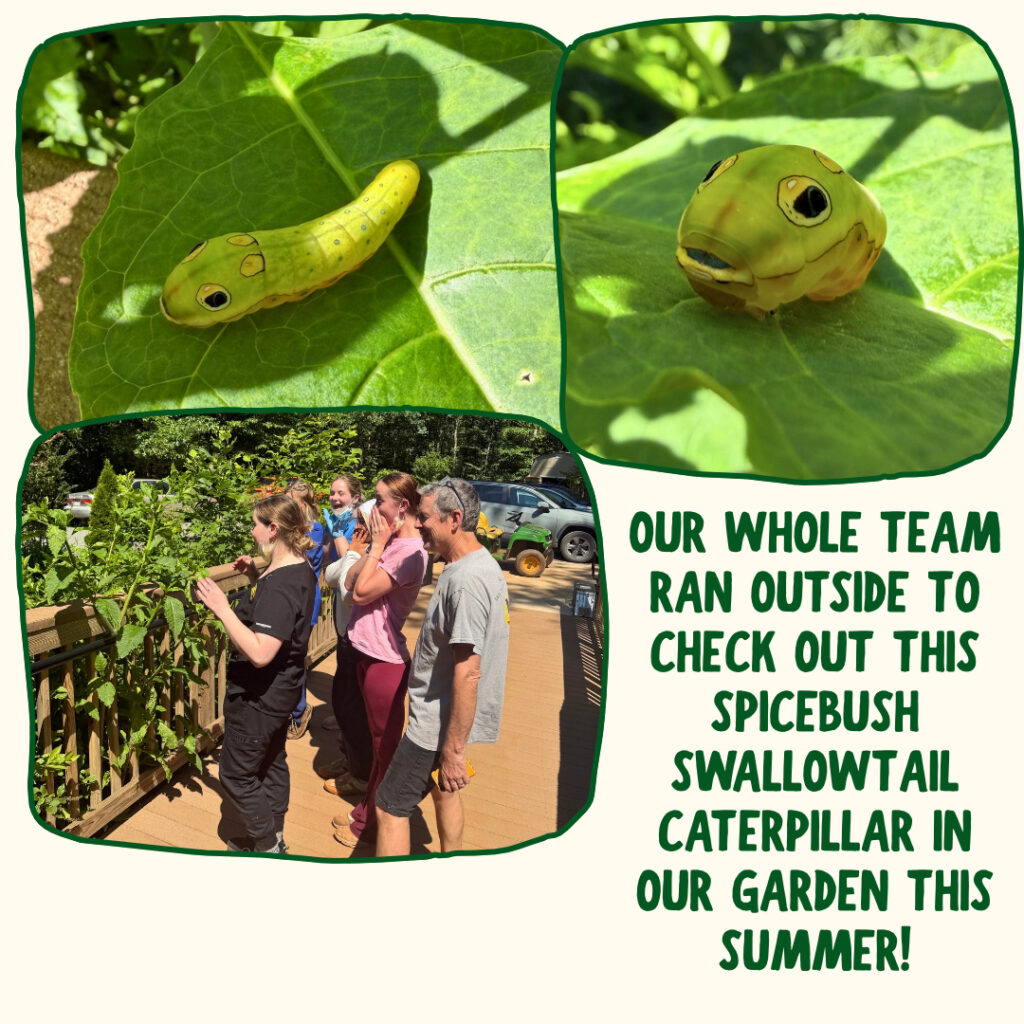
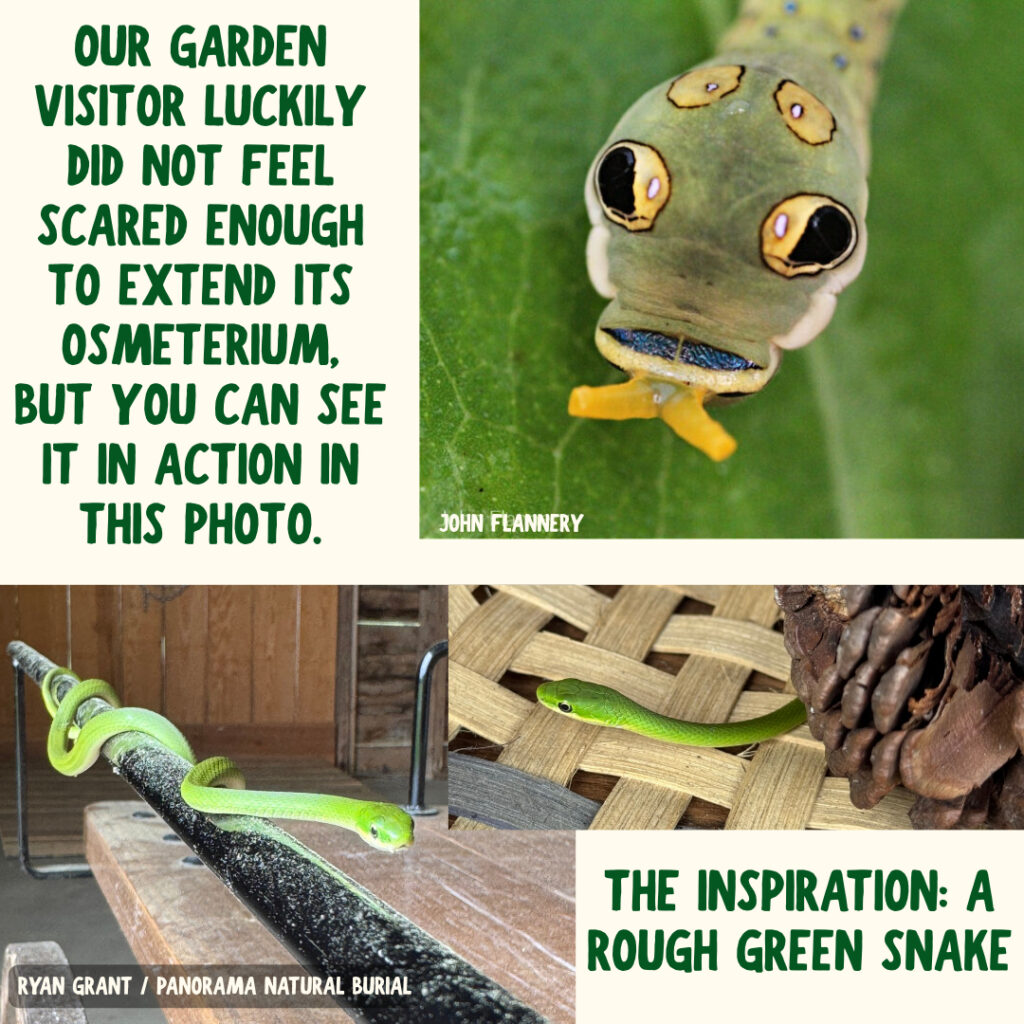
Now, not every costume is a visual disguise. Some native songbirds mimic the calls of much larger, scarier predators to keep themselves safe…or to get rid of the buffet lines at the bird feeder. Blue Jays, for example, frequently imitate the calls of raptor species, like Red-tailed Hawks and Cooper’s Hawks. Even expert bird identification tools like Merlin have been fooled by the clever Blue Jay’s vocal tricks! Watch this auditory disguise in action below – though the Northern Cardinal bravely stood her ground. 💪
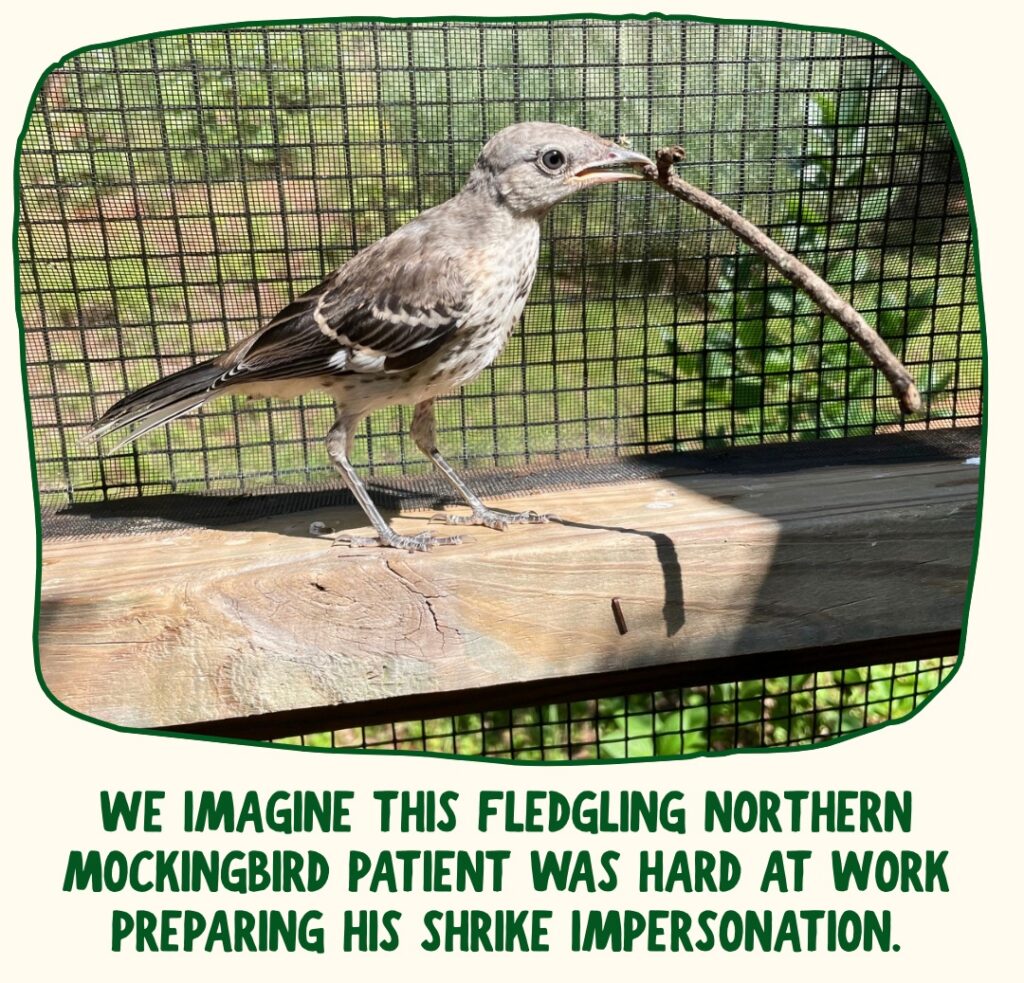
If wildlife held a Halloween costume contest judged on versatility, though, the Northern Mockingbird would be hard to beat. 🏆 It’s in the name, after all! One Northern Mockingbird can learn hundreds of individual songs and sounds over the course of its lifetime, convincingly disguising itself as frogs, dogs, cats, other songbirds, corvids, raptors, and even fearsome shrikes. (Shrikes are particularly brutal with their dinner, earning the nickname “butcherbird.” So, they’re a great Halloween costume for a mockingbird, if you ask us!)
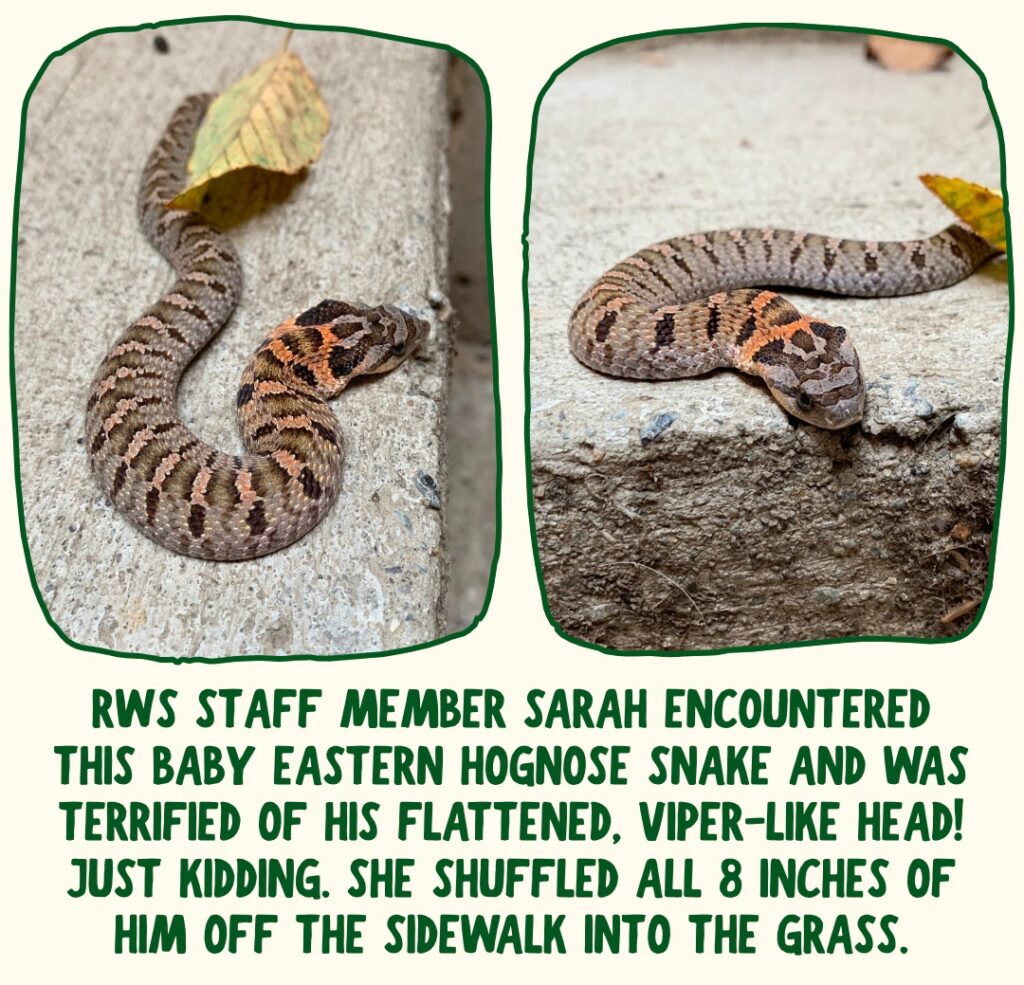
For other species, the costume matters far less than their ability to put on a dramatically scary performance. 👺 Though not true Batesian mimicry, some animals behave like more dangerous species when scared. Central Ratsnakes, for example, may rapidly vibrate their tail in dry leaves or grasses when approached, producing a sound highly reminiscent of a venomous Timber Rattlesnake. This warns a prospective predator to back off – and fast. Similarly, Eastern Hognose snakes are known to flatten their necks and raise their heads in a cobra-like display. If all of that spooky warning behavior fails, a hognose may flop over and go limp to convince a predator that it’s dead and not worth the effort.
And then there’s the beloved Virginia Opossum, who may not have the flashiest costume at first glance but certainly wins on effort. 👏 Opossums actually don’t have a choice about participating in the costume contest, though, because when they’re severely frightened, they experience tonic immobility: an involuntarily catatonic state that most of us know colloquially as “playing possum!” When this happens, the opossum falls over motionless with its jaw and eyes open. It may also drool or foam at the mouth and release some absolutely foul-smelling anal secretions. 😅
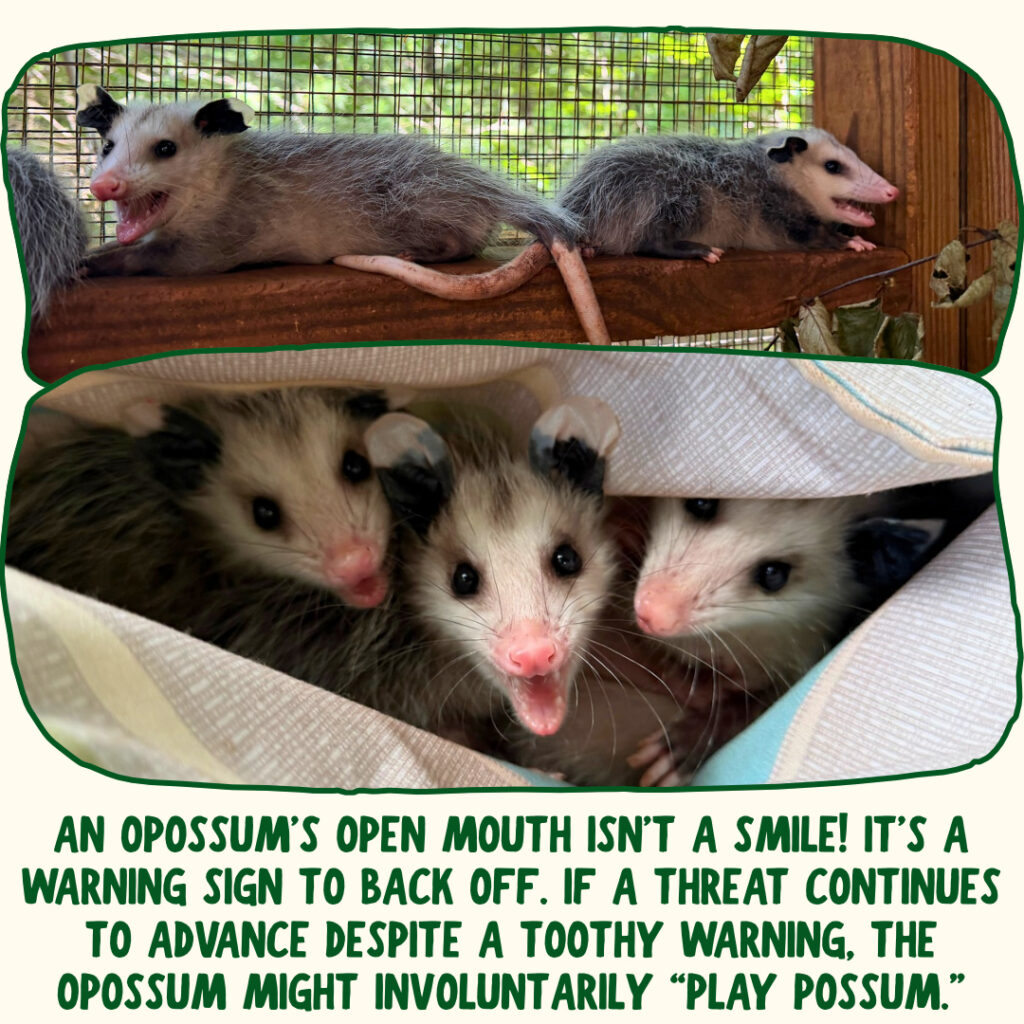
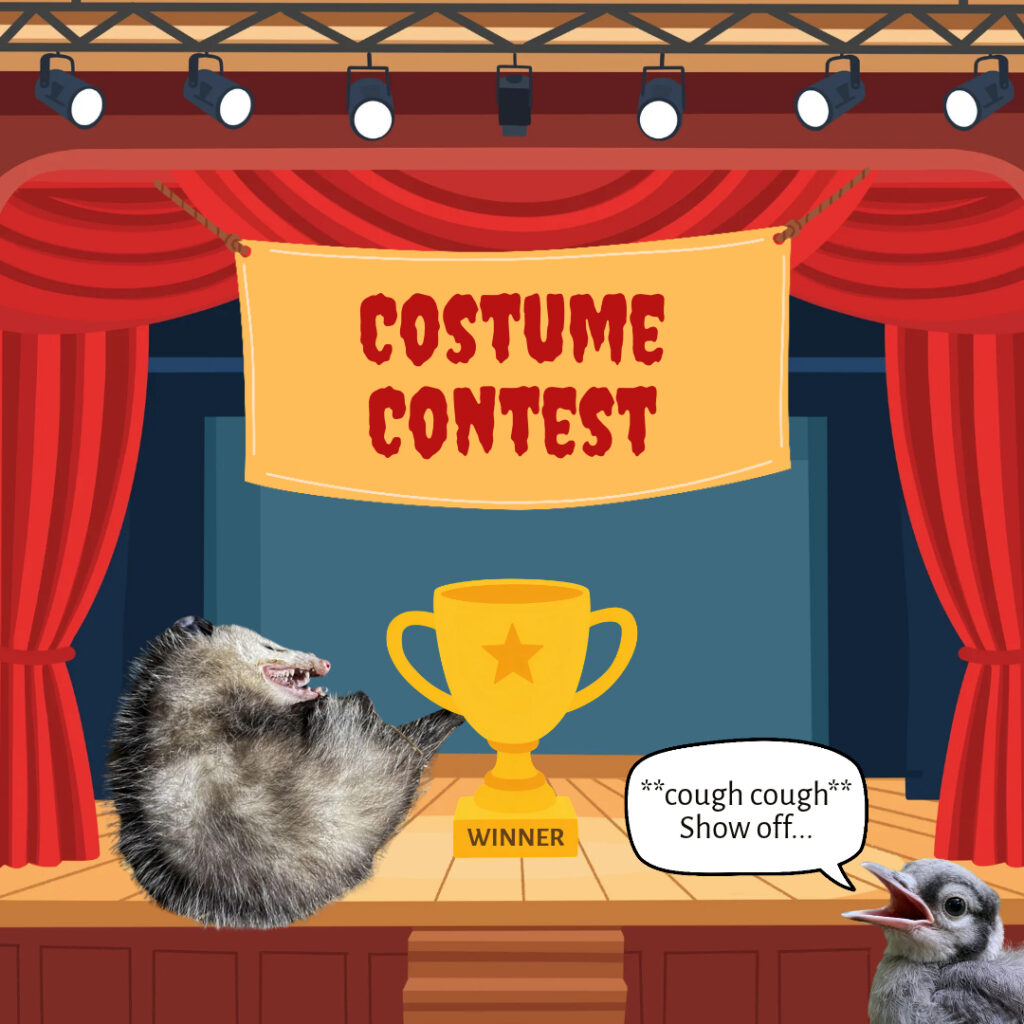
Though we sure hope these behaviors won’t be a part of your Halloween costume this year, we appreciate the humble opossum’s commitment to the bit. 🎭 By “playing possum,” North America’s only native marsupial convinces predators that it is extremely unappetizing. After all, nobody wants to eat an oozing zombie. This catatonic state may last from a few minutes to a few hours. By the time an opossum comes back online, the costume contest awards may have been handed out already. 😅
Whether they’re pretending to be bird poop, a snake, a hawk, or even a corpse, our wild neighbors rely on some pretty remarkable tricks to avoid becoming another animal’s treat. These disguises are adaptations honed over millions of years of competition and evolution, and they’re best appreciated from a respectful distance. But if you ever find a wild animal that looks injured, orphaned, or suspiciously lifeless, give us a call. ☎️ We’re here to help sort out who’s in costume and who needs a hand.
Thank you for reading this month’s Critter Corner! 🎃 Wishing you a very happy and safe Halloween.
October 30, 2026
Published:


Be the first to comment!