


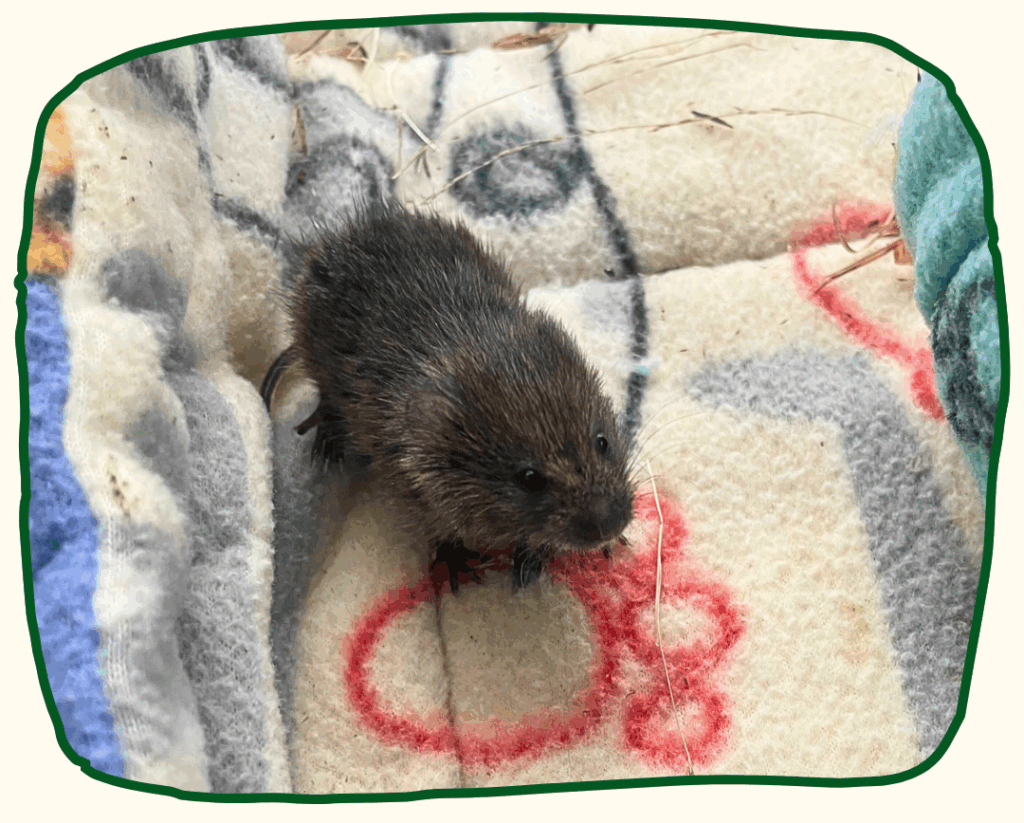
He’s teeny, but his appetite is impressively huge. Meet patient 25-848: an adorable baby Meadow Vole!
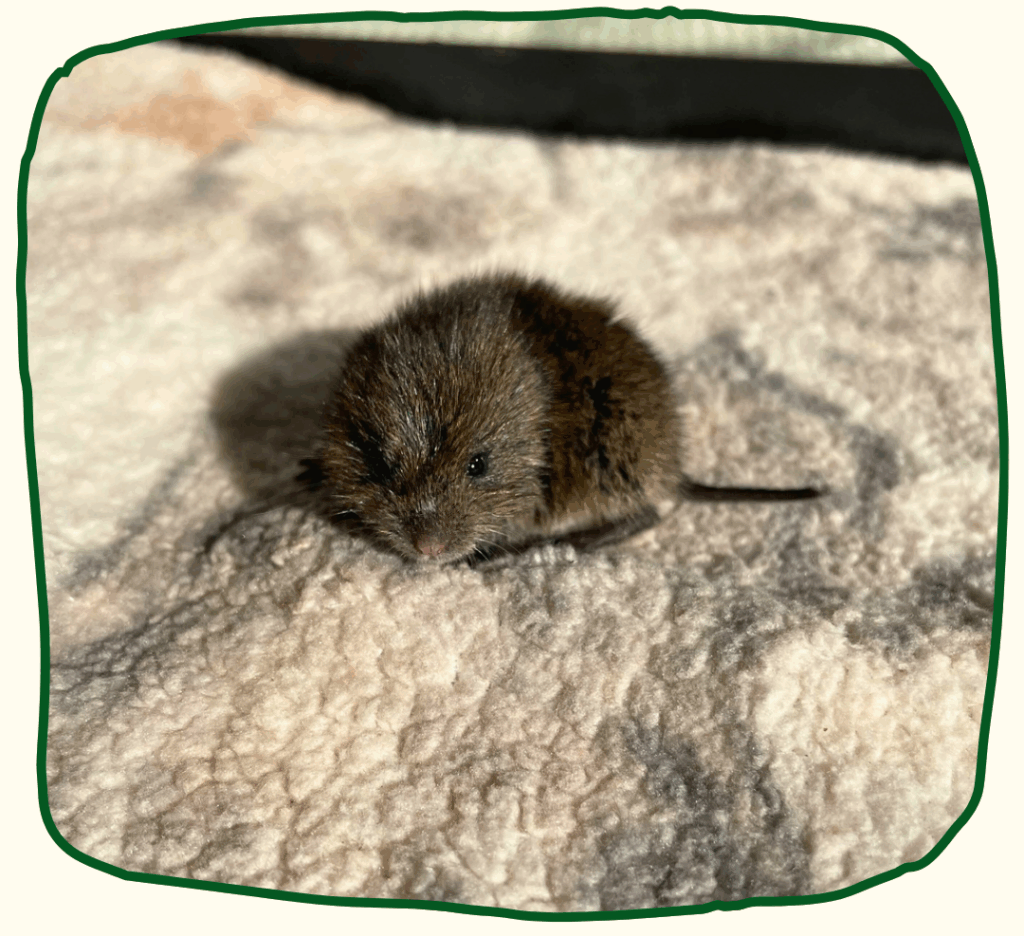
Meadow Voles (Microtus pennsylvanicus) are very unusual patients to receive in rehabilitative care at the Sanctuary. 👀 Though they’re adaptable enough to urban environments, they spend much of their time burrowed below ground or hidden in the grass. As a result, folks typically come across Meadow Voles in need less frequently than other native rodents, like Eastern Gray Squirrels or White-footed Mice. In fact, the Sanctuary’s first ever Meadow Vole patient was admitted last year, and 25-848 is the only vole we’ve cared for this year.
This adorable baby vole came into professional care after presumably being orphaned. A community member in Augusta County stepped outside their home and saw the teeny critter, alone on the ground and not moving. Though they had no clue what had led the baby vole to be there, the rescuer promptly brought the vole to our friends at the Wildlife Center of Virginia in nearby Waynesboro. After a couple days of initial care, the team at WCV transferred the vole to the Sanctuary for long-term rehabilitation. Teamwork always makes the dream work! 💪
Okay, “long-term” is a bit of an exaggeration, because voles grow quickly. When we admitted this charmer, he weighed just 8 grams. In just over a week at RWS, he’s doubled his body weight and is toppling our scales (okay, another exaggeration there) at a whopping 17 grams. 🏋️♀️ You go, 25-848!
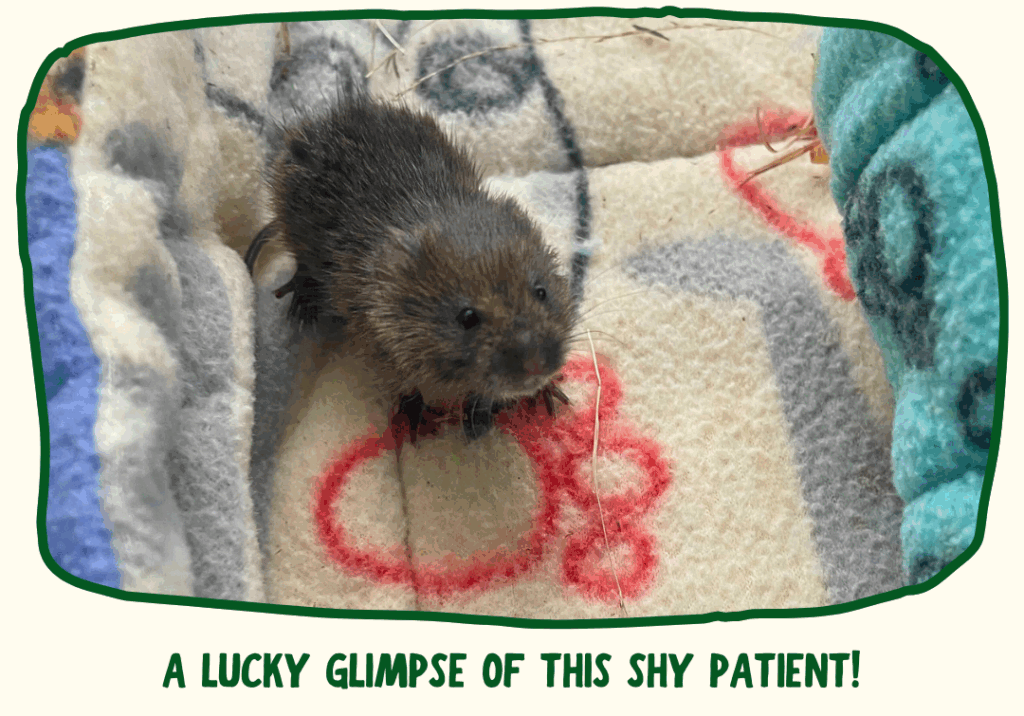
Why do voles grow so quickly? They’re hungry! You might even say hangry, given just how much they scarf down each day. Voles have extremely fast metabolisms, and they typically must eat 100% of their body weight (or more!) in food every single day to avoid starvation.
Just imagine if you had to eat your entire body weight every day. 😅 Perhaps you’re dreaming of Thanksgiving later this week and thinking you might be able to do just that…but the reality is, most adult humans eat just 2% of their body weight or so each day.
All that’s to say: patient 25-848 has a big appetite, and our rehab team has worked hard to keep up!
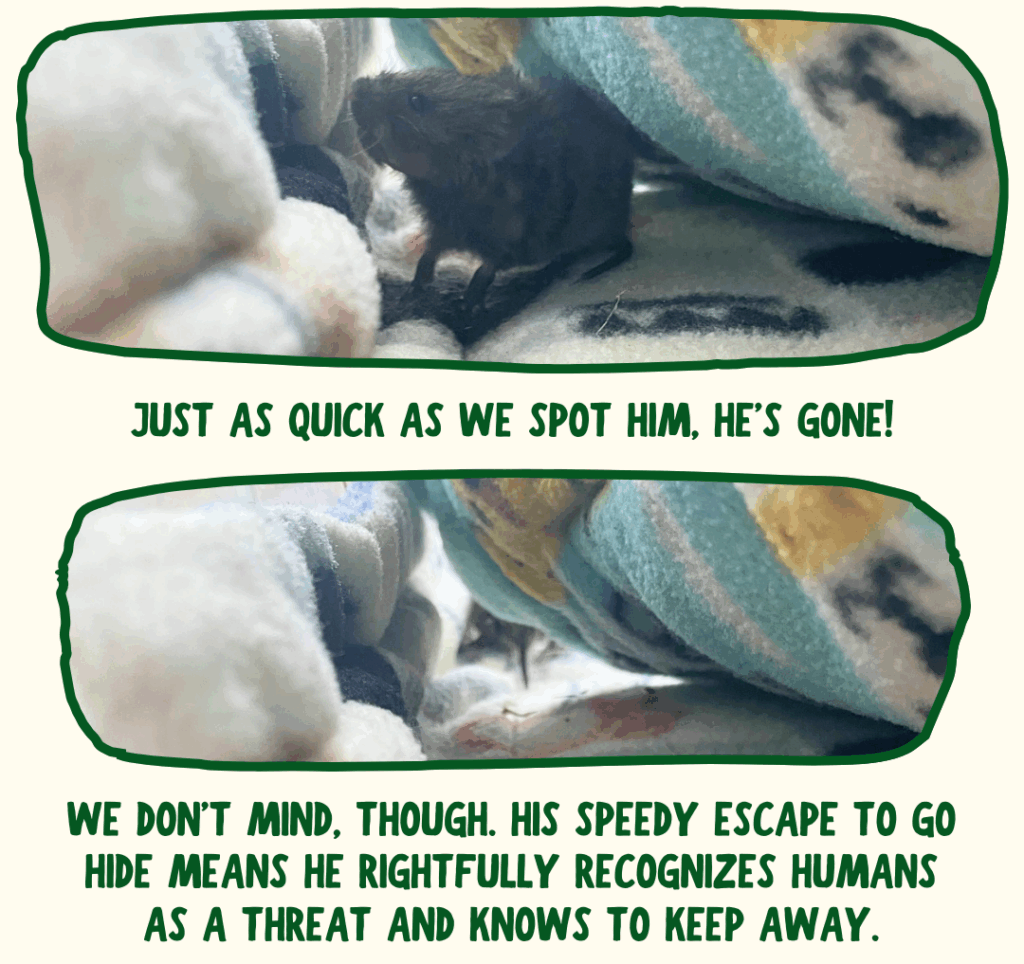
At RWS, we work hard to prepare patient diets that match the species’ natural history. Doing so ensures we meet their unique nutritional needs to support healthy development, and it also helps prepare patients for successful foraging after release.
Natural history knowledge is especially important for late-season babies since native critters often change their diets with the seasons. Meadow Voles sure do! In the spring and summer, voles are largely herbivorous and chow down on a variety of grasses, leaves, bark, and flowers to keep full. 🌱 As temperatures drop and fresh greens become less available, voles often eat more insects, snails, and even carrion. 🐌
As a result, patient 25-848 has received a healthy mix of options for this time of year. He has been extremely eager to eat mealworms and crickets, and he was especially pleased to receive waxworms for the first time yesterday. (They’re extra chunky. Delish!)
Our vole patient always eats his veggies, too. Our rehabilitation program manager, Elka, shared: “It’s almost impossible to keep up and give him as many greens as he needs! He demolishes the minced green bowl first every day. It doesn’t matter how much we put into his enclosure. The greens are always gone the next day.”
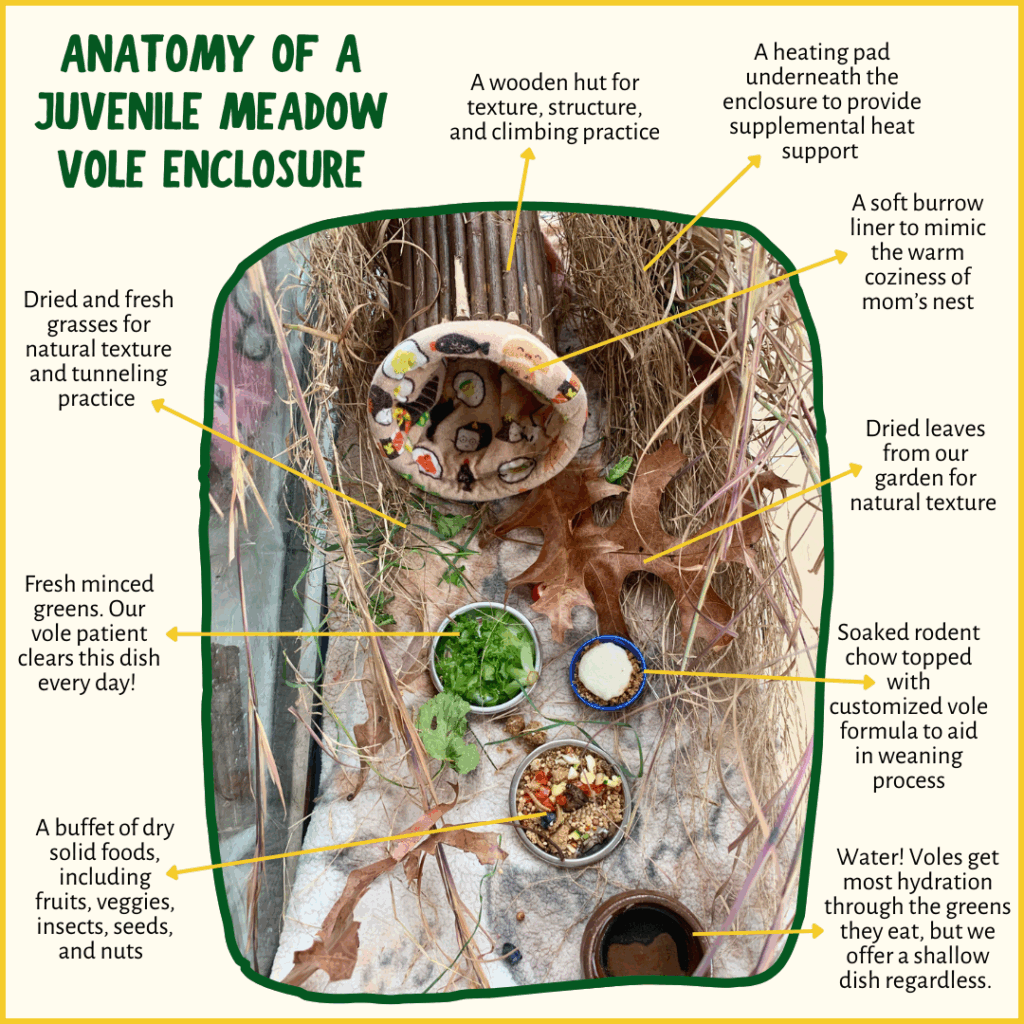
Not only has 25-848 grown a ton physically, but he’s also shown encouraging behaviors in his enclosure in our wildlife nursery.
Our team prepared an elaborate enclosure to mimic the structure and texture of his natural habitat, adding complexity and additional enrichment as he grew. He takes the liberty of rearranging his decor into an impressive network of runways each day. Vogue, baby! 💅

Okay, okay, not that kind of runway. 😆 Meadow Voles in the wild are known for building extensive systems of grass tunnels and surface trails. These chutes help them move between feeding areas while staying hidden from predators. Seeing 25-848 construct and maintain these runways here at the Sanctuary is an excellent indicator that he’s honing his skills and preparing for life in the wild.
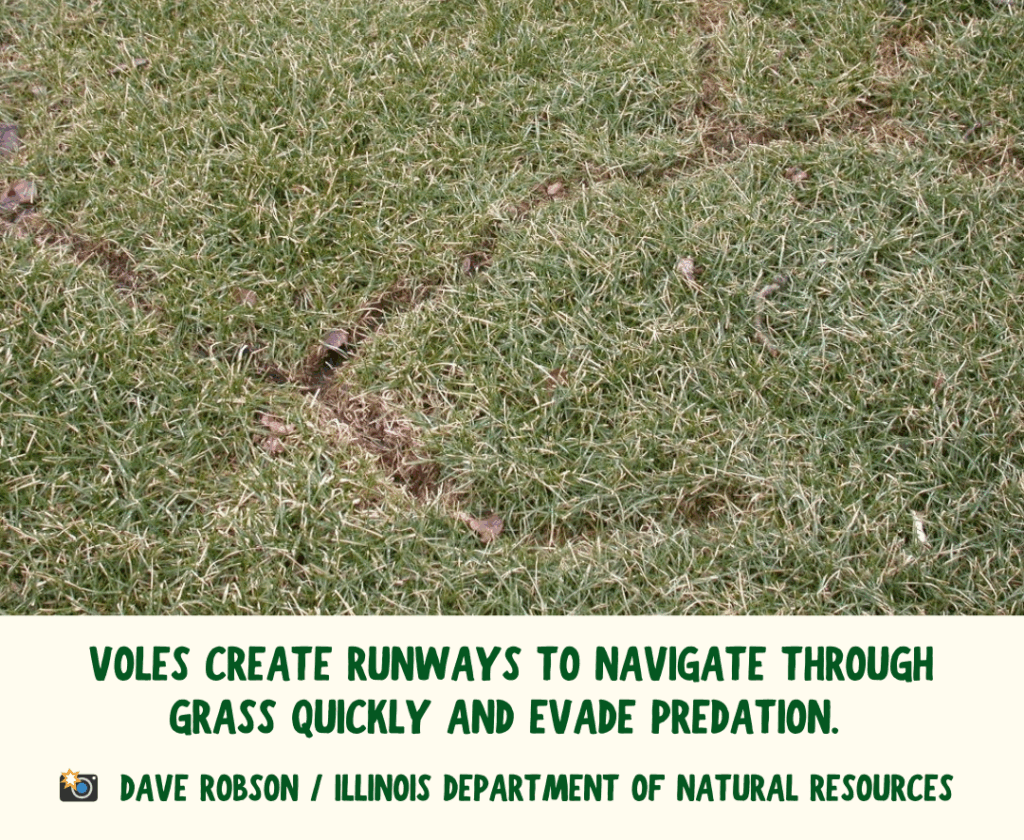
Unlike other late-admit baby mammal patients, this adorable Meadow Vole will not have to be overwintered at the Sanctuary. Voles are typically totally independent from mom within four weeks of birth, and they’ll be ready to have litters of their own shortly thereafter! With a wild lifespan of just three months or so, voles make the most of their time by breeding and contributing to native ecosystems. They disperse seeds and fungi, improve soil health through aeration and nutrient distribution, and of course, serve as food for a variety of other native animals. Thank you, voles! 💕
Since these critters do not hibernate and are active year-round, a late fall release is perfectly appropriate for 25-848’s species. We aim to release him in the next week or two, depending on his continued progress. They grow up so fast! 🥹
Thank you for reading about this month’s featured patient at Rockfish Wildlife Sanctuary!
We hope you have a wonderful Thanksgiving holiday. 🦃 We are deeply grateful for animal lovers like you who make caring for patients like this Meadow Vole possible. ❤️
November 25, 2025
Published:


Be the first to comment!