


Wildlife rehab sure keeps us busy here at RWS! 🐢
Between caring for nearly 900 animals, answering over 3,000 hotline calls, presenting 45 education programs, and completing some transformative renovations, we’ve been busy at Rockfish Wildlife Sanctuary.
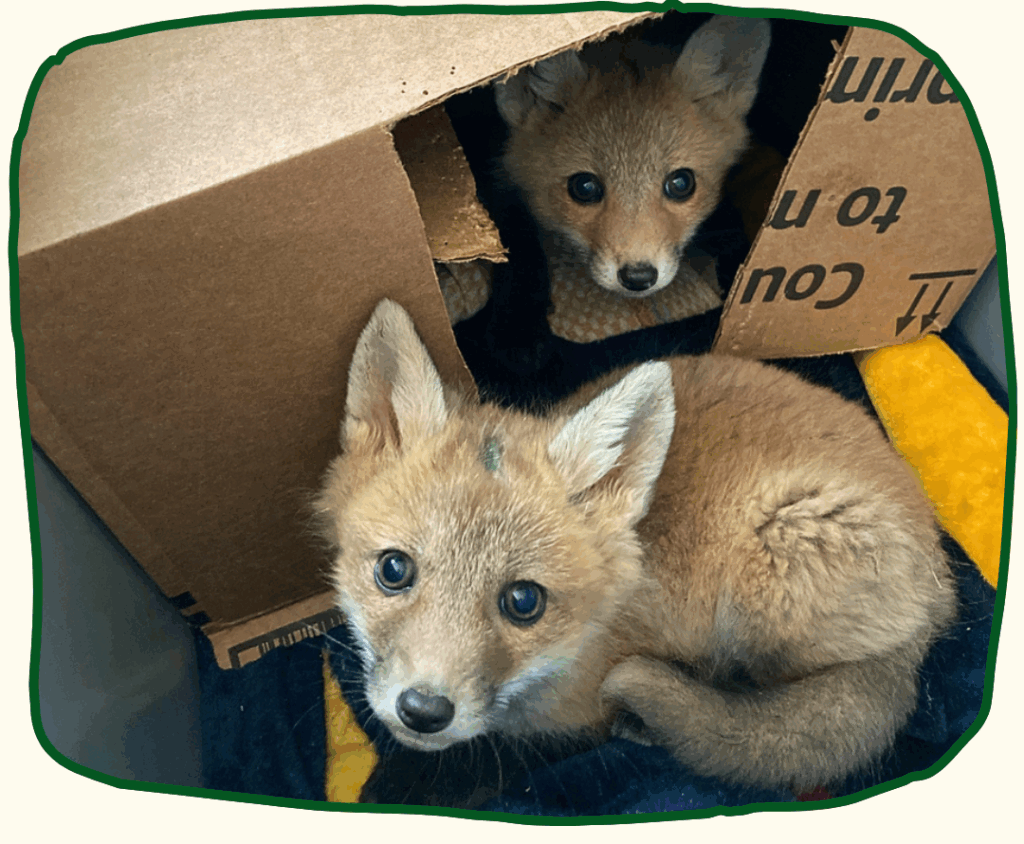
There’s still time to support our lifesaving wildlife rehab work before the year ends! Make a tax-deductible donation today.
While every animal that comes through our doors receives all-star treatment, a few patients particularly struck a chord with us. You might even say they were favorites…though don’t tell anyone that we pick favorites around here! 😂
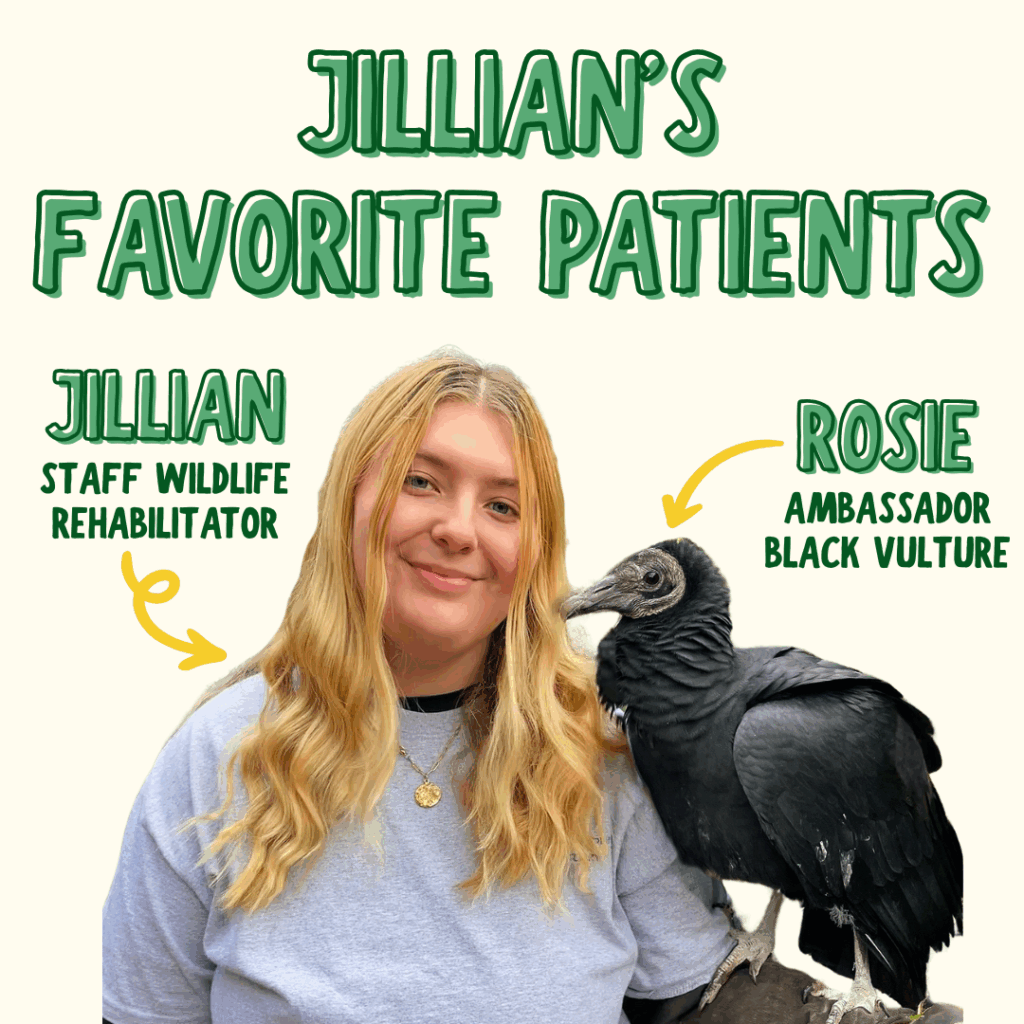
Jillian Duckworth and Chandler Dennis, two of our passionate and talented animal care team members, shared a few of the most memorable wildlife rehab patients they treated at RWS this year. We hope you enjoy their stories. ⬇️
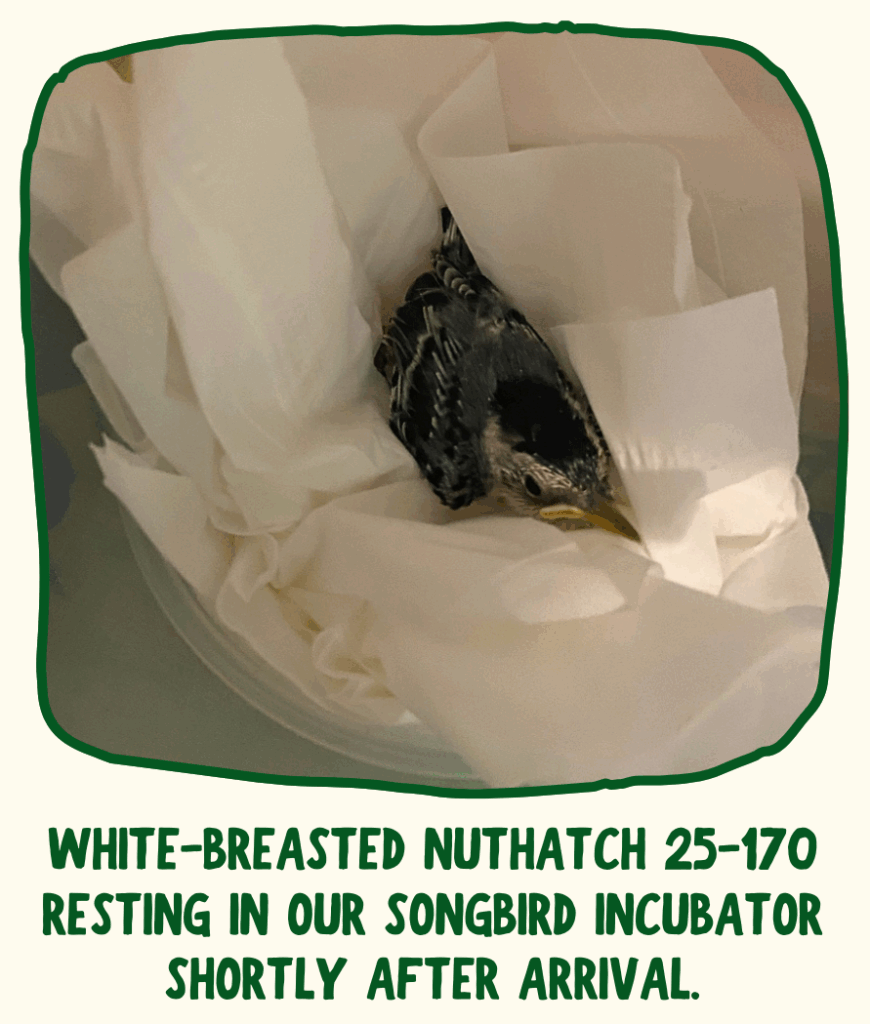
White-Breasted Nuthatch 25-170
We admitted this charming nuthatch back in May after it had been found on the ground in Amherst County. Unfortunately, it was without a parent, and there was a deceased sibling next to it. Its rescuer stepped in and brought the adorable remaining sibling to RWS. The baby nuthatch quickly became a beloved patient, especially to our resident “baby bird whisperer,” Jillian!
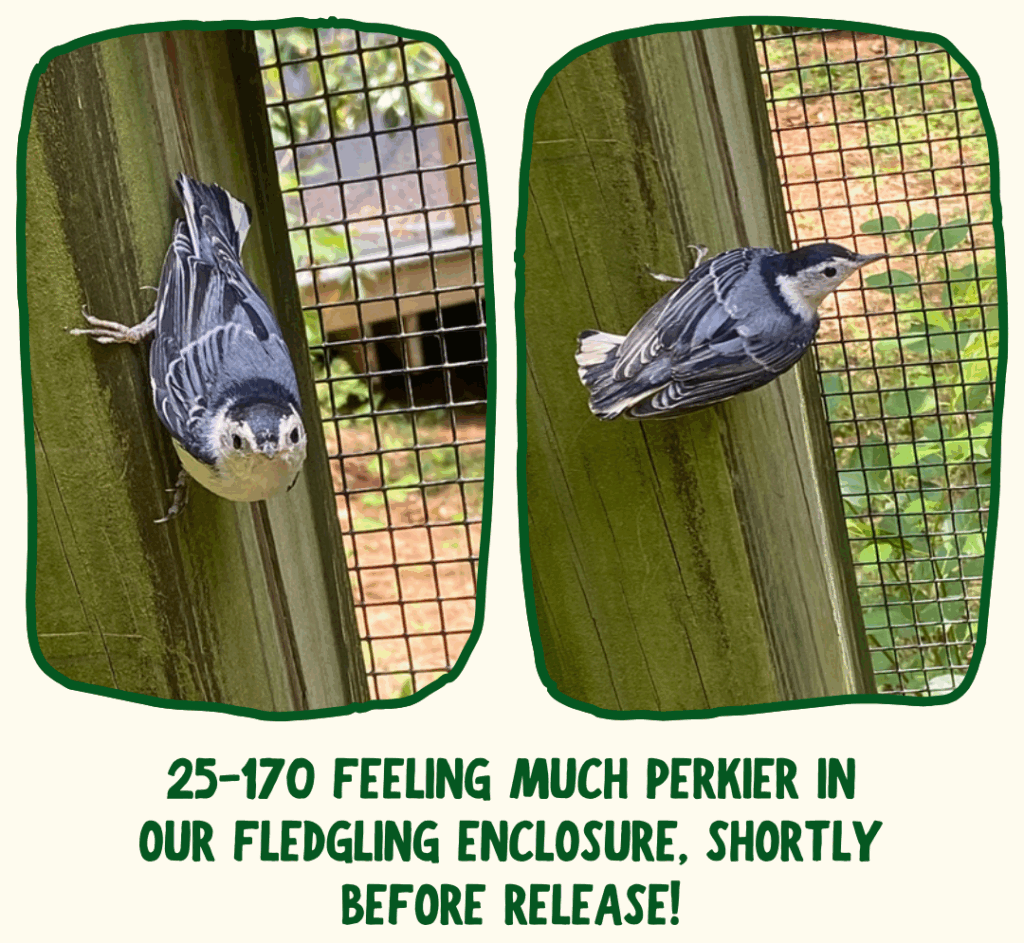
From Jillian: “It was so fun to get a ‘not as common’ bird into care and get to watch its development, from in the nest to outside in our fledge cage, learning all things ‘nuthatchy.’ This patient had a slight wing droop while in care which made the prognosis unknown for a bit of time, so it was a delight to get a positive outcome of it being able to overcome the droop and be releasable!”
Raccoon 25-407
This patient’s story was a doozy! He arrived in early June after being raised illegally by a non-licensed individual for a whole month. While we were glad the situation was not deemed an exposure case by the rescue jurisdiction’s health department – which would necessitate humane euthanasia – we were left with the challenge of rehabilitating a raccoon that had become quite habituated to humans. 😬
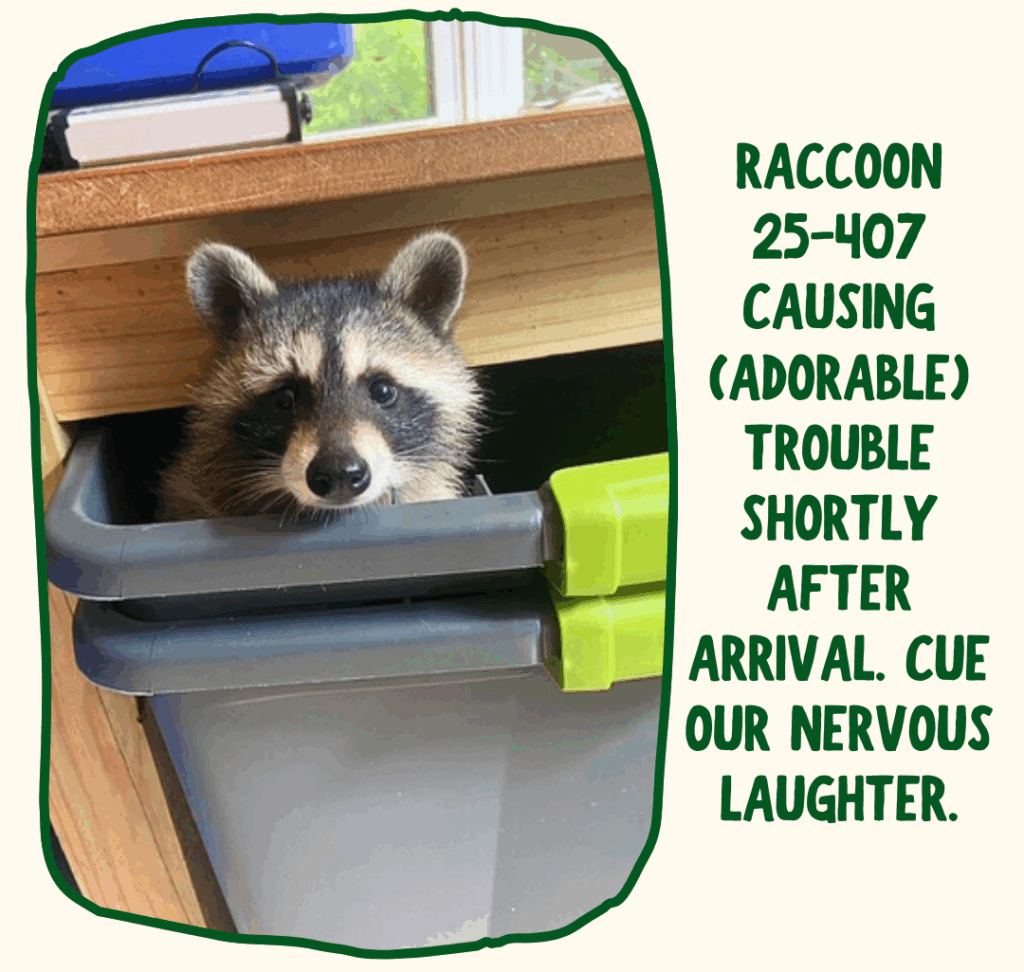
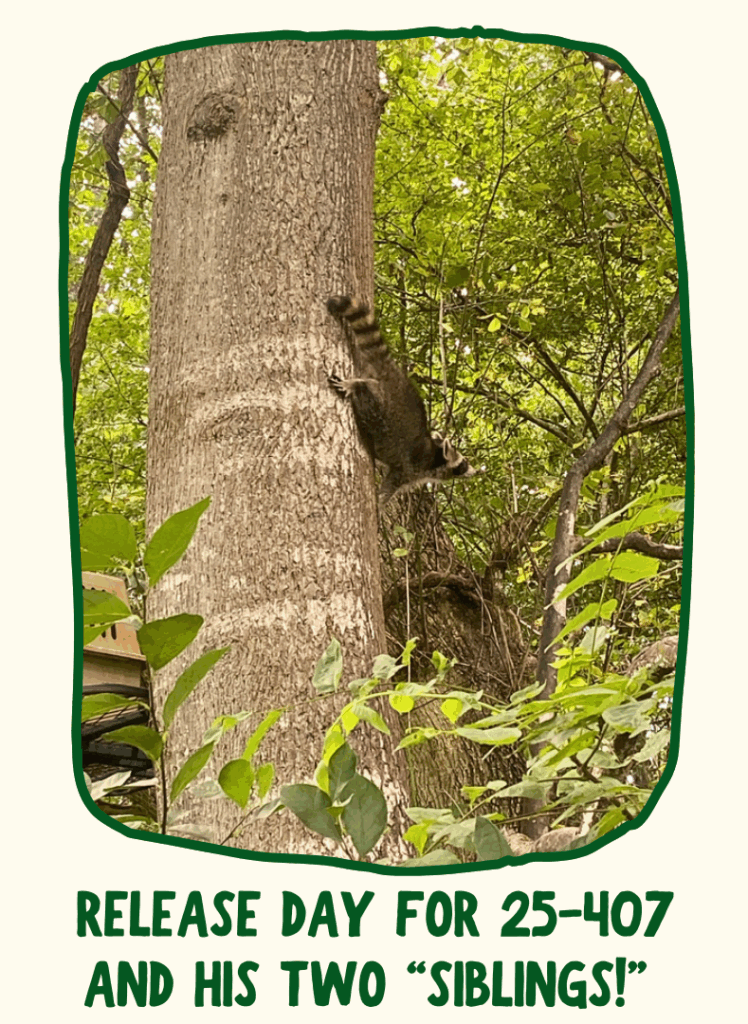
After a two week quarantine period, we carefully introduced 25-407 to another pair of juvenile raccoon orphans we had been caring for. While all three raccoons were skeptical of the new arrangement at first, they quickly grew into a tight trio of “adopted” siblings. With the help of a carefully controlled rehabilitative environment and the support of his two same-species buddies, 25-407 slowly became less habituated and picked up essential survival skills, like foraging and socializing.
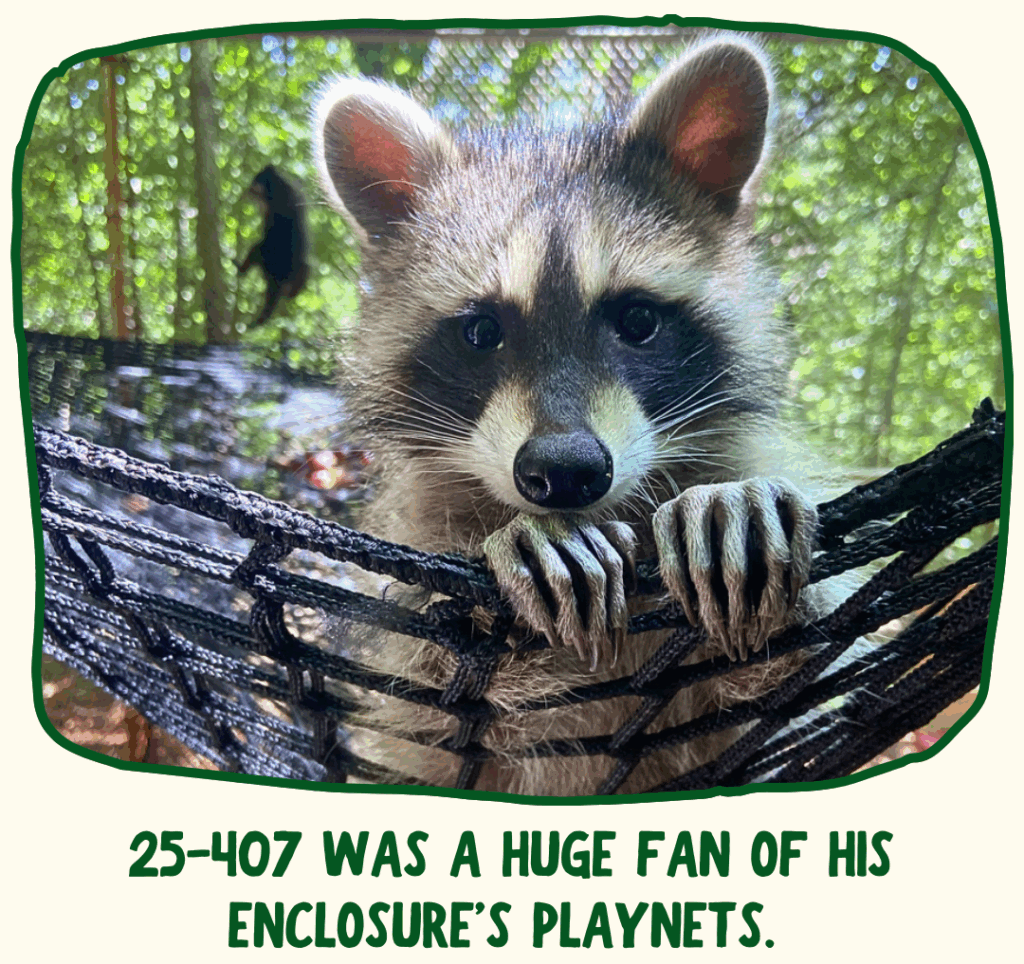
From Jillian: “It was really nice to see the progress of this severely habituated raccoon, brought in by someone who had kept him for a little too long, turn into a happy ending! He ‘wilded up’ and learned that his real companions are not humans but rather his fellow raccoons that he was later released with.”

Carolina Chickadees 25-191, 194, and 195
This squad of charming chickadees arrived from Staunton after their rescuer found them in a birdhouse that had been thrown into a dumpster. 😱 We assume the birdhouse had been discarded by accident, but we’re so glad their rescuer peeked inside and saved the babies.
From Chandler: “These tiny Carolina Chickadees quickly became favorites among many of us at RWS! Their enthusiastic wing flaps and chirps every time I fed them (about every 30 minutes) always made me smile. I also had the opportunity to take these three for their release, and watching them immediately fly off and begin chirping away was incredibly special.”
Lucky for us, Chandler recorded their release moment. Check it out below and and listen to their adorable chickadee calls! ⬇️
Striped Skunk 25-236
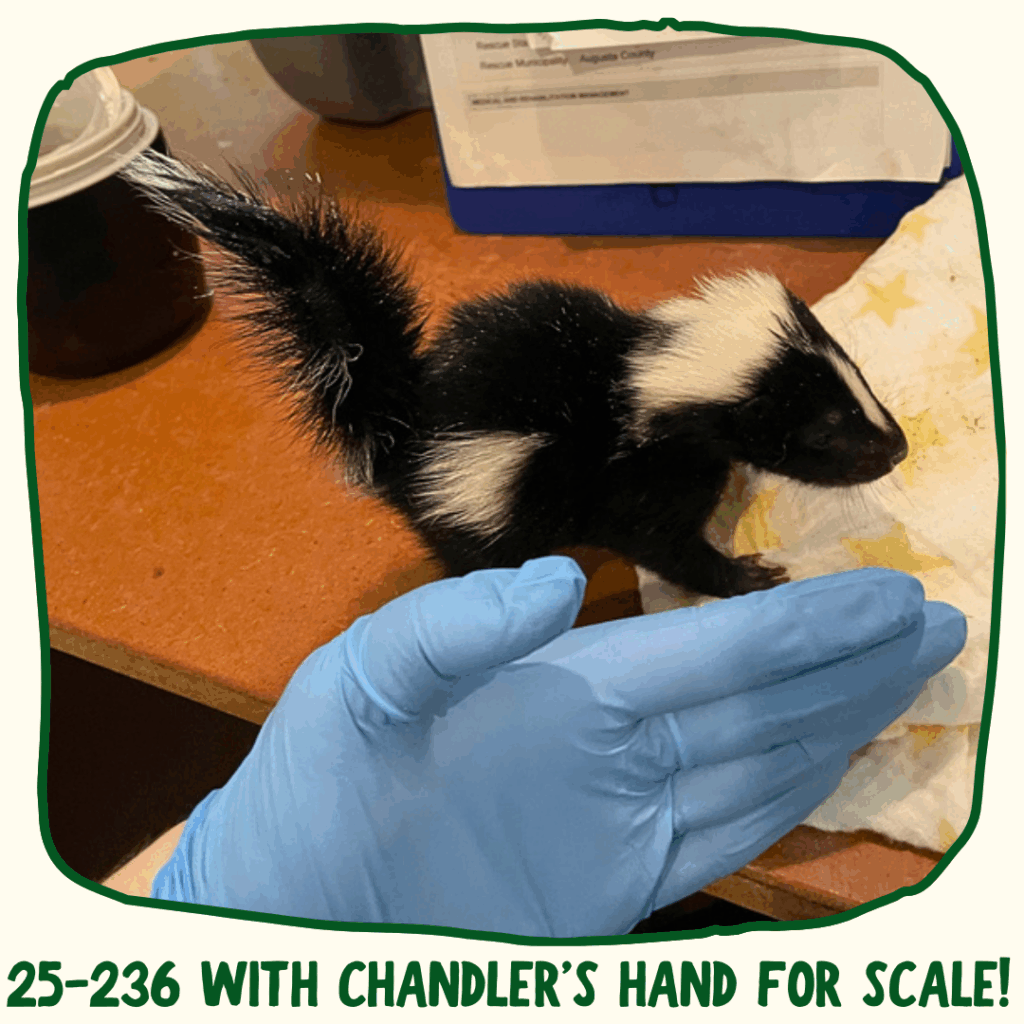
This male Striped Skunk kit arrived in mid-May from Montgomery County. He and his five siblings had been rescued from the side of the road after a deceased adult, presumably their mother, was spotted nearby. Despite his small stature, he grew as well as his siblings and all six were successfully released after two months in wildlife rehab care.
From Chandler: “This Striped Skunk patient was especially memorable because of his teeny size! Skunks are my favorite critters to rehabilitate at RWS, and this patient was probably one of the smallest I had ever rehabbed — a little bit under 200 grams when he first came in and just beginning to open his eyes. Skunks can also be tricky to syringe feed formula since they have a tendency to just chew on the nipple, but this little guy was actually a pro at suckling!”
Red-Bellied Woodpecker 25-306 (blue leg band)
This woodpecker and its two siblings were rescued in the nick of time. When a resident in Lynchburg saw that a tree on her street was being trimmed, she jumped into action – she knew there was a nest of woodpeckers inside! After re-nesting attempts failed, she brought the entire log to RWS.
From Chandler: “All of our Red-Bellied Woodpecker patients were so fun to rehabilitate, but blue band (patient 25-306) was especially memorable. With all of our patients, we try to provide their food in a way that encourages natural behaviors. For example, with woodpeckers, we will place logs and branches throughout their enclosure and sprinkle their food into holes that we pre-drill into the logs. One day while in their enclosure, I noticed blue band picking up mealworms from a bowl, placing them inside one of the logs, and then plucking them out. It was so funny and rewarding to watch him pretty much ‘rehabilitate’ himself while his siblings were still trying to get the hang of pecking at the logs.”
The three woodpeckers were successfully released after six weeks in care. Chandler caught “blue band” in action, shown below! ⬇️
Your donation makes all of these wildlife rehab success stories possible.
Did you know that we receive no state or federal funding? Our lifesaving work is entirely powered by our community! Every dollar helps.
We would be honored to have your support before 2025 comes to an end.
Thank you for reading some of this year’s critter highlights from our wonderful team!
We are excited to continue this important work in 2026, and we wish you a safe and happy New Year. 🎉
December 29, 2025
Published:


Be the first to comment!