


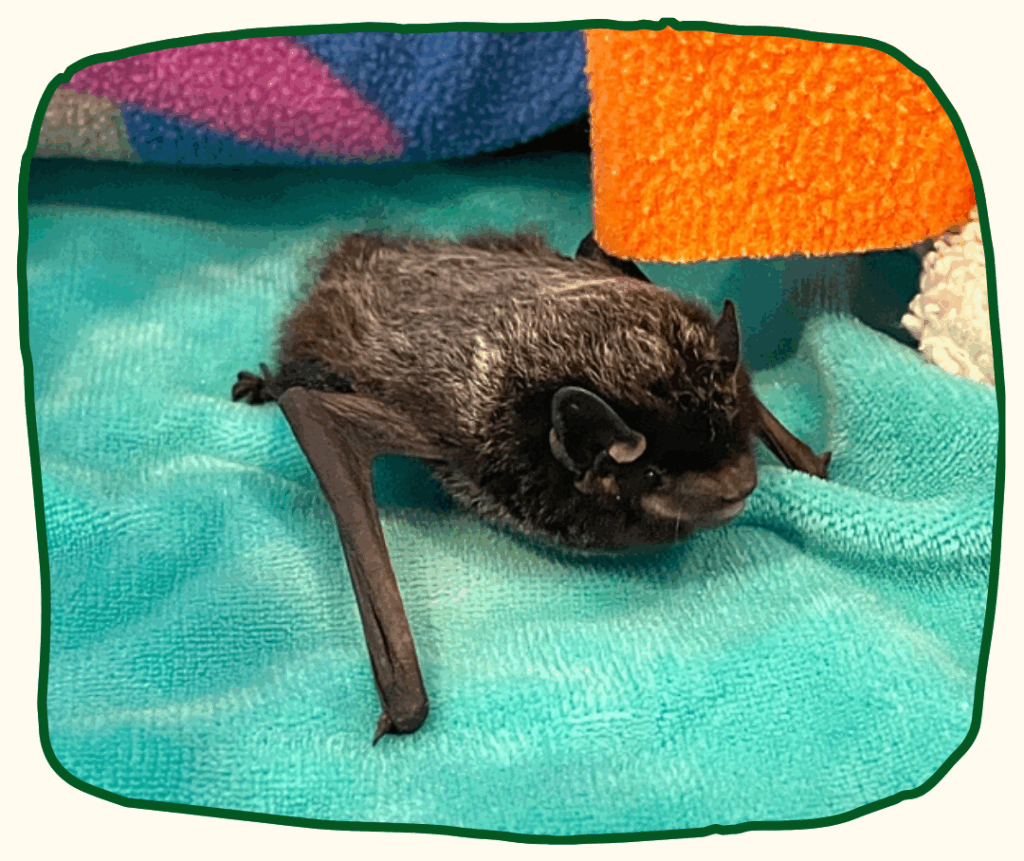
We’re still caring for over 50 patients this winter, including our very last admission of 2025. Meet Patient 25-871, a charming Silver-Haired Bat!
A Batty Rescue
On December 30th, our team received an unusual call on our wildlife hotline. ☎️ A rescuer in Albemarle County was feeding her horses when she noticed something unusual. There was a bat clinging to the side of her horse’s water bucket! While Silver-haired Bats are solitary, their preferred roost is a snag (dead tree) – not a bucket.
This little bat was frigid, wet, and in need of professional help. Thankfully, his rescuer brought him to us right away…bucket and all!
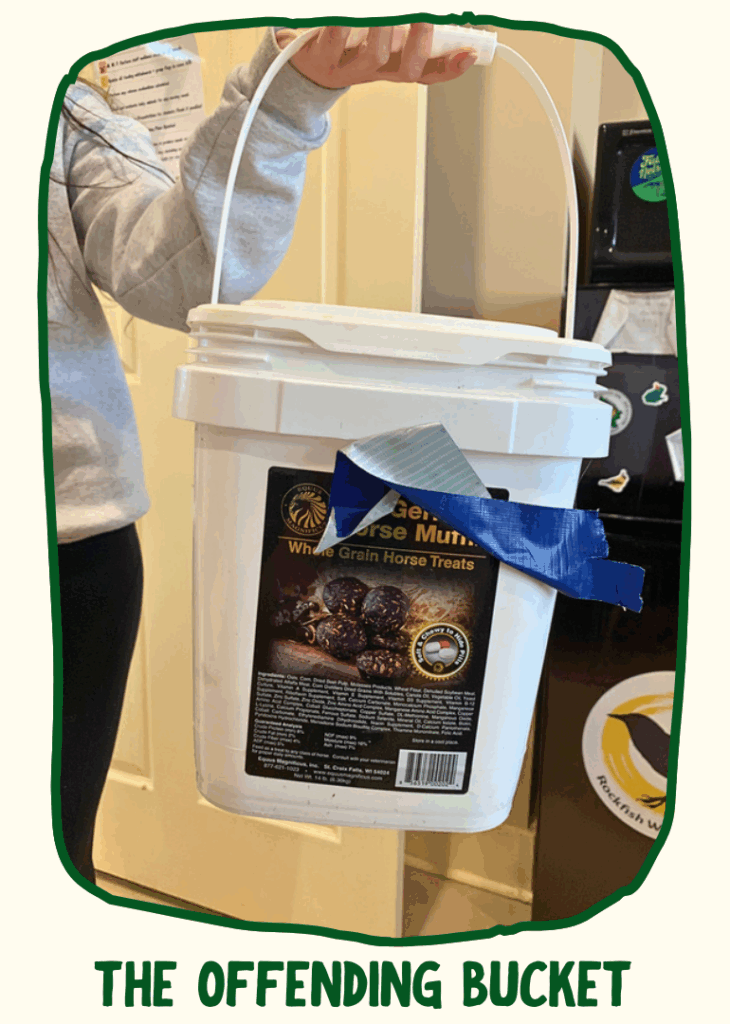
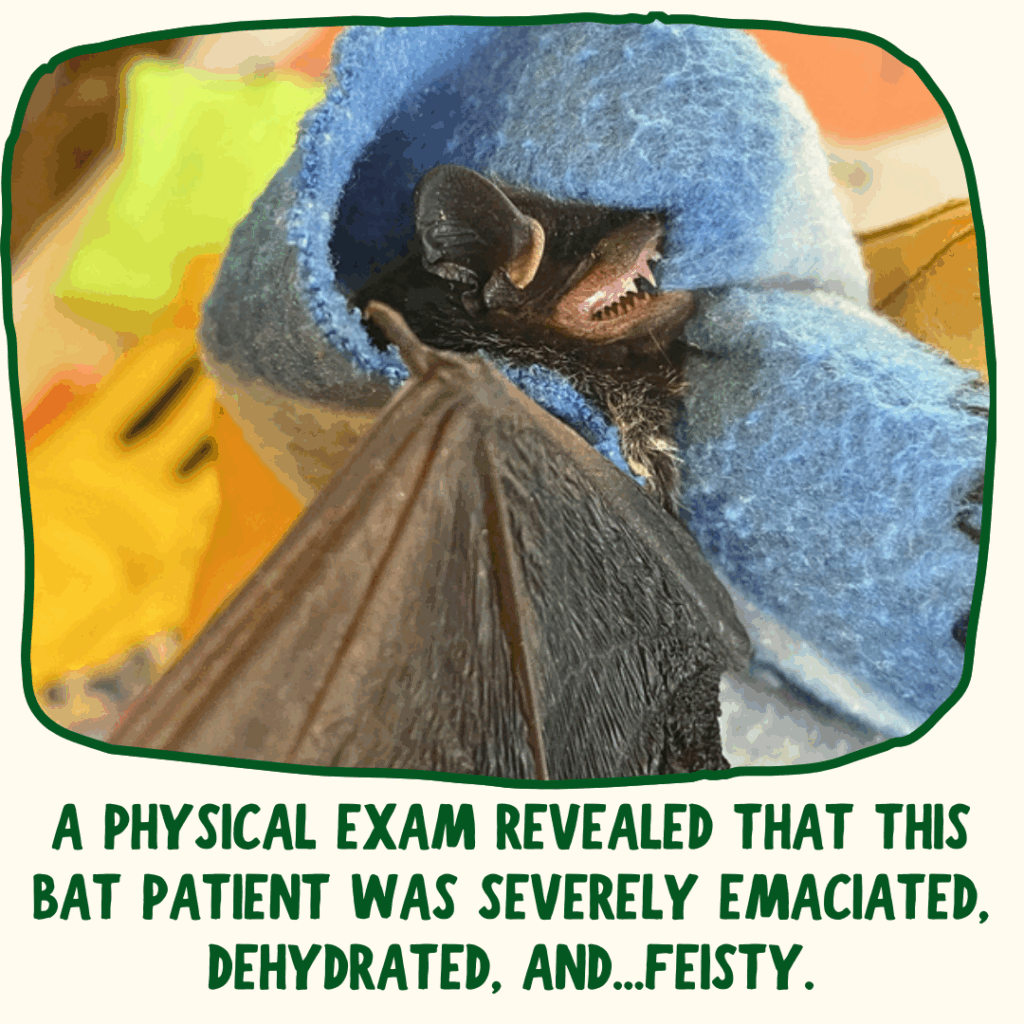
It’s unclear how or when this Silver-haired Bat found his way into the bucket, but we quickly noted during his intake exam that he was in very rough shape. 😔 He was emaciated, dehydrated, and very weak, weighing a measly 4 grams on intake. The average weight for a healthy adult Silver-haired Bat is 8–12 grams!
However, 25-871’s lethargy didn’t stop him from showing off his pearly whites and trying to bite us. 😆 Honestly, we were impressed by his feistiness. It wasn’t a problem, though. Our team always wears Personal Protective Equipment (PPE) when working with our patients. This ensures that we can safely handle even the most fractious animals. (Hey, we’d bite in their position, too!)
Crafting a Rehabilitation Plan
After our exam revealed no further injury beyond generalized weakness and poor body condition, we got to work on his rehabilitation plan.
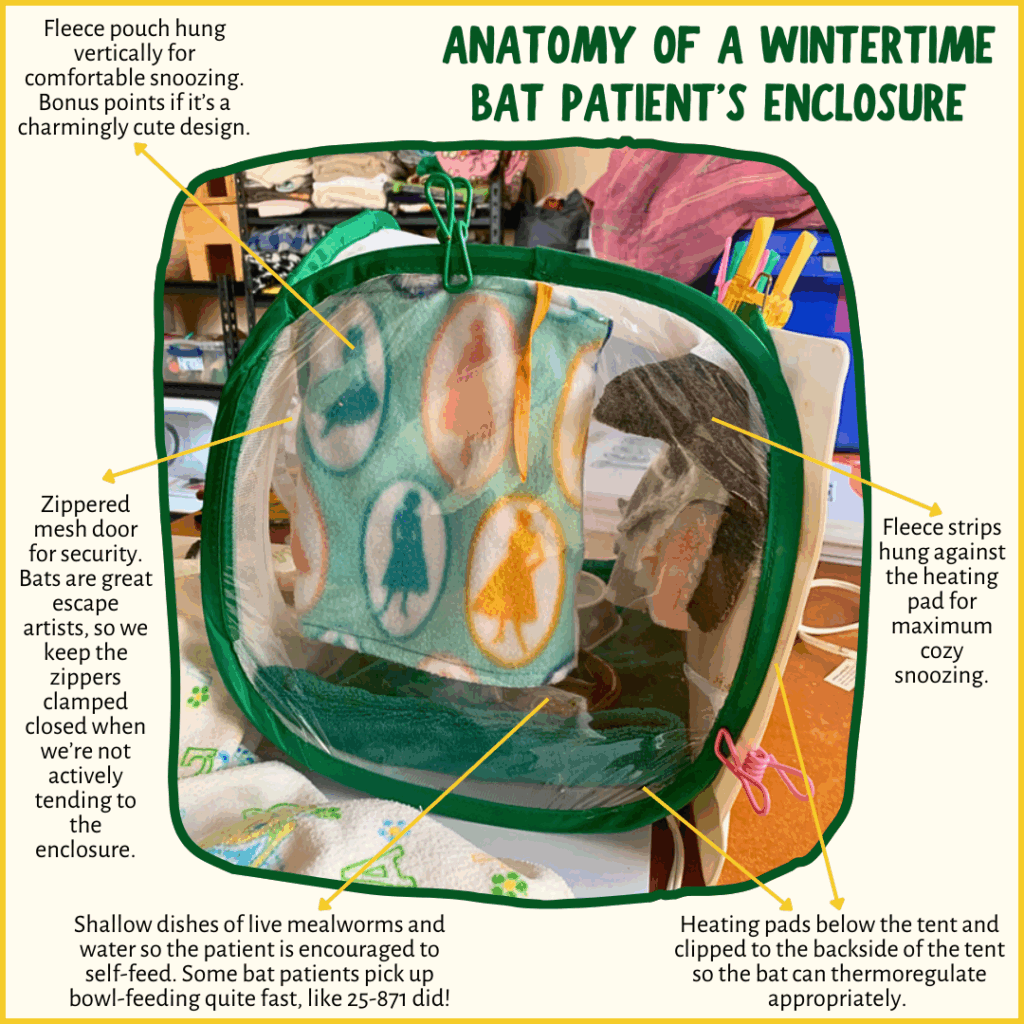
Our team first set up a cozy little enclosure for 25-871 in our Rabies-Vector Species Nursery. Have you ever played with a butterfly tent? Believe it or not, that’s often a perfect enclosure for our bat patients! It’s soft, so flapping won’t damage their delicate bat wings, and it allows for toe-gripping without getting toes or teeth stuck through the mesh. We then drape the inside with soft blankets, creating a cozy vertical bed for a bat to slide into and snooze. Bliss. 😌
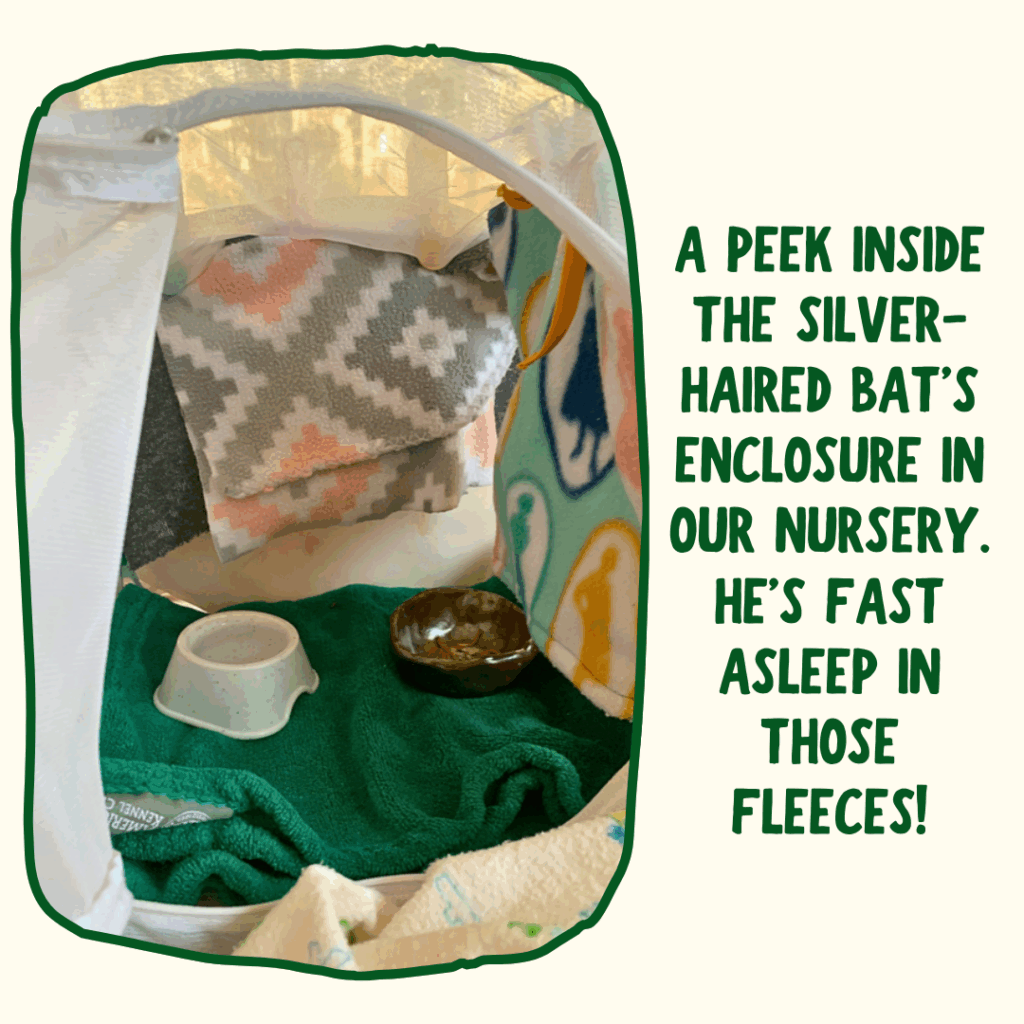

Wait…isn’t it winter?!
You might be wondering why those heating pads are attached, since it’s winter. ❄️ Shouldn’t bats like 25-871 be hibernating? (Trick question, if you read December’s Critter Corner. You’ll know that bats are not true hibernators!) Ordinarily, if we have to keep bat pups through the winter, we do artificially hibernate them using a…wine cooler. Yup, really. We set it at the perfect temperature, ventilate it throughout the day, and put a humidifier inside. This mimics the consistent, cold, wet conditions of a cave for cave-dwelling hibernators, like the Big Brown Bat pups we overwintered last year.
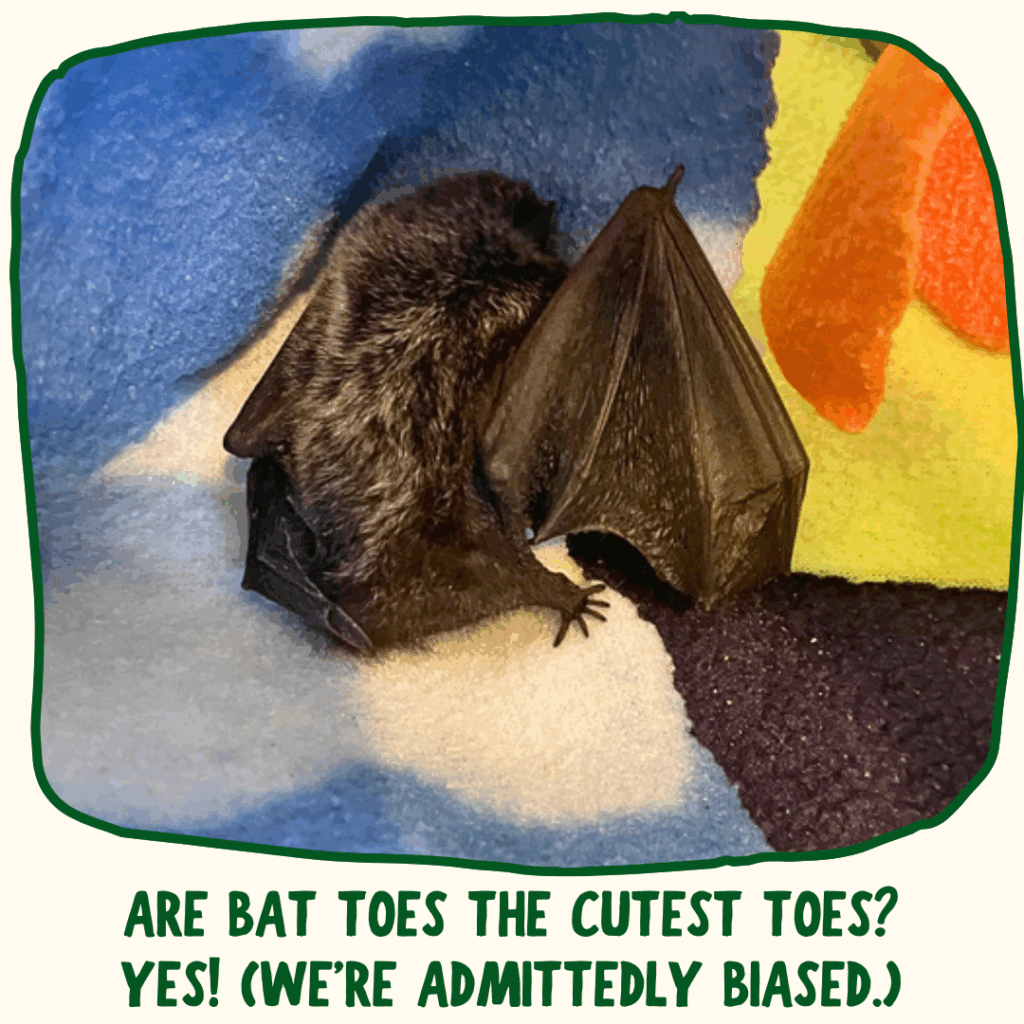
However, Silver-haired Bat 25-871 was not an orphaned bat who wasn’t release-ready by winter. When an adult comes off the landscape during the winter, it’s typically because it became cold-stunned and/or is underweight and dehydrated. As a result, the patient needs more intense rehabilitation, rather than maintenance care, and recovering requires their bodies to remain metabolically active. Basically, we couldn’t get this skinny bat to eat his way back to a healthy body weight if he were in torpor all day long! 💤
While 25-871 still experiences daily early morning torpor, he’s warm enough that he’s active in the later afternoon and evening. That’s when he gleefully plows through his daily mealworm allotment. Keen eyes might be able to see in the above photo’s weight chart that he’s now weighing in at over 10 grams – perfect for a healthy adult! 💪
What’s next?
Assuming he continues to thrive in the Sanctuary’s care, we aim to release this handsome Silver-haired Bat soon once the temperature is more consistently mild at night. That way, we can be confident he’ll be able to find the resources he needs to continue thriving…and avoid getting cold-stunned in a barn bucket.
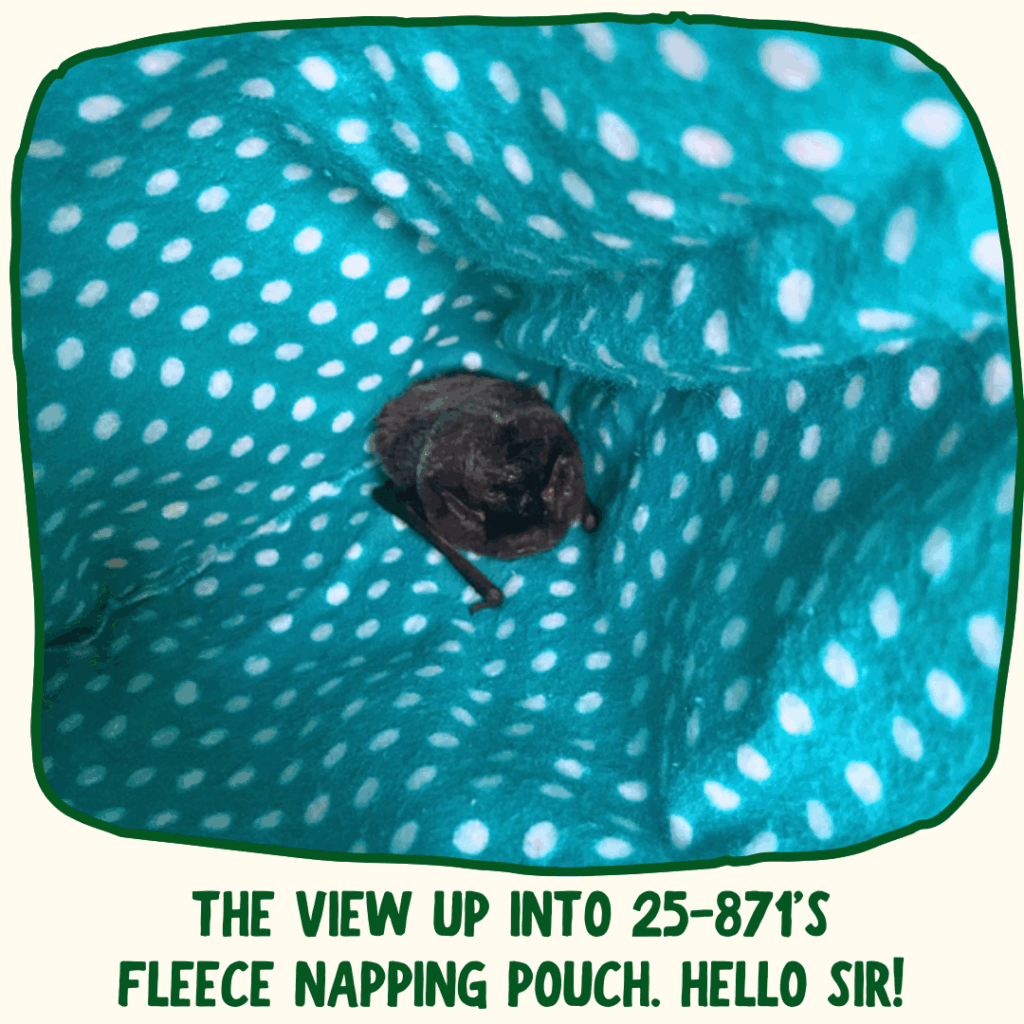
Thank you for reading about this month’s featured patient!
If you’d like to help us care for Silver-haired Bat 25-871 and the hundreds of other animals we’ll soon admit, we hope you’ll consider becoming a monthly donor at RWS. Giving just a few bucks a month has a real impact on our ability to care for a rising number of wild animals in need. 💚
Thank you for being part of our community and caring about our wild neighbors!
January 15, 2026
Published:


Loved hearing about the silver bat, especially all of the human characteristics. I’m becoming a monthly donor today!
Thank you SO much, Linda! Thrilled to have your support.