


Honk, honk! It’s baby season! 📢
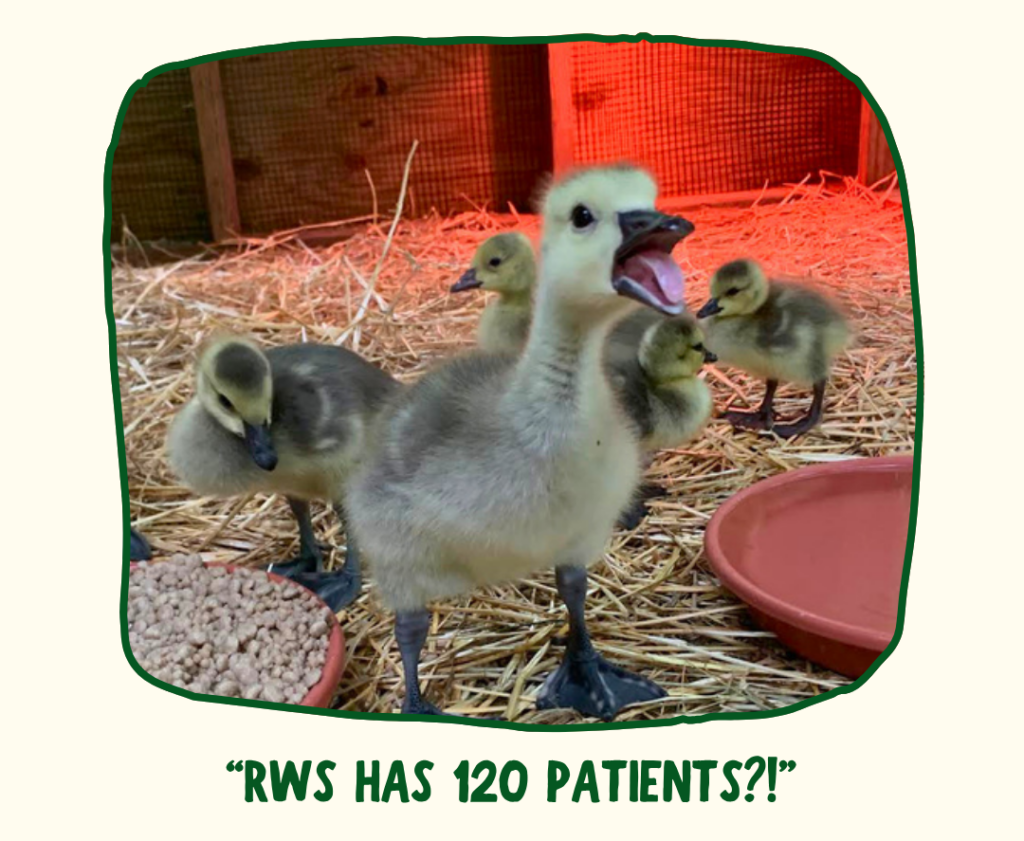
The wildlife patients are rolling in at RWS. As our first wave of baby squirrels is calming down, we’re quickly admitting opossums, cottontails, flying squirrels, and songbirds. Amidst the critter chaos, we’ve received a number of phone calls about injured Canada Geese.
Mystery of the Hurt Goose
One such caller rang our hotline earlier this month. ☎️ She wanted to report a hurt goose sitting in a little patch of grass within a grocery store parking lot in Albemarle County, but she wasn’t sure what exactly was wrong. She’d seen many of her neighbors posting about the goose on Nextdoor and Facebook, and a police officer had even been called to assess the goose. Well, we love a mystery at RWS!
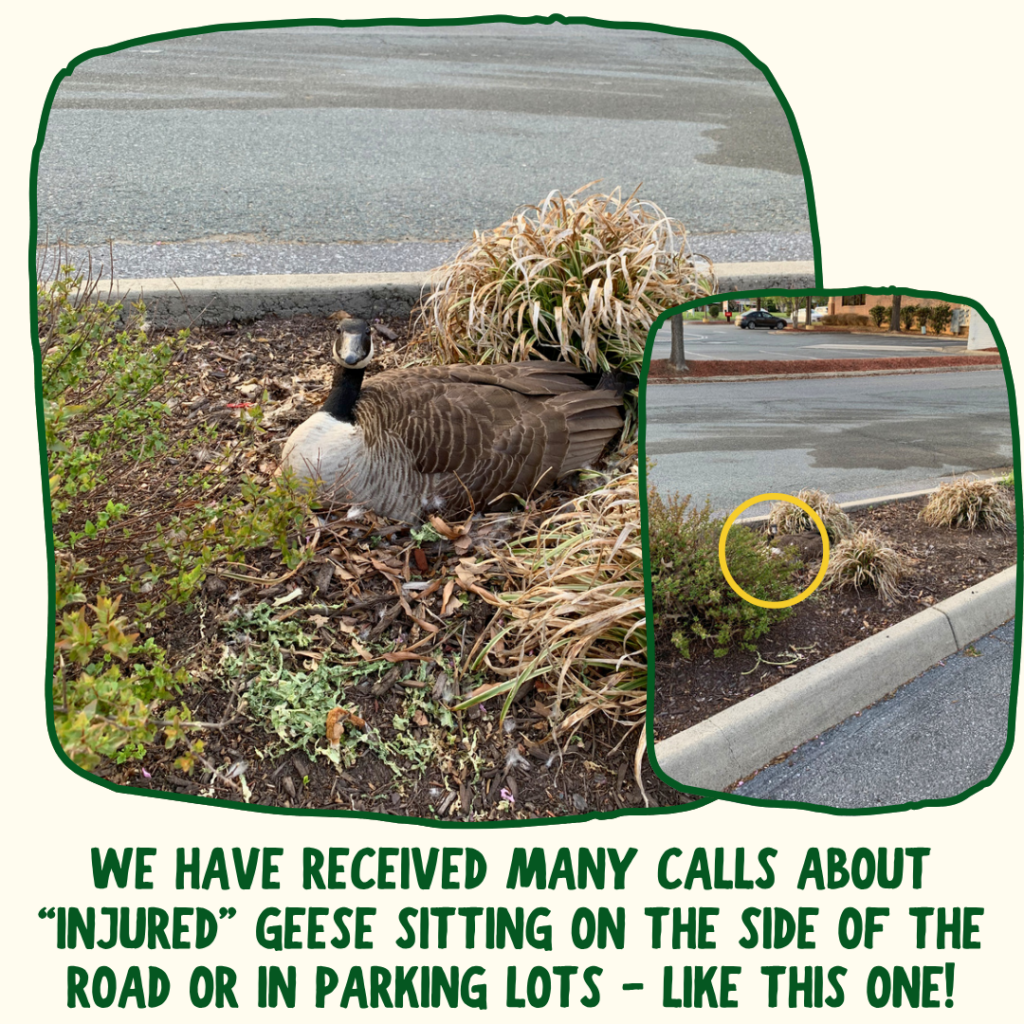
Our first step when we receive calls about injured wildlife is to assess the degree of the injury: did the caller see any blood? (No.) Any asymmetry of its wings or legs? (No.) Is it stumbling, vocalizing, or tilting its head to one side? (No.) Does it react when approached? (“It just looks at me, but it doesn’t move. Then it’ll start flattening its head.”) That answer gave our team a hunch! 🧐
We asked if the caller noted any particular material around the goose’s body as it sat. She replied that she didn’t see much other than some grey fluffy bits around it. Bingo!
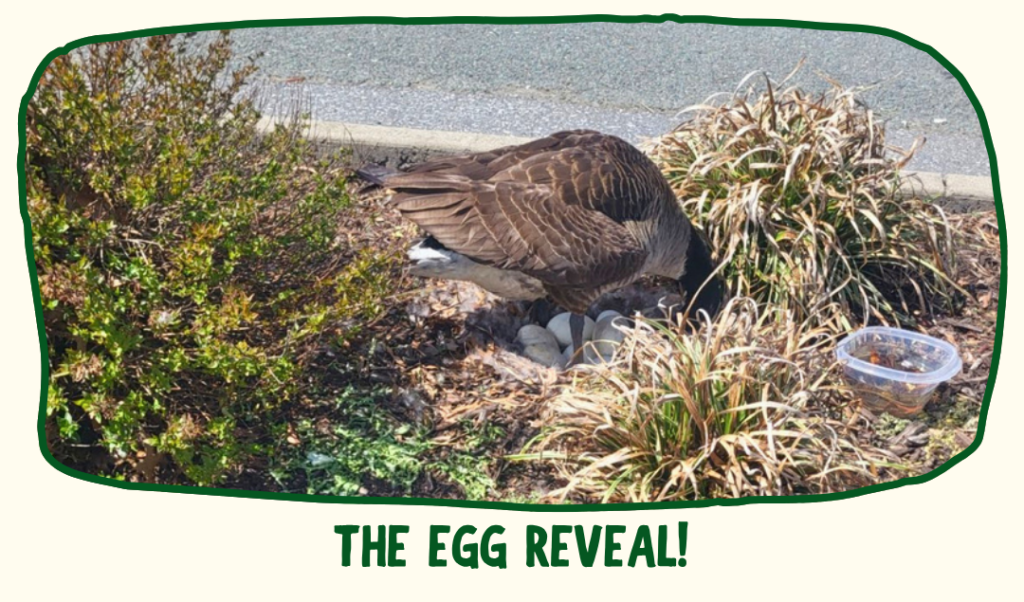
An expectant female Canada Goose typically lines her grassy nest with her own downy fluff feathers. She’ll also stick out her head so it’s flat in an effort to camouflage. Lo and behold, the caller went back to the parking lot to investigate. As she got closer, the goose shifted a bit and revealed a lovely surprise. This goose wasn’t hurt. She was simply a mother-to-be! 🤰
We received a text from the caller:
“Turns out you were right. She’s sitting on 7 big eggs! Thank you, I learned about geese today!”
Huzzah! We love when we can help our human neighbors better understand – and in this case, worry less about – our wild neighbors. With so many calls about “injured” (nesting) geese in busy spots lately, we realized that the Canada Goose is one of our most common avian neighbors that, often, folks don’t get to learn much about…other than that they’re “mean.” More on that later.
So, for this month’s Critter Corner, we’re giving the humble Canada Goose its due. 🪿 Plus, we’ve already started admitting orphaned goslings this season. Stick around through the end to see our new waterfowl care room in action – and meet our first honking patient of 2026!
Why a Parking Lot?
First, about that nesting location. Why pick such a bustling spot for their nursery? As ground nesters, these birds typically select nesting sites where they can have an unobstructed, multidirectional view to ensure they can spot predators. 🪹 However, flat landscapes have also become attractive for development. As wild spaces disappear, geese are left to make do with what they find, whether that’s a protected wetland, a soccer field, or a parking lot median.
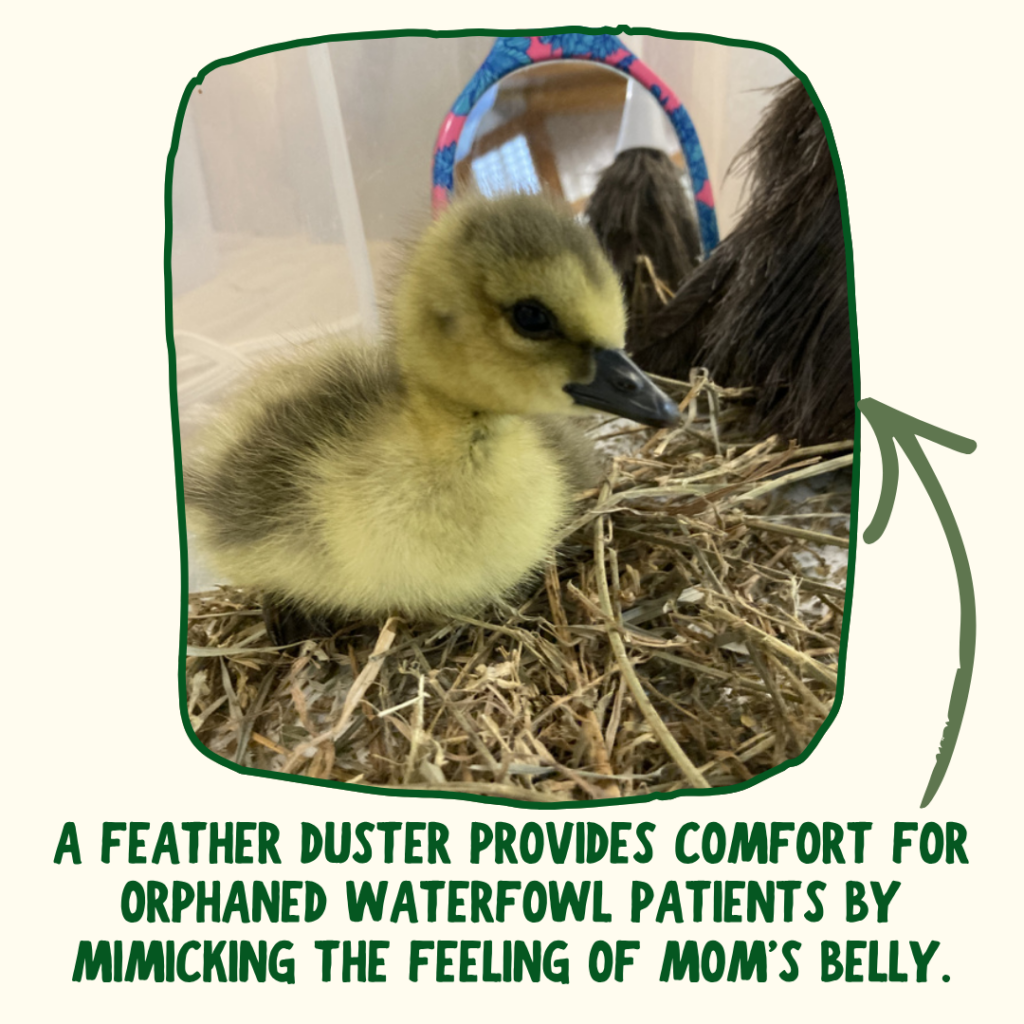
Beyond clear sight lines, a parking lot can offer another advantage for the Canada Goose. 🚙 Typically, predators like foxes or hawks steer clear of places where humans and cars abound. Those same humans and cars typically try their best to avoid harming geese in their midst. So, that means a parking lot might just seem like the safest bet for a couple of doting, honking parents! If that nest location ends up being successful, it’s likely the mated pair and offspring will return to nest in the same area the next year.
Don’t get us wrong: just because some animals have adapted to live alongside humans like this, that doesn’t mean we shouldn’t be protecting the wild spaces where they belong. 🌳
Canada Geese and other birds deserve to nest in the habitats they evolved to support…but in this human-dominated world, sometimes you’ve gotta be a crafty goose who settles for a parking lot.
Geese through History
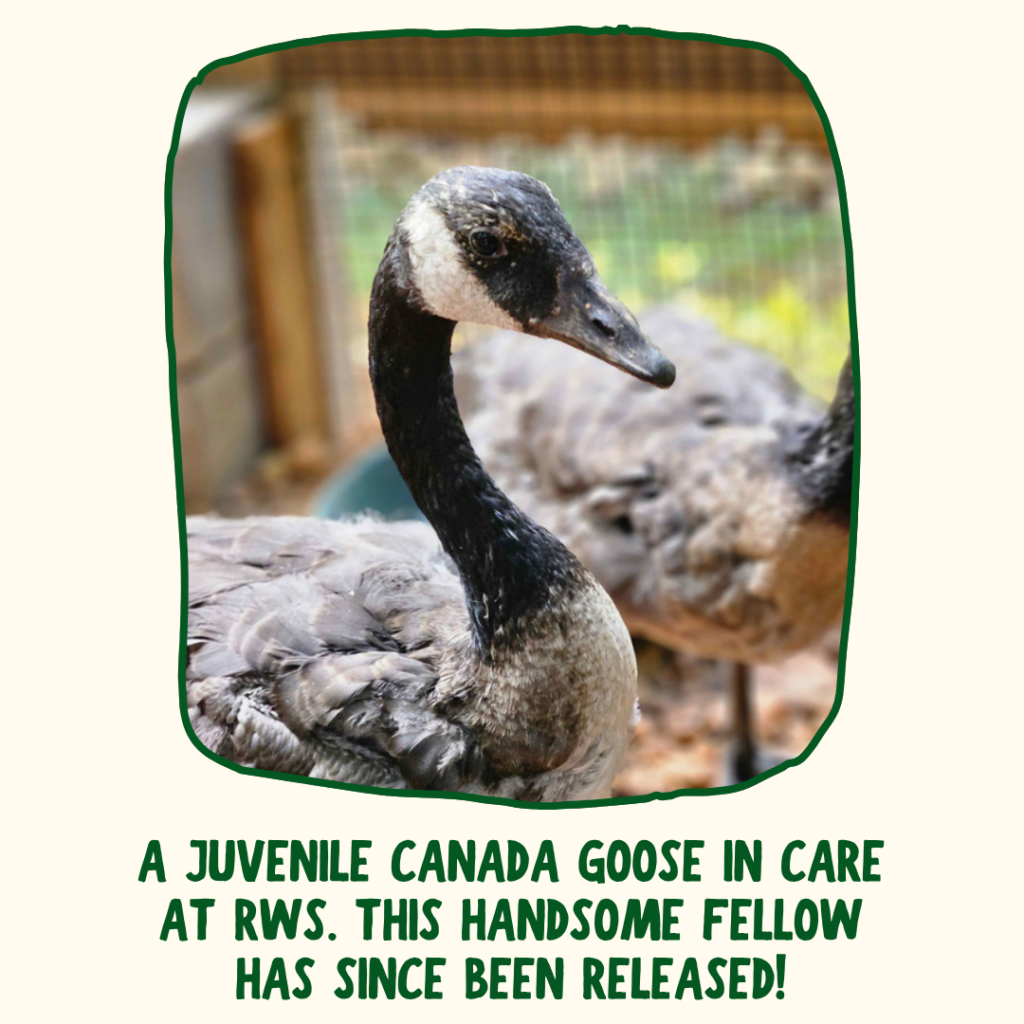
To back us up, though: what is a Canada Goose? While nearly every American can recognize this large-and-in-charge migratory bird, few know about their mythic past.
First, the Canada Goose’s taxonomic name is Branta canadensis. The genus Branta comes from the Old Norse word brandgás, meaning burnt or dark goose…but cooler. Specifically, it meant a goose whose dark markings looked like they had been forged in fire. 🔥 At least the Vikings recognized how mighty neat these kinds of birds were!
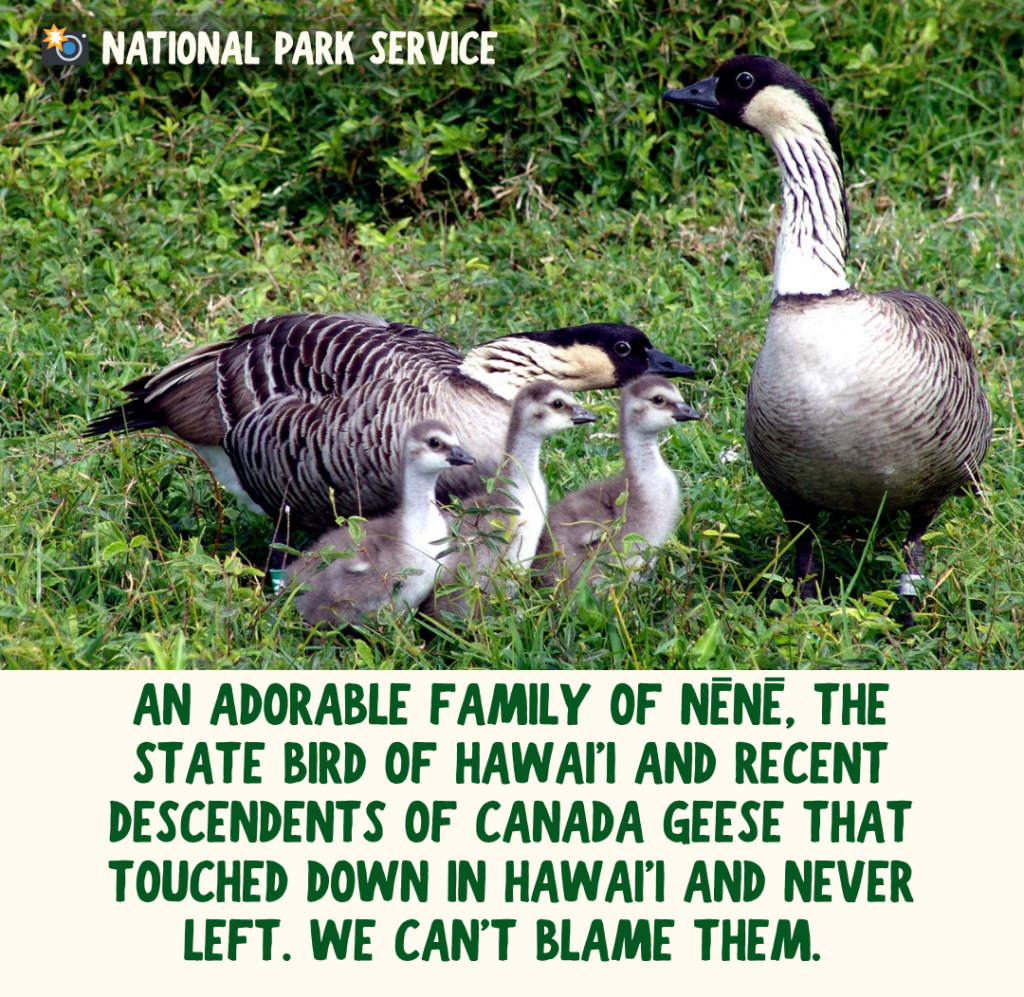
The Canada Goose diverged from its common ancestor with other species in the Branta genus just over 1 million years ago. Its closest cousin is the charming Nēnē (Hawaiian Goose) which is thought to have descended from the Canada Goose itself after landing in the Hawaiian Islands about 500,000 years ago. Hey, if we stopped in Hawai’i mid-migration, we’d probably never leave either. 🌴
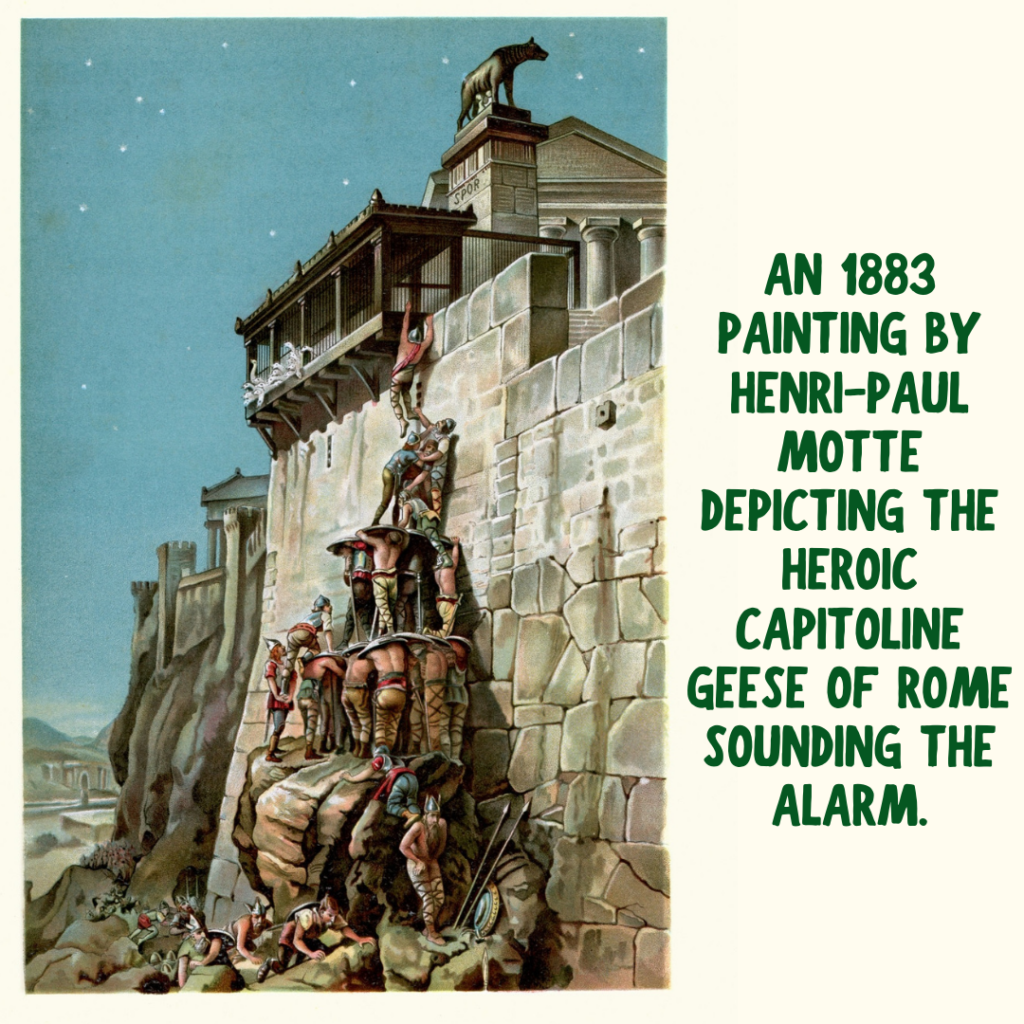
Geese have played powerful symbolic roles in human traditions throughout history, too. For starters, there’s the Egyptian god named Gengen-Wer (translating to “The Great Honker“), who laid an egg from which all life formed. No big deal! 🌍 Later in history, the goose was sacred to the Roman goddess Juno. Romans even kept a flock of her geese in a temple dedicated to her. According to legend, those very geese saved Rome from a surprise attack around 390 B.C. by doing what they do best: honking loudly.
The Canada Goose itself has played important roles in culture throughout history, too. For the Innu people indigenous to Eastern Canada, the Canada Goose is a gift from the Creator so hunters would know which direction wind is blowing, when it is time to hunt, and when it is time to store food in preparation for winter. Spring Canada Goose hunts are also a staple in Cree nations and represent one of the few remaining practices that help pass Cree traditions and language to younger generations. 🧑🧒
Canada Geese Mating & Parenthood
Speaking of passing on traditions: a successful gosling brood starts with Mom and Dad’s committed, cooperative relationship. Around two or three years old, a Canada Goose will begin searching for a mate. It’s a big decision, but they normally get it right: Canada Geese mate for life, with extremely low “divorce” rates. With wild lifespans stretching up to 30 years, this is a partnership meant to last for decades! 💒💍
When nesting time rolls around in early spring, mom selects the real estate and dad helps her construct the nest. Then, she’ll lay her clutch of eggs and incubate them practically non-stop, hardly eating or drinking for the 25-day incubation period. Meanwhile, dad patrols the area from a safe distance, ensuring predators keep away from his beloved mate. 💪 The folks calling our hotline to report the solo “injured” goose likely didn’t see the male because he was on patrol. However, he’s never so far that he can’t hear his mate’s alarm call!
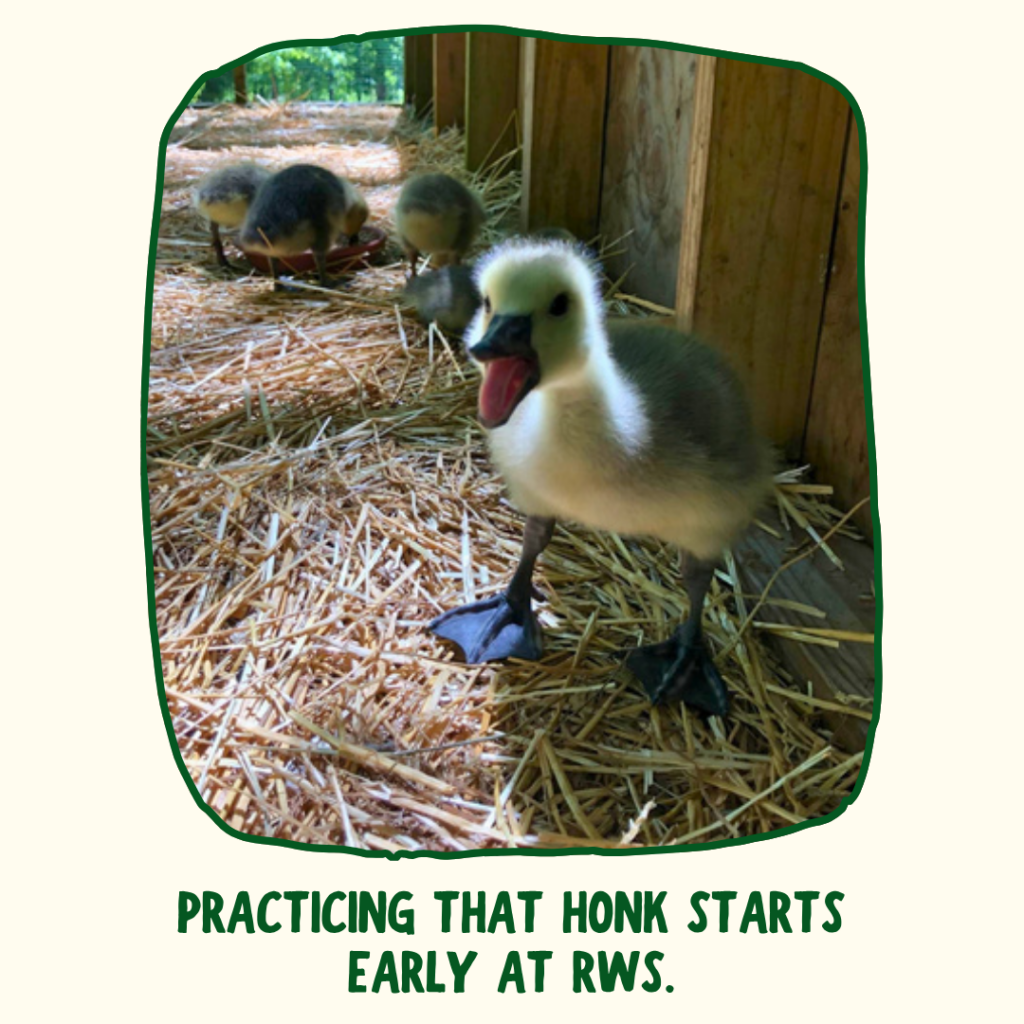
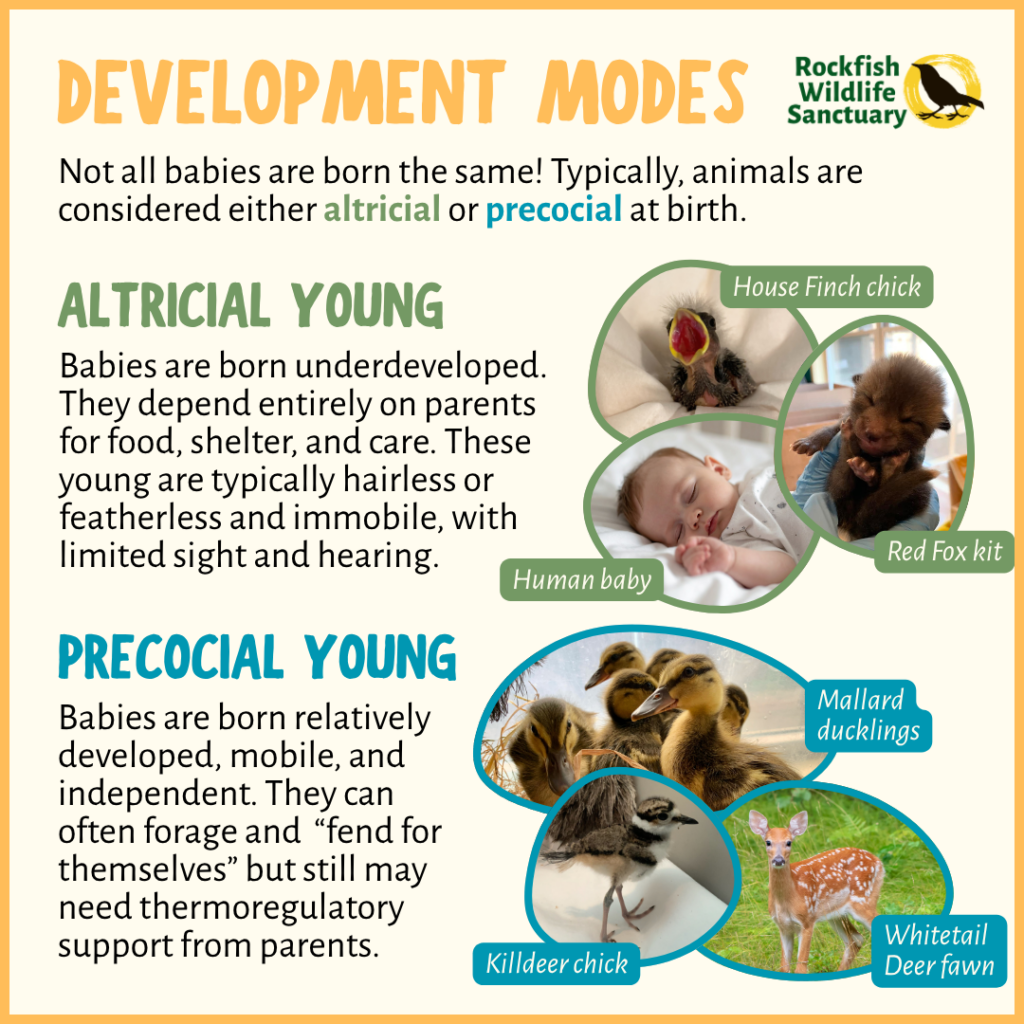
Once those babies are born, they’re on the go. 🏃 That’s because infant waterfowl are typically precocial, meaning they are born relatively mobile and independent. They’re also nidifugous, which means the babies leave the nest right away after hatching. (Nidifugous is also a great word to have in your back pocket when you need to impress folks at your next dinner party.)
Together, mom and dad waddle on down to the nearest water source with their four to nine new bundles of joy in tow. Within 1–2 days, the adorable little goslings are swimming on their own and feeding themselves. All of the parents out there reading this are probably wishing they were geese by now!
Don’t let that independence fool you, though: a gosling’s early life is still quite the family affair. Goslings imprint on their parents shortly after hatching and then stay with their families for about a year at least. Parents provide socialization, guidance, and protection…which is where their occasional reputation for being “mean” comes from. 😅
About that “aggression”
Canada Geese are indeed extremely territorial over their young and their nesting areas. However, keep in mind that they are defensive creatures, not aggressive ones. Geese provide plenty of warning that you’re too close like stretching their head out, standing up, hissing, and wing flapping. Simply back away and give them space, and you can both be on your merry way.
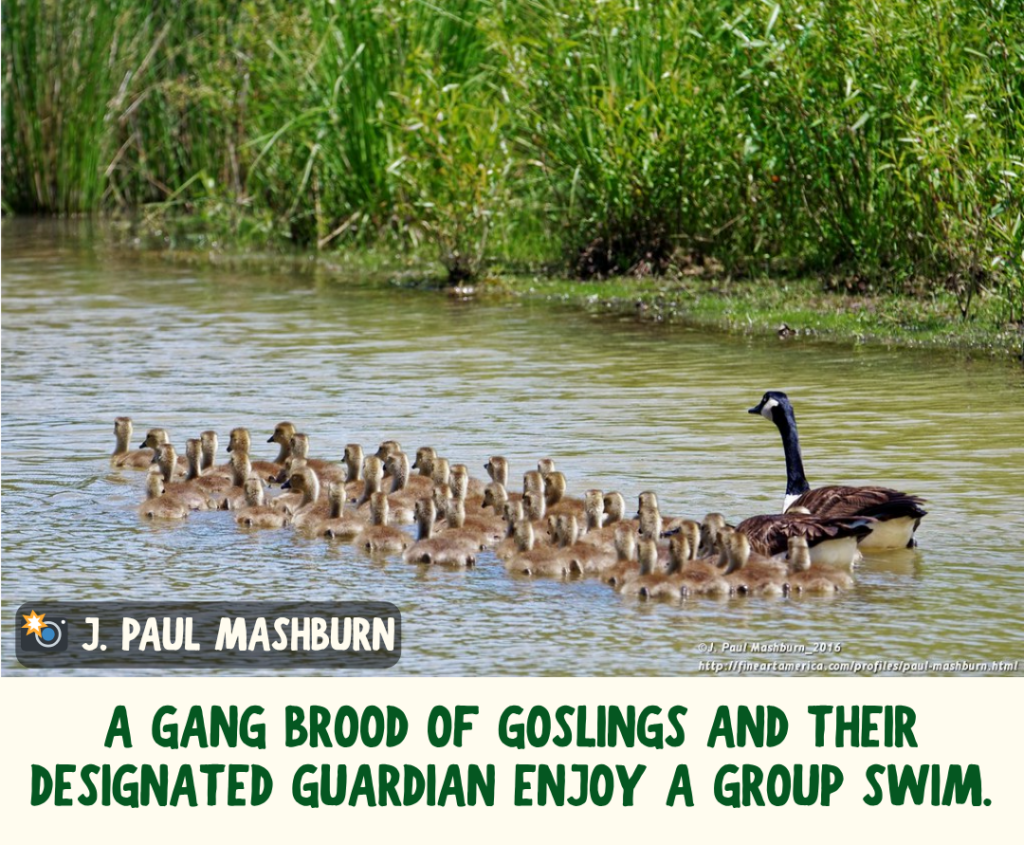
Though they’re fiercely devoted to their offspring, goose parents do sometimes get to drop the kiddos at daycare – well, sort of! Occasionally, groups of geese will form a social network called a “gang brood” or, much more charmingly, a crèche. Multiple breeding pairs gather and task a few of the adults to watch all of the juveniles, which can sometimes be up to 100 babies! 👶 The other adults enjoy some much-needed foraging time ahead of migration. As mostly herbivorous creatures, the Canada Goose eats up to 10% of its body weight daily to stay fueled for long days in flight.
Migration
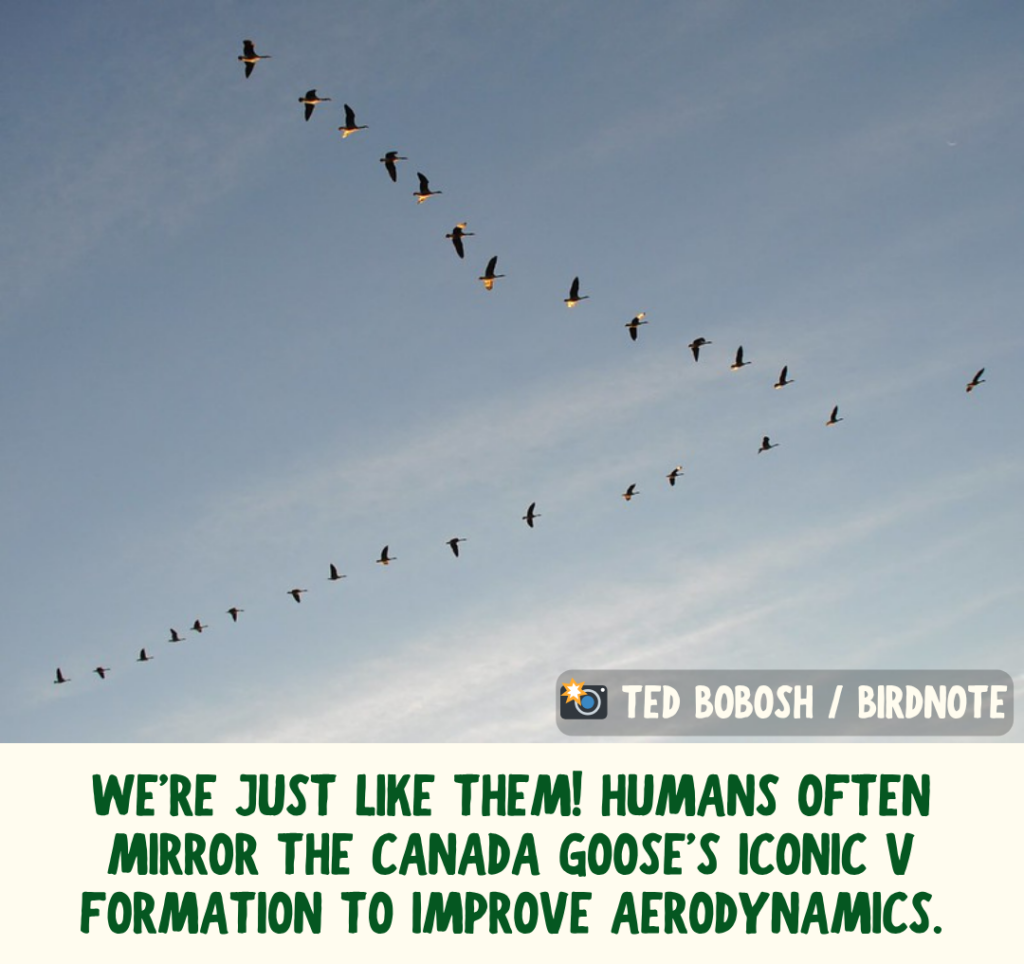
Speaking of migration – that’s often what Canada Geese are known for. It’s typical to see groups of these birds soaring together in that iconic V formation in the spring and fall. The V is an important tactic because it allows geese to conserve energy by drafting off of one another. Individuals take turns at the lead, communicating when they’re tired by honking and falling backwards into the formation to allow another goose to head up front. Teamwork makes the dream work.
Scientists estimate that flying in a V formation can conserve 15–30% of a goose’s energy compared to flying alone. 🔋 The V formation has other benefits, too. It’s much easier for geese to see one another and keep track of the whole flock when they’re flying. It also helps them stay consistently speedy. With a good tailwind, these birds can easily cruise at 70 miles per hour!

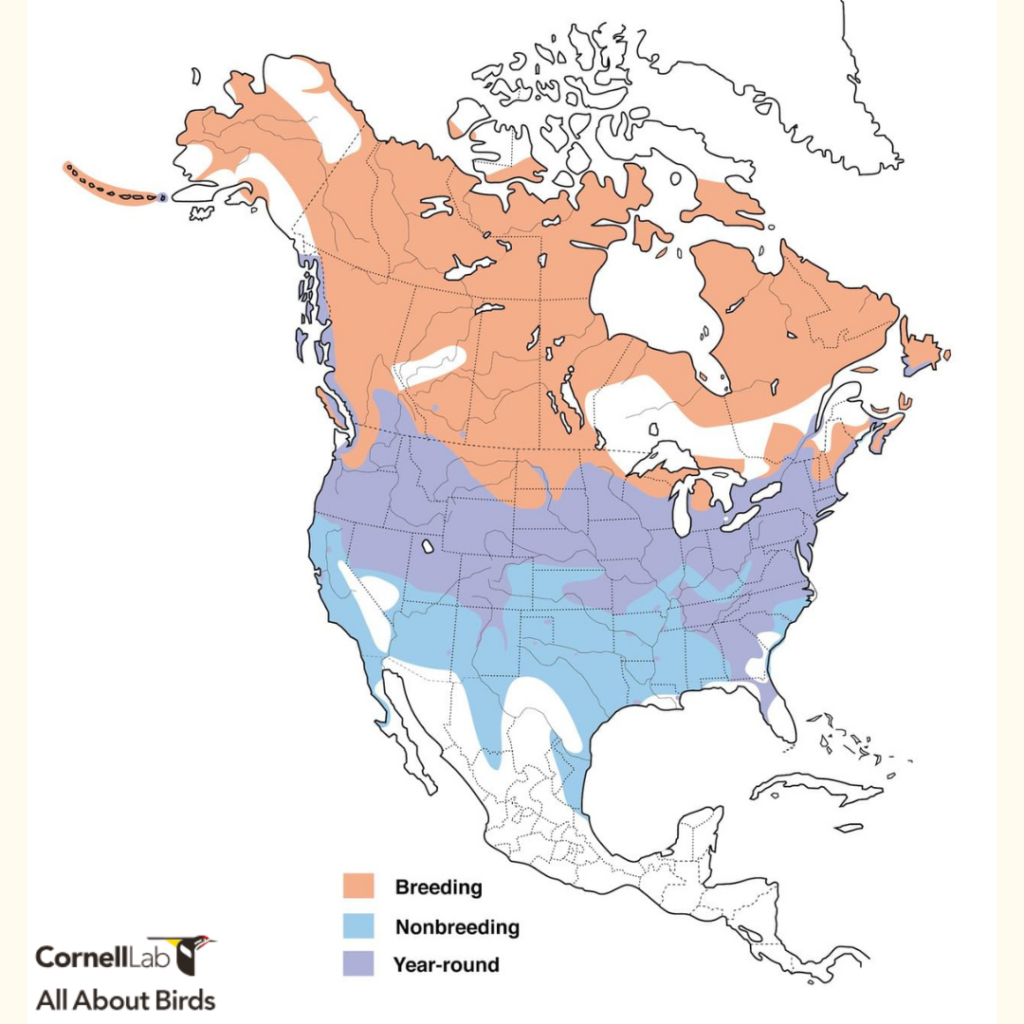
Not all Canada Geese migrate, though. Virginia’s Canada Geese are largely considered year-round residents, enjoying the relatively mild winters and successfully nesting in the spring. 🌱 This means Canada Geese are contributing to our ecosystems year-round! As they move between wetlands, they transport seeds, algae, and even invertebrate hitchhikers, thus supporting local biodiversity. They eat the seeds and leaves of invasive plants like the common reed, and they also provide a reliable food source for predators like raptors and foxes. Even their feces plays a role by cycling nutrients back into the system. Not too shabby!
Coexisting with Canada Geese
That said, we know that not everyone is a fan of the Canada Goose – and we get it. Given that they’re extremely adaptable to human-designed landscapes, Canada Geese aren’t always shy about sharing their (loud) opinions and droppings in public spaces. 😅
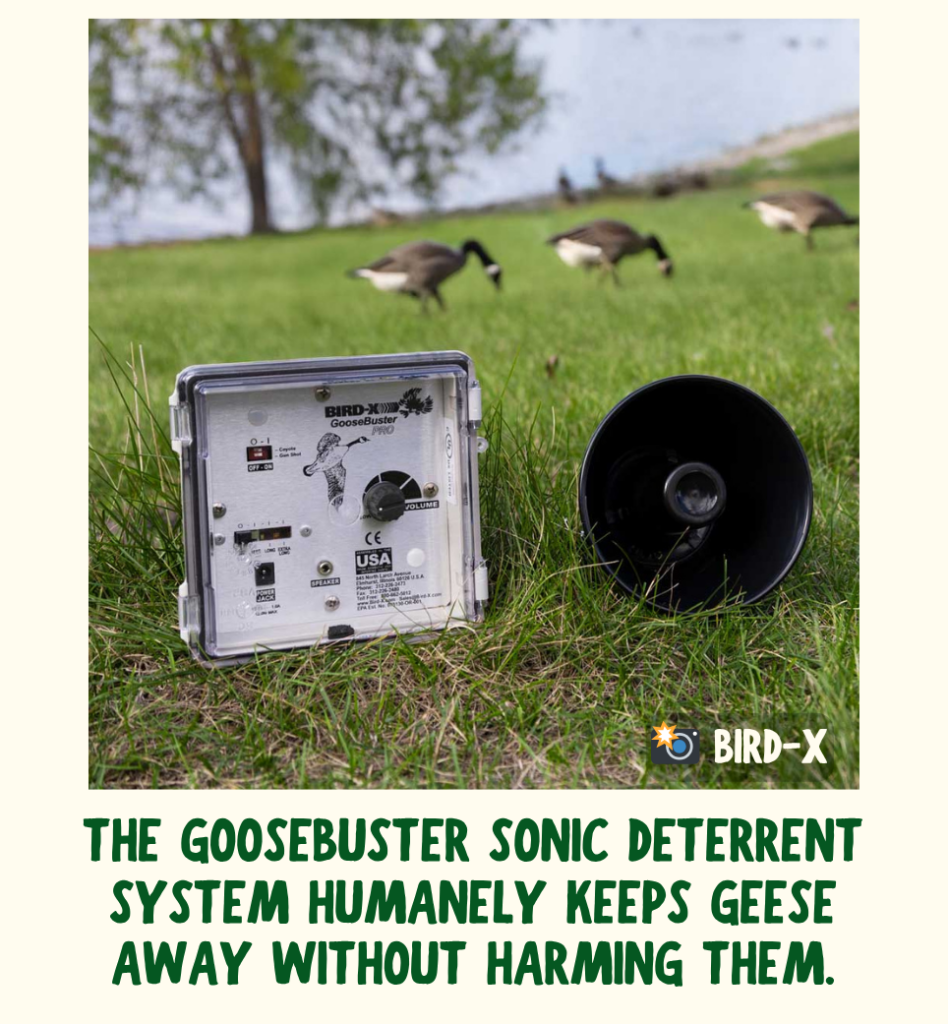
If you’d prefer your yard not become the neighborhood goose hangout, the trick is to make it a little less appealing before nesting season begins. Geese love open sight lines, easy access to water, and a manicured lawn. Letting your grass grow a bit taller, adding plantings or a buffer along pond edges, or breaking up those wide open spaces can make a big difference. Noise deterrents like the wildlife biologist-developed GooseBuster can help too. 💥 For even more advice on coexisting with our feathered neighbors, check out this recent toolkit from the Humane Society of the United States.
Remember that the Canada Goose is federally protected by the United States’ Migratory Bird Treaty Act – even if the goose is a year-round resident. 🇺🇸 That means it is a federal crime to harm or harass a Canada Goose, its eggs, or its nest unless you have a permit from the United States Fish and Wildlife Service. (For more information, check out VDWR’s page on goose management.)
Our first Canada Goose patient of the season
RWS must maintain a special permit from USFWS to rehabilitate them, too – and boy, do we get a bunch! 🐣 As one of the few rehabilitation organizations providing long-term care for orphaned goslings, we admit about 50 babies annually from all over Virginia. They’re in for a treat this year, though, because we’ve got a whole new waterfowl care room ready for them thanks to all of the generous folks who supported our capital renovation project last year. ❤️
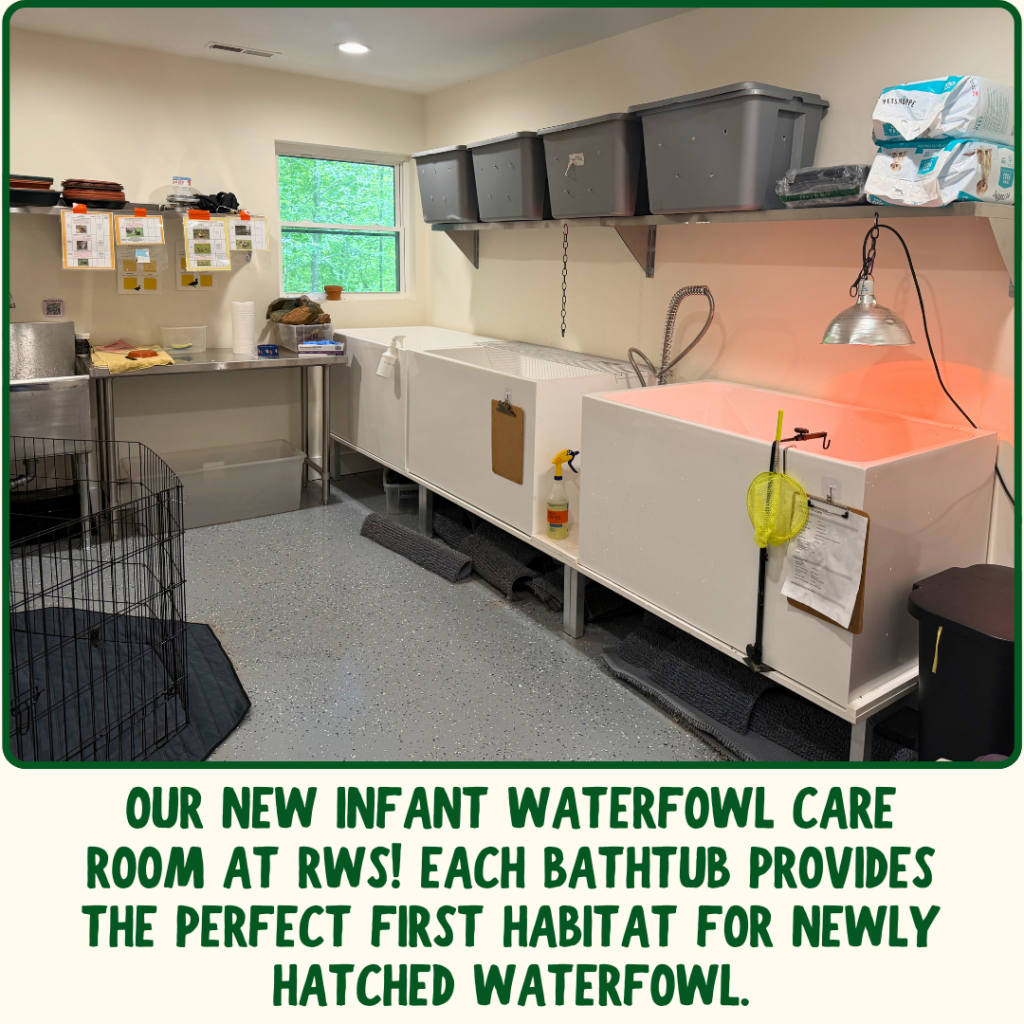
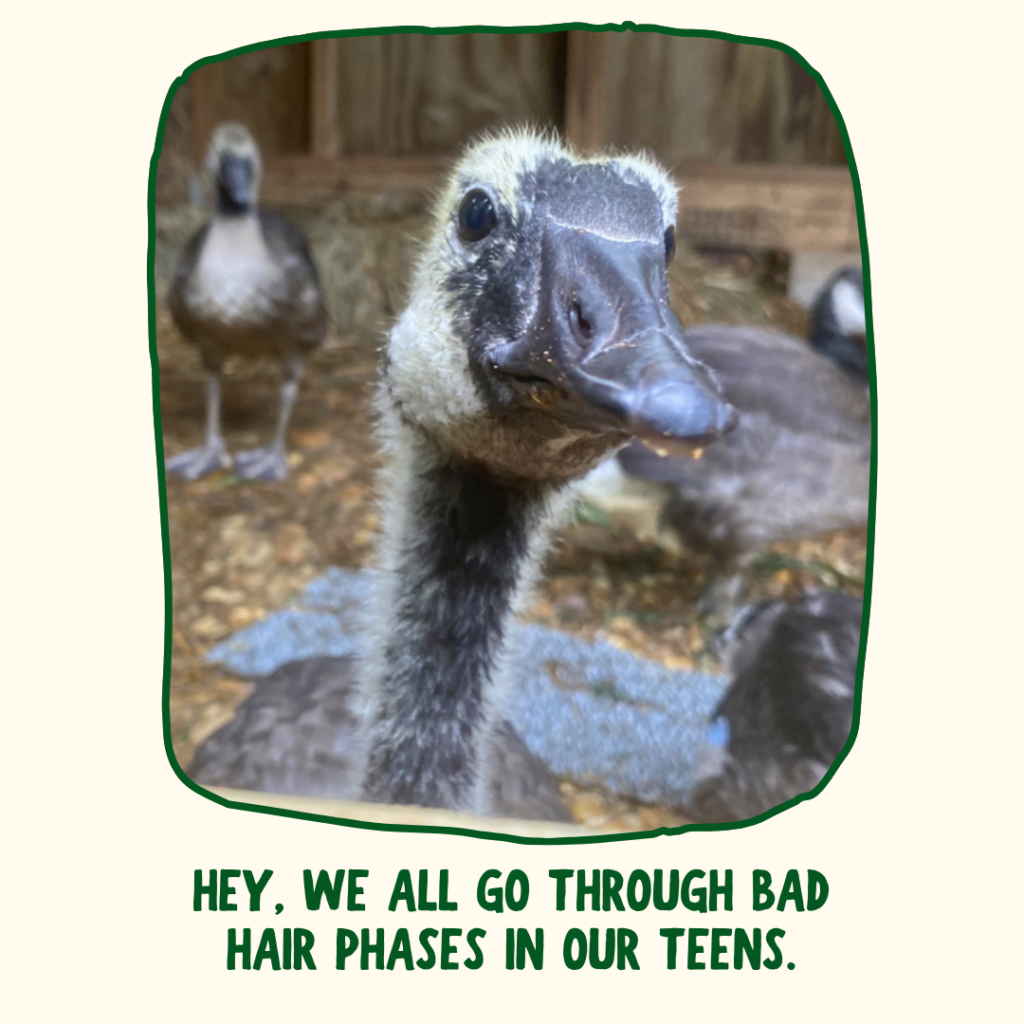
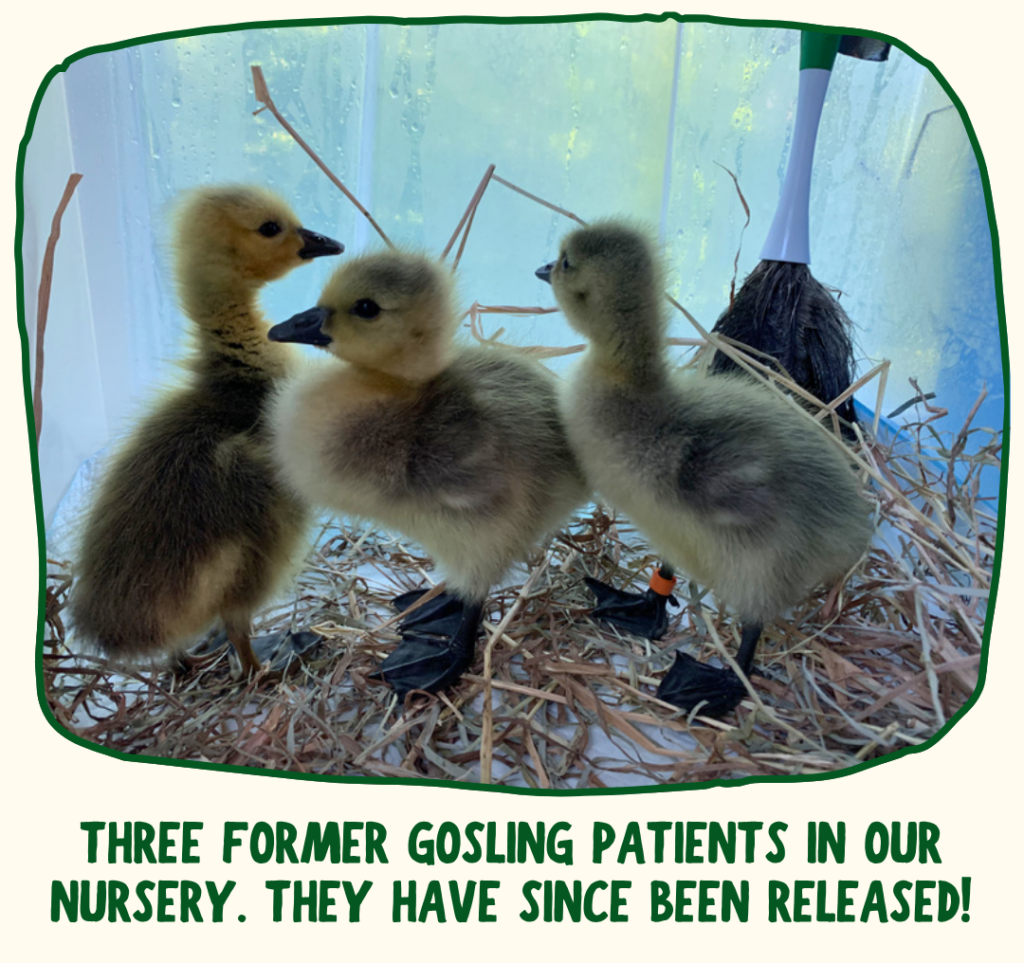
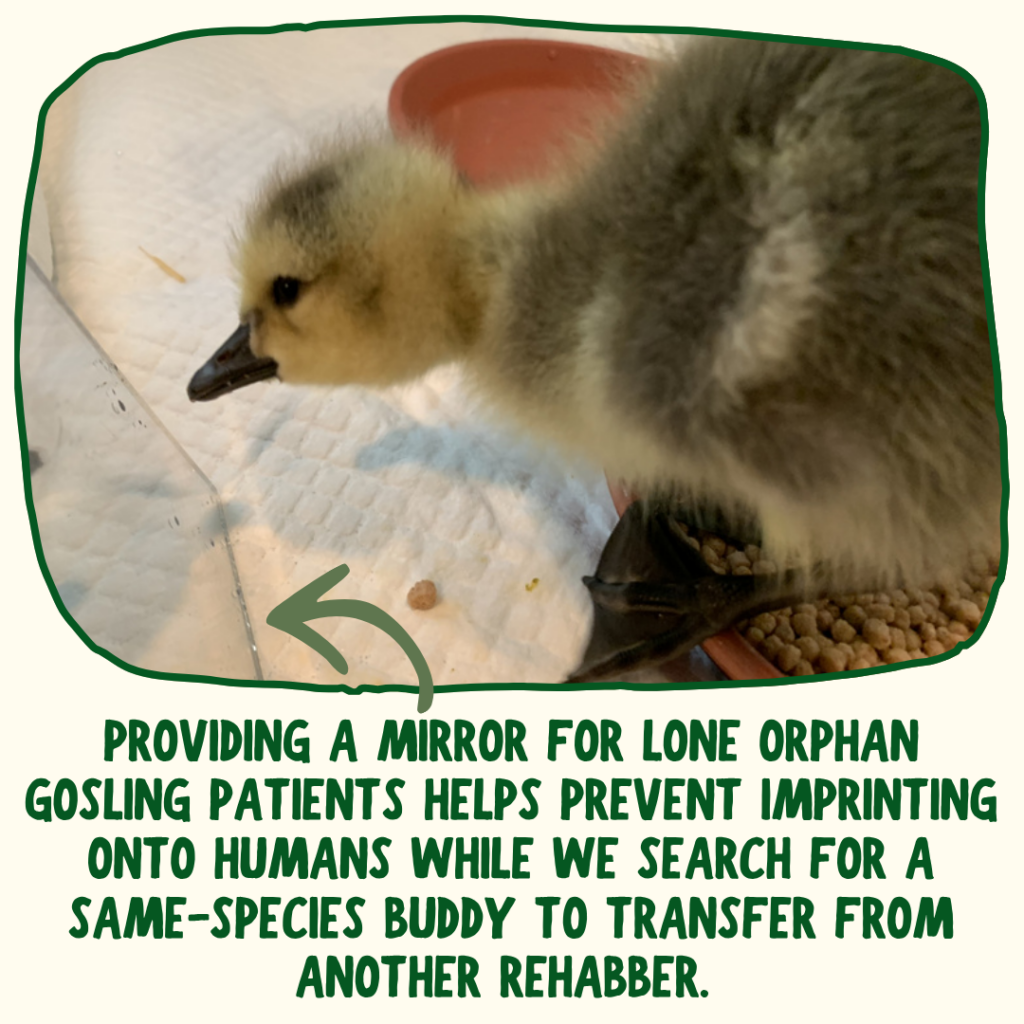
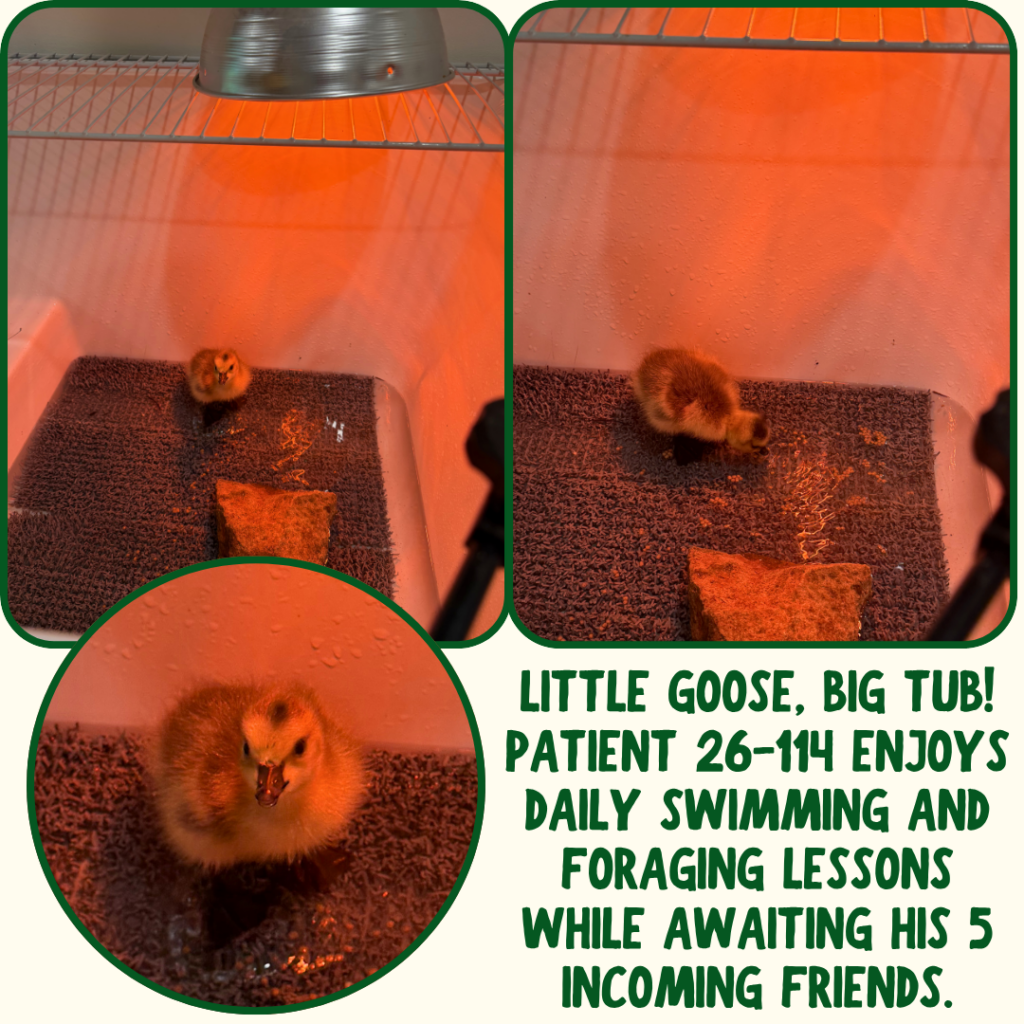
We’ve even admitted our first orphaned gosling of the season already. Patient 26-114 arrived as a transfer from our friends at the Wildlife Center of Virginia after he approached a family in Albemarle County, all alone. He definitely needed help! He’s settling in very well and loves his supervised swimming time each day. Our new bathtub enclosures for infant waterfowl are working like a charm! Soon, he’ll have conspecific (same-species) buddies in the form of 5 Canada Goose patients that we’re admitting as transfers.
At the end of the day, Canada Geese are loud, proud, and protective. They also occasionally roam around as if they’re paying your mortgage. 😆 But, the next time you’re stuck in traffic because a goose is sauntering across the road, we hope you’ll take a moment to consider the humble goose for what it is: a bird that has a family it cares about, a partner it’s devoted to, and a home it’s working to sustain in our ever-changing landscape.
Thank you for reading this month’s Critter Corner from RWS. Honk, honk!
April 30, 2026
Published:


Be the first to comment!