


Last week, we had to say goodbye to Barney, one of our beloved Virginia Opossum education ambassadors. 😢
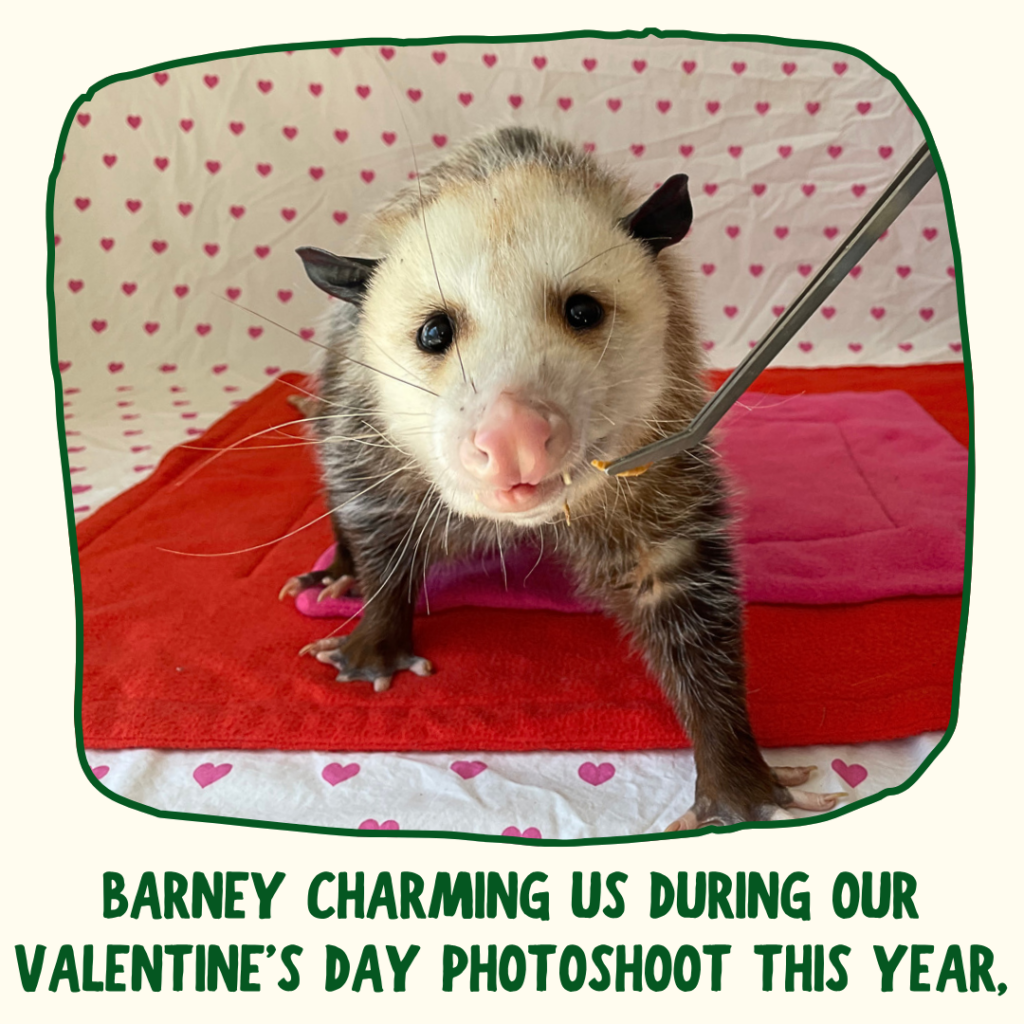
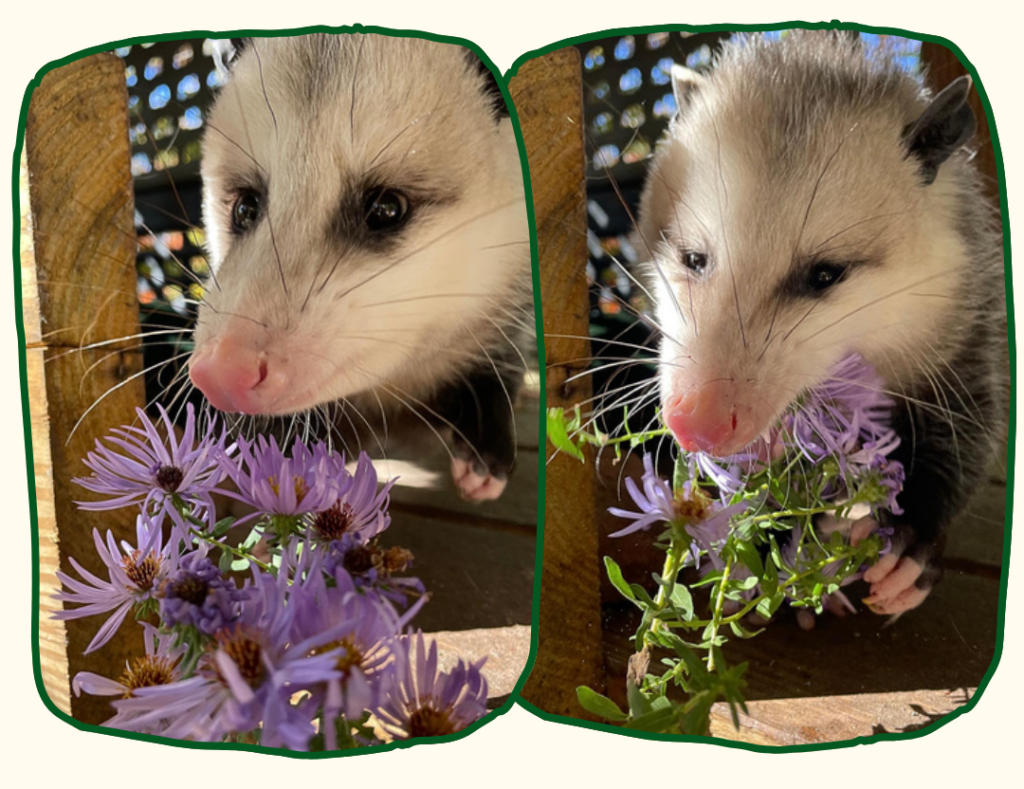
Barney had a truly wonderful life with our team at Rockfish Wildlife Sanctuary. We will miss him dearly! Shortly before he passed at the old age of 3.5, our friends at Chime Studio captured this gorgeous portrait of Barney that we’ll always cherish. ❤️
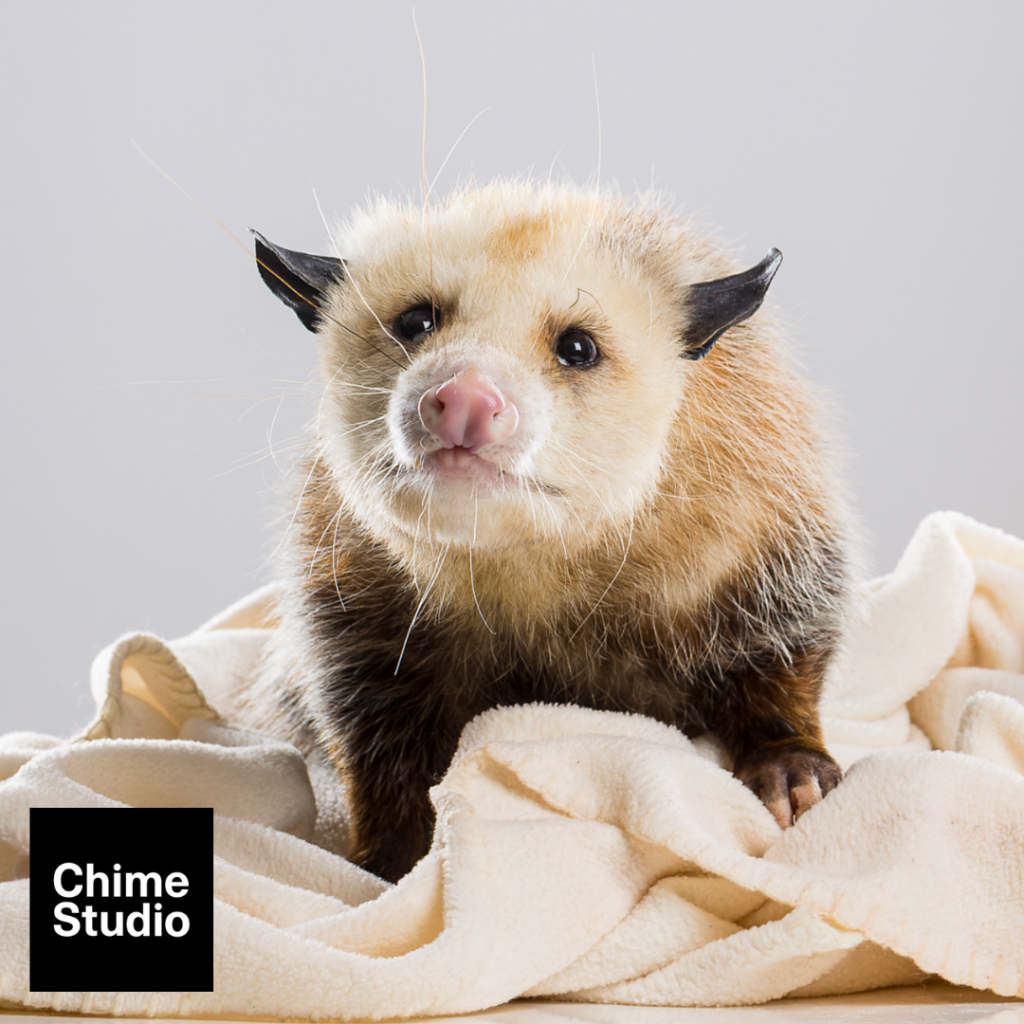
Throughout his time at RWS, he was a well-respected, hardworking team member who also happened to be incredibly spoiled. 💕 We’ll admit to it. That’s how we like our ambassadors!
Barney first joined the RWS team in late spring of 2023 as an orphaned joey. His mother had unfortunately been hit by a car, and a Good Samaritan brought him and his siblings in for professional care. Unfortunately, Barney was missing many of his fingers on his right side, either due to a predation attempt or possibly due to his siblings. (Nature is pretty tough!)
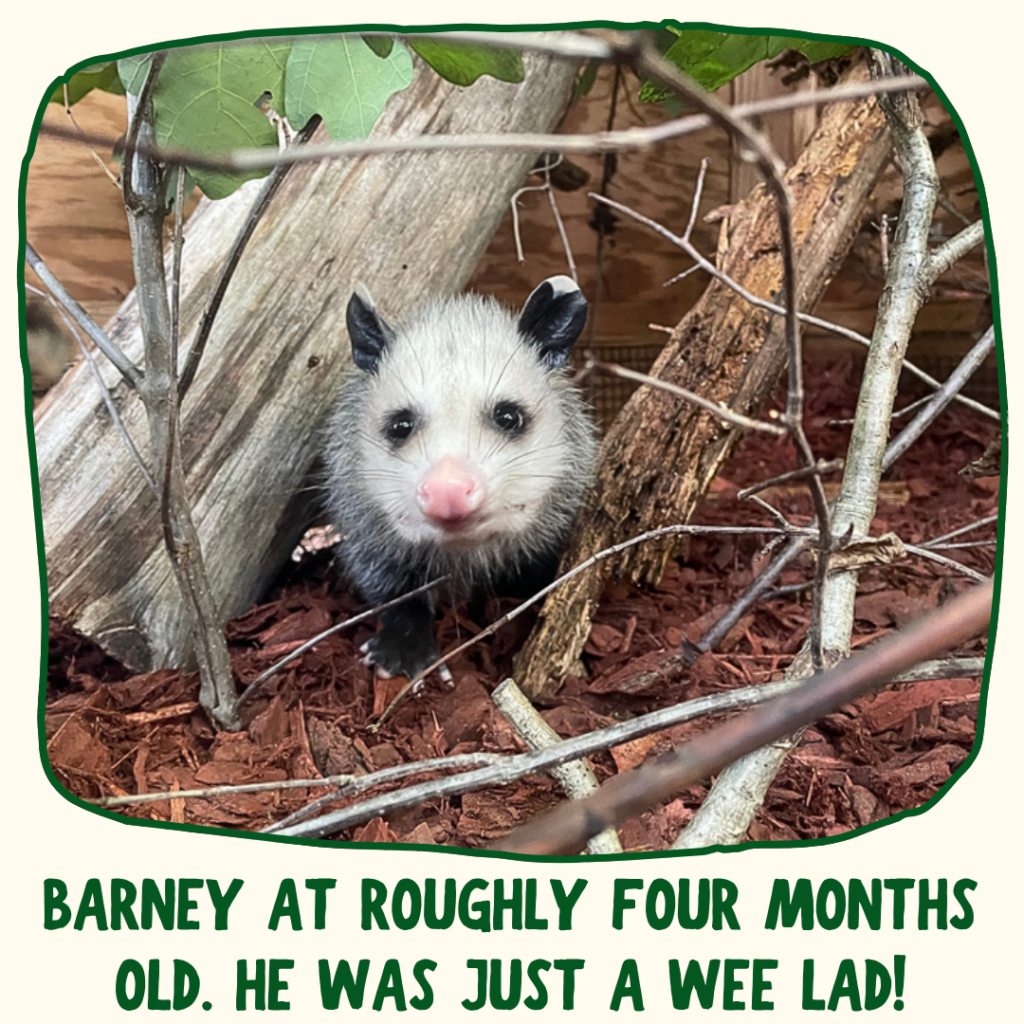
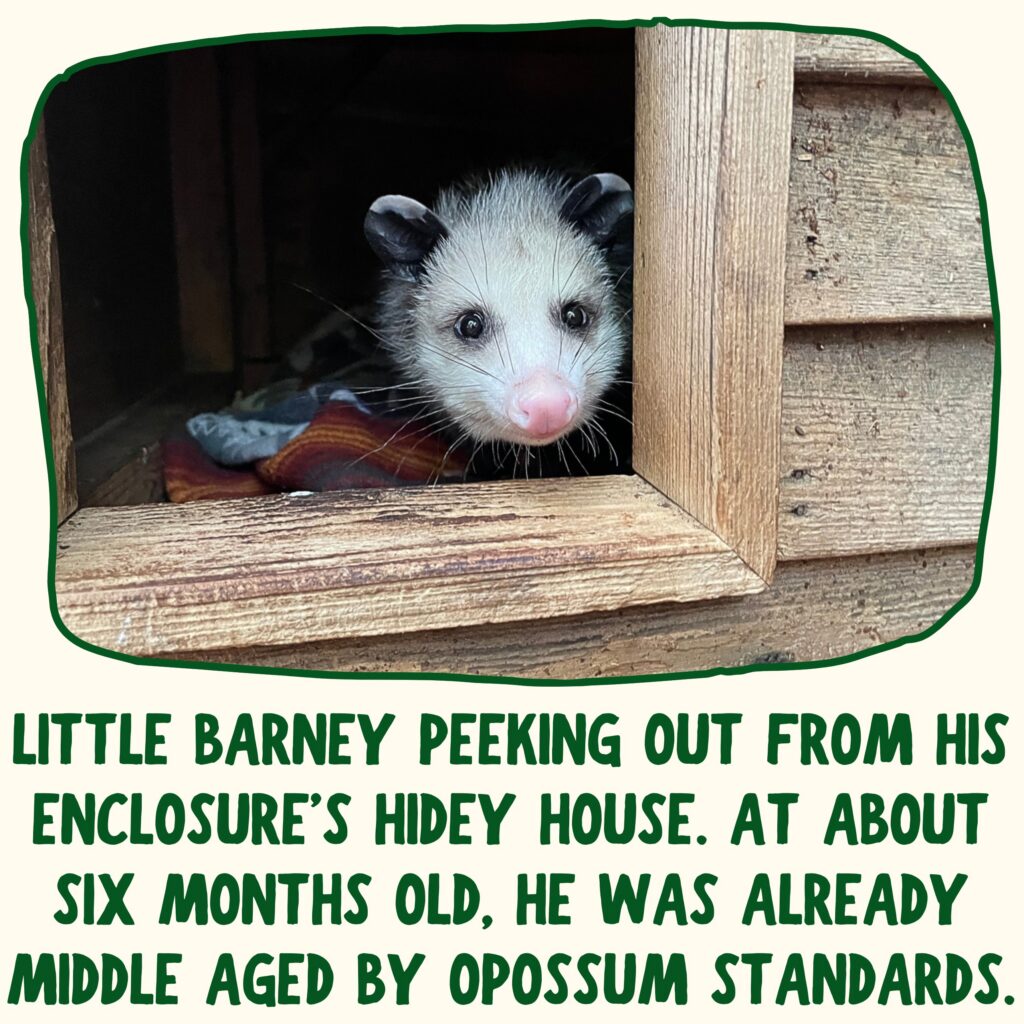
possums rely on their dexterous little fingers for climbing, and Barney just couldn’t keep up. Thus, while his siblings progressed and were released, Barney stayed on our team as a permanent resident and education ambassador. From the beginning, this charismatic opossum clearly had zero complaints about the hospitality at RWS! 🤣
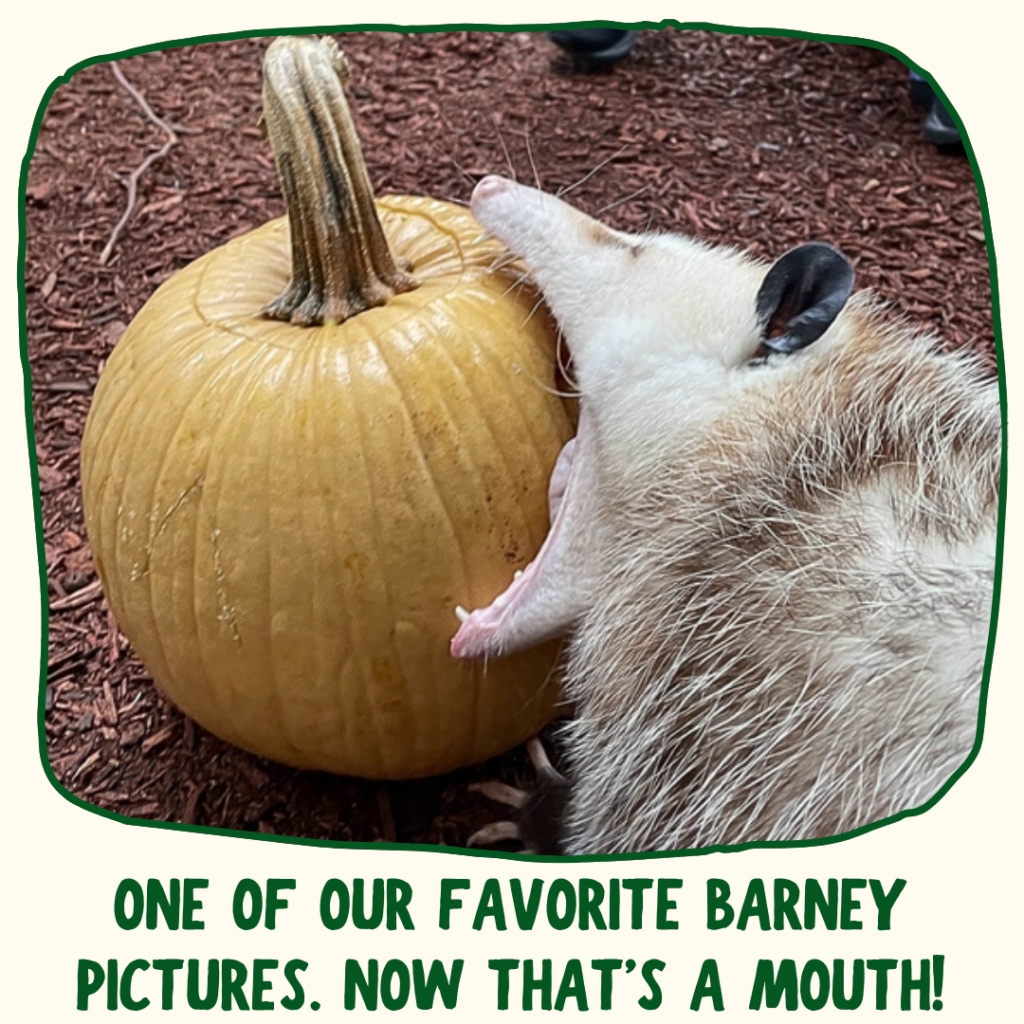
Over the next three years, Barney charmed thousands of Virginians at educational programs and on social media! His outgoing personality, fluffy ginger coat, and impressively ginormous yawns charmed our whole team as we doted on him. His appetite was driven by his curiosity and powerful nose. That meant if Barney thought your pant leg had something edible on it, he’d come right up and try to take a bite. So, though he was admittedly the subject of a couple incident reports, Barney was always a great reminder to folks that wild animals are not and should not be kept as pets. Thanks, Barney. 🐾
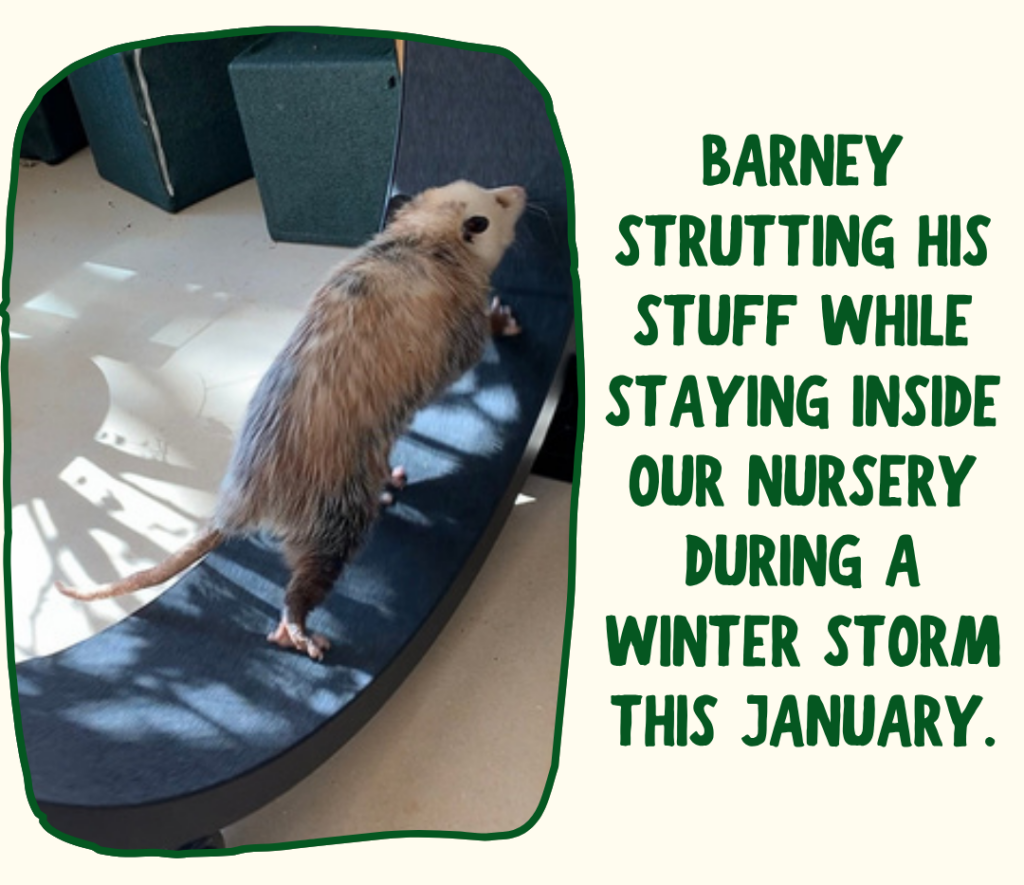
When he was off the clock from being a local celeb, our handsome russet ambassador enjoyed a life of luxury. He loved chomping down on his meal, climbing around his enclosure thanks to the special ladder we built for him, and exploring fresh enrichment items (especially if they involved food). Most of all, though, Barney loved his exercise wheel. Up until just a couple months ago, Barney would trot on his wheel for about an hour each day! 🏃♂️
As Barney slowed down, we closely monitored his quality of life to prevent any suffering. We knew it was his time as he began to lose his ability to walk. We spoiled him with all of the love and tasty goodies in the world before he was peacefully put to sleep last week.
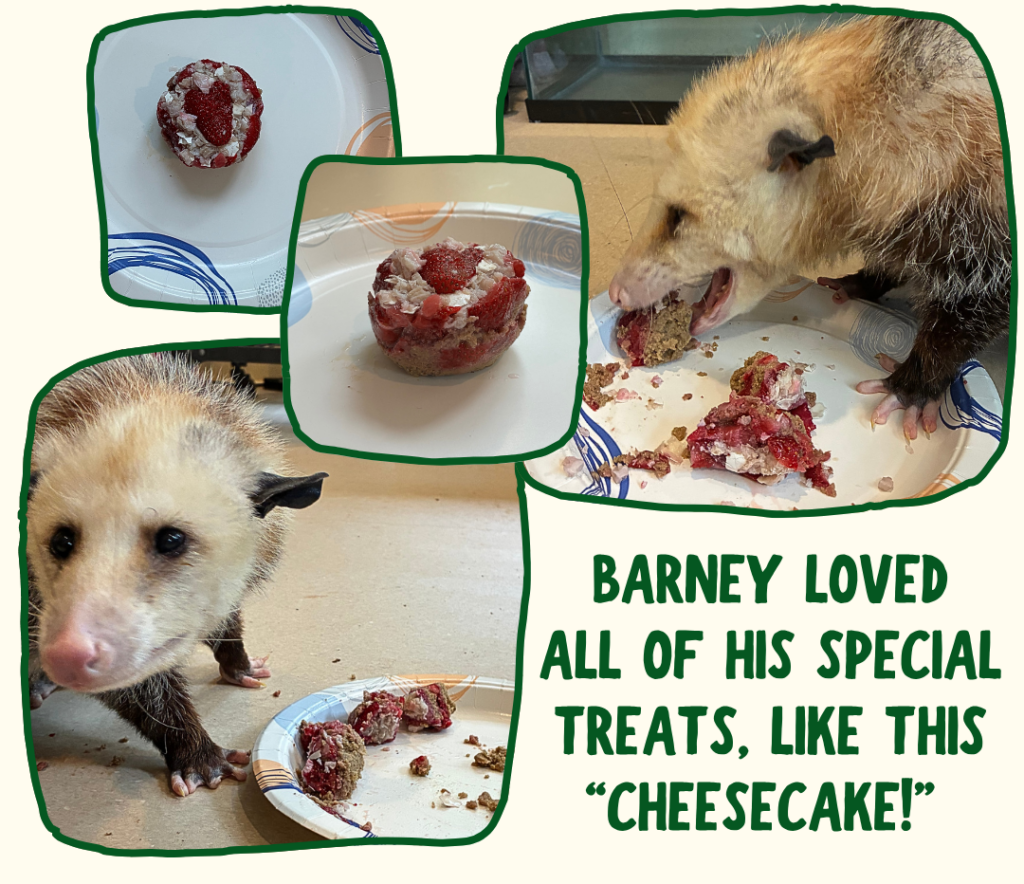
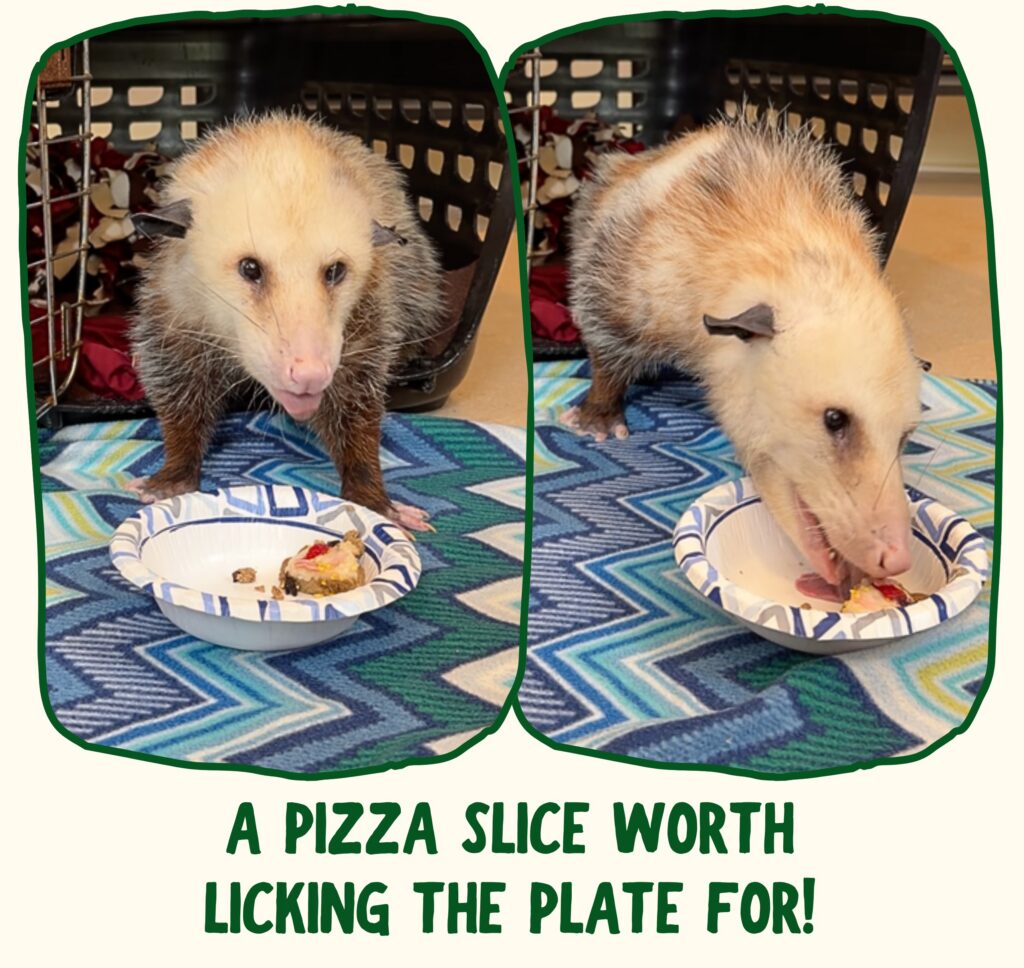
Here’s just a sample of some of the delicious treats Barney enjoyed in his final days, all lovingly “baked” by our wonderful summer intern squad. 🍰🍕
You will always be a treasured part of the RWS team, Barney. Thank you for representing your species so admirably over your long, meaningful life.
Our readers might be surprised by the fact that, for a Virginia Opossum, 3.5 years is an extremely long life. In fact, Barney’s lifespan was actually about triple that of the average wild opossum.
So, for the remaining bit of this month’s Critter Corner, we wanted to make the Virginia Opossum’s naturally short lifespan make more sense. After all, we can think of no better way to carry on Barney’s legacy than to continue educating our community about the incredible Virginia Opossum. ❤️
The opossum’s short lifespan is ultimately part of its evolutionary survival strategy. 🤔
Every species of critter in the world has a life history, which is its overall pattern of growing, reproducing, and dying. Ecologists study life histories to better understand evolutionary trade-offs, learn how populations change over time, and identify necessary conservation steps. We’ll spare you from getting too deep into the technical weeds, but this is all simply to say that some species experience fast life histories while others experience slow life histories.
Let’s start with the slow life history critters out there, because you are one! (Unless a cottontail happens to be reading this, in which case, please call RWS. We have many questions for you.) We humans enjoy relatively long lifespans compared to much of the animal kingdom, but we have comparatively few offspring over that time: just 2.3 children per woman is the current global average. We also invest a ton of individual time, attention, and resources to each child over many years to help them grow and thrive into reproductive age, when they might eventually choose to have children themselves. Ecologically speaking, that’s evolutionary success! 💪
Most species with slow life histories are those who are generally not at risk of dying from being eaten by a predator or a sudden weather change. Non-human species with slow life history strategies include many other primates, whales, elephants, and even the humble yet iconic Greenland Shark. 🦈 This gentle giant doesn’t even reach reproductive age until 150 years old. Scientists have found evidence that some individuals have lived over 400 years. Real spring chickens! 🐓
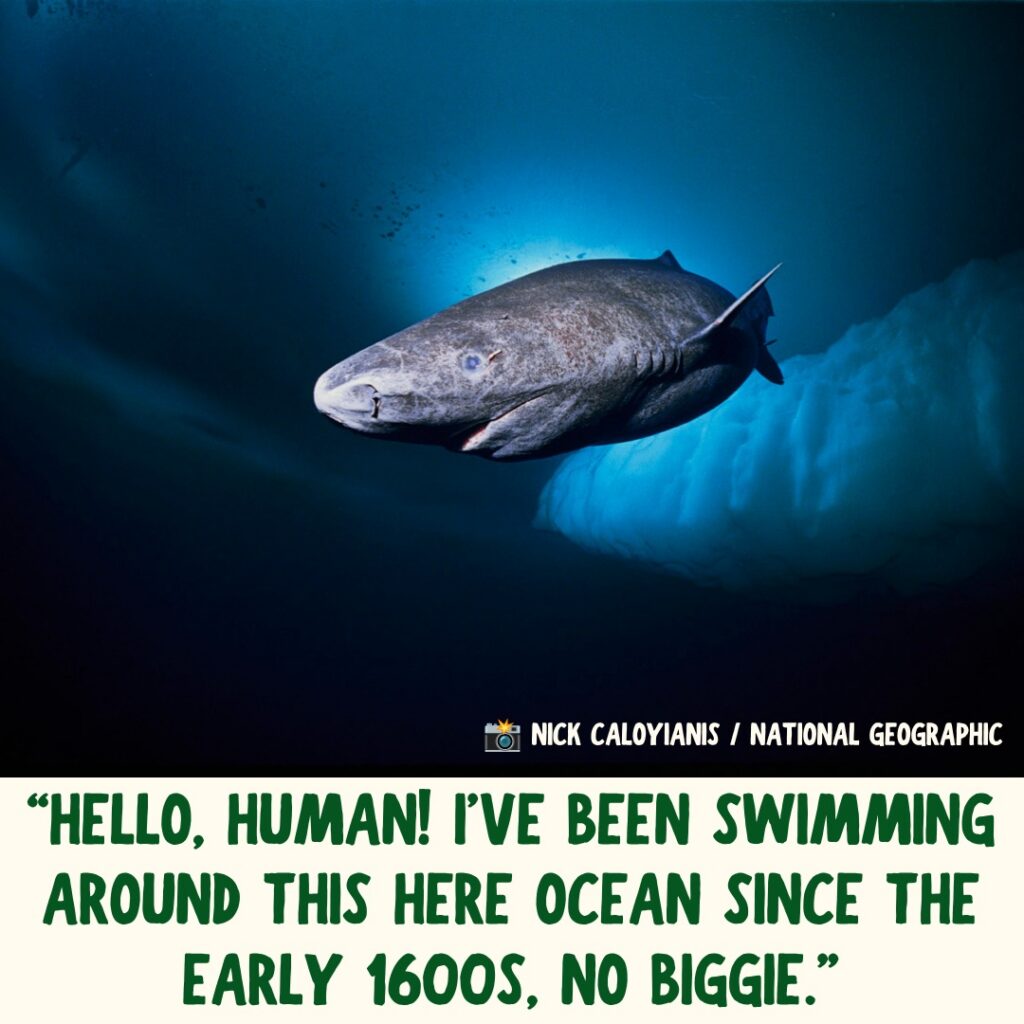
Now, compare the Greenland Shark’s 18-year pregnancy to that of the mighty, prolific Virginia Opossum. Today’s featured critter has the shortest pregnancy of any North American mammal at just 12ish days. 😱 As you likely guessed by now, the opossum is among the many species that have fast life histories on the road to evolutionary success.
For these animals, natural selection has led to an evolutionary pattern of growing quickly, reaching reproductive age fast, having lots of babies at once, and dying soon after. Parents usually don’t devote much care to each individual baby, and as a result, most babies in a litter likely won’t survive until reproductive age themselves. Fast life histories are common in other smaller creatures like insects, mice, cottontails, or weeds because they are often impacted more strongly by selective pressures like predation or the whims of sudden, harsh weather. 🦉☔️
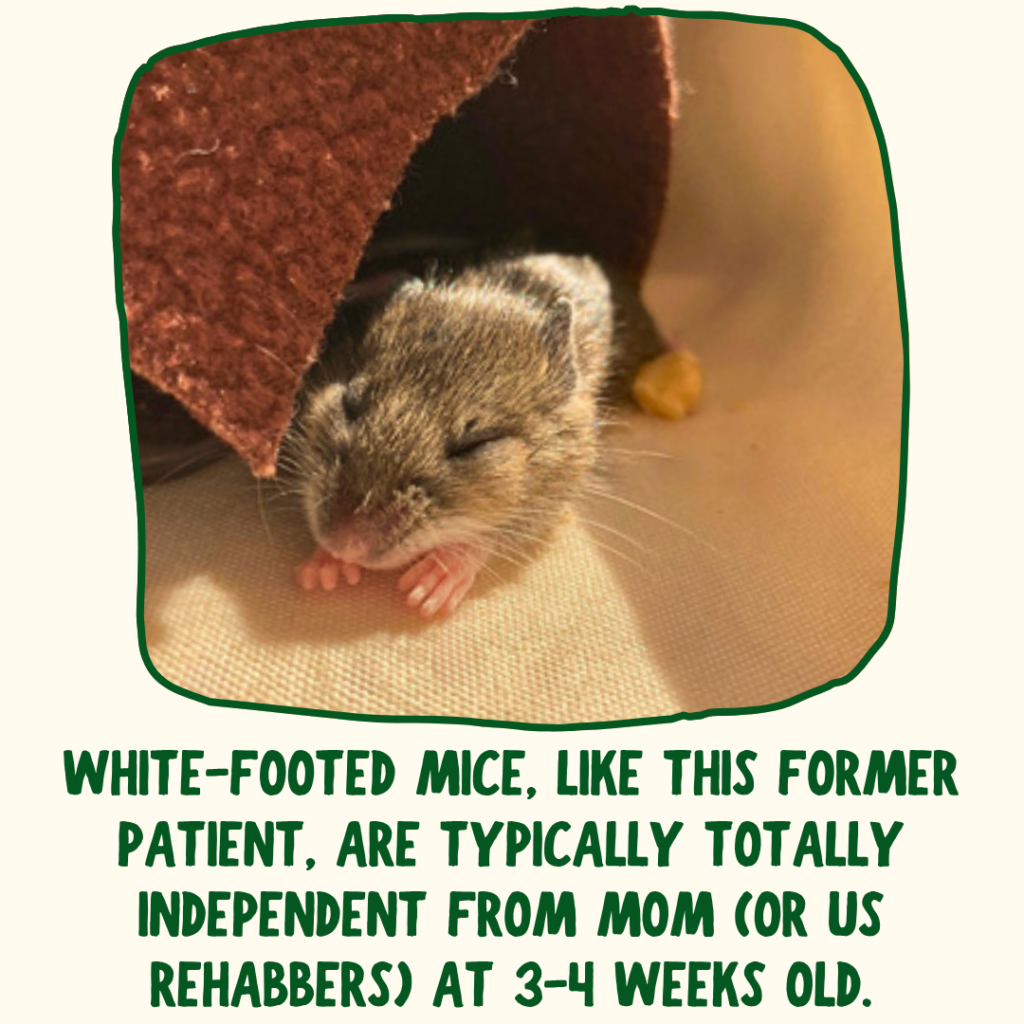
In short, species with fast life histories could die at any moment. Having as many babies as fast as possible makes evolutionary sense! When your body spends so much metabolic energy to grow up fast and then grow a dozen babies at once, there simply isn’t enough energy left over to maintain cell health and long-term body health. 😮💨
Before the ecologists out there show up at RWS with pitchforks, life histories exist on a rich continuum and few species neatly fit into one category. There are many other factors that impact a species’ reproductive strategy! But this is generally the reason why certain species live so long and others, like Virginia’s unofficial fuzzy mascot, simply cannot sustain a longer life.
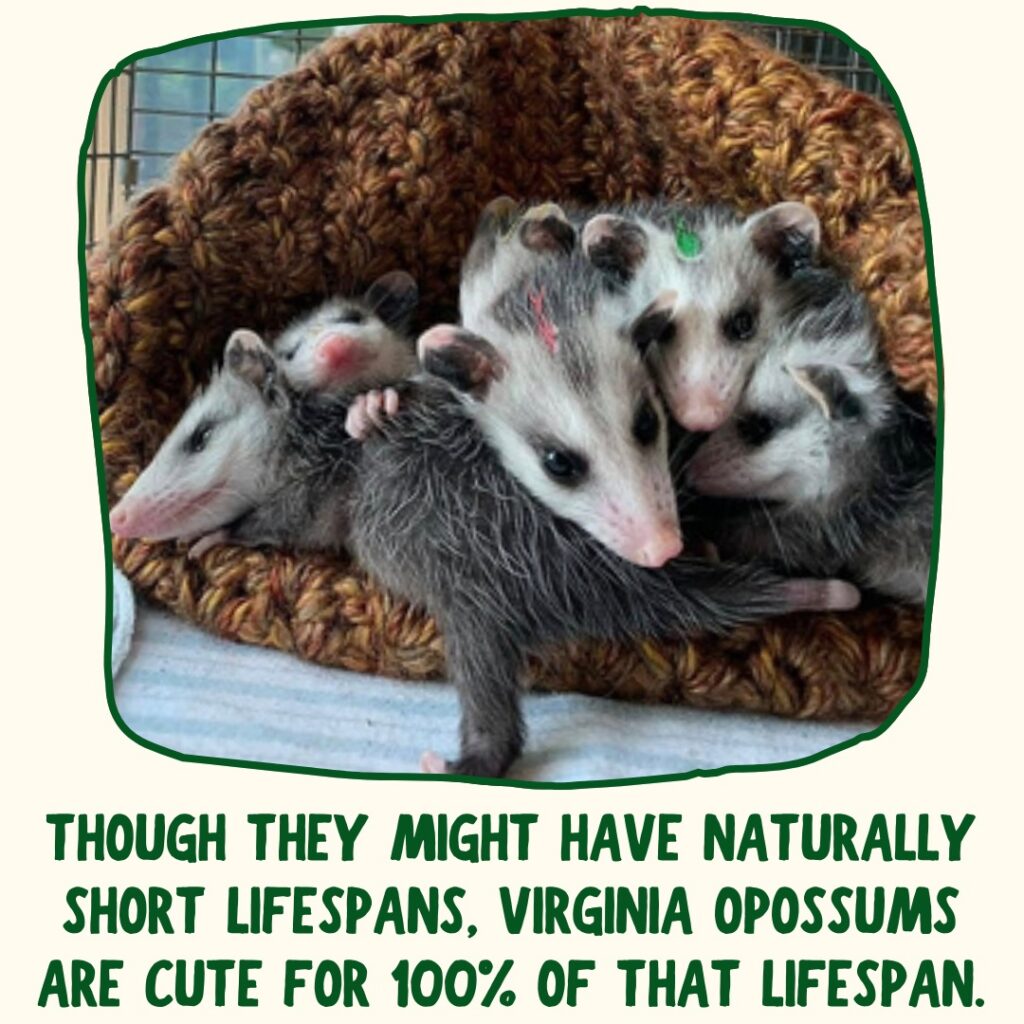
But the opossum’s lightning-fast growth and reproductive rates aren’t the only remarkable features of how they have babies. Their Latin name, Didelphis virginiana, is grounded in the Greek word for “two wombs,” thus hinting at their special superpower: they are the only marsupial north of Mexico! As many of you know, this means the female opossums have a pouch that they carry their teeny babies around in as they grow. 👛
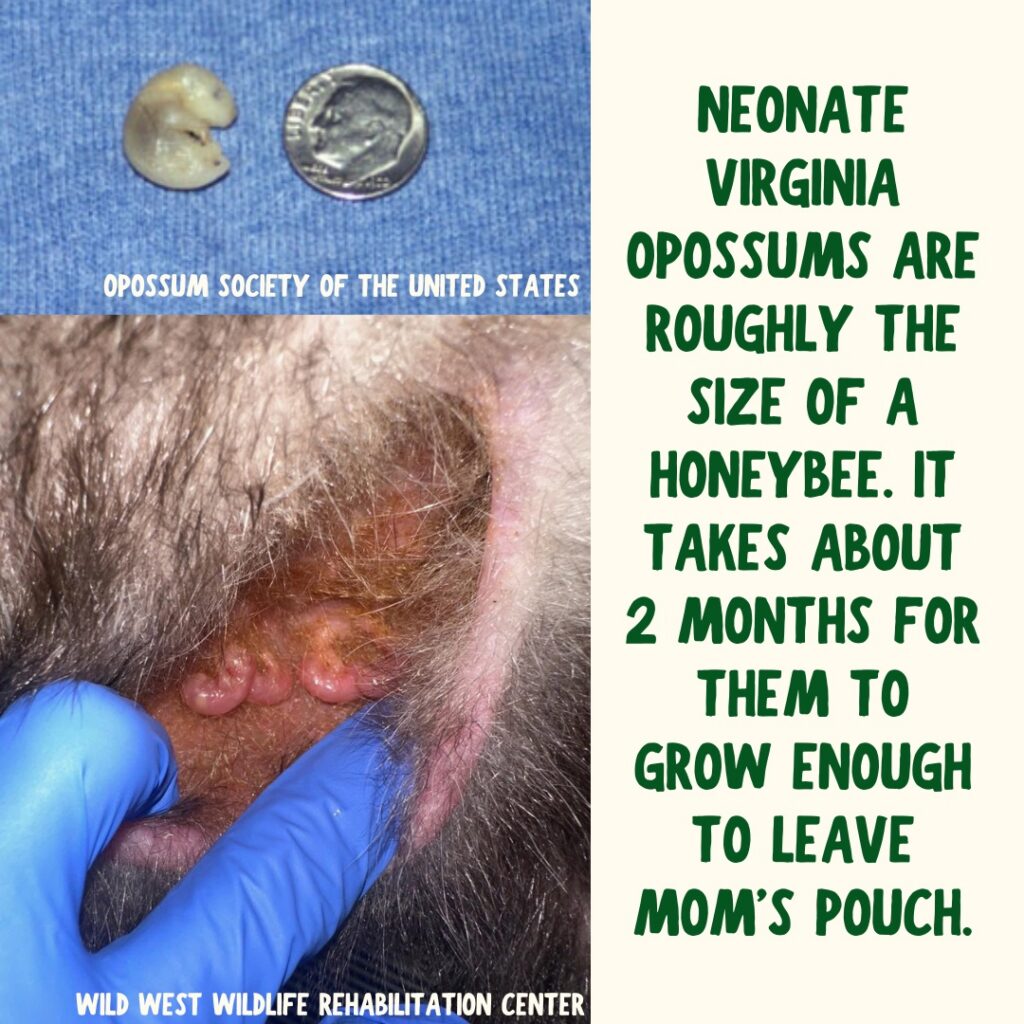
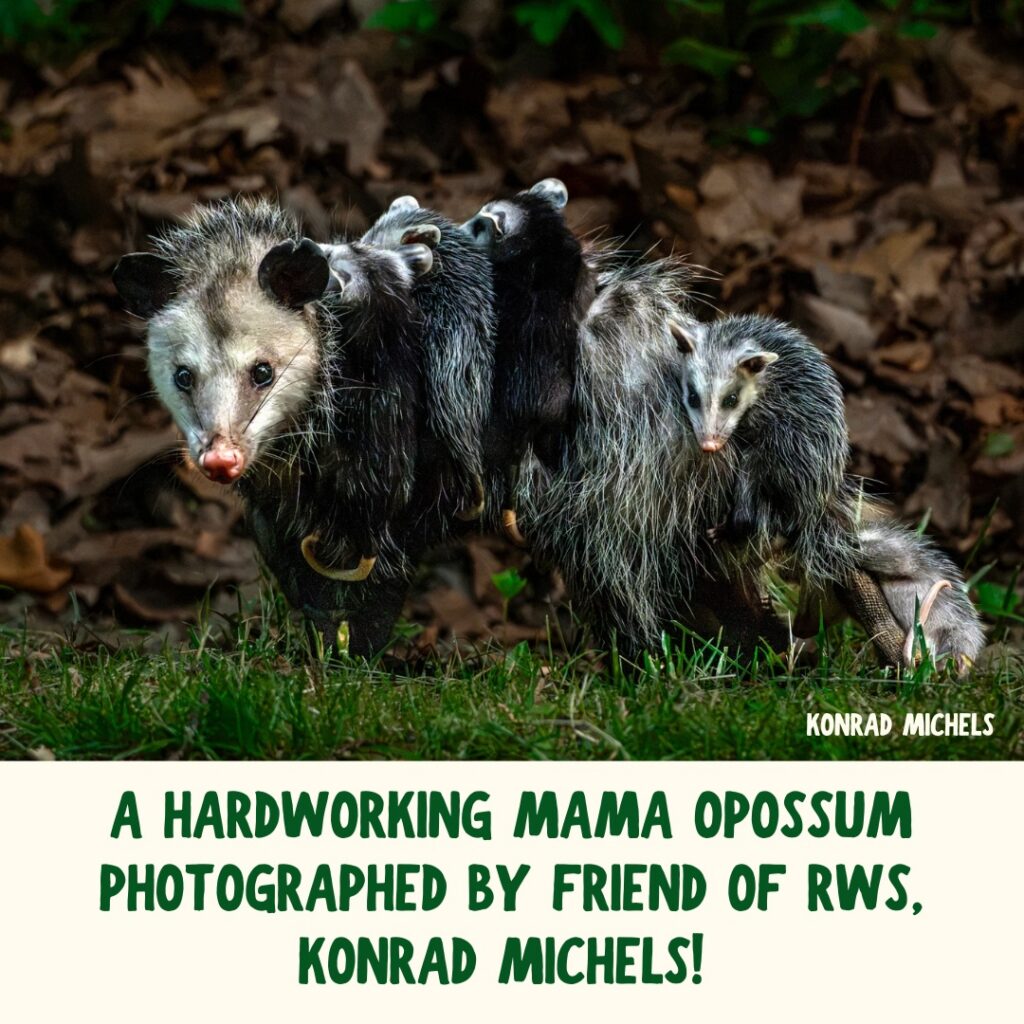
Those babies truly are teeny. After that blink-and-you’ll-miss-it pregnancy, a squad of 5–25 babies are born, each weighing about 0.006 ounces. Mom only has 13 teats, though, so natural selection happens fast. Only up to 13 of the “fittest” tiny little jellybeans will be able to find a teat and latch on. Once they’ve latched, the teat swells in their mouth and keeps the baby firmly sealed onto mom for the next two months. That’s one hard-working mom! 👏
Once the babies have fur of their own and their eyes start to open, they ride around on mom’s back oh-so-adorably. That’s sort of where mom’s attentiveness ends, though. If a baby falls off of her, she’s likely not going back for them. Luckily, though, opossums are considered totally independent at just about 8 inches long (not including their tail). They’ll reach sexual maturity between 6–10 months old and soon be having babies of their own. They’ve got one short, magnificent life to live!
And that brings us back to Barney, whose short, magnificent life taught so many people about the helpful and humble Virginia opossum. We hope you’ve enjoyed reading a bit about his story today and learning about the incredible life histories of our marsupial neighbors.
To honor Barney’s legacy, we hope you’ll share this email – or your favorite facts from it – with a pal today. Thank you for reading and learning about our wild neighbors. In doing so, you’re supporting the Sanctuary’s work for native wildlife and conservation. 🌳
If you’d like to further honor Barney’s memory, please consider setting up a monthly gift to the Sanctuary! Your support will help us care for the 64 Virginia opossum patients currently in care at the Sanctuary as well as countless to come in the future. 💚 You can become a monthly donor here:
Thank you, Barney. ❤️
July 31, 2026
Published:


Be the first to comment!