


This new patient has our team screaming “AAAAAAALVIN!” all day long! 🐿️ Just kidding. We don’t talk to our patients. We also don’t name them – but we can’t deny the thought crosses our minds every time we admit an Eastern Chipmunk patient. 😆
Meet September’s featured patient: Eastern Chipmunk 26-750!
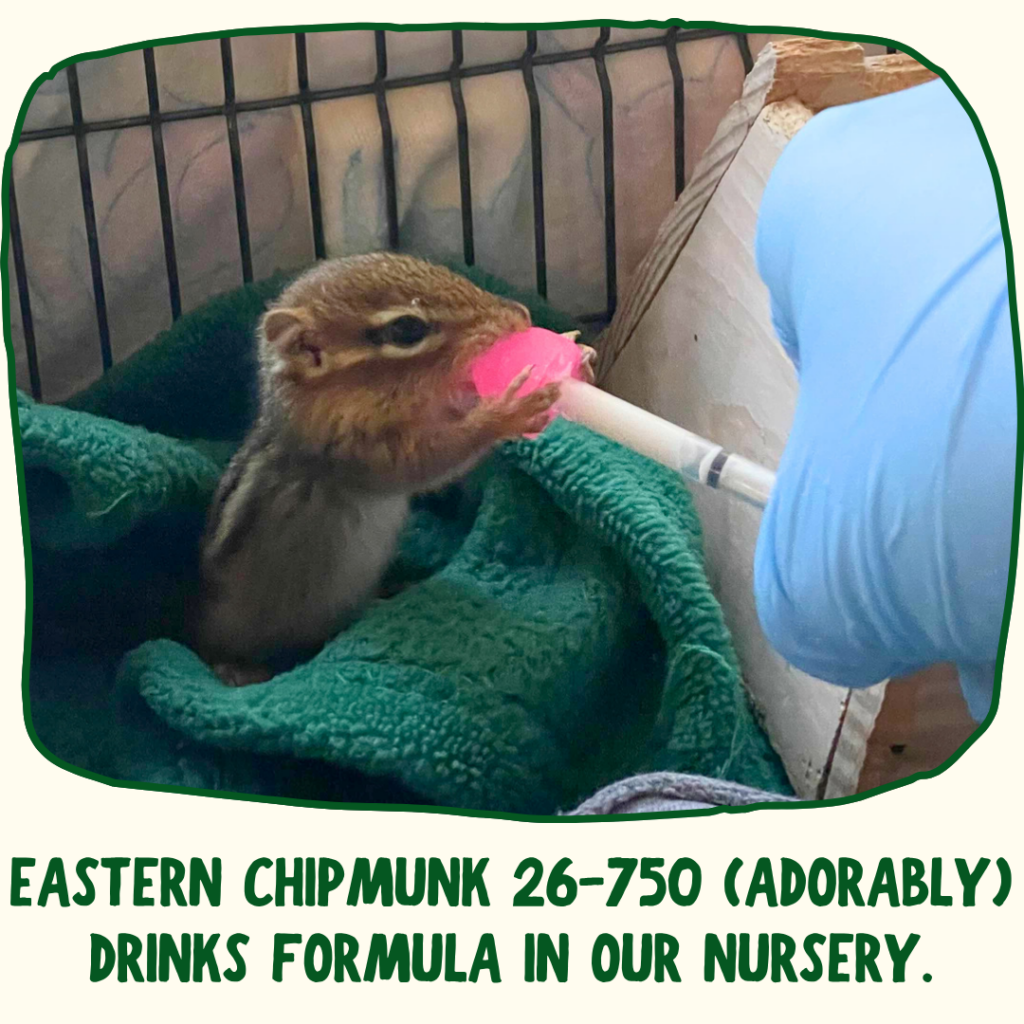
Though Eastern Chipmunks aren’t exactly rare animals to see in the wild, they’re unusual patients to receive at the Sanctuary.
That’s because they spend so much of their lives underground, staying safe from predators by enjoying the extensive tunnel systems they’ve built. Similar to groundhogs, chipmunks build designated rooms within their subterranean homes, one of which is a nursery. It is there that a mother gives birth to her babies, and there they all stay for 4–6 weeks until the babies open their eyes and begin exploring the world beyond the burrow.
If you find an Eastern Chipmunk who is teeny, hairless, and/or has its eyes closed, it needs professional care. 🚨 Well, unless you happen to be inside of a burrow. That’s not likely, though, since their tunnels are about 2 inches across.
Patient 26-750 was not safe and sound inside a burrow earlier this month. On September 5th, a community member in Richmond, Virginia noticed a teeny little chipmunk running around the middle of a road. When she approached, she noticed that the chipmunk’s eyes were closed. 😲
This was a chipmunk in desperate need of help! Though we don’t know exactly how he came to become functionally orphaned like this, we are so glad this good-hearted rescuer scooped him up and brought him to our friends at the Wildlife Center of Virginia that very evening. The next morning, the team at WCV transferred the little chipmunk to RWS for rehabilitative care.
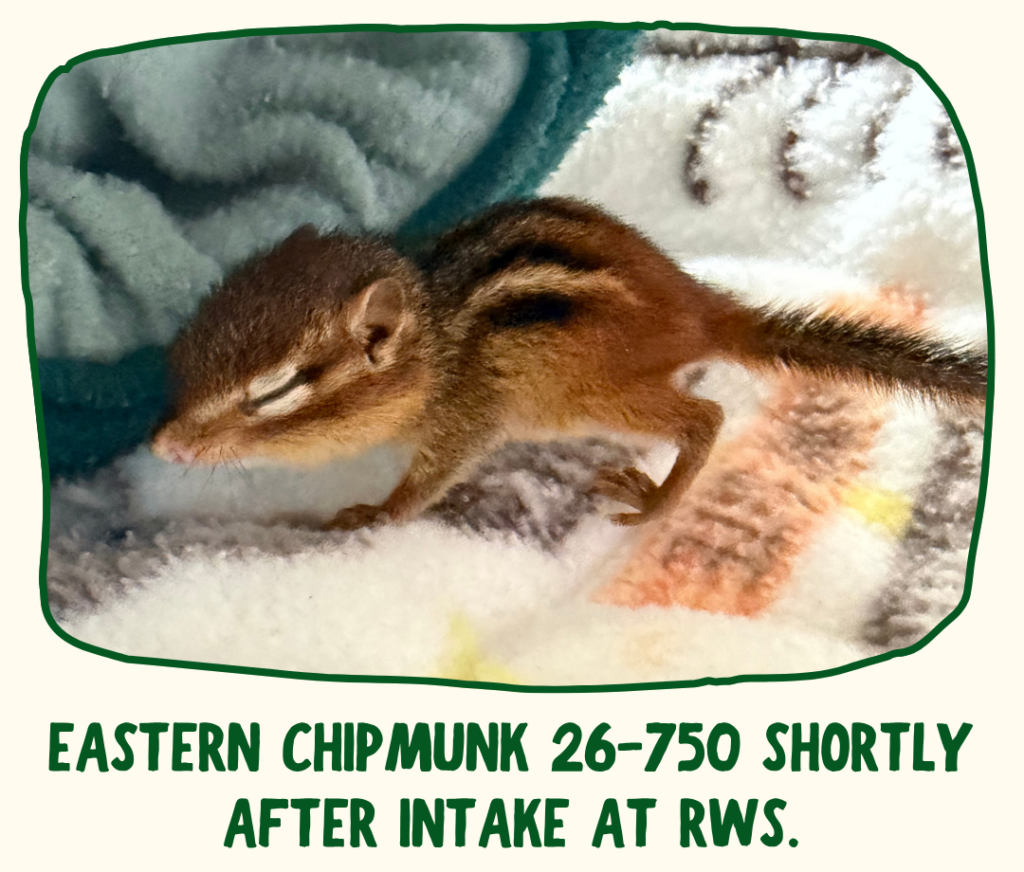
When this orphaned chipmunk arrived and officially became our 750th patient of 2026, he was a true pipsqueak! He weighed just 16 grams and was quite thin. We continued to transition him from electrolytes onto species-specific formula, which he luckily took to right away. With five syringe-feedings per day from our team during his first couple of days in care, he quickly got the hang of drinking formula.
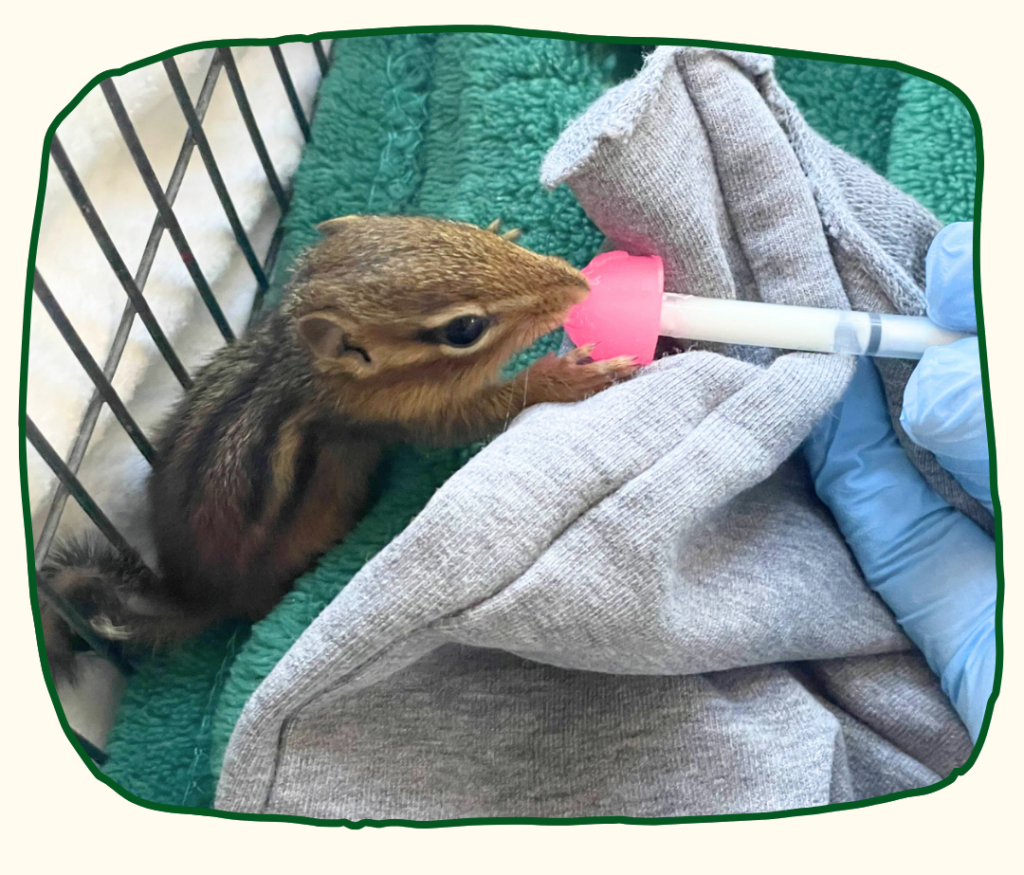
Chipmunks are among the smallest mammal species we work with, other than mice and bats. 🐭🦇 To ensure we’re feeding them formula at a safe, slow rate for a mouth so teeny, we use a 0.5 mL syringe with a teeny nipple that has been custom-molded for wildlife rehabbers specializing in tiny orphaned mammals.
This is yet another reason why wildlife rehabilitation is never something you should try at home. ❌ Most commercially available nipples or bottles that you could pick up at a pet store would likely cause a severe respiratory illness via aspiration, or even death, for a baby chipmunk, squirrel, or mouse.
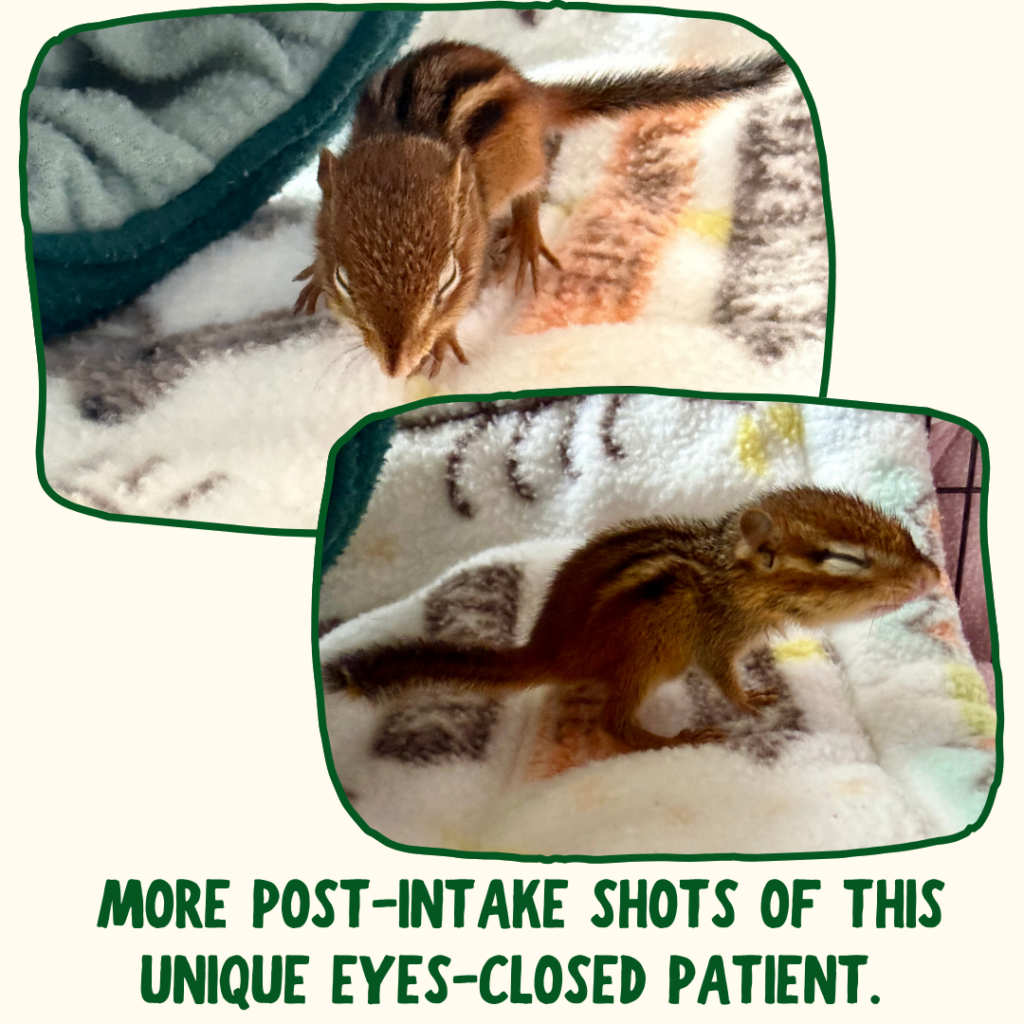
Fortunately, all of those hand-feedings have transformed Eastern Chipmunk 26-750. In just ten days, he’s nearly doubled his body weight and grown almost an inch! Excitingly, he’s also opened his eyes. The spunky little rodent has become increasingly active and curious by the day, which is exactly what we want to see from a healthy juvenile mammal!
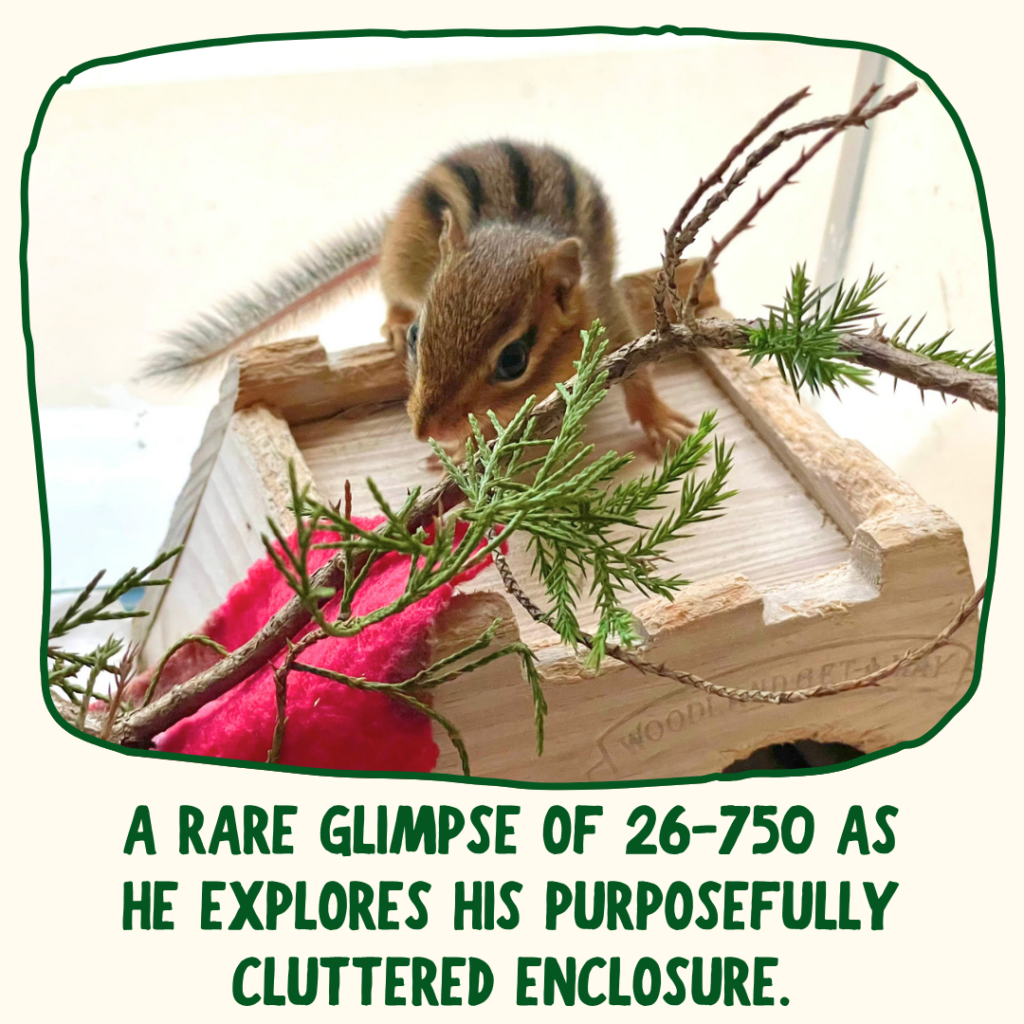
As he’s soared through these developmental milestones, we’ve worked hard to hone his essential survival skills. 💪 One way our team has done so is by supplementing his care with enrichment that matches his natural history. His nursery enclosure is very cluttered, and that’s strategic! We’ve stuffed it with hides, linens, and fresh native plant clippings to provide the dense cover he needs to feel more secure. These features also help him practice his foraging and climbing skills.
While we wish we had a conspecific (same-species) buddy to pair with him, he’s roughly at the age when he’d naturally be taking on solo adventures beyond the burrow. Once Eastern Chipmunks leave mom for good, they become highly solitary and extremely territorial. Chipmunks only interact with other chipmunks for courtship…or to fight. You won’t find chipmunks making small talk around the water cooler. 🙅
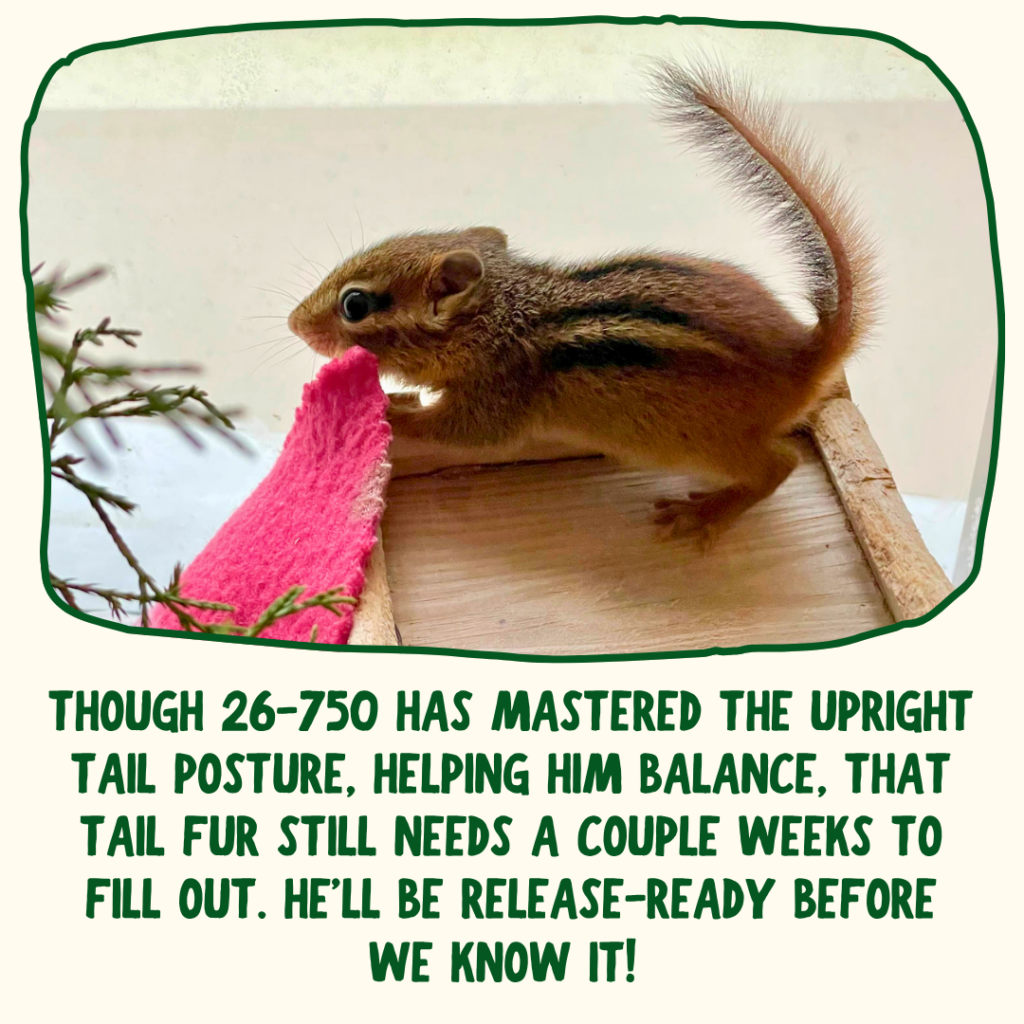
So while 26-750 doesn’t have a lifetime of cuddles in his future, as it’s not in the species’ nature, he does have a lifetime of good eating ahead of him. An Eastern Chipmunk can eat 20% of its body weight per day, and what it can’t fit in its stomach, it’ll tuck into its iconic cheek pouches to cache (store) in its burrow for later. He’s prepping for that life at RWS by already ditching our lame syringe feedings in favor of feeding himself. (We love when patients do this! 😆)
Our staff prepares teeny meals for 26-750 and replaces them throughout the day as needed. One of those meals is a “mush bowl.” That’s a special bulk rodent diet soaked until soft and topped with chipmunk formula, enticing him to chow down. We also provide him with a juvenile meal, featuring dry food sources like nuts, veggies, and bits of egg. 🥚🌰🥕 These options help a mammal patient transition from formula to solid foods, eventually weaning entirely. We’re not quite there yet, though!
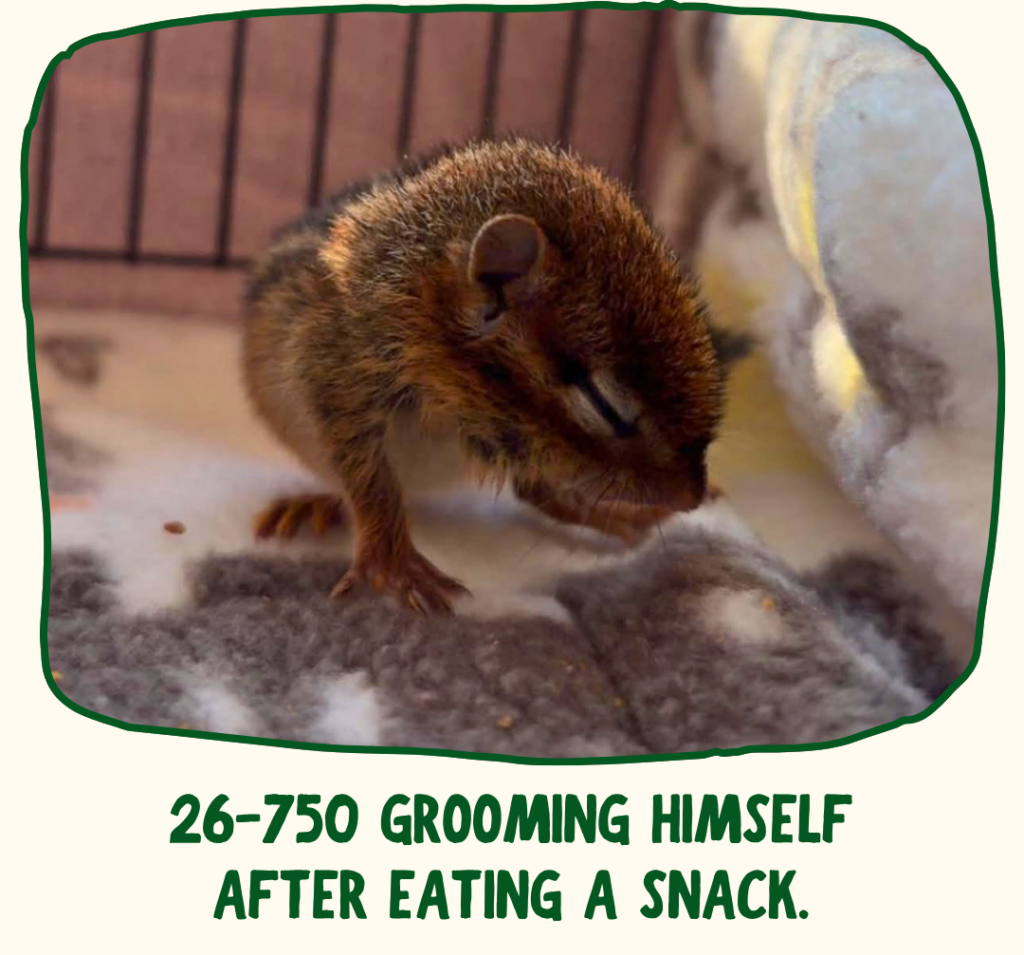
Once this little chipmunk does wean, we’ll spend a few days acclimating him to the outdoors. Then, before we know it, he’ll be ready to be released back to the wild! 🎉
He’ll join a world where chipmunks like him are essential to a healthy ecosystem – they improve soil quality, disperse native seeds, control invertebrate populations, and contribute to the food web themselves by being prey to a variety of species. 🌳
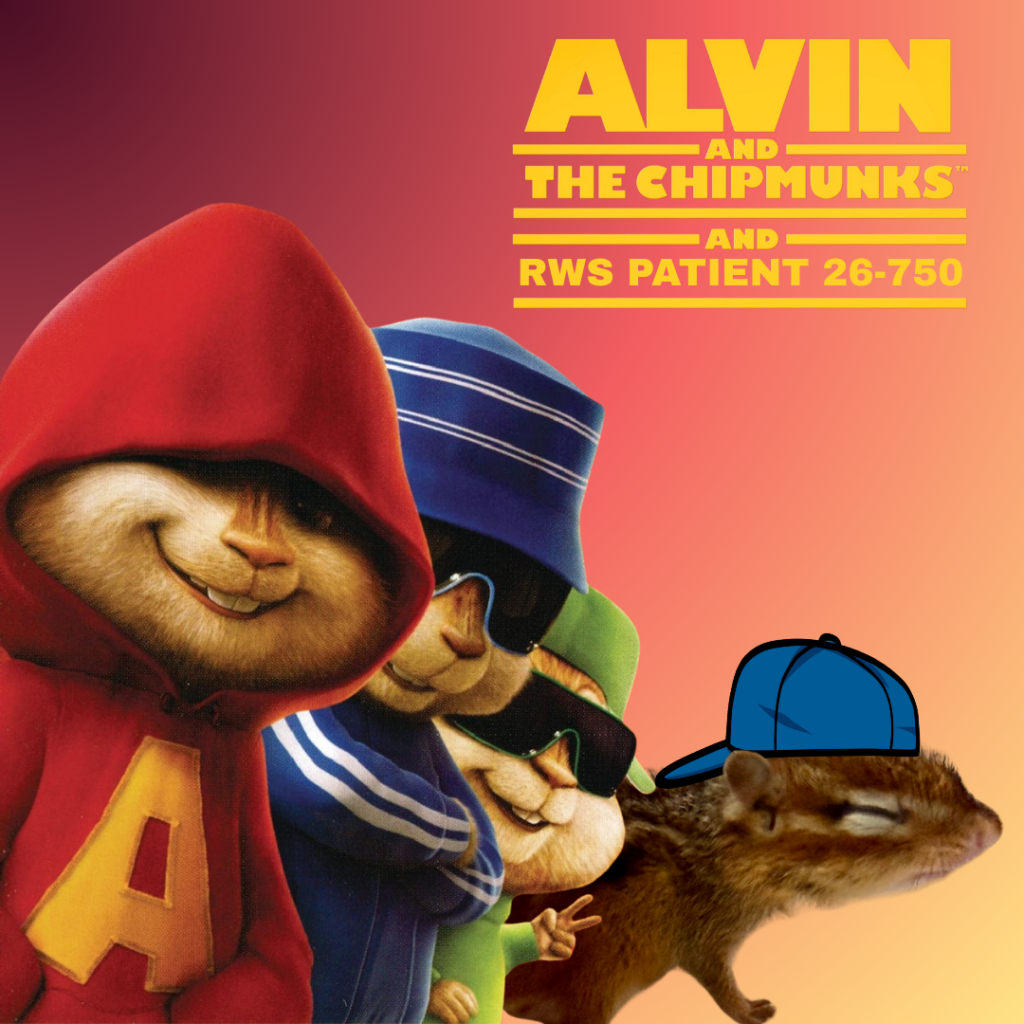
Until then, though, we’ll be daydreaming about patient 26-750’s future career as a rodent rockstar once he’s back in the wild and meets up with the rest of the band. We’ve imagined their album cover below. 😆
Thank you for reading about our adorable Patient of the Month!
We hope you can support patients like him by joining us at Mountain View Magic in just a couple weeks. 🪄 Learn more about our fundraiser and grab tickets below!
September 15, 2026
Published:


Be the first to comment!