


We just celebrated our final mammal patient release of 2026 – and boy, was it a special one! 🤩 Our featured patient this month is Striped Skunk 26-737, who charmed her way into all of our hearts (despite the occasional smell). 🦨
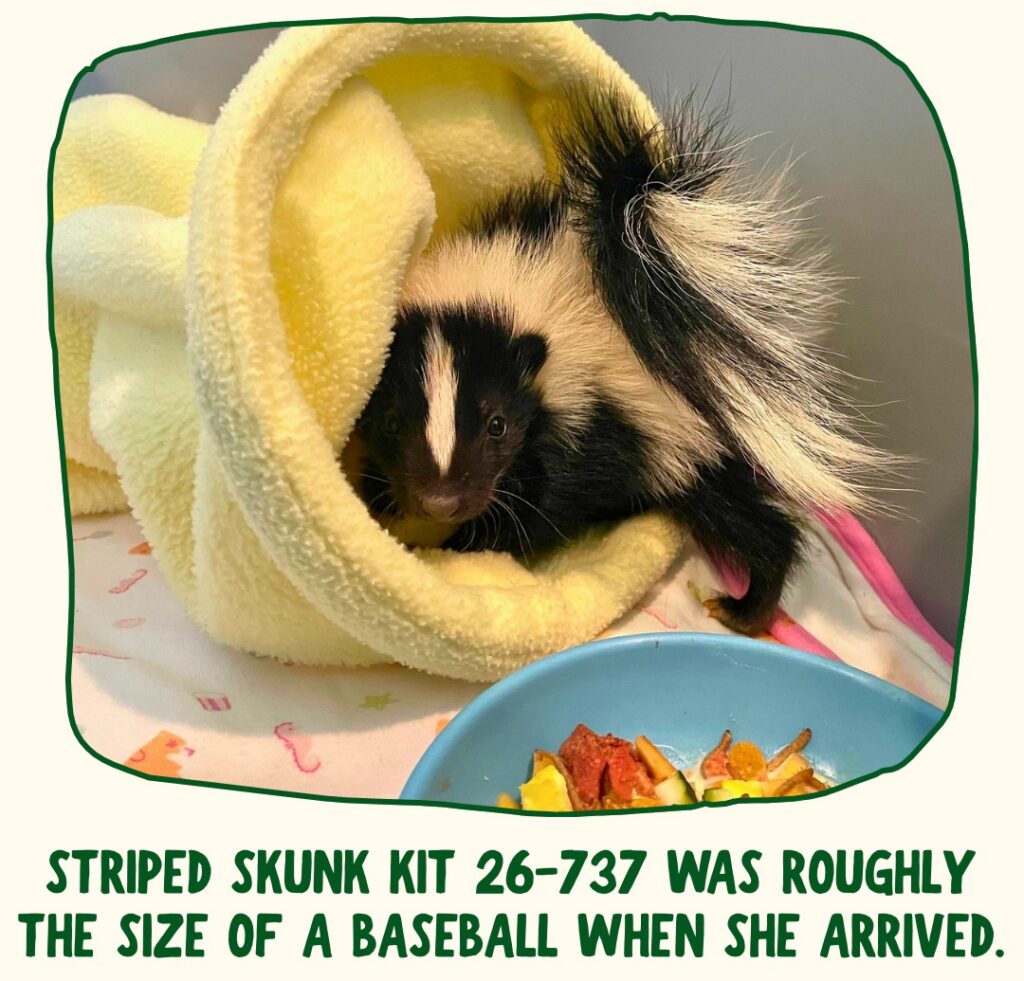
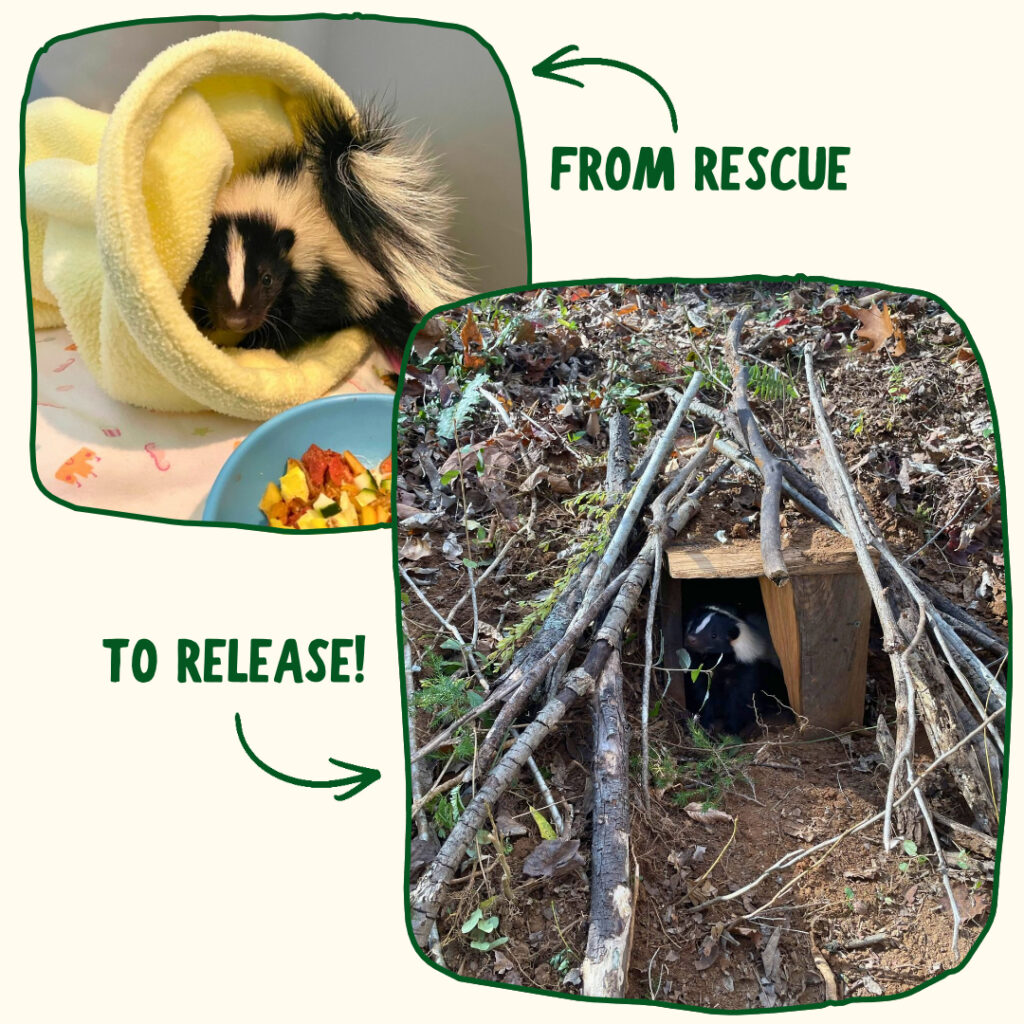
This adorable little orphaned kit arrived at the Sanctuary about three months ago. She had originally been rescued in Amherst County, where a property owner stumbled upon her huddled against a deceased sibling. 😞 At just 132 grams (a little over 1/4 lb), it was far too soon for her to be out in the open with no mother in sight. She desperately needed help.
While we do not know what happened to her mom, we are very glad that this kind community member took the time to bring the baby skunk into professional care. After a pit stop with our friends at the Wildlife Center of Virginia, where she was confirmed to be clinically healthy, the wee skunk was transferred to RWS for long-term rehabilitative care. 🚑
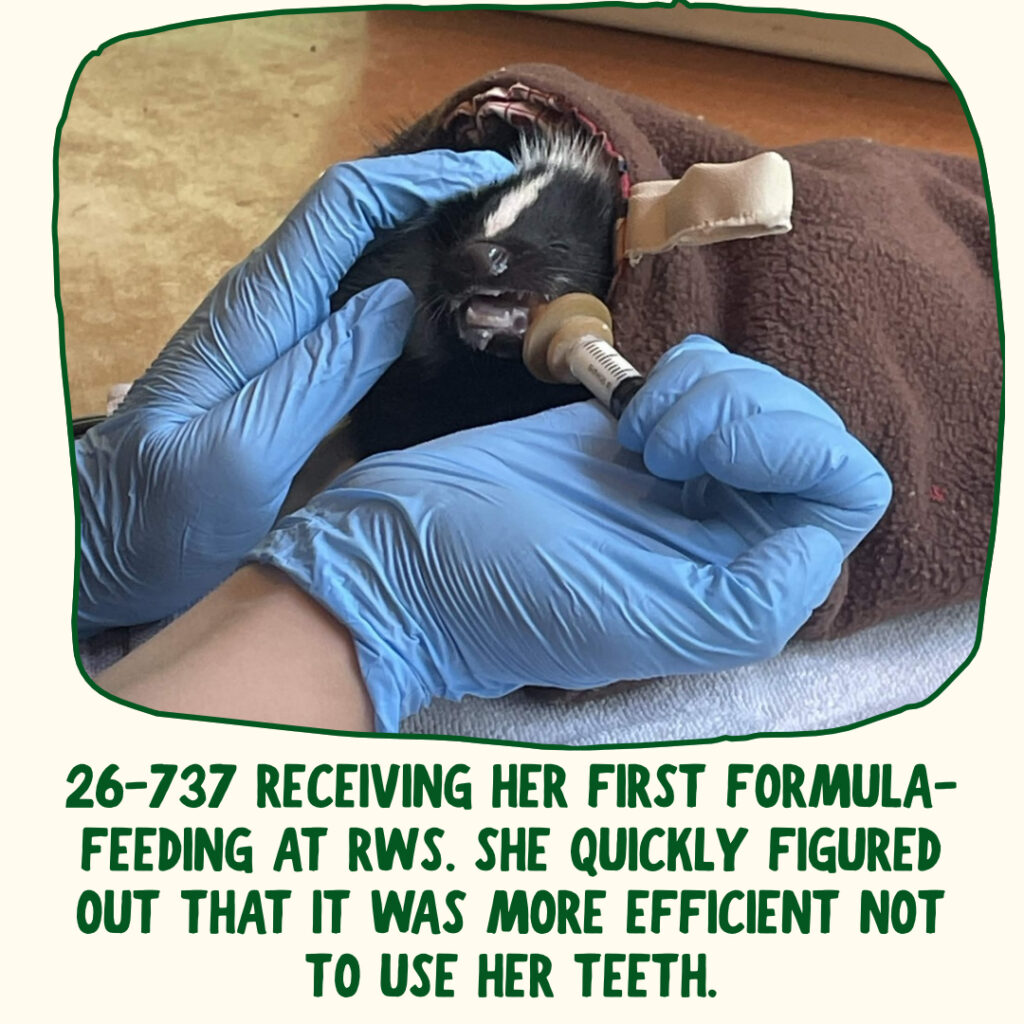
Upon arrival, our team got the little patient situated inside our rabies-vector nursery. This room is designated as an infant care unit for orphaned foxes, skunks, bats, and groundhogs. (Raccoons get their own rooms at the Sanctuary.) By late August, though, all of these other patients had moved outdoors or been released already. Patient 26-737 had the room to herself!
That presented its own problem. 🤔 Skunks are highly social as kits, spending all of their time with their siblings and relying heavily on their mother as they gain independence. When we admit a lone orphan patient, we network with other rehabilitation groups across Virginia to find a suitable conspecific (same-species) match to support the critter’s social development. This time? No dice. No other rehabbers had such teeny skunks – or any juvenile skunks left in care, for that matter.
But this baby skunk wasn’t totally on her own. She had our team and a whole network of Sanctuary supporters who made her care possible! 💪
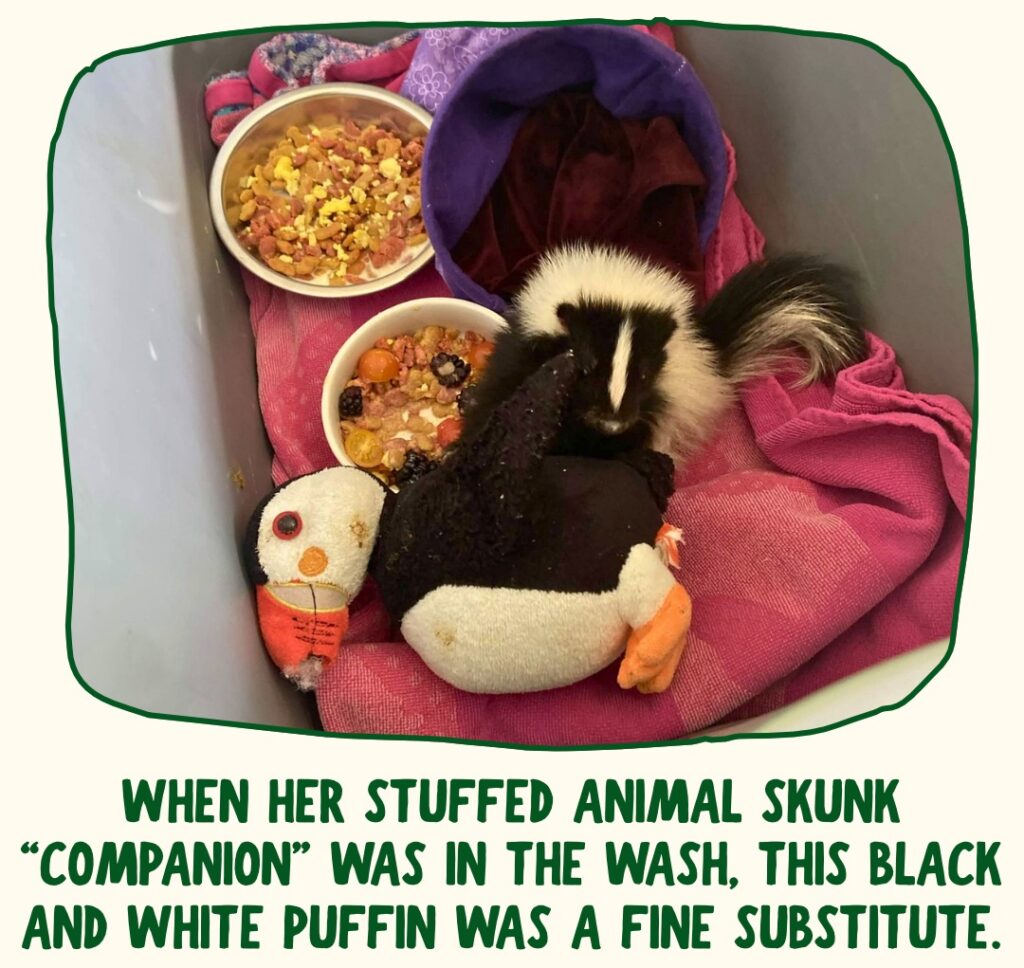
From her first day in care, our team incorporated daily enrichment to help her develop the motor and social skills she would need to thrive in the wild. 🎁 Her favorite toy of all seemed to be a simple jingly ball! Whenever our team entered the nursery, she would freeze and raise her tail – an appropriate fear response, thankfully. Once we left, though, we could hear jingling through the door for hours as she played. (Yep, it really was too darn cute.)
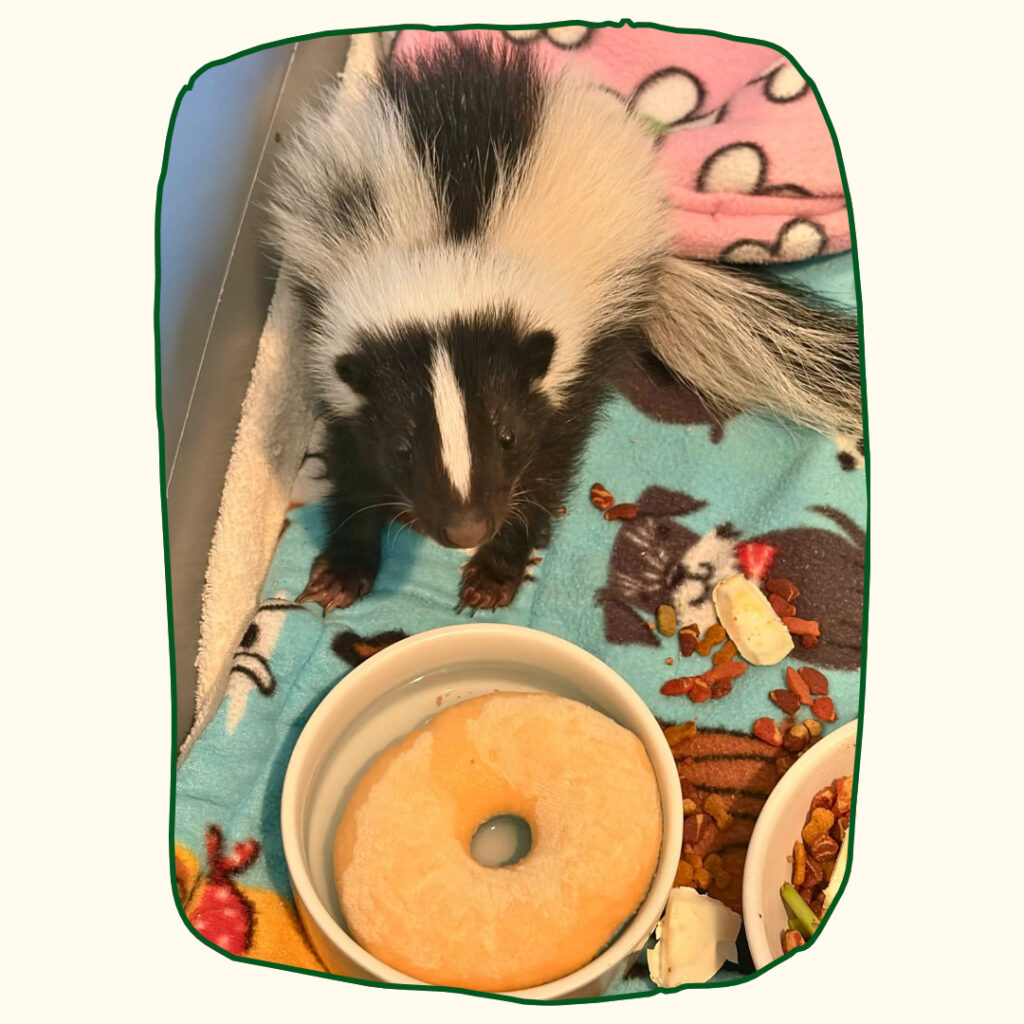
Other enrichment items didn’t receive quite the same glowing reviews from 26-737. For example, she promptly kicked this stuffed donut toy into her water dish. 🍩
Before we knew it, Striped Skunk 26-737 was weaned and ready to move to our newly renovated skunk palace enclosure. The expanded space and the wire buried 2 feet underground allow skunk patients to practice burrowing without digging themselves out of our care before they’re ready. Our rehabbers decked out the enclosure with dens, branches, logs, rocks, and plenty of leaf litter. She received daily foraging trays filled with different substrates she might encounter in the wild, with mealworms hidden throughout!
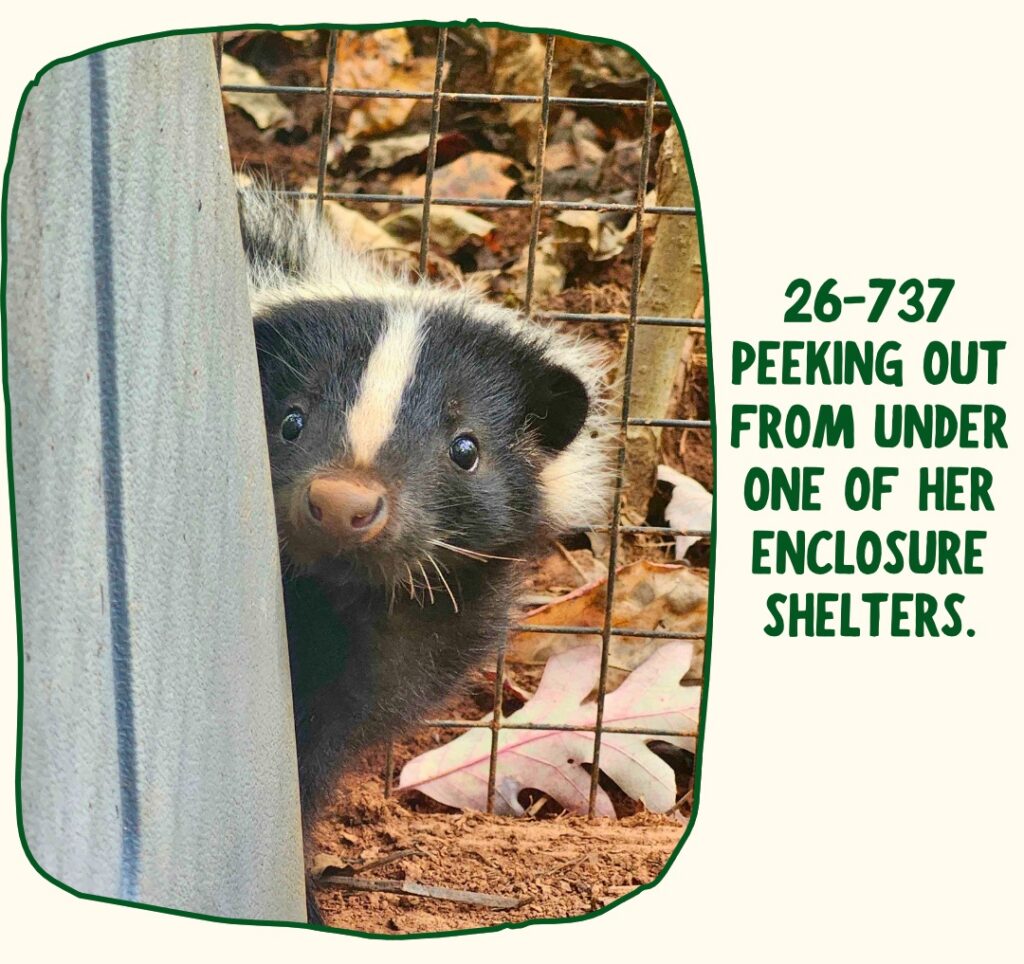
But no matter how hard we worked to build her the perfect enrichment trays and food toys, nothing topped the natural, insect-laden allure of a good ol’ rotting log. ⬇️
As much as we adored caring for this skunk, we knew we did not want to keep her in captive care until the spring. Doing so would risk her becoming too comfortable around humans and prevent her from establishing a territory of her own ahead of mating season. Plus, she was ready! With cooler weather approaching, we wanted to provide her with a staged soft-release to ease her into life in the wild.
It was time for us to build this skunk her starter home. 🏠
Constructing patient 26-737’s soft-release den was a team effort! While the growing skunk continued to build her foraging skills in her enclosure, one of our wonderful weekly volunteers, Dave, got to work excavating a den for her at the edge of our 20-acre property. This would ensure the skunk was close enough for us to deliver supplemental food as she settled into the wild, but far enough that she would not be seeing, smelling, or hearing any humans. 🙅
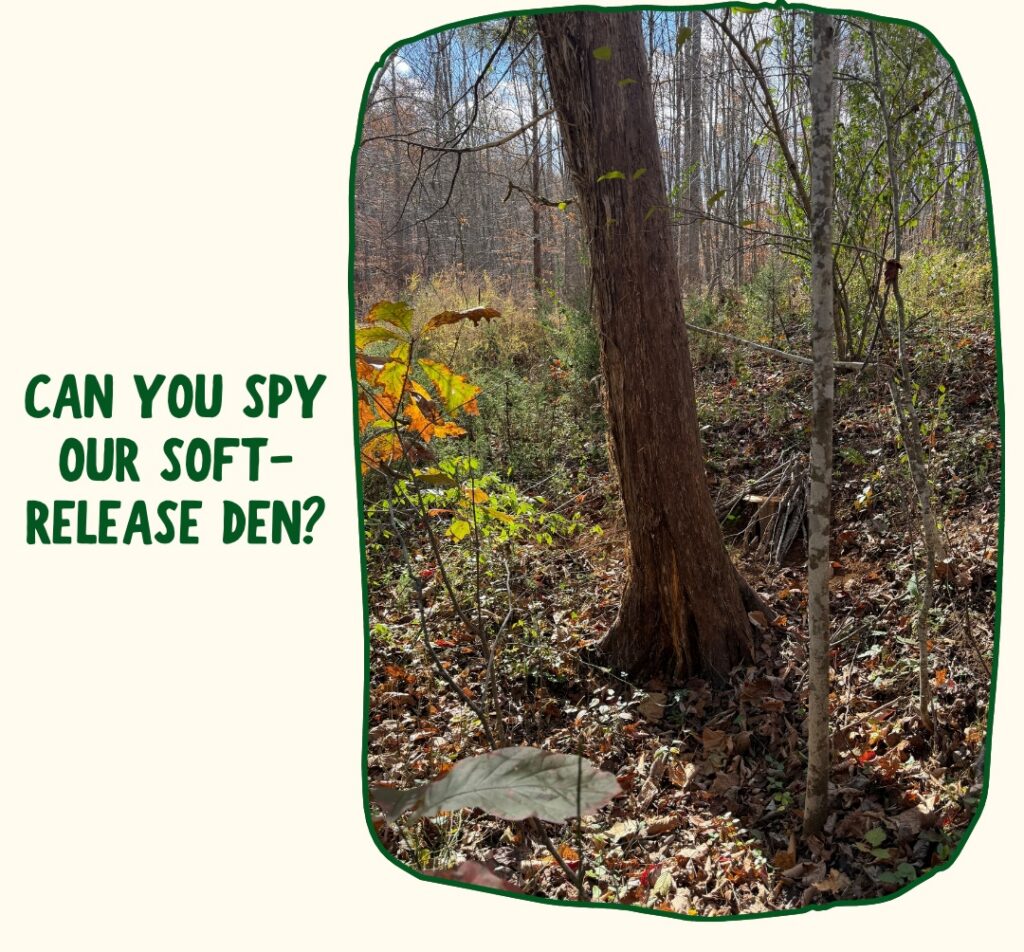
We then grabbed one of our wooden den boxes, made by volunteer Kaleigh. We slid it into the hole, leaving about a foot of space behind the den so 26-737 could choose to dig even deeper. Staff rehabber Chandler spent the following afternoon reinforcing the structure and beautifully camouflaging it within the hillside. 🛠️ Then, Chandler and Rehabilitation Program Manager Elka used a humane trap to contain 26-737 in her enclosure overnight, preventing unnecessary stress for the skunk…and keeping our staff spray-free. 😂
Late Friday afternoon, we had the pleasure of moving this patient into her new home. 🥲
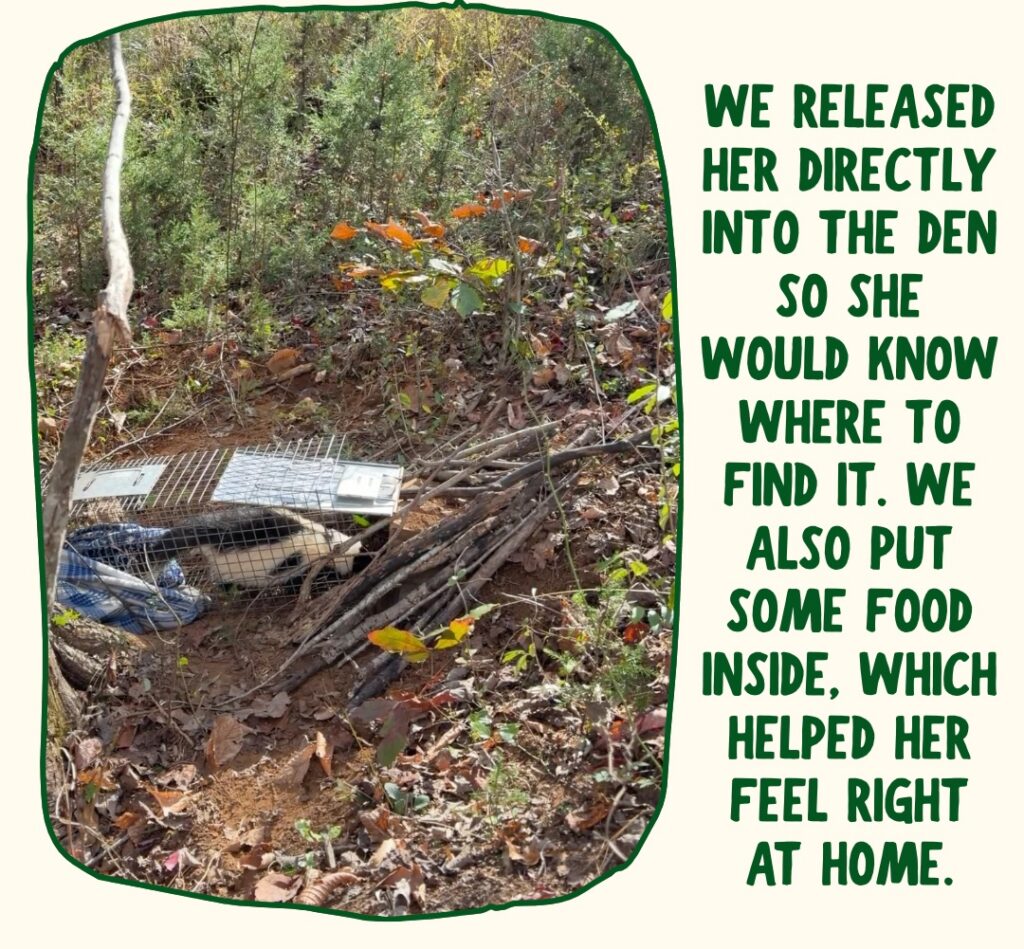
She loved it! Well, actually, she first found a whole lot of fun things to sniff and snack on nearby before crawling inside for a nap. She was already doing great as a wild skunk! 😂
Our team installed a trail camera facing her den so we could monitor her activity. 🎥 In the days since, we’ve delighted in watching her come and go from the den each night, digging deeper to make herself comfortable and successfully foraging for food nearby.
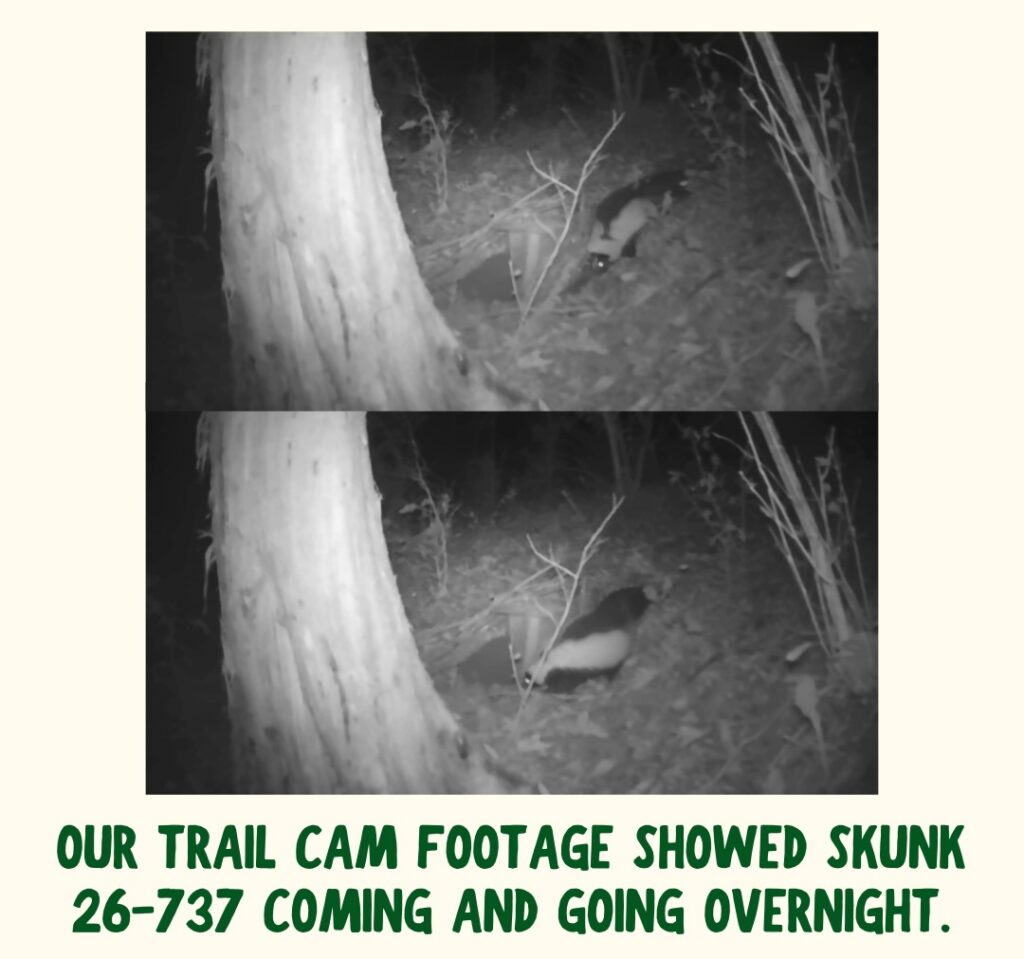
It is hard for us to believe that this skunk was once a tiny, shivering orphan huddled up against her deceased sibling. Today, she’s large and in charge, deftly foraging and settling into the wild where she belongs.
These are the second chances you make possible! Thank you for powering our work for native wildlife and helping us provide every animal with the individualized care they need to get back to the wild. 💪
Thank you for following along with this month’s featured patient at Rockfish Wildlife Sanctuary. If you’d like to help us care for future wildlife patients just like her, we hope you’ll consider making a gift to our kitchen renovation project today. Thank you! 💚
November 17, 2026
Published:


Be the first to comment!