


Ahhh, the classic snow day: slow mornings, cozy movies, hot cocoa, and…trudging through the woods carrying a basket of squirrel meals!? 🤔
At Rockfish Wildlife Sanctuary, a winter storm doesn’t mean shutting down. Snow days mean business as usual – only with bigger boots. ❄️
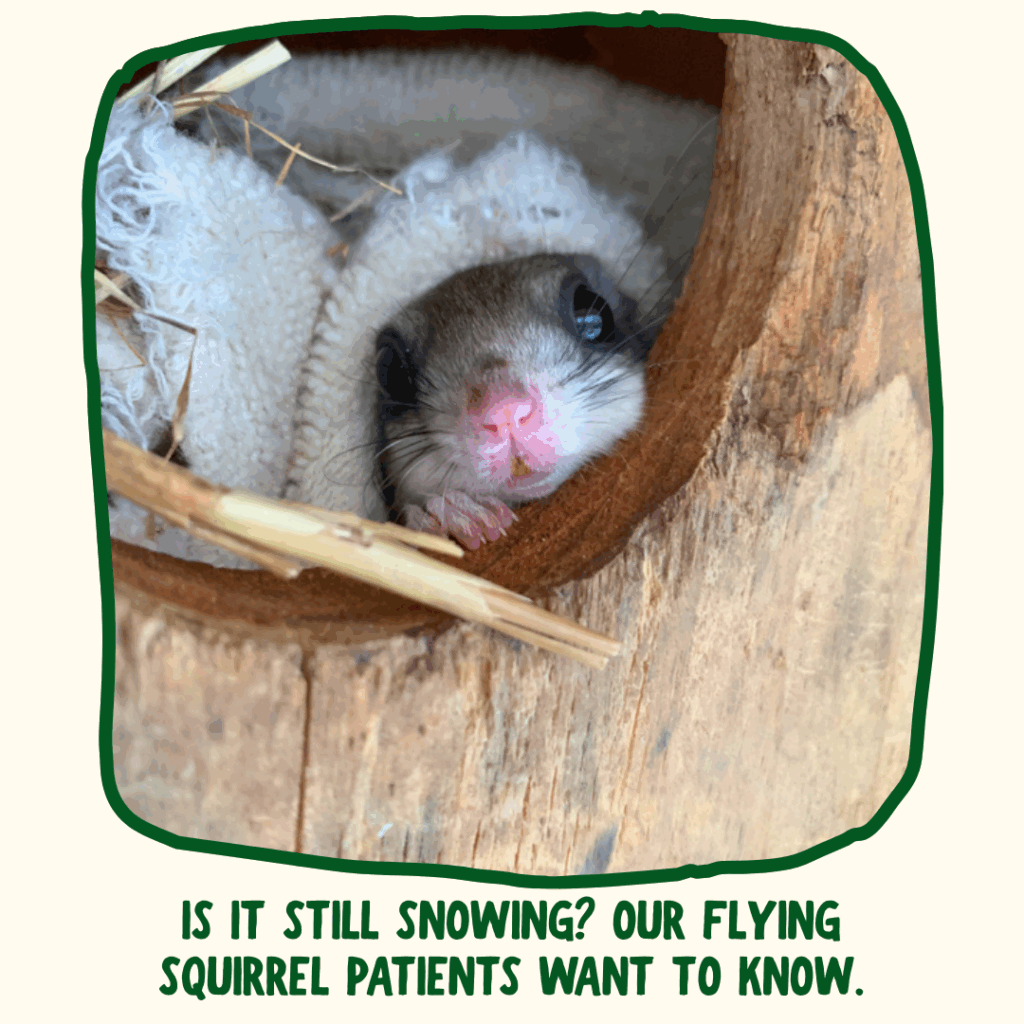
Right now, we’re caring for 36 overwintering patients. These include:
- 3 Southern Flying Squirrels
- 18 Eastern Gray Squirrels
- 5 Yellow-bellied Sliders
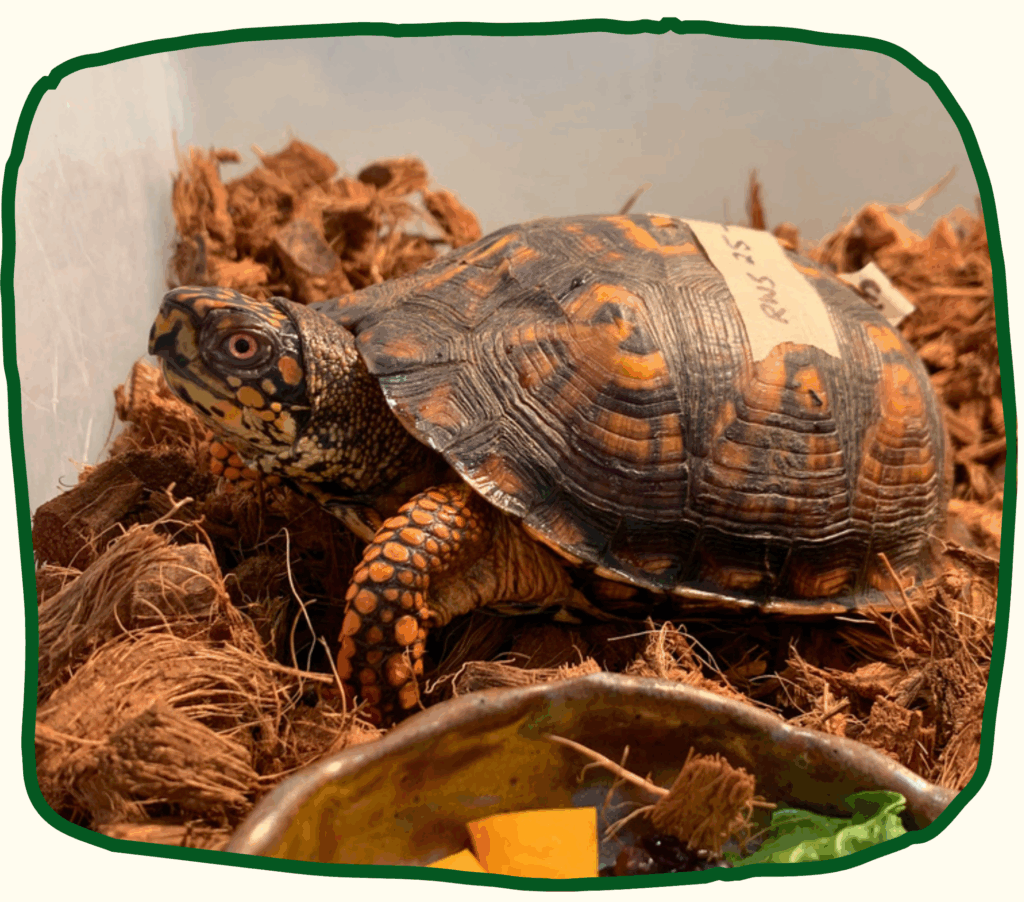
- 9 Eastern Box Turtles
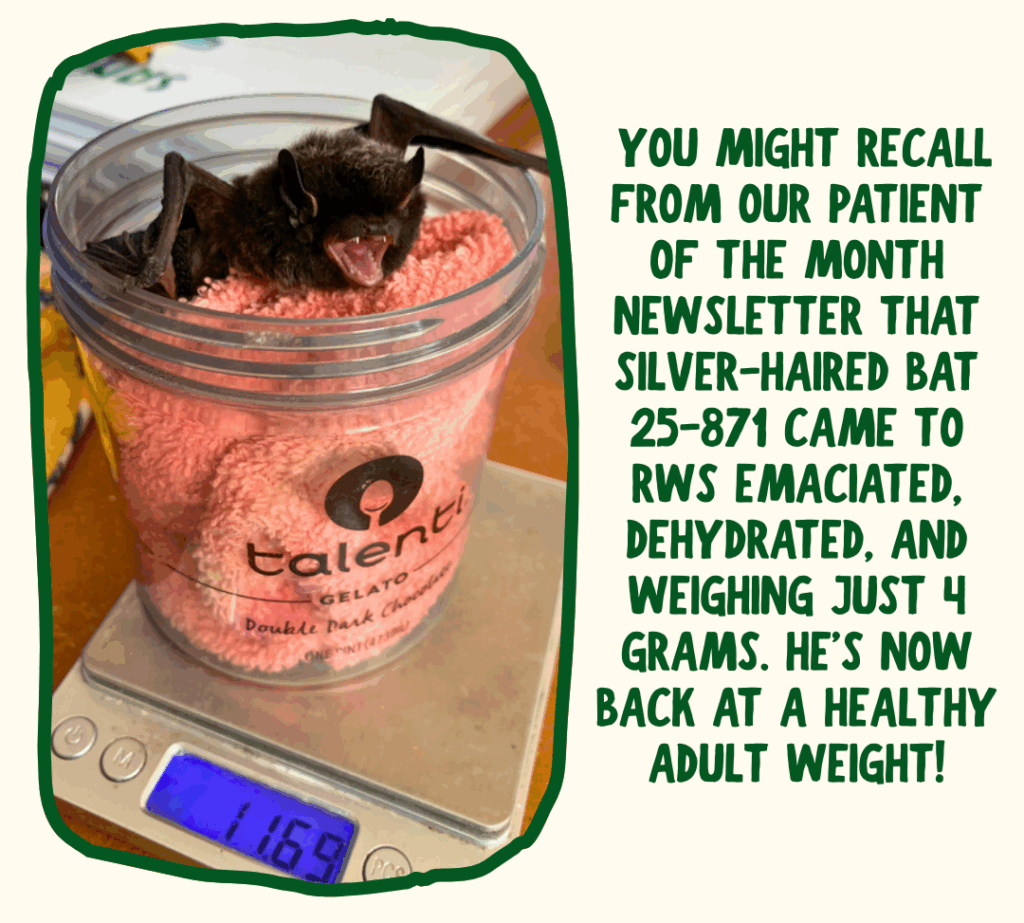
- 1 Silver-haired Bat (our patient of the month, in case you missed it!)
That list doesn’t include our 13 education ambassador animals, who live with us year-round. Even in freezing rain, every one of these critters needs food, warmth, and careful monitoring.
Rural Life’s Challenges
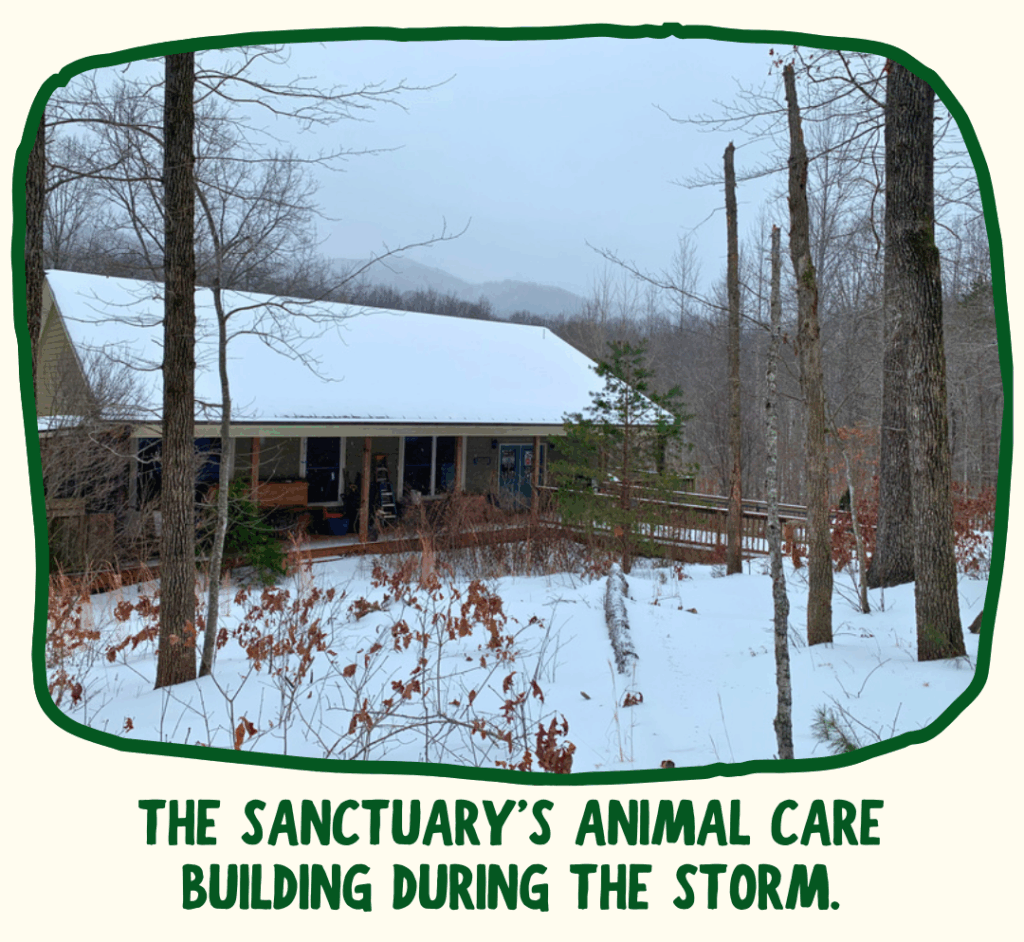
Our rural location in beautiful Nelson County is typically one of our biggest strengths. Our patients recover in a peaceful, truly wild environment, far from traffic noise and city stress. The downside? Rural life also means that when a winter storm hits, it really hits! RWS can become inaccessible for days at a time due to ice and snow. ❄️
Our central animal care building, Becca’s Haven, was constructed in 2014 with tough weather in mind. The building has a powerful generator that kicks in and fuels the whole facility if we lose electricity. Additionally, half of the first floor is a private apartment, rented to tenants who become permitted wildlife rehabilitators as part of their lease agreement. During a winter storm or other major weather event, those trusty tenants step in to care for animals until staff can safely reach the Sanctuary. 💪
It’s a wonderful system! Well, except for the fact that our apartment has been temporarily empty while facility renovations wrap up. Our new tenants aren’t moving in until February. With the storm fast approaching last week, we needed a new plan!
Plan B
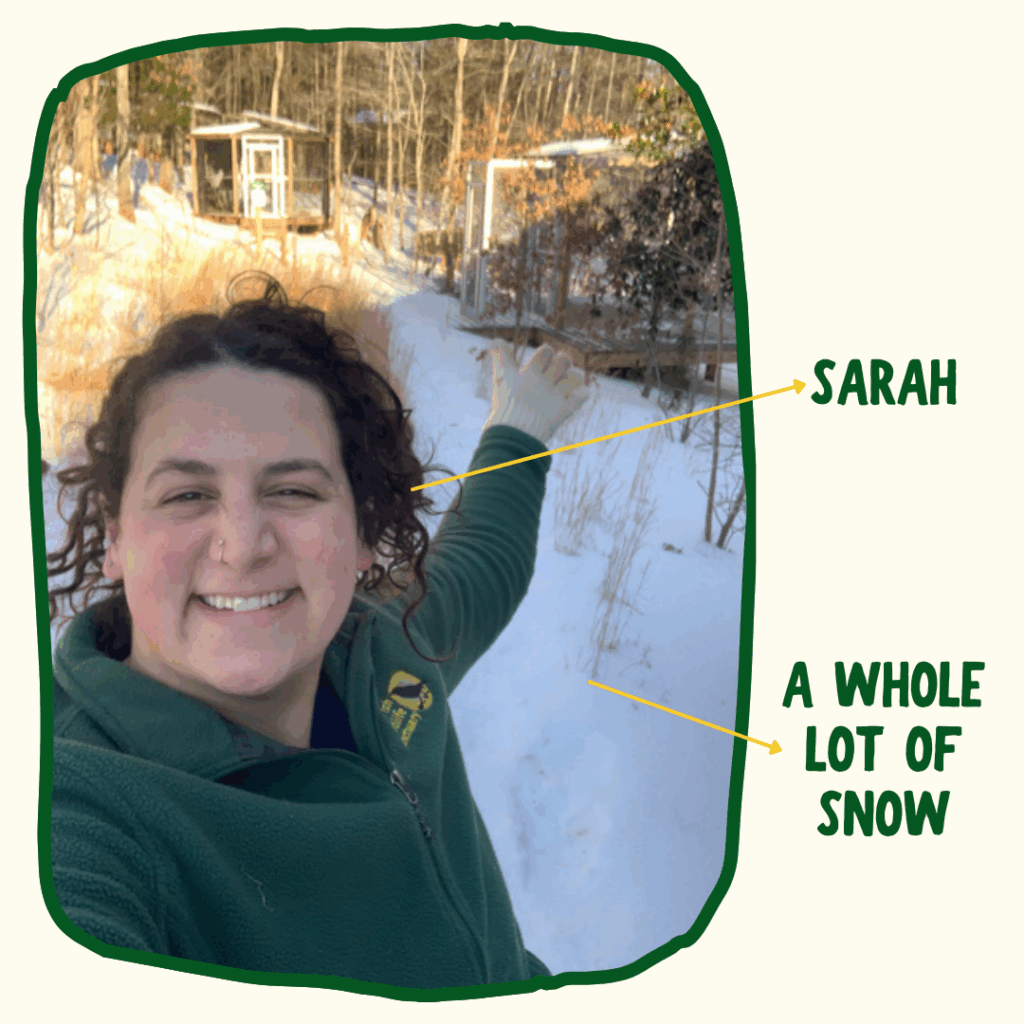
Our executive director, Sarah, opted to get snowed in at the Sanctuary and be on animal care duty for this winter storm. With an air mattress (loaned by one of our wonderful volunteers!), plenty of pasta, and her two dogs, Sarah “moved in” to the empty apartment on Saturday to ride out the weather. 🐶🐕
As you’re reading this, Sarah’s still there. We thought we’d have her share “A Day in the Life” so folks can learn how we operate and adapt to winter weather.
Wednesday 1/28 at 7:00AM
Gooooood morning! It’s day five of my winter storm adventure at RWS, and I’ve got the routine down. Coffee comes first! I firmly believe that a good office coffee maker is key to a successful wildlife rehab center.
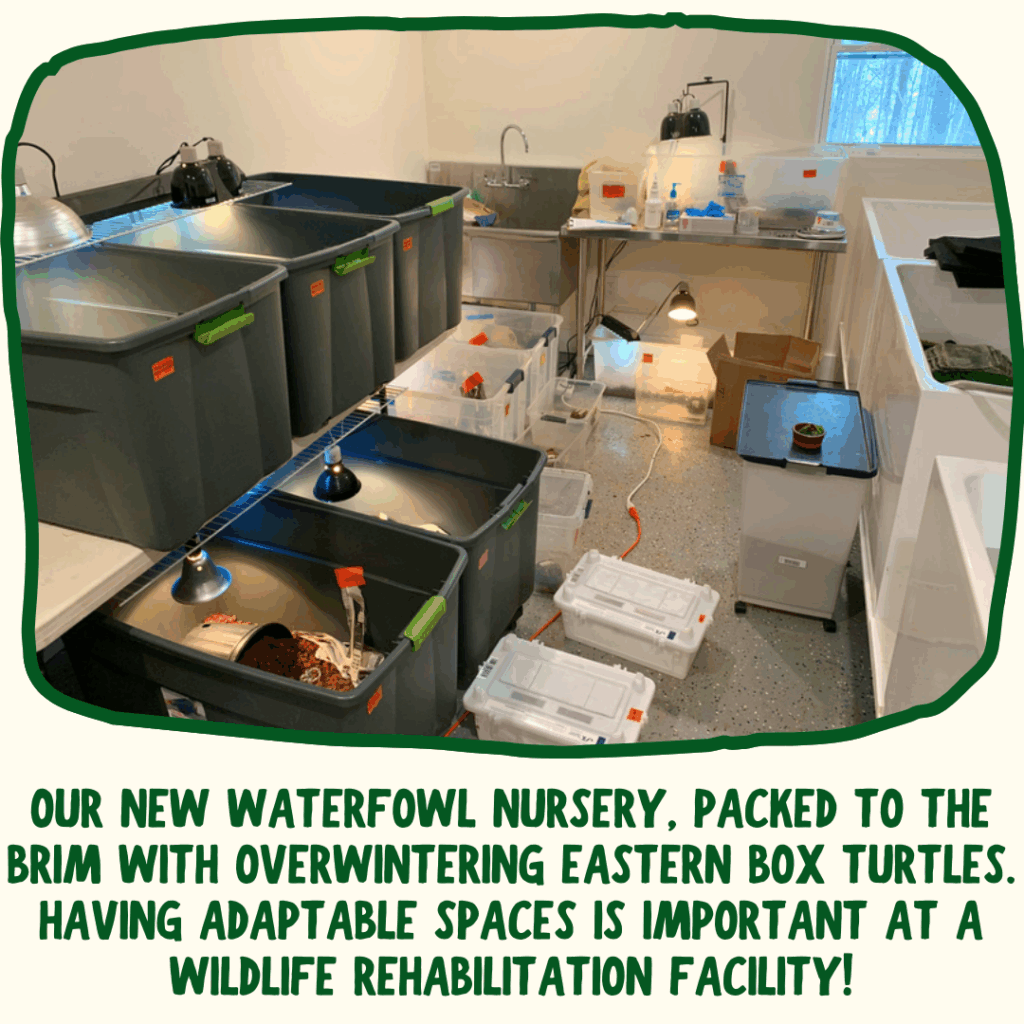
Next, I go downstairs to our new waterfowl care room. We’ve temporarily repurposed it into reptile patient headquarters for the winter. These turtles are spending the winter with us while recovering from incidents like car collisions or aural abscesses. I turn on basking lights for our Yellow-bellied Sliders, check on our box turtles, and start preparing their baths.
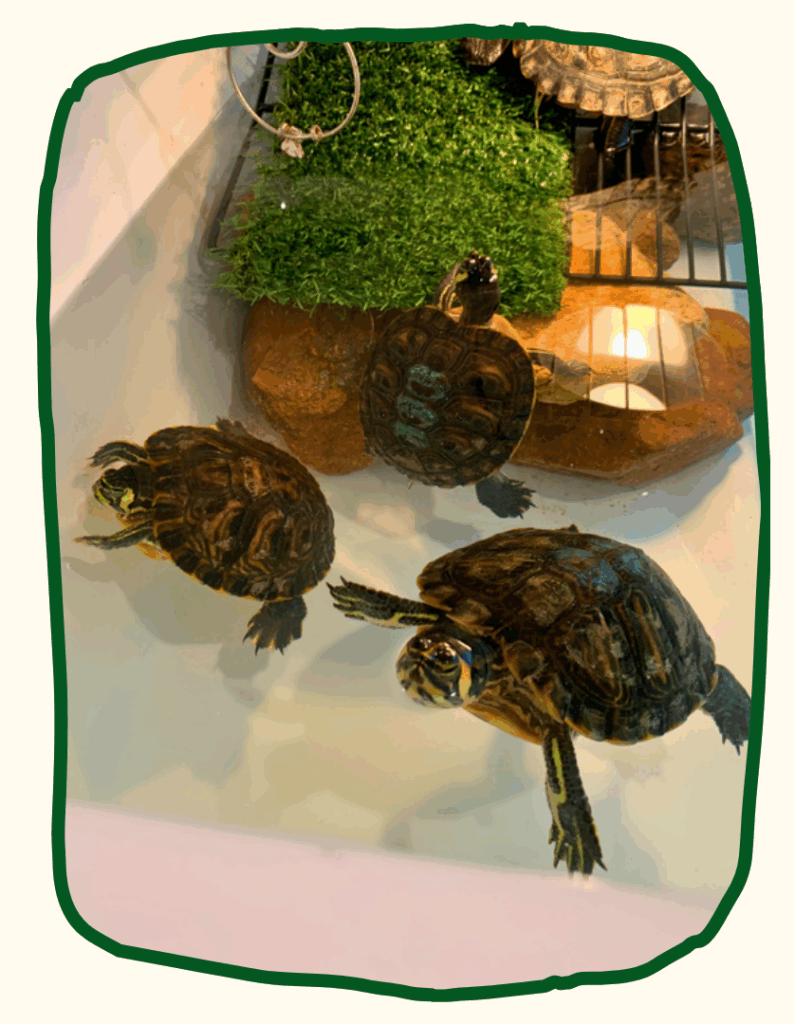
Yes, baths! 🛀 On Mondays, Wednesdays, and Fridays, our box turtle patients are each treated to a lukewarm bath. It keeps their skin stays nice and hydrated through the dry winter months. Each turtle’s bath is tailored to their individual needs, with strict hygiene between patients to prevent disease transmission.
I spend some time responding to our wildlife hotline voicemails and answering email inquiries before heading outside to check on Rosie and Jack, our ambassador Black Vulture and Red-tailed Hawk. We’ve made some additions to their enclosures to help them through these chilly days. Jack has a heat lamp over her favorite perch, and Rosie has a big crate stuffed with straw for insulation.
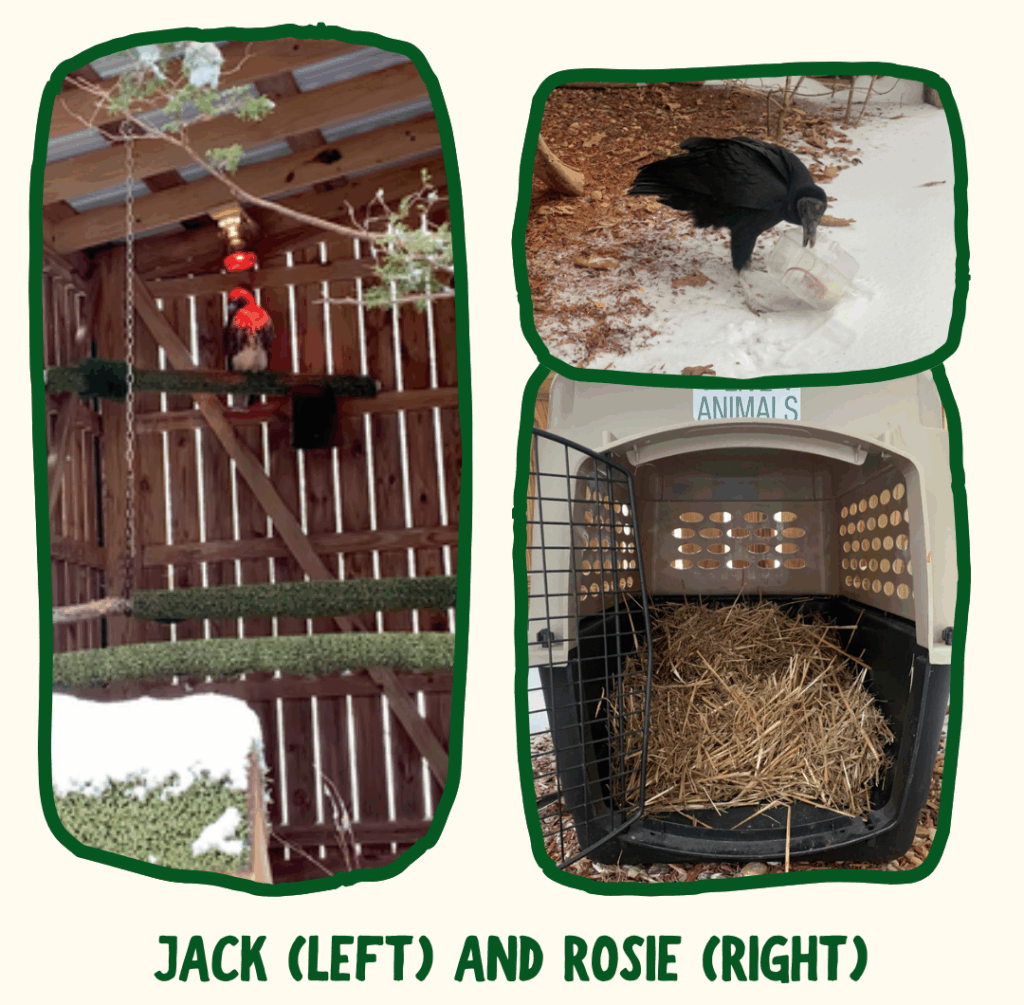
Rosie and Jack both eye me skeptically. I realize I’ve made the grave mistake of showing up to their enclosures without treats! 😆 I hurry back inside to our animal care kitchen and pop my imaginary chef’s hat on.
I always enjoy meal-prepping for our patients. It involves lots of tiny dishes, interesting species-specific diet plans, and exactly zero meals I’d personally eat. Can I interest anyone in some meat jell-o? No? Well, our aquatic turtles sure love it! 😆
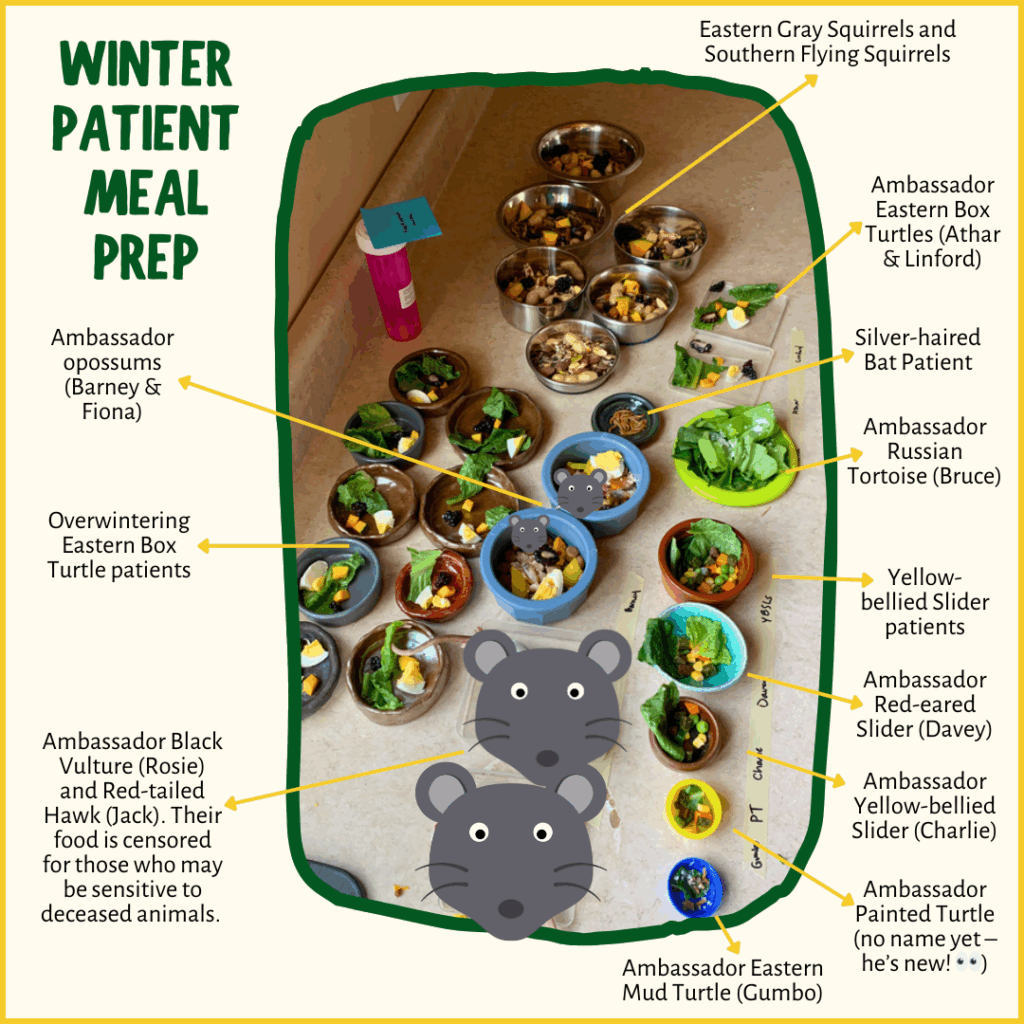
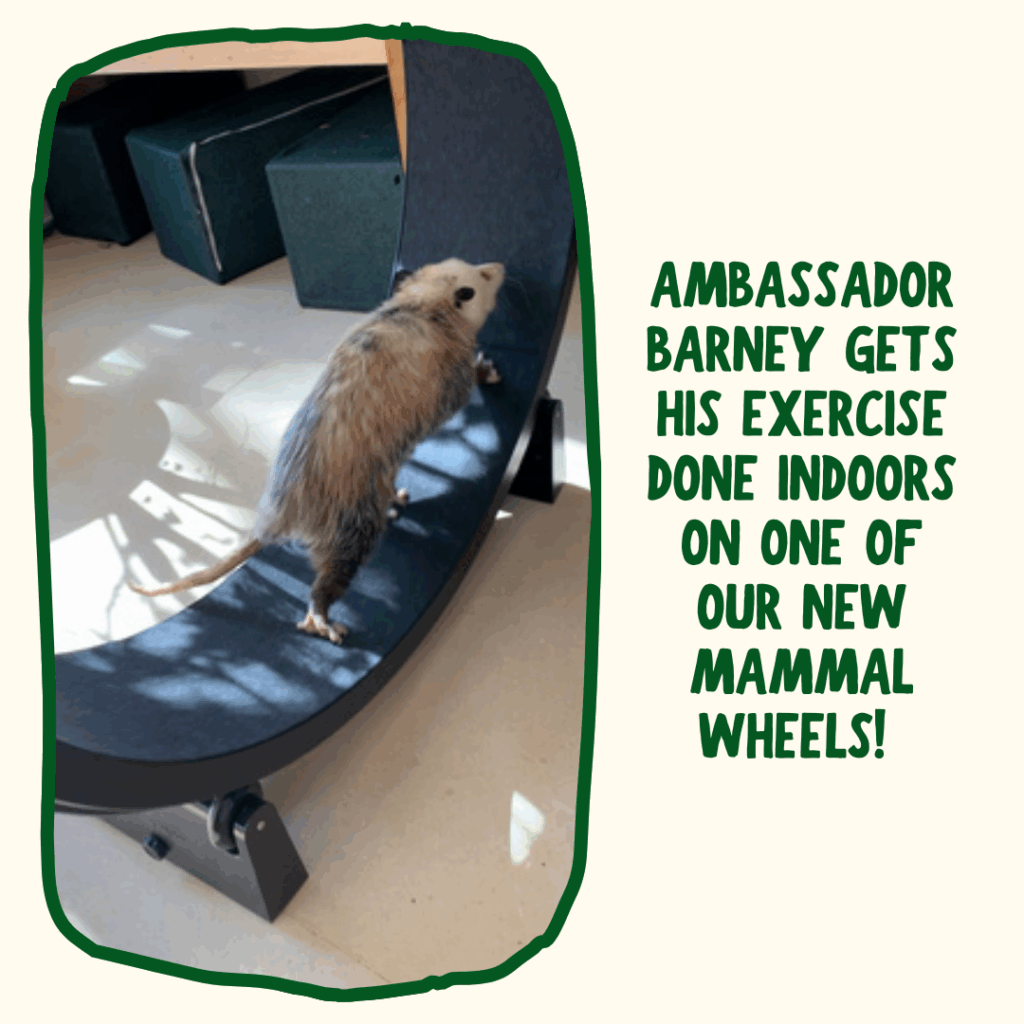
I also prepare some enrichment for our education ambassador opossums. Fiona and Barney are staying indoors through the cold spell, as they’re geriatric (2 and 3, respectively). Opossums are also not cold-tolerant as a species in the first place. Barney didn’t take long to open his food puzzle (watch below), so I also prepare a couple foraging trays with snow and leaves from outside.
Late Morning
After getting laundry started, I head back outdoors to deliver meals to Rosie, Jack, and our flying squirrel and Eastern Gray Squirrel patients. The doors to the squirrel enclosures need to be dug out again after ice shifted and refroze overnight, so I get my workout in!
I check on every enclosure’s patients to make sure they’re dry and cozy. They’re all doing great, thanks in large part to the forward-thinking of Chandler, Elka, and Jillian – the incredible rehabilitation staff at RWS! My colleagues spent time before the storm swapping out linens from their nest boxes to straw. Fleece and synthetics can absorb moisture and freeze, making it a dangerous substrate for frigid temps. They also set up each enclosure with a discarded Christmas tree. This provides natural shelter for each group and plenty of dry pine needles to nest in. Cozy bliss!
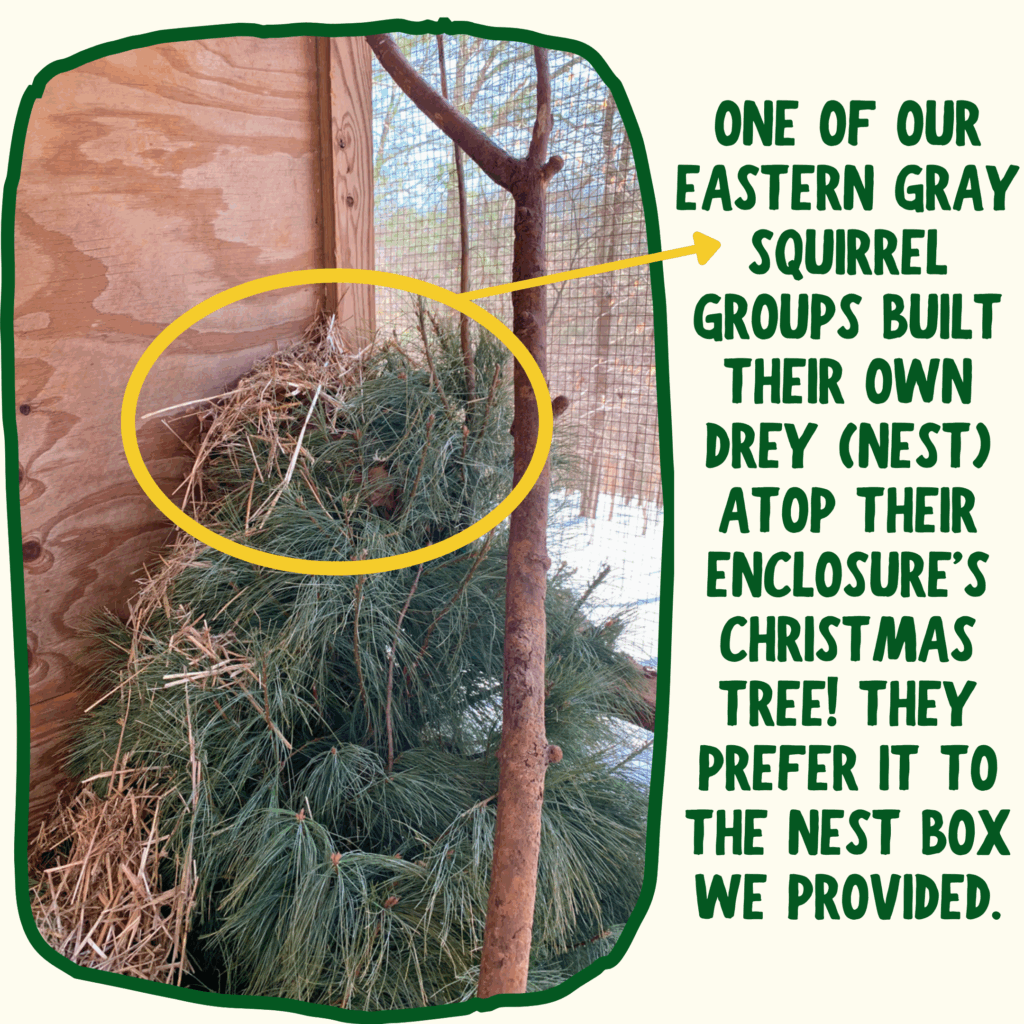
Though our trio of overwintering Southern Flying Squirrel patients don’t have a Christmas tree, they have something just as great: a heated nest box. Our ingenious facilities manager, Jeff, installed a heating pad safely into their nest box to keep them toasty all season long. After confirming that all of our outdoor patients are totally unbothered by the single-digit temps, I’m reminded how lucky I am to work with such compassionate, talented people at RWS who prep the patients so well. Thanks, team!
Mid-Afternoon
After shoveling out some more enclosures, I’m happy to head inside and warm up by working on reports and grant applications for a couple of hours. (I do this with hot chocolate by my side, of course.)
Once I’ve swept, mopped, and delivered a fresh meal to our overwintering Silver-haired Bat patient, I’m ready to go back to “my” apartment and relax.
Evening
I pop over to the rehab facility around ten o’clock to turn off that basking light for our Yellow-bellied Slider patients. I’ve given them a few more hours of sunny warmth, since they love it. It’s not like the commute from my air mattress to their tank is too long. 😆
In the brief trek back to the apartment in the dark, I take a second to enjoy the peaceful quiet despite my cold toes. The sky is full of stars, untouched by light pollution, and the night is so still. And then, as if I’m in a movie, I hear a Great Horned Owl hooting a courtship call from a nearby tree! 🦉 I couldn’t have asked for a better nightcap.
And there you have it: a day in the life, snowed in at RWS. While we hope to reopen soon and begin welcoming new patients again, one thing is certain in the meantime: no matter the weather or the chaos it brings, we’ll always be ready to care for the animals at the Sanctuary who need us.
Thank you for reading this month’s Critter Corner and for making our work possible!
Stay tuned for our fun Valentine’s Day announcement, coming early next week. 👀💘
January 29, 2026
Published:


Be the first to comment!