


Something very exciting happened at Rockfish Wildlife Sanctuary last week. 👀
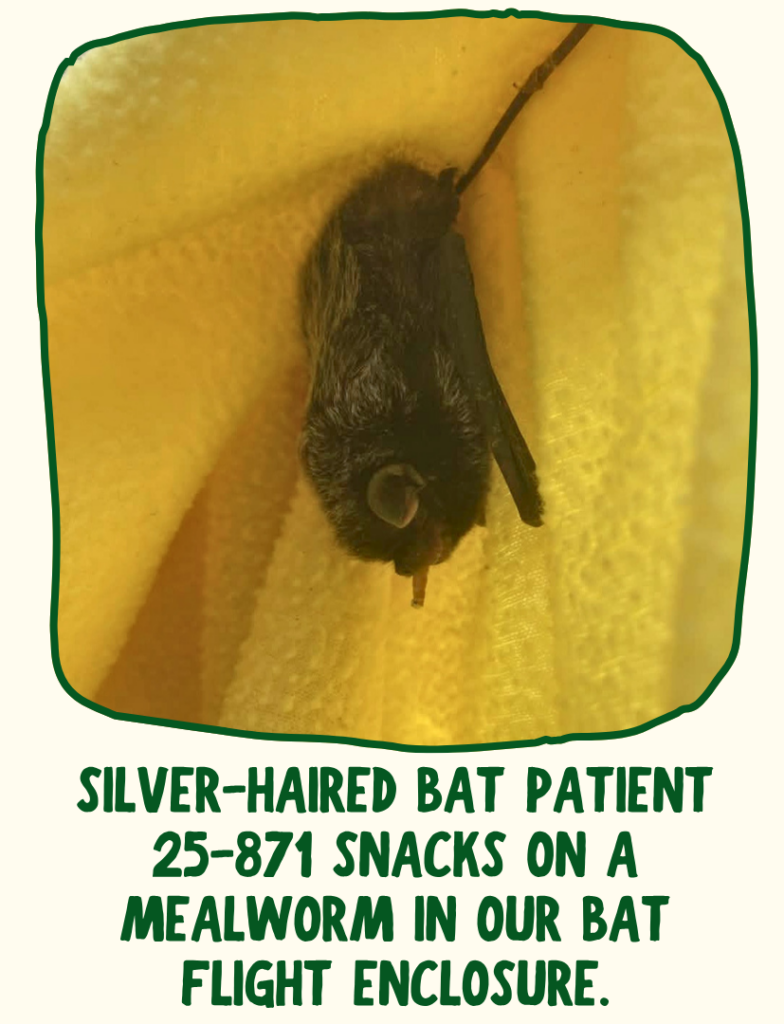
We’re not talking about the fact that we’ve admitted over 50 patients already or that we released our overwintering flying squirrels. We’re not talking about how the silver-haired bat we featured back in January is flying laps around our bat enclosure these days in preparation for release.
Okay, we know that those are exciting updates – and we’re certainly celebrating them! But what really got us going last week was receiving something all wildlife rehabilitators dream about: a new refrigerator. 🥳

We’re so grateful to the generous supporter who donated this sparkling, barely-used fridge to RWS. ❤️ It’s stainless steel for easy cleaning, and it’s much bigger than the fridge we’ve had since we moved into our Becca’s Haven building over a decade ago. This beautiful upgraded fridge offers more space for the produce, mammal formula, bird formula, supplements, and prey items that we need to feed all of the hungry mouths coming our way.
And boy, there are a lot of feedings! Each year, our team prepares well over 50,000 wildlife meals and hand-feeds baby animal patients about 85,000 times!
So for this month’s Critter Corner, we wanted to shed some light on the complex, fascinating process behind hand-feeding the hundreds of baby mammals we receive at RWS.
Stay tuned for a future Critter Corner about feeding baby birds! For now, though, we’re knocking on wood that baby bird admissions will hold off a little longer. 😅
Hydration is Key!
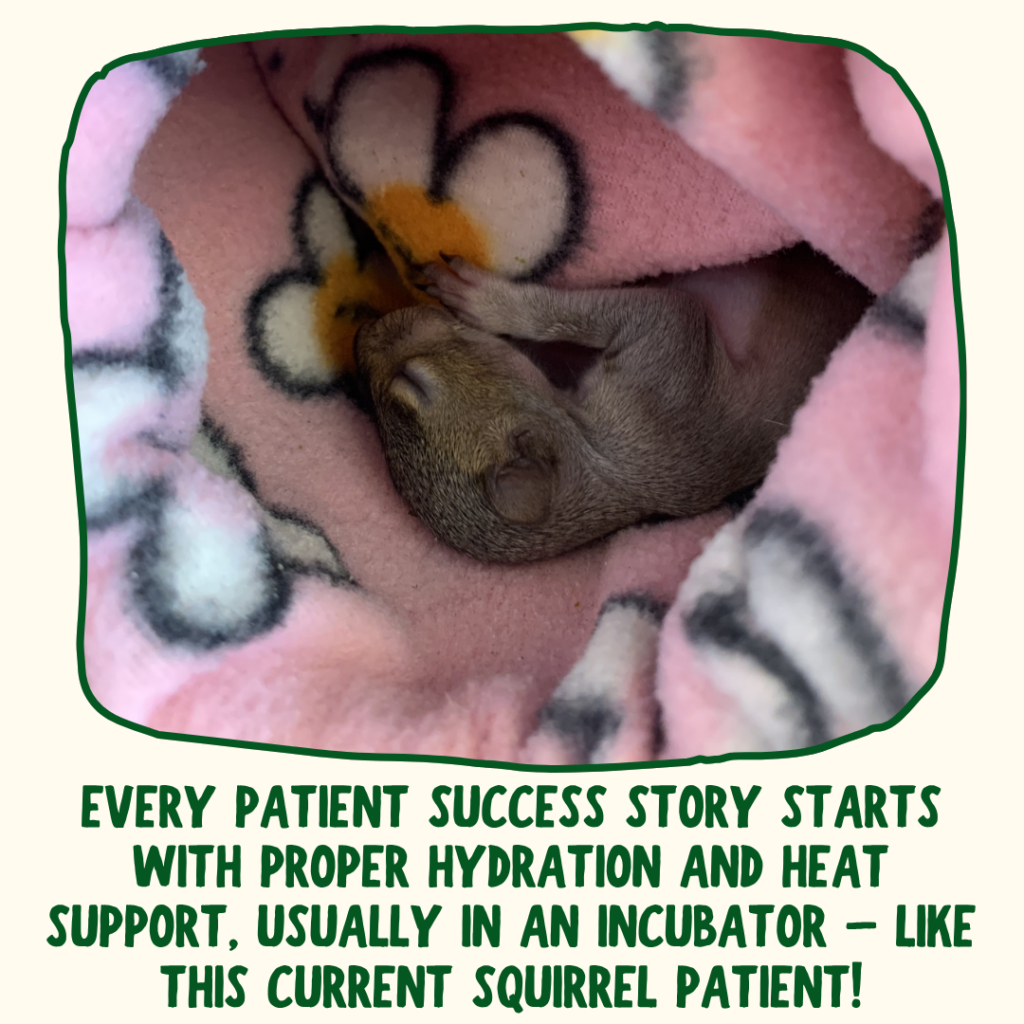
Just like with humans, every new patient’s nutrition journey starts with warmth and hydration! 💦 Our bodies cannot digest food if we are not sufficiently warm for our organs to function. Additionally, it’s wise to presume that even the healthiest-seeming orphaned animal is at least mildly dehydrated given the length of time they have been separated from their mother. Though we can determine the baby’s level of dehydration using clinical signs noted during its intake exam, virtually every new patient will need to receive oral electrolytes or subcutaneous fluid therapy.
We don’t want to dampen the mood, but this is just one of approximately 2 million reasons why wildlife rehabilitation is a “don’t try this at home, folks” job. Attempting to feed a wild animal without a permit is not only illegal – it is deadly. Without ensuring that animal is sufficiently warm and hydrated, and without the training to safely syringe-feed, you risk aspiration pneumonia, gastrointestinal distress, stress-induced cardiac events, and other life-threatening complications. 😔
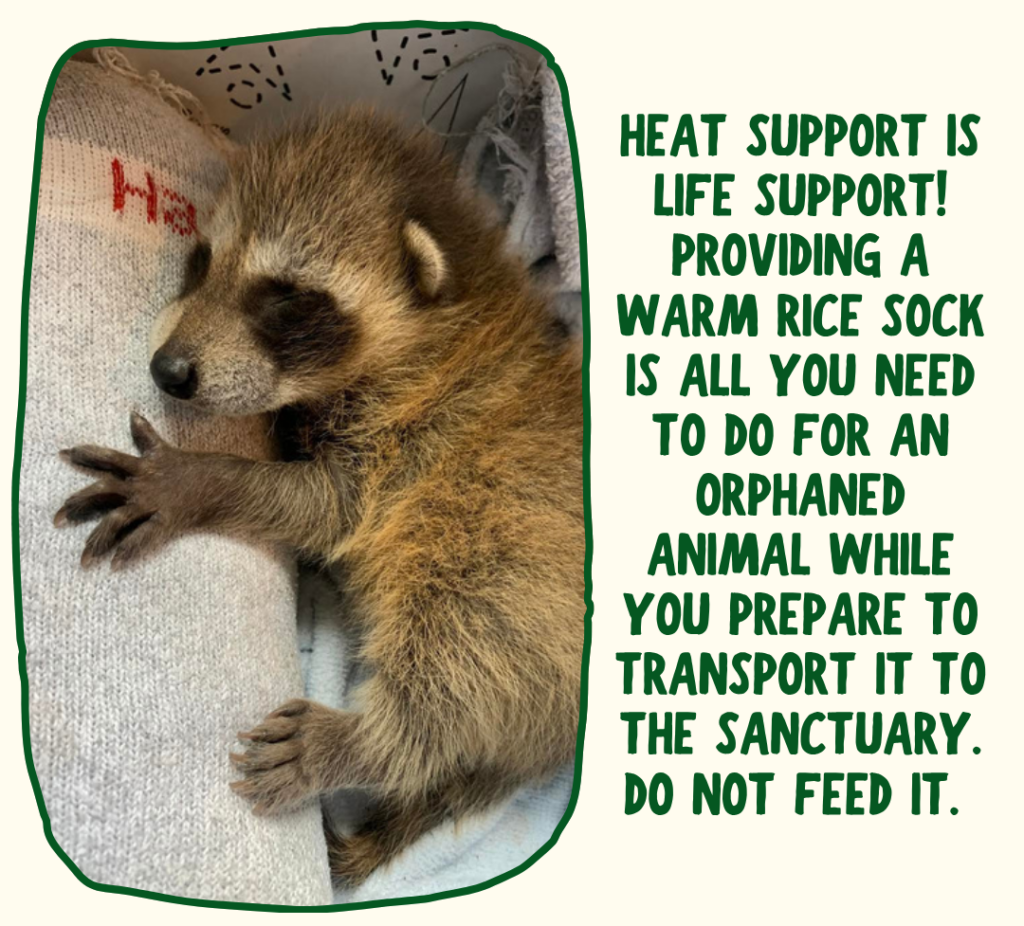
If you’ve found a young animal you suspect needs help this spring, simply call our wildlife hotline at 434-263-4954 before attempting any kind of care on your own. ☎️ We can help you determine if it needs professional help and coach you through providing proper heat support while you work on transporting the animal to us.
The Formula Facts
Once we’ve gotten a baby animal properly hydrated and warm, we’re ready to get some calories into them!
As you likely know, young mammals need milk to survive. The type of milk can make a life-or-death difference! 🥛 Humans are pretty much the only mammals that drink milk from other species. (Yep, it’s pretty weird.) In the wild, you won’t find a baby raccoon drinking cow milk, goat milk, or kitten milk replacement formula. Those milks don’t match the specific nutrition that little raccoon needs to grow appropriately.
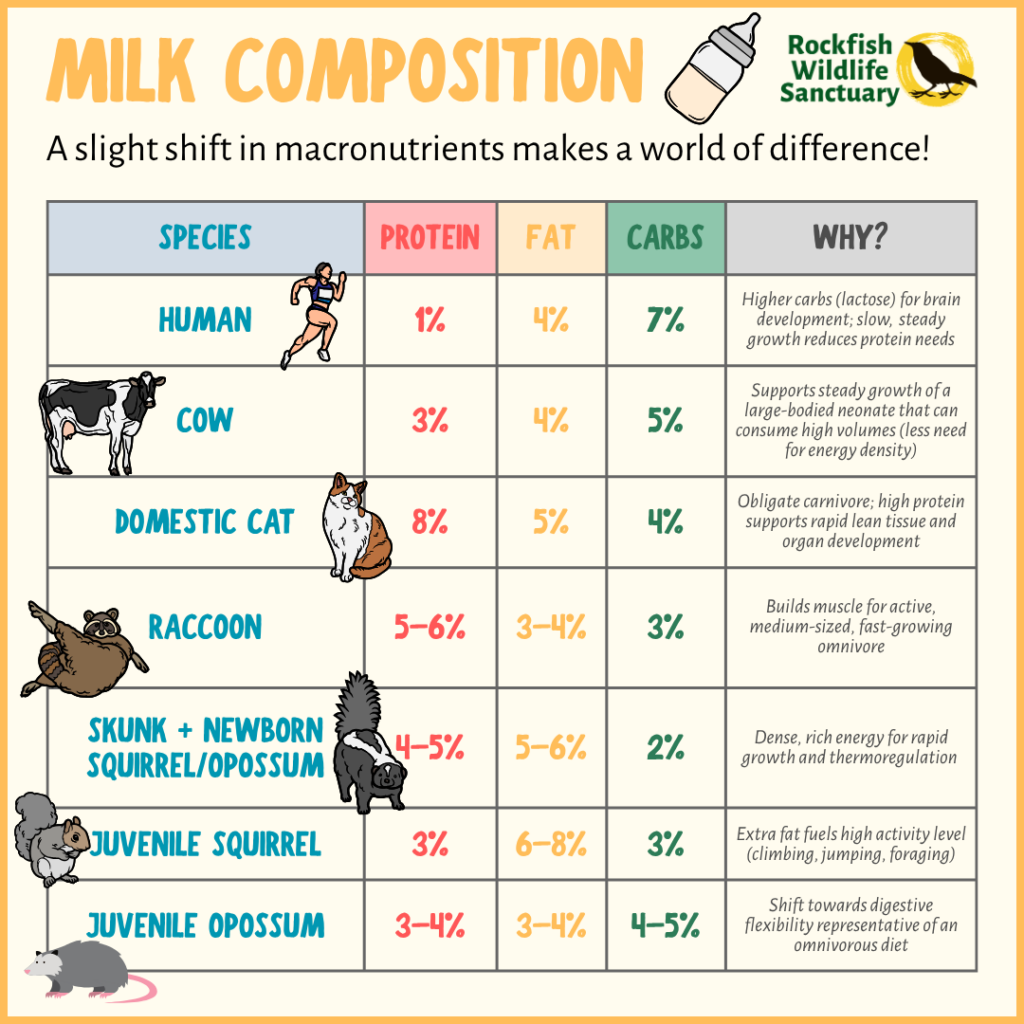
At the root of all of this are the three essential macronutrients that all animals need to survive: fat, protein, and carbohydrates. 👩🔬 Species have evolved to produce milk with different macronutrient ratios that support their unique natural history. Even a 1% difference in composition is significant when it comes to producing evolutionarily fit offspring!
Leave It To The Pros
These different compositions mean that feeding the wrong kind of milk replacement formula can lead to severe consequences for a vulnerable newborn baby. These complications include stunted growth, skeletal diseases, digestive issues, and other life-threatening complications.
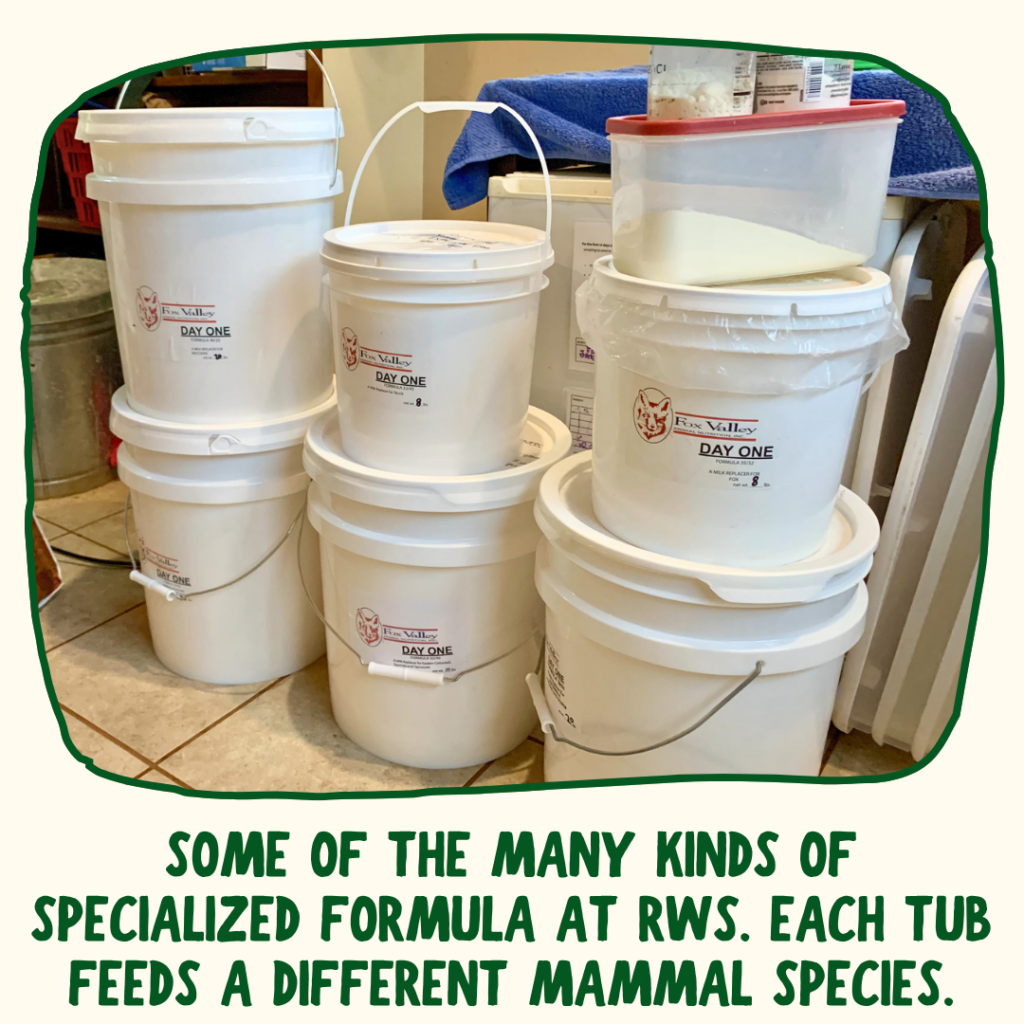
Luckily, we can order specialized formula to help us care for all of these species and more! 🍼 They’re made to match that species’ mother’s milk as closely as possible, just like human formula mimics breast milk. Another reason not to try rehabbing without a permit? Each of these tubs costs about $250! 😅 Our patients deserve the very best, though. We’re so grateful to our many supporters who help us purchase these formula mixes every spring.
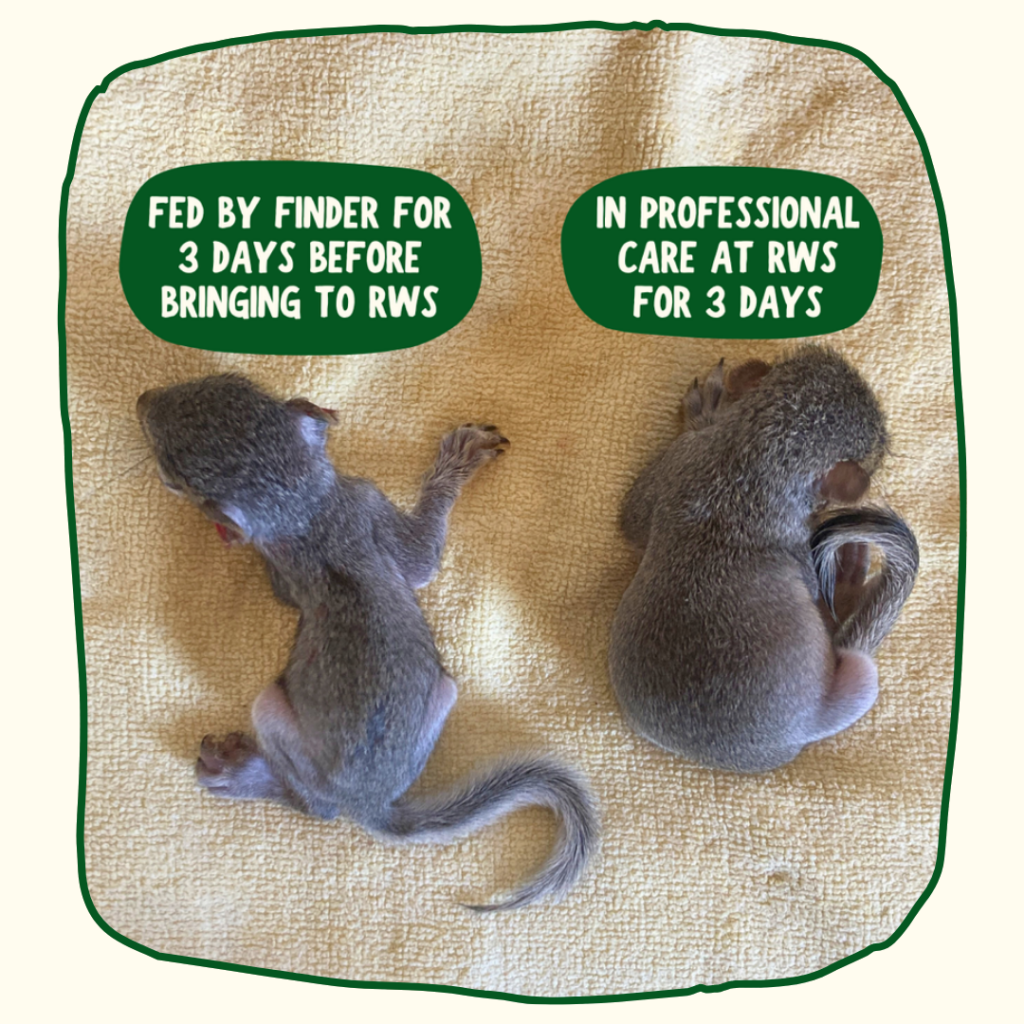
Check out the difference between a baby squirrel who was fed kitten milk by their finder for three days and a squirrel who was only fed by the team at RWS during that time. They’re the same developmental age, but you can see that the two squirrels are in drastically different body condition. (We were thankfully able to get the finder-fed squirrel feeling better, and it was eventually released!)
Feeding Schedules
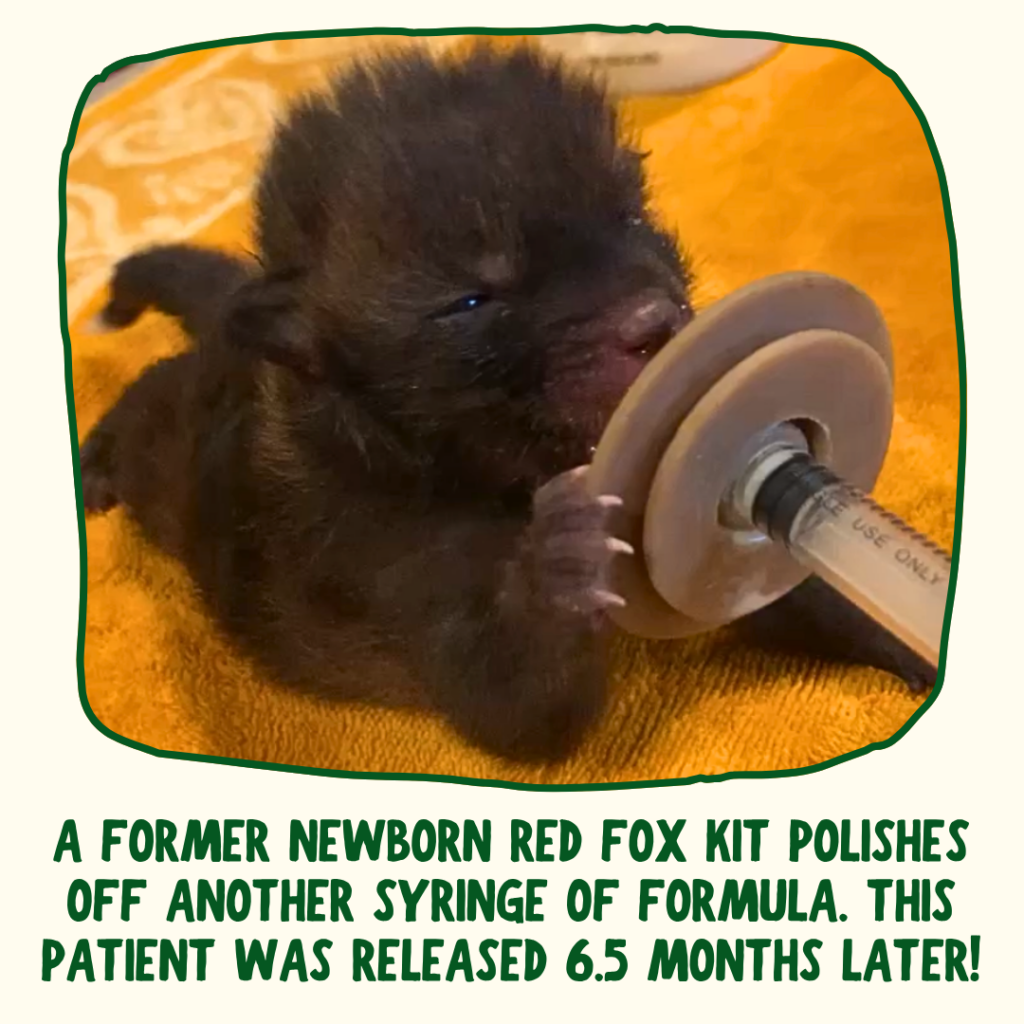
After determining the appropriate type of formula for a new baby mammal patient, we’ll use their weight and developmental age to figure out how many times per day they’ll need to be fed. ⏰ This varies widely, as you can imagine. While older raccoons might need just one supplementary bottle-feeding per day as they explore solid foods on their own, neonate bats are fed every 3 hours, 24/7.
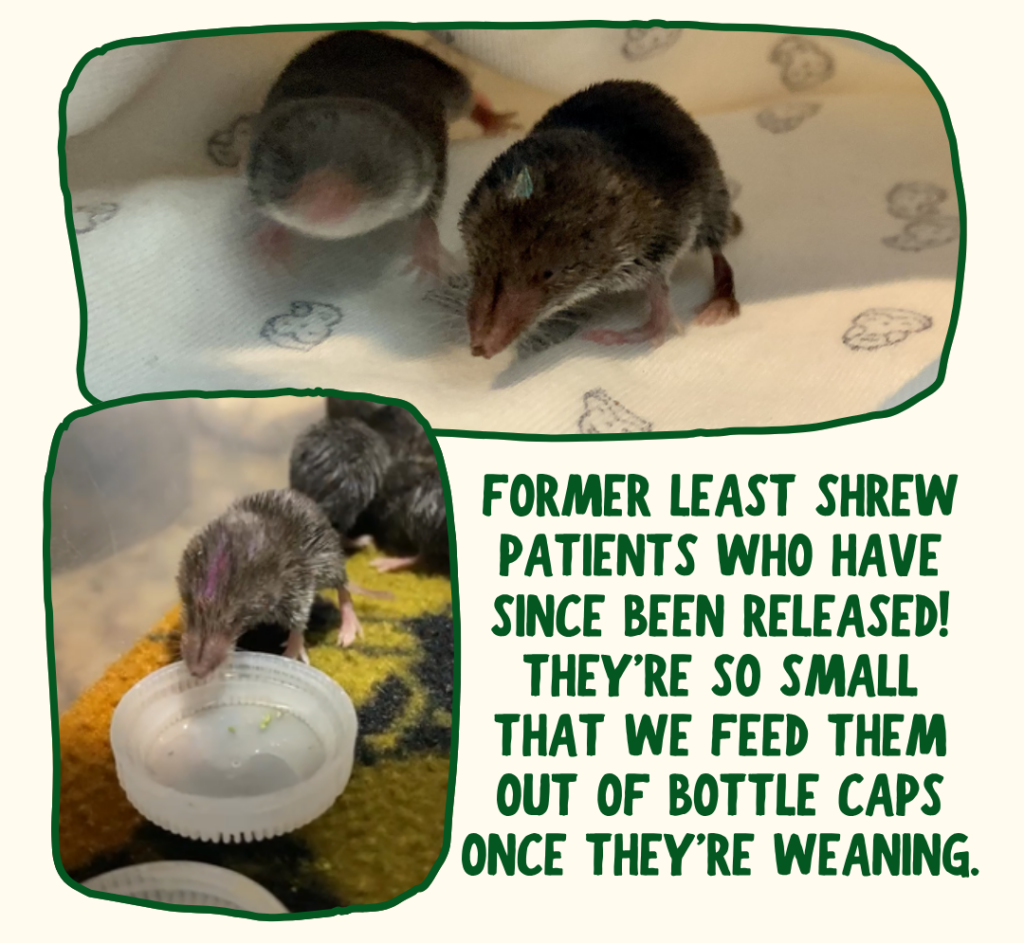
That said, bats aren’t even our most labor-intensive formula-drinkers. Shrews take the cake there! These teeny mammals have blisteringly fast metabolisms from birth. Some adult shrews can eat 3x their body weight every day — which would be like a 200-pound adult needing to eat 600 pounds of food just to survive the day. Not even Joey Chestnut could keep up with a shrew! To safely raise neonate shrew patients, our team must feed them every single hour, all day and all night long. Thankfully for us, they typically pick up self-feeding pretty quickly. You go, shrews. 💪
HOW does hand-feeding work?
At each of those feeding times, we’ll gather the supplies we need for safety and success, including:
- 🍼 Bulk formula, prepared nightly and refrigerated, plus a small cup to portion it into.
- 🫖 Electric kettle and thermos to warm up allotted formula.
- 🌡️ Liquid thermometer to monitor formula temperature and prevent overheating.
- 😷 PPE: we never feed or handle any patient without wearing gloves and a mask!
- 🛌 A heating pad and fleece mat to create a warm station for animals who cannot yet thermoregulate.
- 🧻 Tissues to stimulate each baby’s urination and defecation reflexes. (Most wild mammal babies need their mom to lick their genitals to stimulate potty time. Thankfully, humans do not.)
- 📏 The appropriately sized syringes, nipples, or tubes.
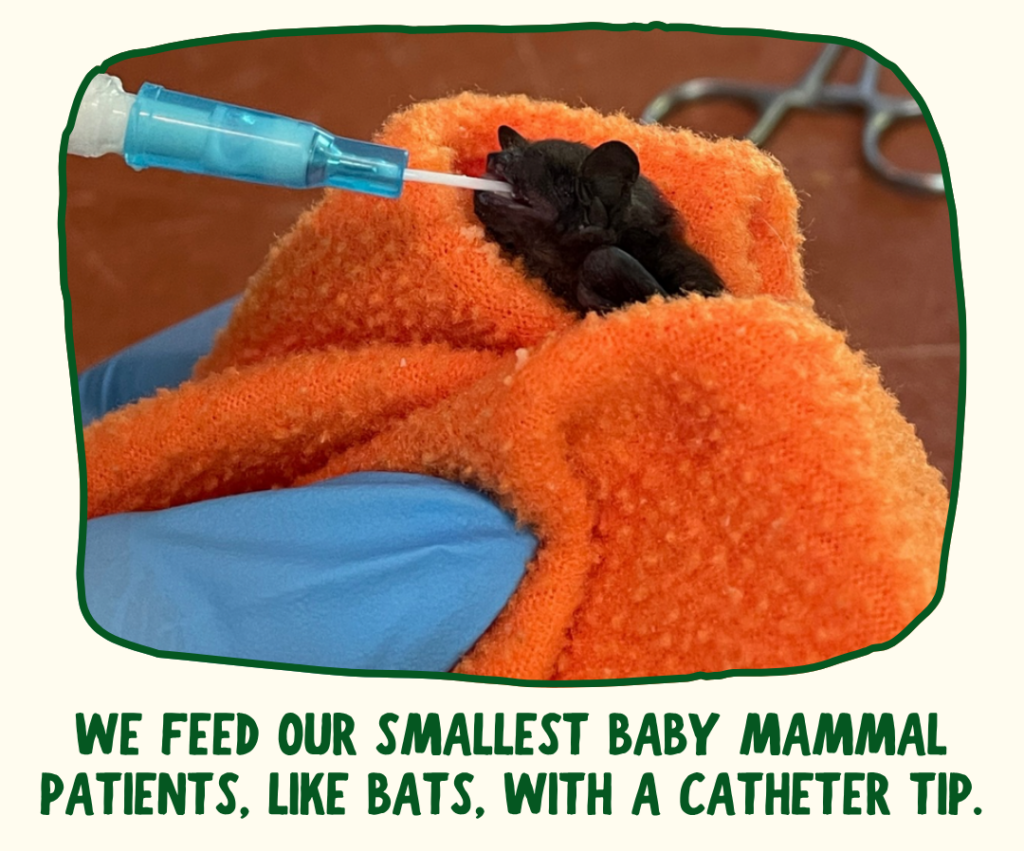
We never use actual bottles like folks do for human babies, as it’s very difficult to control formula flow for teeny animals. Using a syringe instead allows us to carefully monitor flow while the patient suckles. Many baby critters are so enthusiastic that they’d drink too fast if we didn’t forcefully pull backwards on the syringe at the same time! (Looking at you, raccoons. 🦝) We attach nipples of all sizes to the syringes, from catheter tips threaded through a teeny nipple for mice and bats to dog-sized nipples for raccoons and foxes.
Tube-Feeding
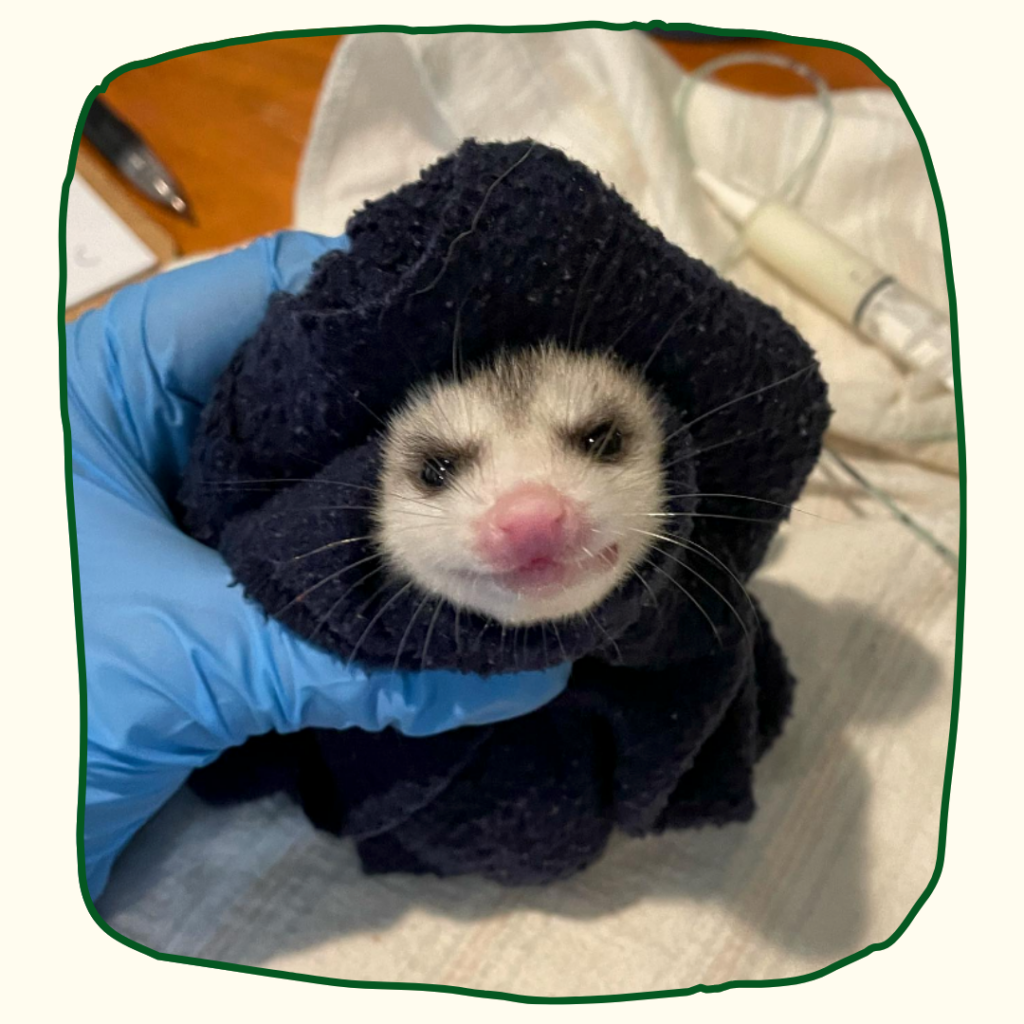
We do need to tube-feed certain species, too! Take the Virginia Opossum, for example, which is by far our most common patient. We care for roughly 200-250 orphaned joeys annually! Their natural history is charmingly freaky. 😳 The teeny babies lack a suckling reflex, instead swallowing their mother’s nipple. It grows with the joey, lengthening to deliver milk straight to the joey’s stomach. We emulate that natural process by carefully inserting a tube into the patient’s mouth, gently pushing it down to their stomach, and filling their belly with the right amount of formula based on their body size.
While tube-feeding might not sound too pleasant to you, it’s extremely efficient, painless, and natural for the little baby opossum. Plus, we often “burrito” young opossums to keep them safely swaddled during their feedings…which results in adorable moments like this. ⬇️
Teamwork Makes The Dream Work
You might be wondering: how do we feed such a high volume of patients? Luckily, that’s where our staff and volunteer force step in! Though the Sanctuary has 3 full-time animal care staff members year-round, our team swells in the spring and summer to help us care for all of the babies who need us. Our seasonal full-time rehabber, Rita, starts just this week and will be working with RWS until October. We’ll have eight total interns (a record!) joining our team this season, too. We’re also beginning to welcome back our wonderful volunteer force after a winter season break. Together, these committed critter-lovers will help our staff safely and effectively perform thousands of feedings. 💪
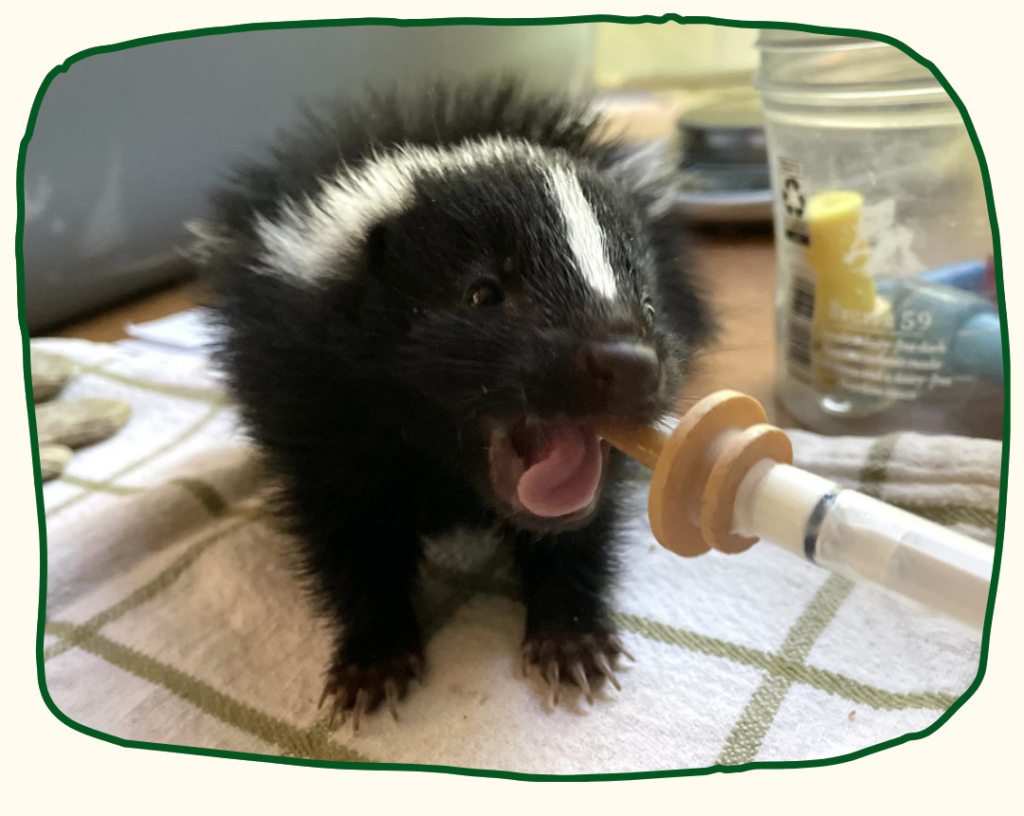
All of that effort and all of those trained hands support a simple truth: feeding orphaned baby mammals is not a one-size-fits-all job. No two patients are the same, even within the same species! Our commitment to meeting each animal’s individual needs and developmental stage has been a core value at RWS since our founding in 2004.
Though our patient load has grown exponentially over the years, we haven’t lost sight of that commitment. We’ve simply had to grow our capacity to provide that same high standard of care at a much greater volume. Our staff, interns, volunteers, and supporters make that possible every single day! ❤️
Thank you for reading our March Critter Corner! If you need us, we’ll be feeding baby squirrels.
March 30, 2026
Published:


Be the first to comment!