


When it rains, it pours. Every April, it pours opossums! 🌧️
This year has been no different. This past week, we admitted 30 orphaned baby opossum patients in a single day! We’re also ahead of patient admission numbers compared to this same time last year by about 25%…mostly due to opossums.
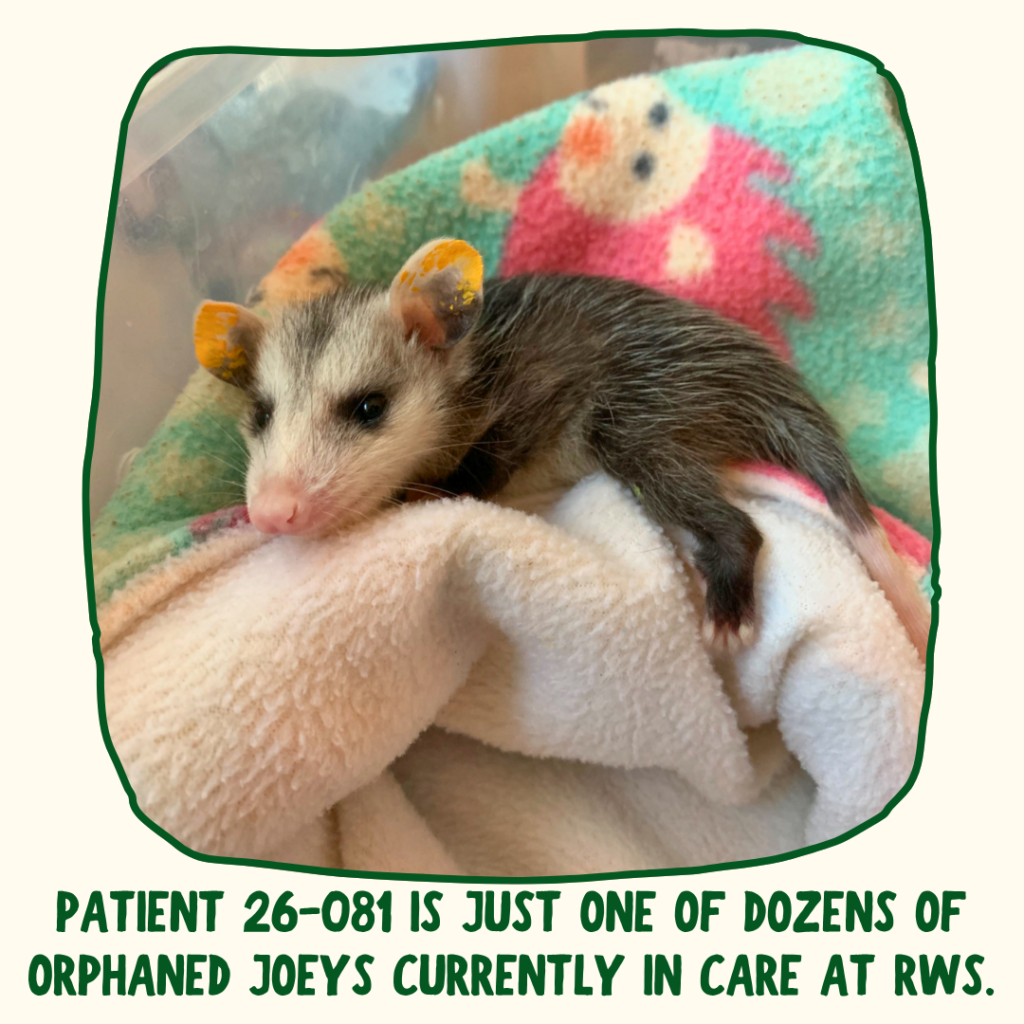
One group of patients we’ve admitted is Nursery Group K, consisting of Virginia Opossum patients 26-074 to 26-082.
Their rescue story is a familiar one. A community member noticed a dead opossum on the road outside their home in North Chesterfield and decided to investigate, knowing that baby opossums can sometimes survive in their mother’s pouch even after a collision. In fact, that is exactly how the vast majority of the 200+ orphaned joeys we treat every year are rescued. 🚗
Lo and behold – babies galore! The little joeys were still alive, so their rescuer brought them to our friends at Chickahominy Wildlife right away, where their recovery journeys began. The squad of opossum patients was then transferred to RWS for continued care.
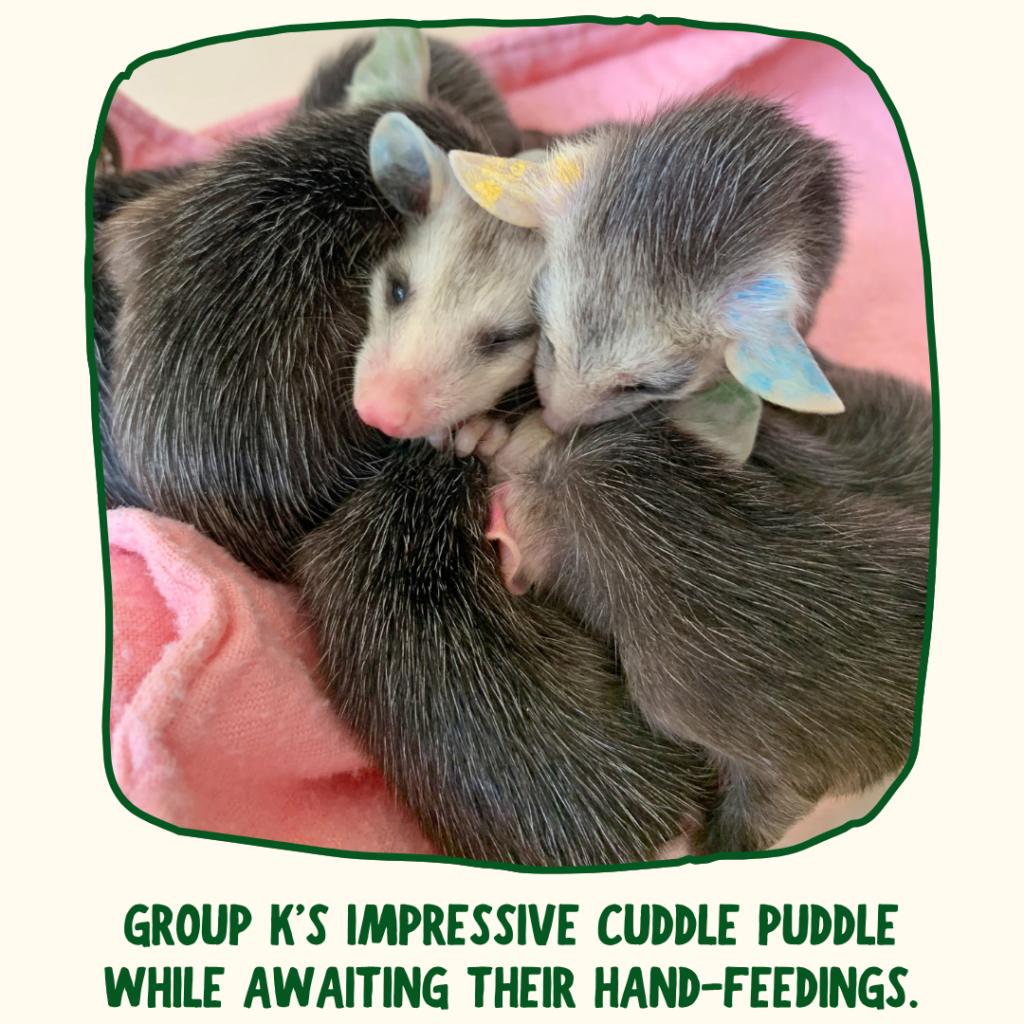
Group K’s patients were all roughly 50 grams upon admission, having just barely opened their eyes. At that size, they would still be spending nearly all of their time inside their mother’s pouch. Yes, pouch – the Virginia Opossum is the USA’s only native marsupial! 🦘🐨
When we receive joeys this teeny, we know we need to get them on the right track to recovery ASAP due to their rapid growth rate. Opossums are typically totally independent from mom around four months old and usually only live one year in the wild. This means there’s very little room for error early on, and getting their care right from the start is critical.
So why would one of the most charming, most adorable native species live for such a short time? (It’s not fair!) The answer more or less boils down to the fact that, evolutionarily speaking, the Virginia Opossum abides by a “live fast, die young” mantra. They reach sexual maturity around 7–9 months of age and can have 1–3 litters per year, with each litter producing up to 13 viable babies. Your body would also probably age extra fast if you had 39 babies before you turned 2. 🫠
The Virginia Opossum isn’t winning any “Mother of the Year” awards anytime soon by human standards. 😅 She spreads her parental investment across all of those babies rather than providing intensive care to each individual. However, this is a successful reproductive strategy because it’s likely that at least one of those little joeys will survive until reproductive age. Even the joeys that don’t survive will play important ecological roles as prey, supporting predators like raptors and foxes.
That might sound morbid, but don’t fret – the mighty opossum has proven itself to be an evolutionary champion. Opossums have been around since the age of the dinosaurs, and even the “modern” Didelphis virginiana you see in your backyard today existed for millions of years before Homo sapiens appeared. (Frankly, opossums will probably be here long after us, too.) 🦖🦕
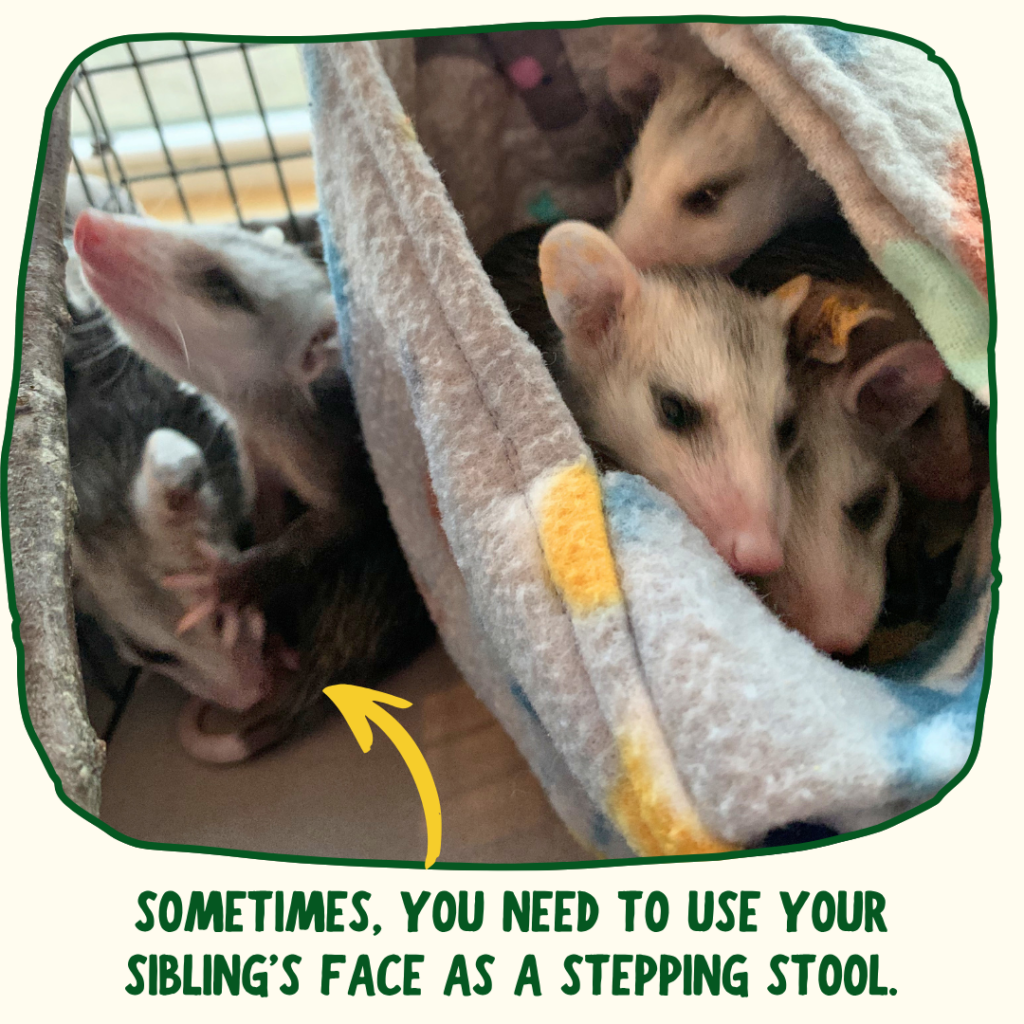
That natural history is exactly why it’s so important that an orphaned joey is brought to a licensed wildlife rehabilitator immediately. 🚑 With a species that grows so quickly, even a short period of improper care can cause permanent damage. We sadly see the consequences of that all too often. Our education ambassador opossum, Fiona, developed metabolic bone disease after being fed an inappropriate formula as a baby by a well-intentioned community member.
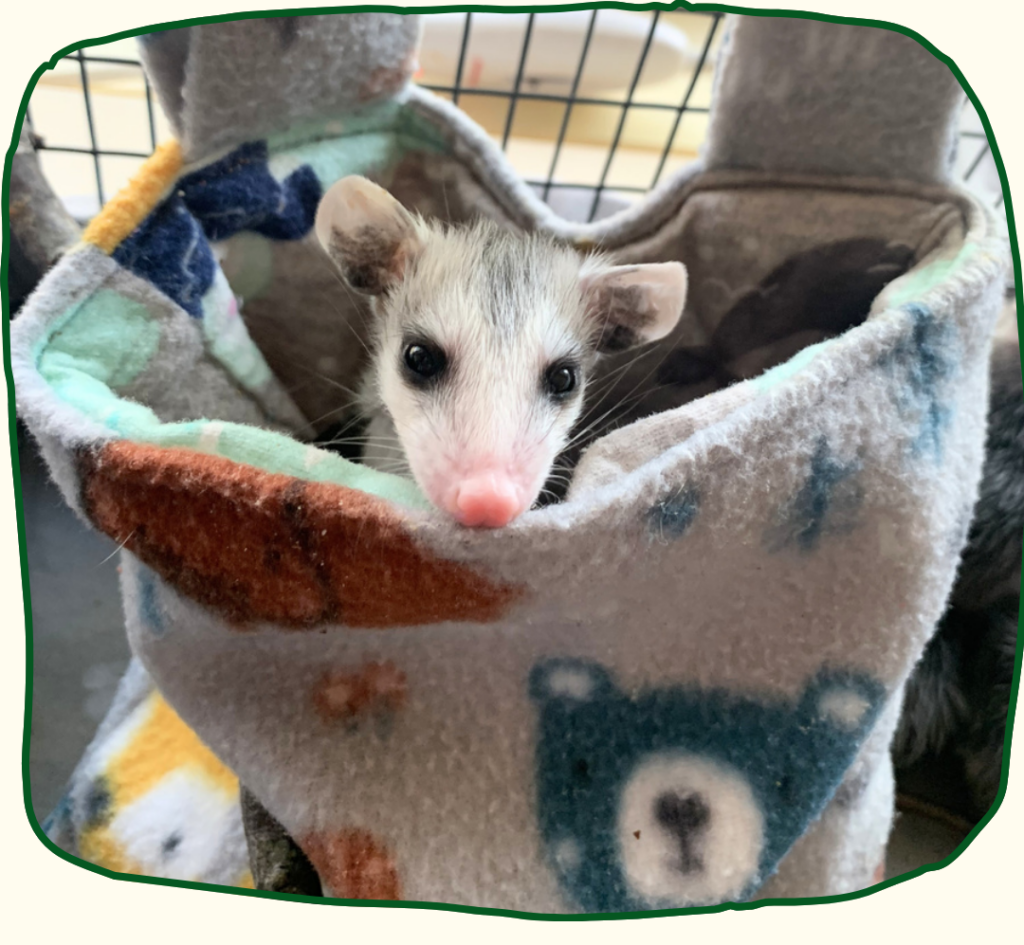
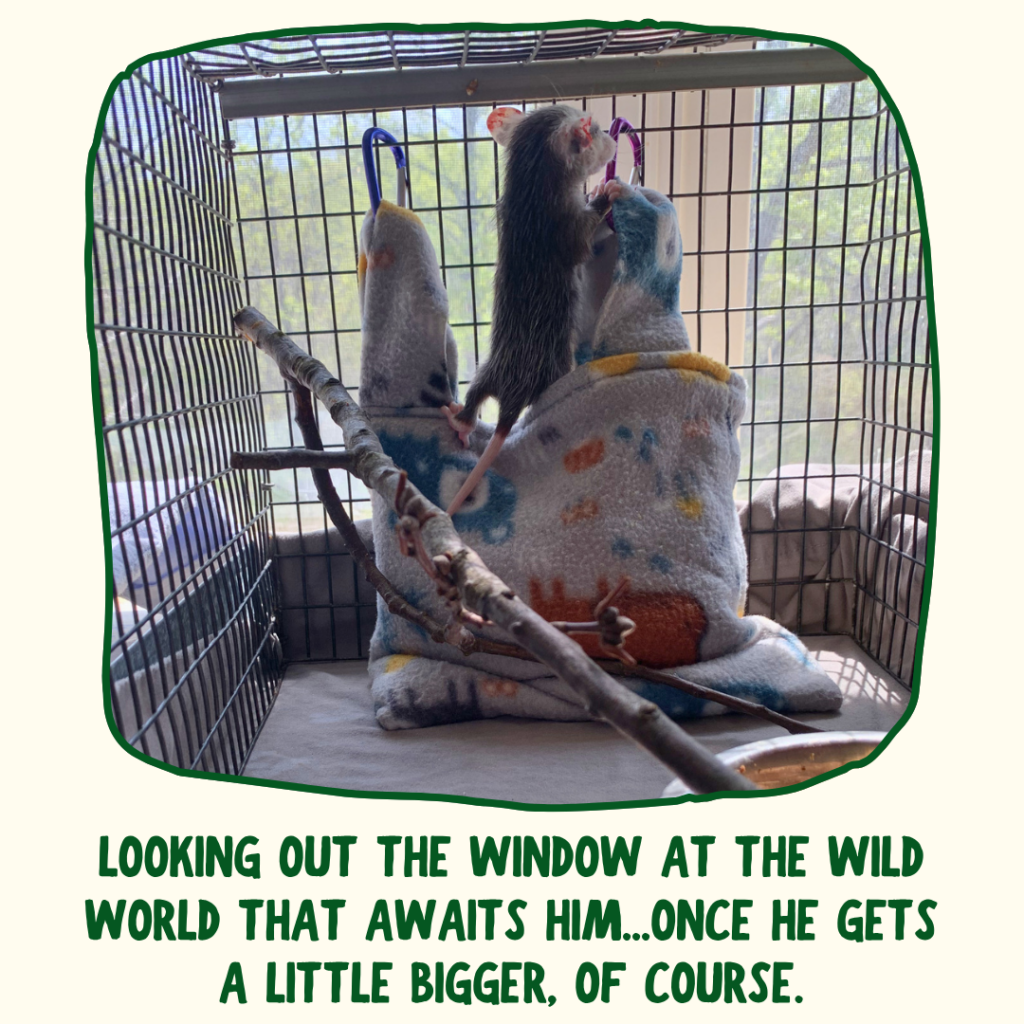
We’re grateful that the folks who rescued Group K acted quickly and brought these joeys to a professional right away! Upon admission, we started the babies on a course of warm fluid therapy to help correct dehydration and get them stabilized. From there, they did exactly what we hoped they would: they piled into their cozy fleece pouch and snoozed. Providing each group of joeys with a fleece pouch helps recreate the warmth and security of their mother’s pouch, reducing stress after often harrowing rescue situations. It also has the added benefit (for us) of being extremely cute. 😍
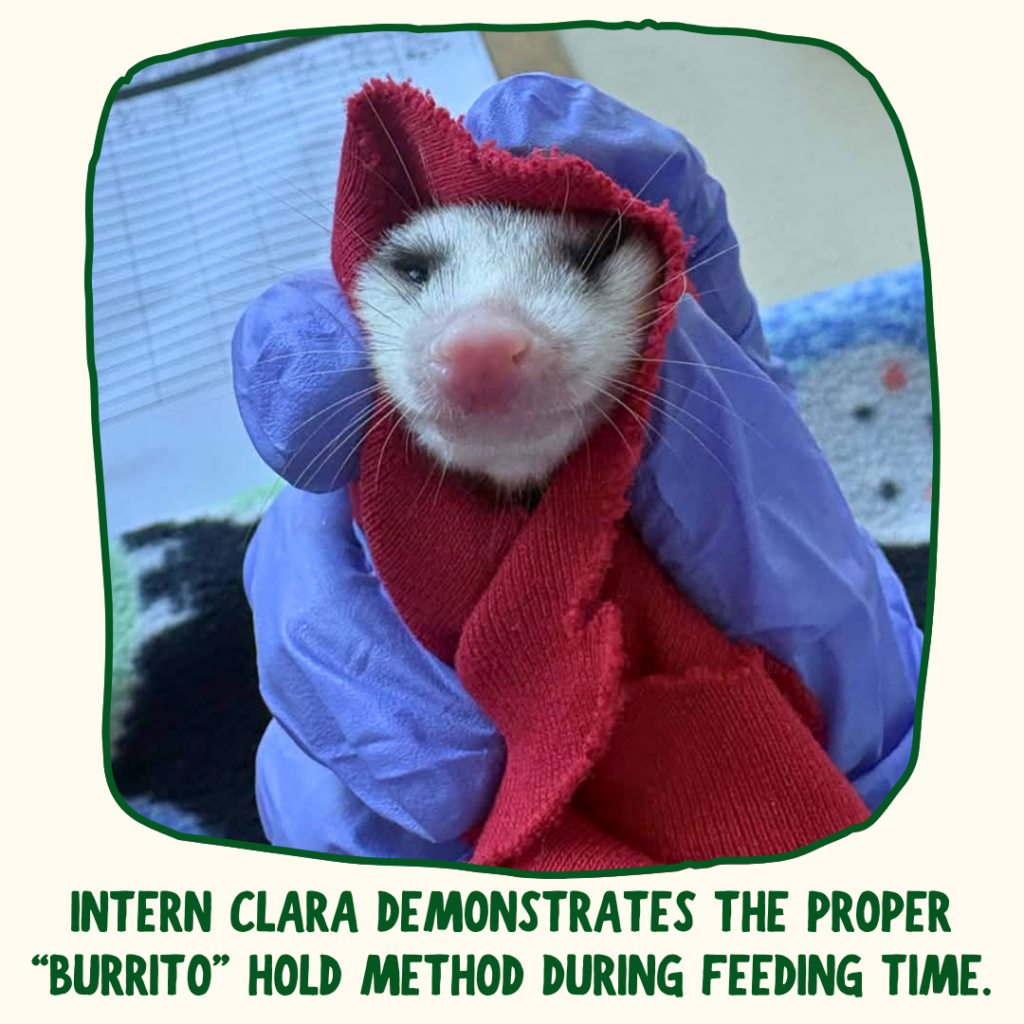
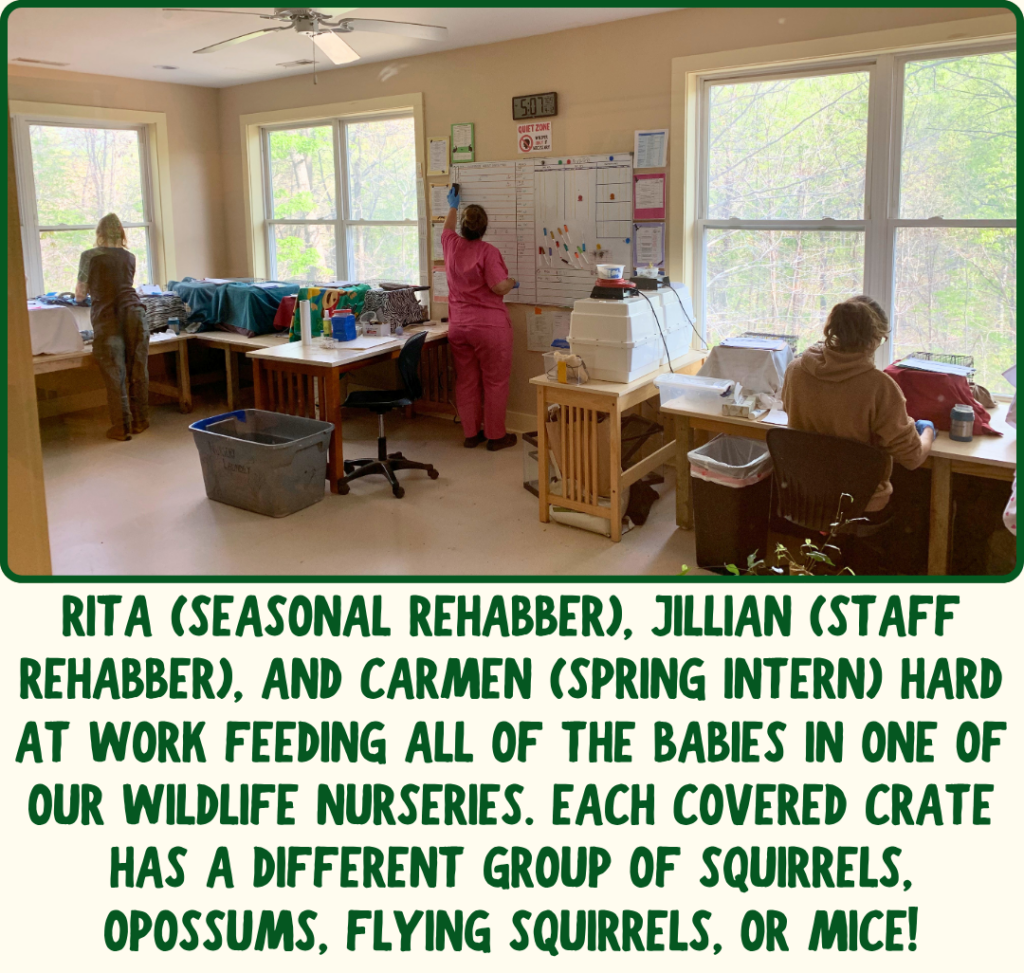
As you might remember from last month’s Critter Corner, baby opossum patients are actually tube-fed in care! This too emulates their natural history. In the wild, a joey is attached to its mother’s teat, which stretches all the way down the joey’s throat and delivers milk directly into its stomach. So, we do the same! At their current size, Group K is being tube-fed a specialized opossum formula four times a day, with each feeding carefully measured and monitored to make sure their little bodies are tolerating it well. With their eyes now opening, we’re also beginning to offer soft foods mixed with formula to help them start the transition to self-feeding.
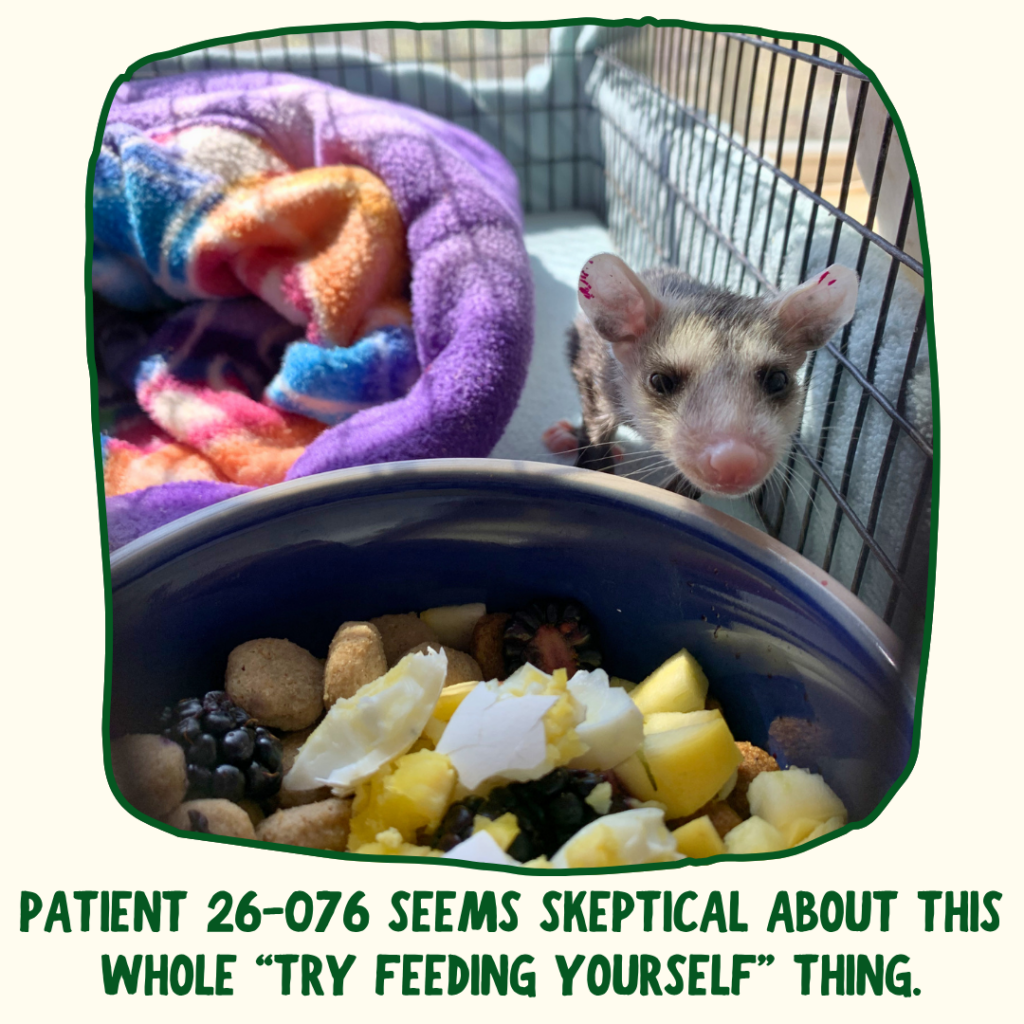
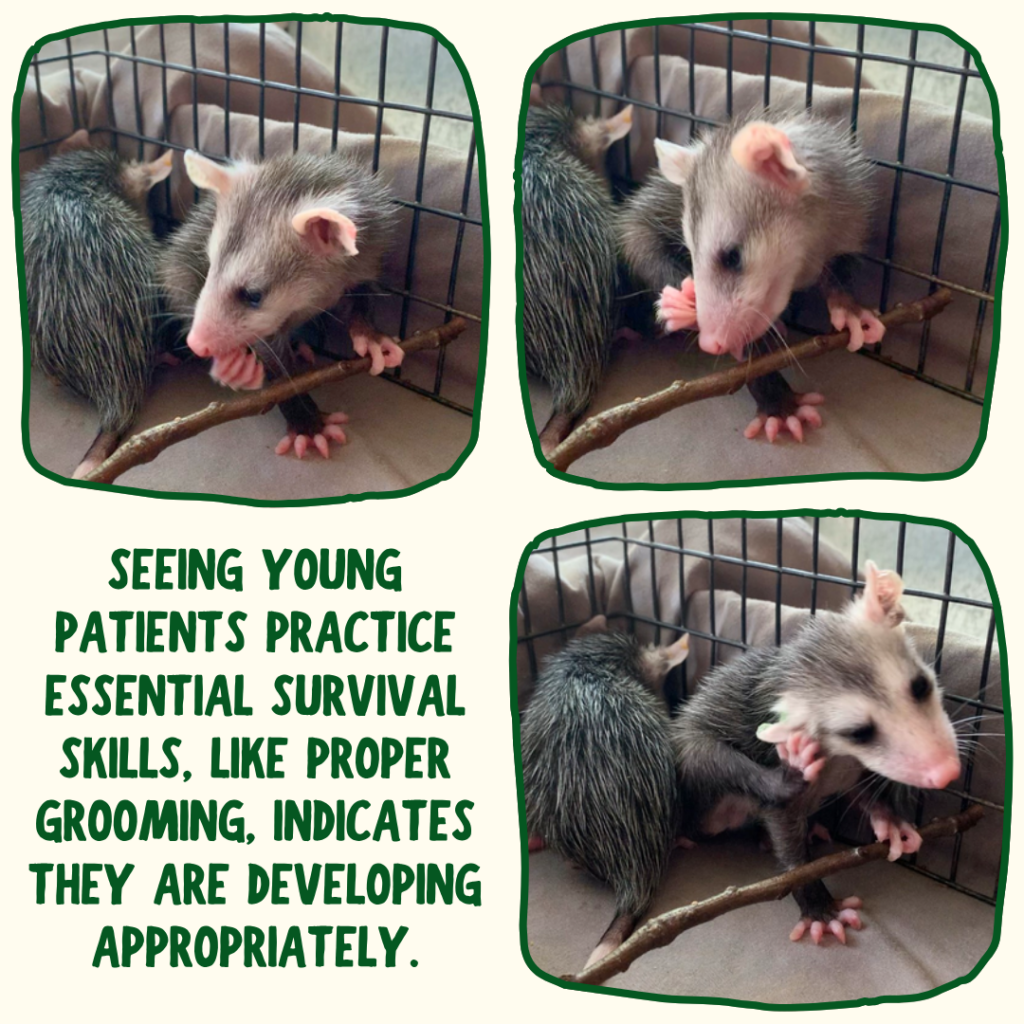
Though they’ve only been in care for a few days, the joeys in Group K are already making great progress thanks to the dedicated care of our staff. 👏 Each patient has started gaining weight and becoming more active, which is exactly what we want to see at this stage! Assuming they continue on this trajectory, they’ll soon graduate to one of our outdoor pre-release enclosures (which we’re currently renovating!) where they’ll build their climbing skills, explore natural substrates, and prepare for life in the wild. And then, before we know it, these once pouch-bound babies will be ready for release. 🥲
If you’d like to help us care for the hundreds of joeys still to come this season, you can join our team of mighty monthly supporters! Just a $5 gift each month helps us secure the formula, food, and care supplies babies like these need to get back to the wild where they belong. Plus, your donations are tax-deductible! ⬇️
Thank you for caring about wildlife and for reading about the delightful and determined babies of Nursery Group K, our featured patients this month.
April 13, 2026
Published:


Be the first to comment!