


Wildlife rehab baby season is in full swing, and we’re already 70+ patient admissions ahead of where we were at this time last year. The past few weeks have brought many of the season’s firsts: raccoons, fox kits, groundhogs, waterfowl, songbirds, and more!
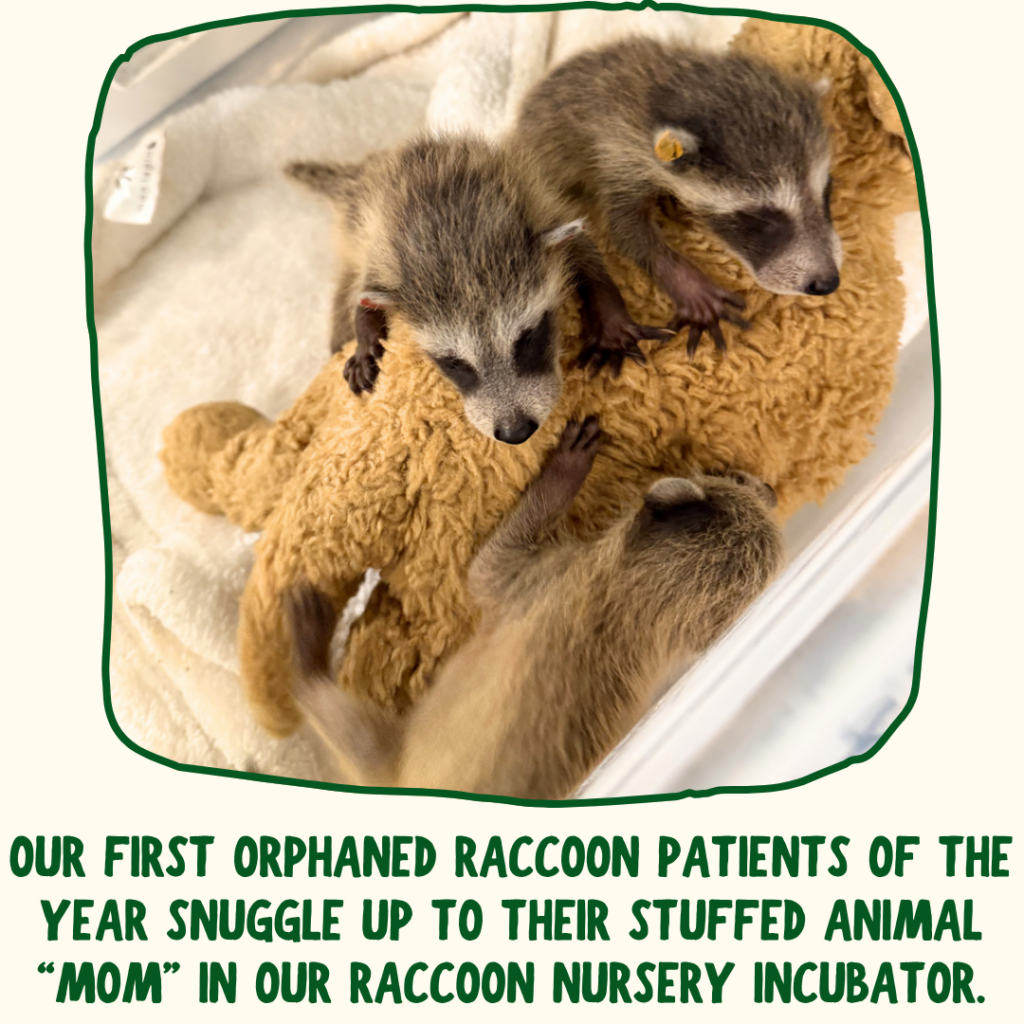
With all of these critters pouring into our care, it’s been tough for our team to pick a stand-out Patient of the Month. So, we’ve got a tie for now…until you pick the winner by voting at the end!
An obligatory disclaimer: we care for all of our patients equally here regardless of whether they’re bestowed “Patient of the Month.” But, a little friendly competition never hurt! (The patients won’t know anyway – we don’t talk to them.)
Who are our contenders? We’ll start with the smallest.
An Aquatic Rescue
Meet Patients 26-276, 277, and 278. These orphaned White-footed Mice have perhaps the wildest rescue story we’ve encountered! 🛥️
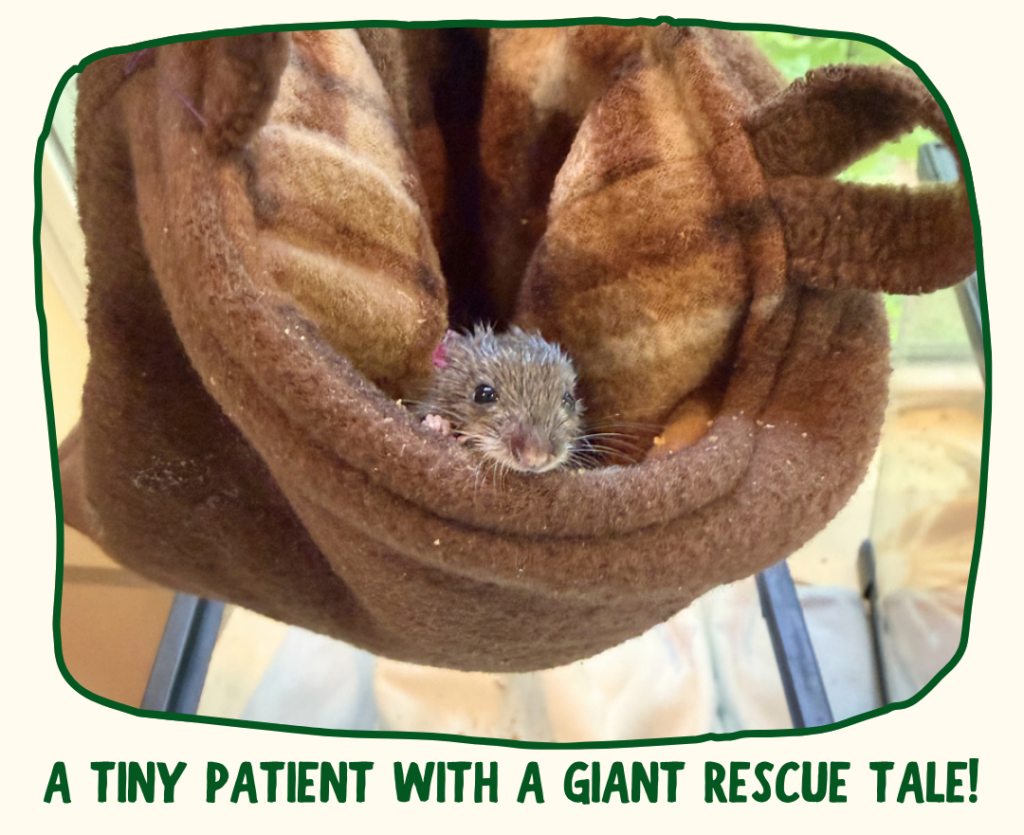
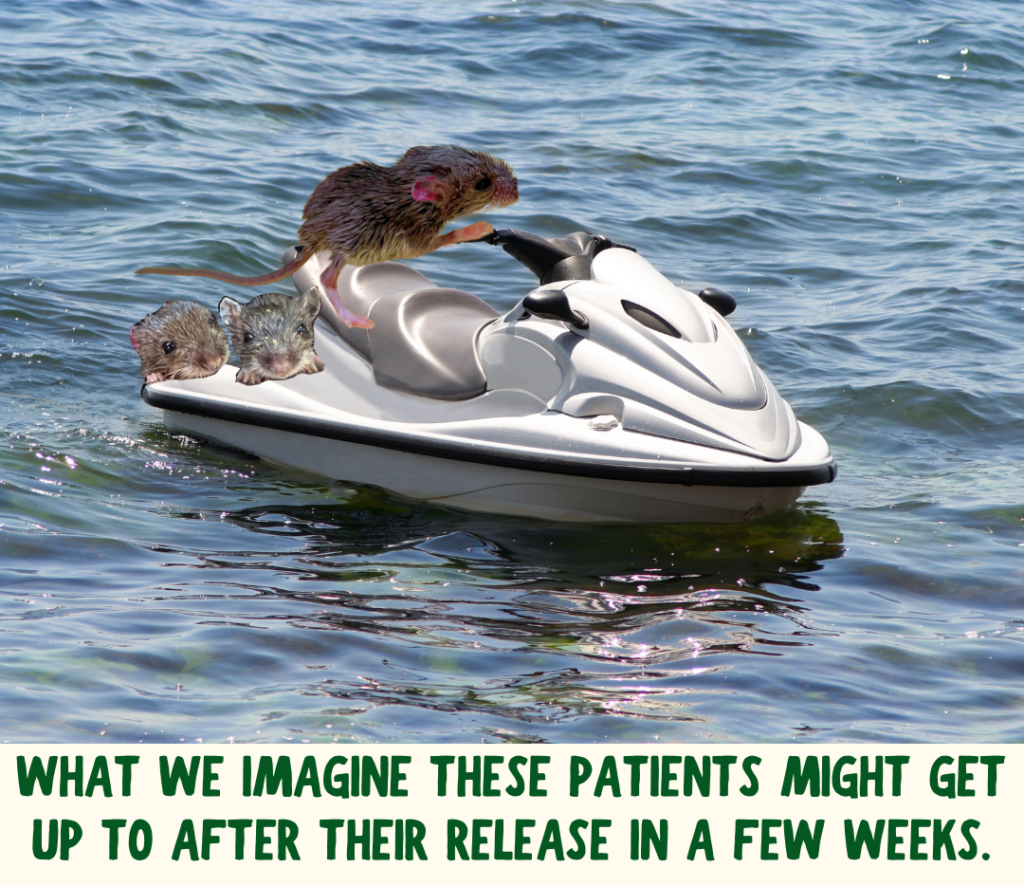
These adorable infant mice were orphaned after they were found on a jet ski. 🌊 Yep, a jet ski! It wasn’t even in storage, either. This jet ski was actively out on the water when three little mice toppled out. Their rescuer (and jet ski driver) quickly sprang into action, collecting the soaking wet babies and bringing them to our friends at the Wildlife Center of Virginia for initial wildlife rehab care. After a day of stabilization, the team at WCV transferred this trio to RWS for long-term rehabilitation. 🚑
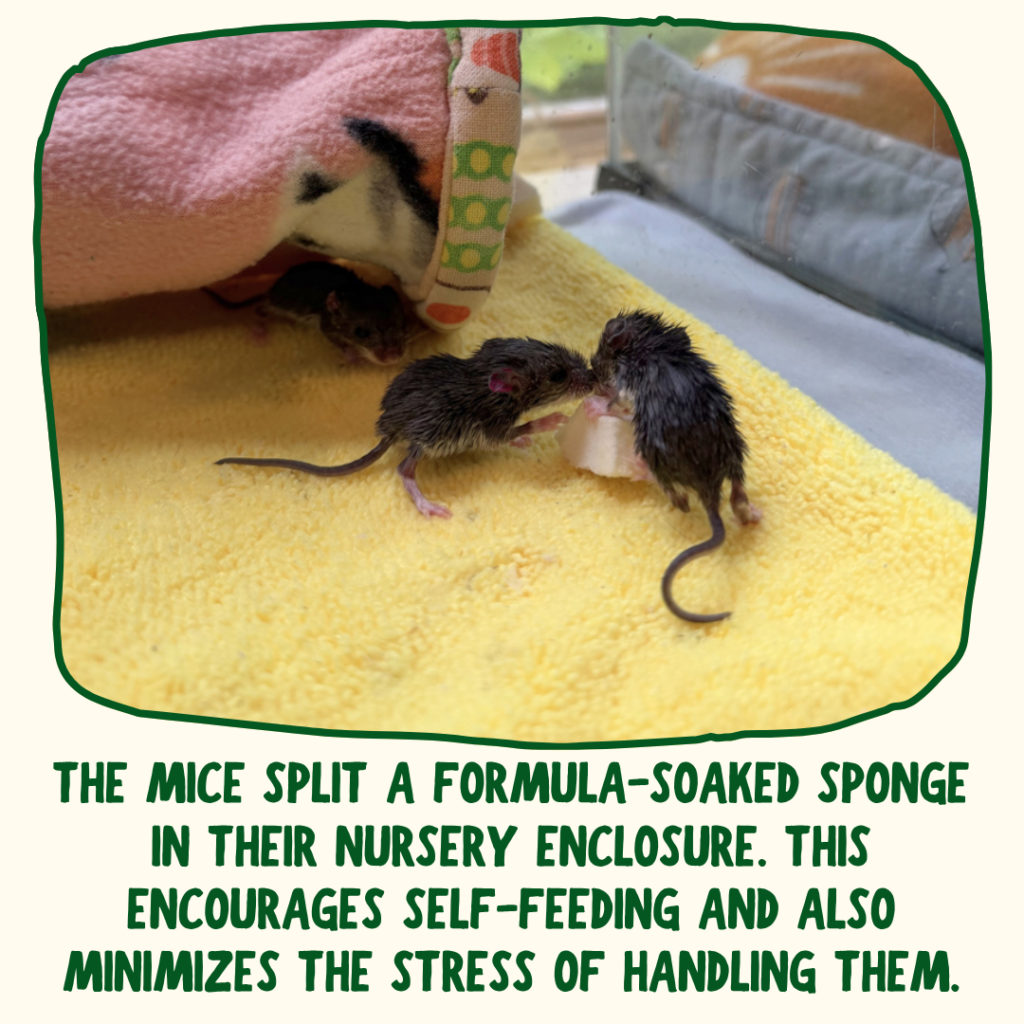
Despite their truly shocking rescue story, these little mice are doing well in their recovery journey so far. Their prognosis remains guarded given the trauma they endured so young, but our team is providing them with the highest standard of care: formula hand-feedings six times per day, cozy fresh linens, and teeny meals to encourage them to self-feed. 🍼
We’re often asked: why bother rehabbing mice? Aren’t there enough? It’s true that White-footed Mice are classified as a species of Least Concern when it comes to their population levels – but that sure doesn’t mean each individual mouse doesn’t matter! One mouse returned to the wild means one more critter helping to disperse native seeds, pollinate plants, and maintain soil health. It also means one more meal for a vixen fox raising her kits or a Great Horned Owl looking after his mate while she incubates their eggs. Every release is an opportunity to support our vulnerable ecosystems. We’re proud to care for creatures of all sizes and ecological roles at RWS. ♻️
We look forward to helping these three orphaned mice continue to recover from their aquatic ordeal. We’ll be sure to keep them far away from the RWS jet skis! (Kidding. We don’t have one…yet!)
Who’s competing against these mice for the coveted Patient of the Month title this May? Look no further than Patient 26-254, a juvenile Groundhog who was intent on finding what she was missing: a mom! 🥺
One Hoglet’s Tale
This little groundhog made herself known. First, she appeared and began trailing her rescuer while he did yard work around his home in Augusta County. It’s typical for juvenile groundhogs to leave their den when the time is right. They’ll forage independently, but they typically follow their mother around and don’t stray too far from their family. This little hoglet had no family in sight while she trotted after her rescuer, as if to ask, “Are you my mother?”
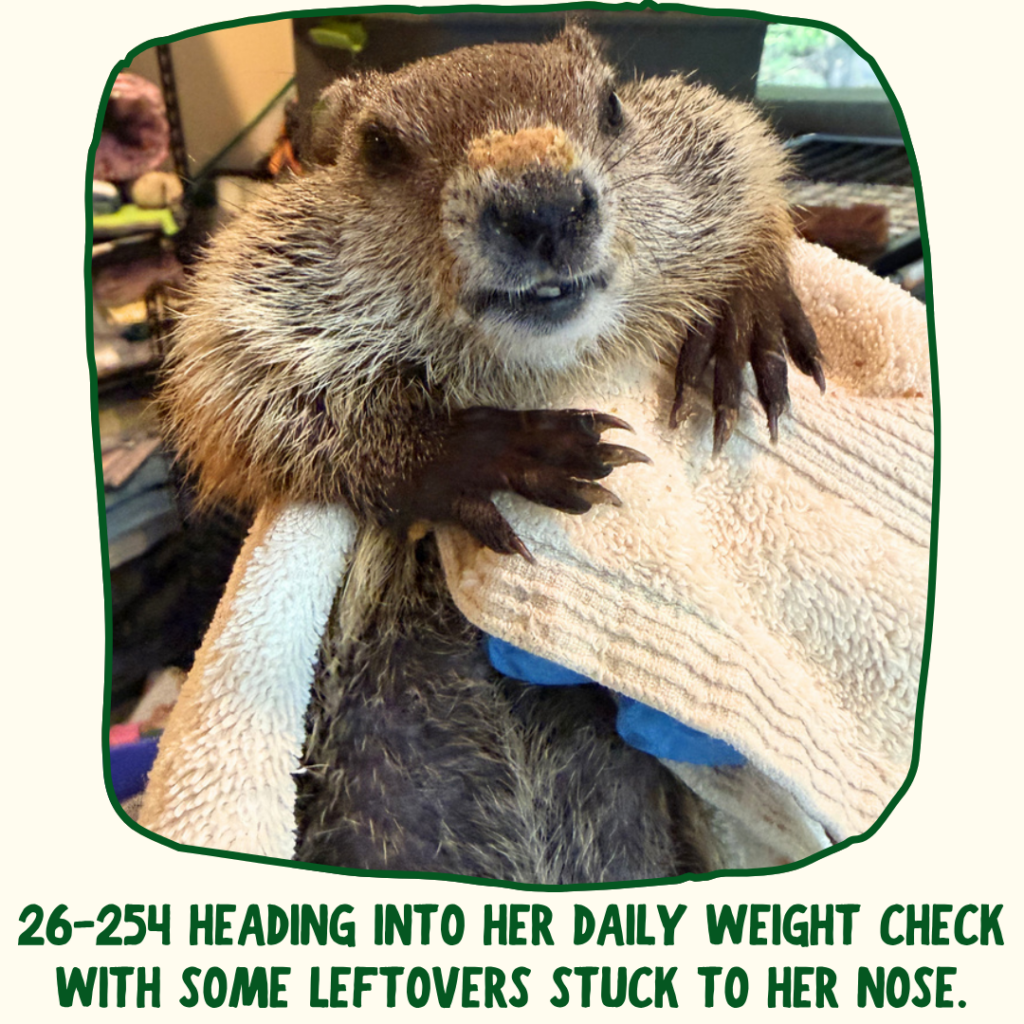
Shortly thereafter, the hoglet began following the neighbor’s cat around as well. 🐈 At this point, her rescuer stepped in and brought her to our friends at WCV for an initial intake. It wasn’t clear whether the cat had interacted with the hoglet, but the veterinary team did find puncture wounds on her. She was also significantly dehydrated and cold to the touch. Cold can be a quick killer when it comes to orphaned wildlife, so we’re very grateful this groundhog’s rescuer brought her into professional wildlife rehab care when he did!
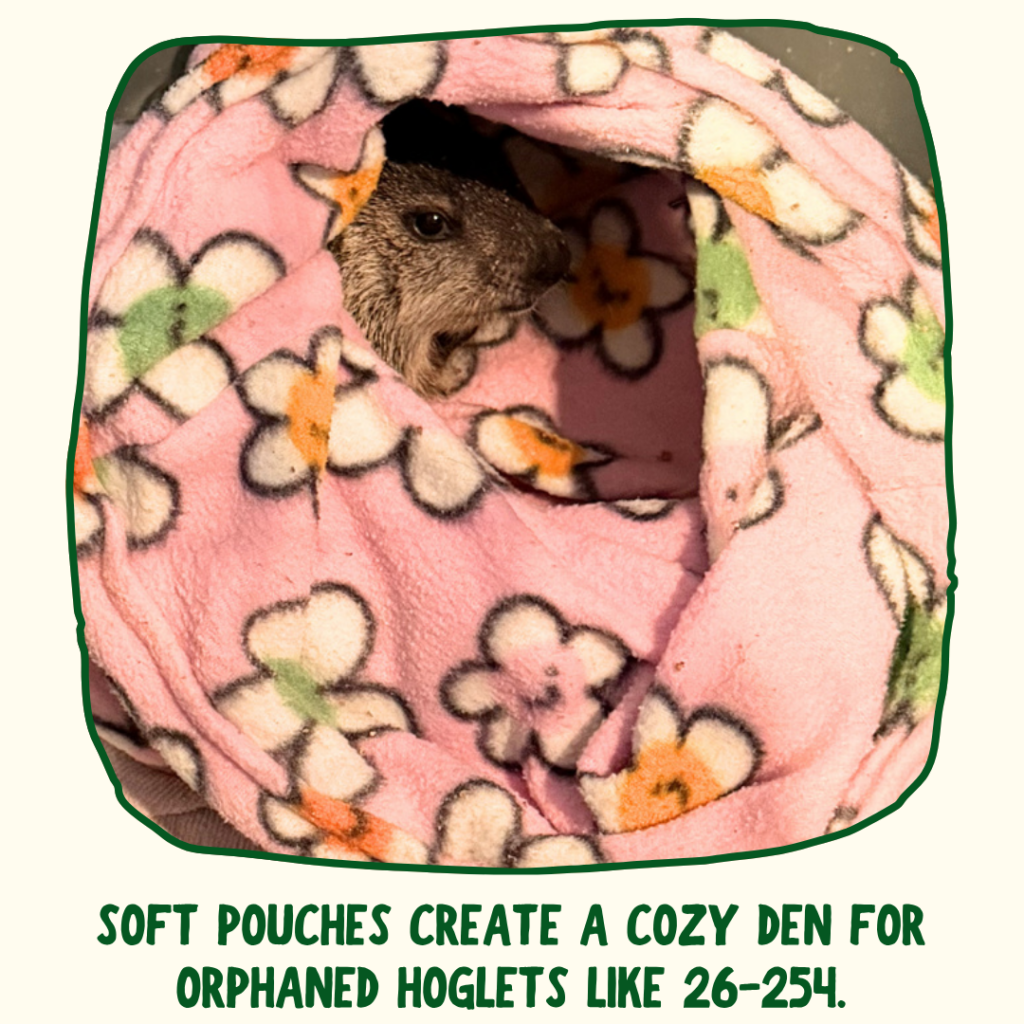
After three days of antibiotic treatments to prevent infection from her wounds, our friends at WCV transferred the groundhog patient to us at RWS for continued rehabilitation. We specialize in caring for highest-risk rabies-vector species like groundhogs and have designated nursery space and outdoor enclosures just for them.
Plus, they’re always some of our team’s absolute favorite patients to treat! Groundhogs are very “polite,” as we like to joke. They eat their veggies, they kindly latrine in one spot, and they’re generally quiet and tidy with their enclosure furnishings. 😀
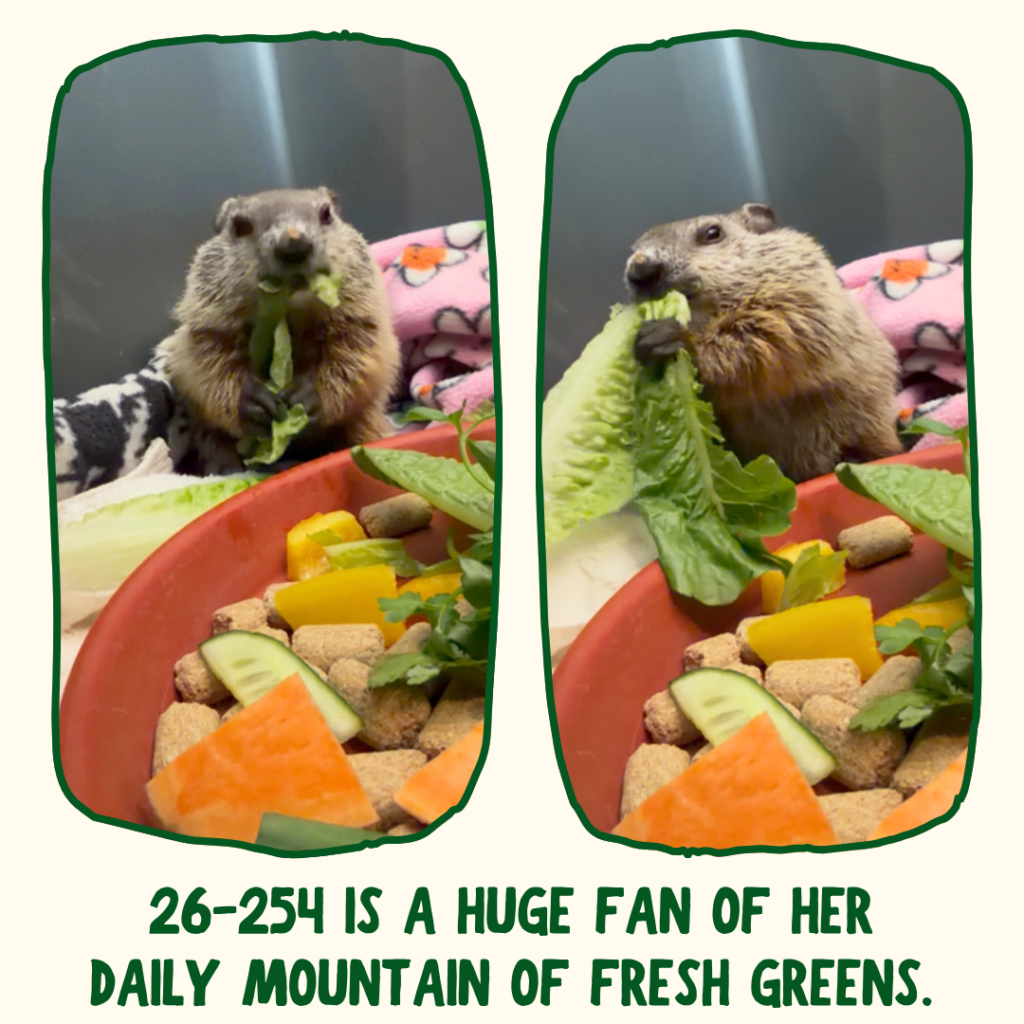
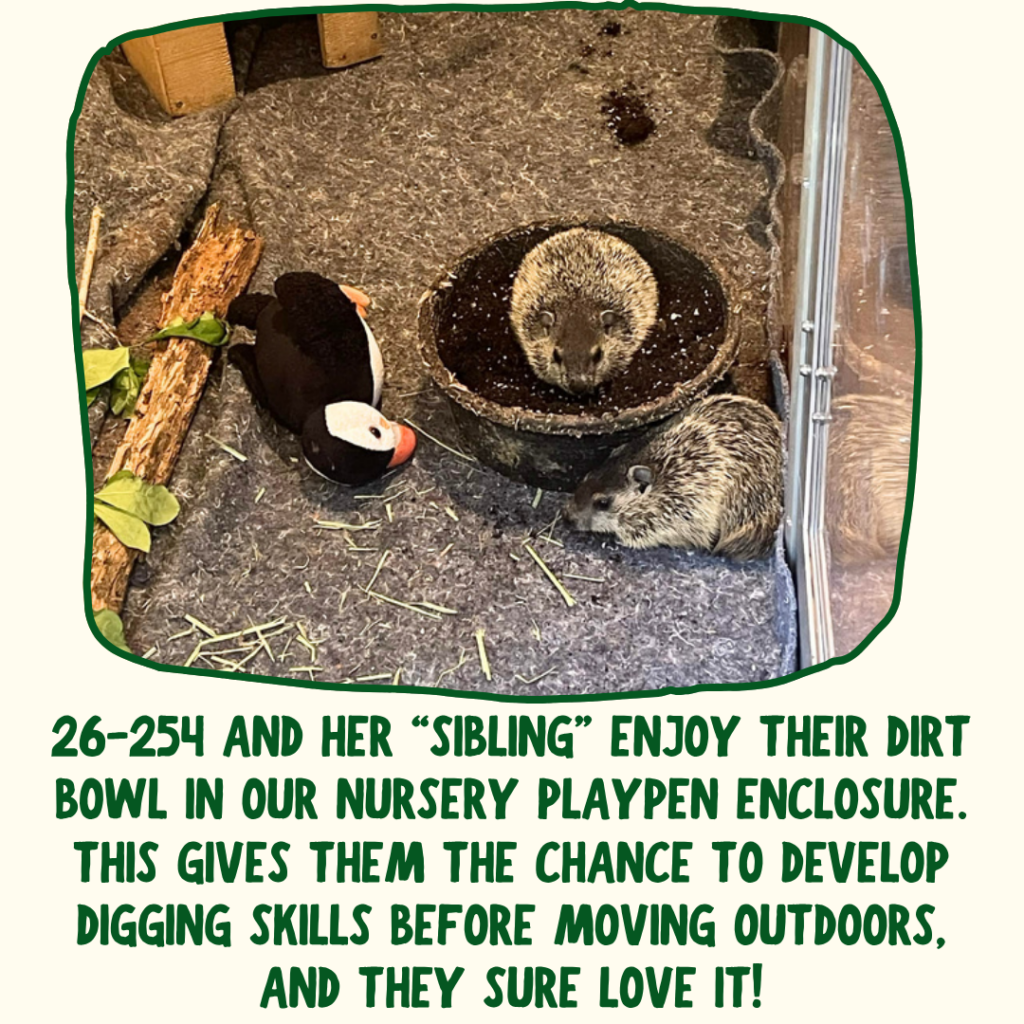
Following an initial quarantine period at RWS, we combined patient 26-254 with another lone hoglet who had come in shortly before her. Together, this hoggy duo has nearly doubled in size and is preparing to move to one of our outdoor enclosures where they’ll be able to forage, tunnel, and den to their heart’s content! While 26-254 hasn’t found her mom, exactly, she’s found the next best thing: a fellow hoglet companion and a team of devoted wildlife rehab professionals helping her return to the wild.
Now that you’ve heard their stories, please help us decide: who should be our Patient of the Month? Click the link below to vote on our website. (Remember, it’s just for fun!)
No matter who you pick, we’ve got good news: they’re all winners here at RWS. We’re grateful to be able to provide these patients with the attentive care they deserve, and it’s all thanks to supporters like you.
Thank you for learning about our Patient(s) of the Month!
May 18, 2026
Published:


Be the first to comment!