


It’s not every day that we admit a clutch of orphaned Red-shouldered Hawks. It’s even more unusual to admit seven in one day, like we did this week!
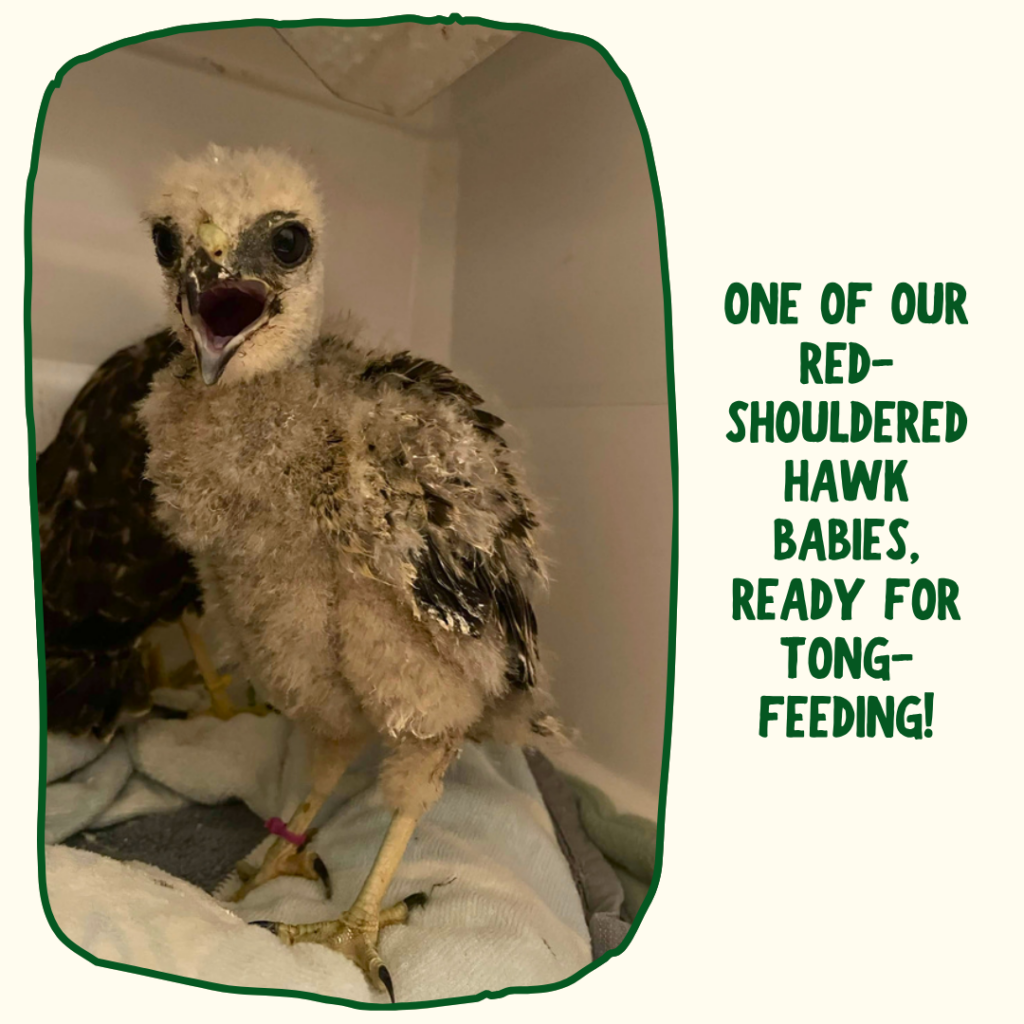
Each one of these patients initially came into care as a solo orphan. Our friends at Chickahominy Wildlife provided initial stabilizing care before transferring them all to RWS. With our quiet nursery and multiple outdoor flight enclosures, we were glad to take on these patients for long-term rehabilitation.
Whether you’re a total “bird nerd” or someone who can’t tell a hawk from a heron, this month’s Critter Corner is sure to teach you a little something about our Red-shouldered Hawk neighbors – projectile poop and all. (More on that later.)
The Red-shouldered Hawk’s scientific name is Buteo lineatus, roughly translating to “lined buzzard.” While lineatus refers to the barred pattern across the Red-shouldered Hawk’s chest, the Buteo genus it belongs to has a near-global distribution. Buzzards are everywhere!
While vultures are sometimes colloquially called buzzards in the U.S., they’re not really buzzards. The Common Buzzard, Buteo buteo, is a close relative of the Red-shouldered Hawk and is Europe’s most common bird of prey.
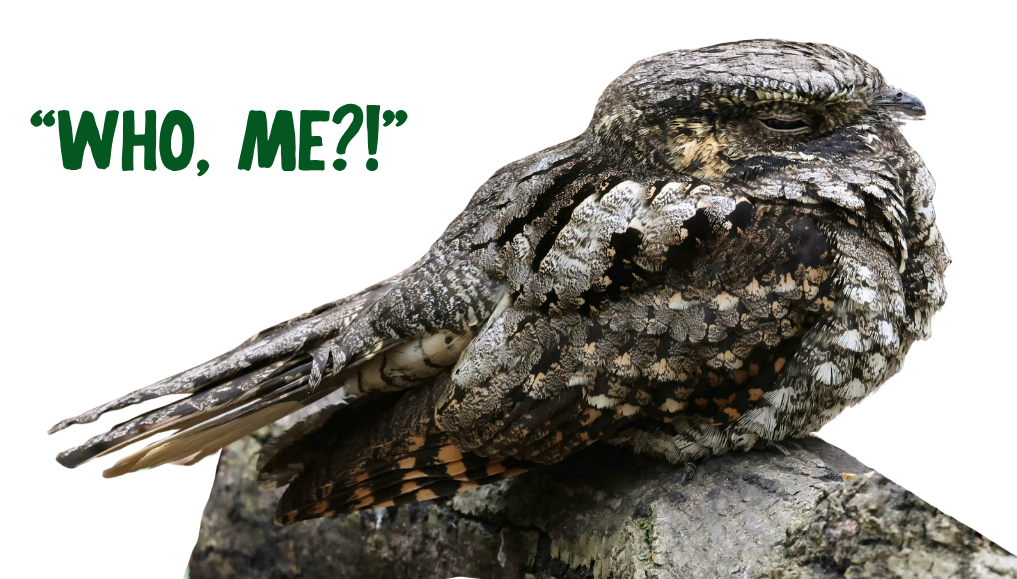
Etymologists guess that “buzzard” was likely just old-timey onomatopoeia for a hawk’s call. When in doubt, name it after the sound! (Looking at you, whip-poor-wills.)
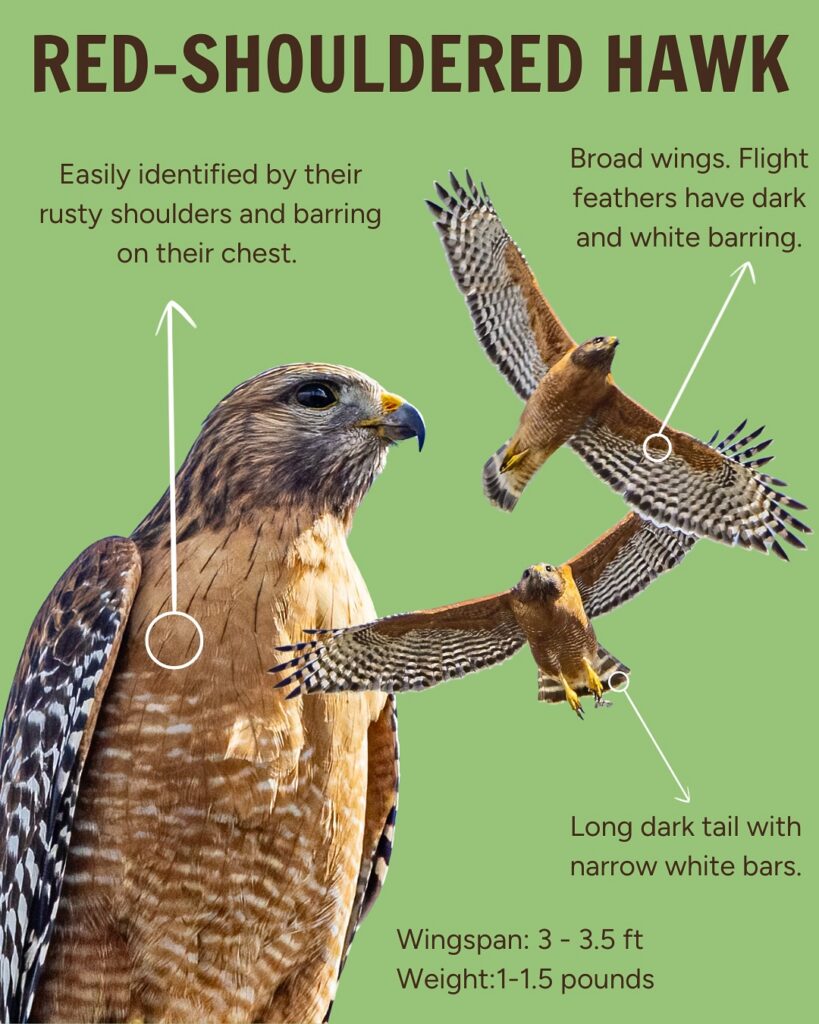
People often mistake the Red-shouldered Hawk for their much more common neighbor, the Red-tailed Hawk. However, they’re easy to tell apart even from a distance once you know what to look for! These graphics from California’s Peninsula Open Space Trust do a great job of highlighting these traits. ⬇️

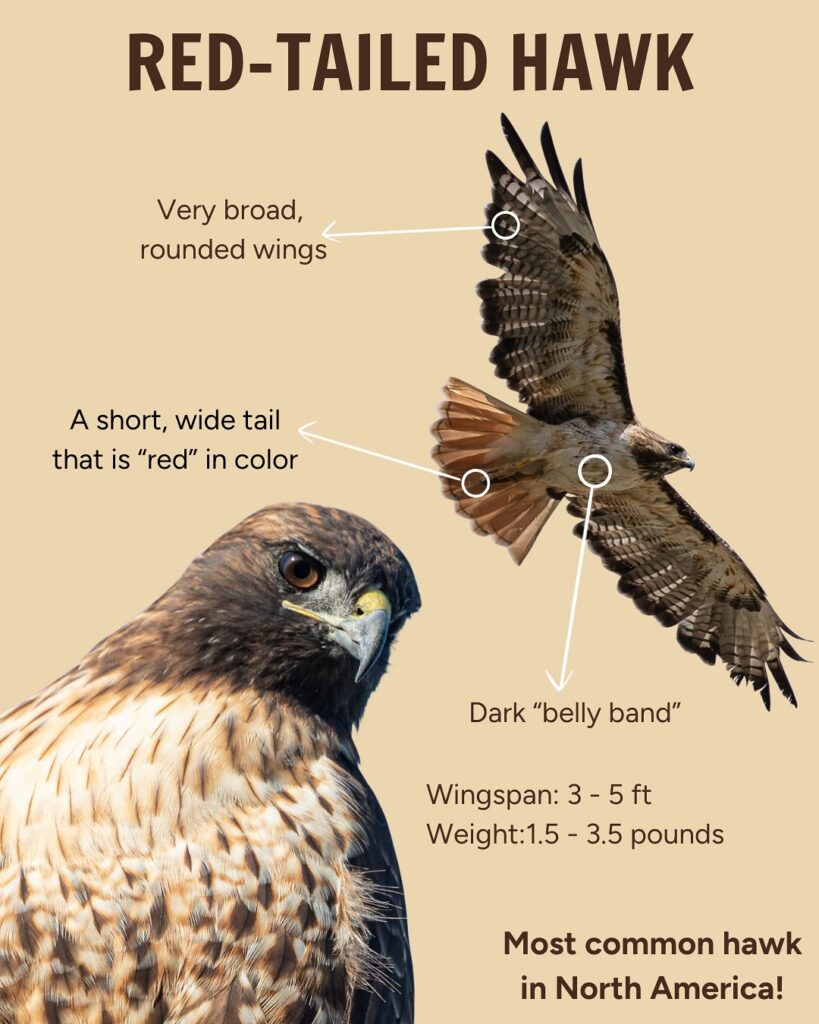
The environmental context of your hawk spotting matters too. Red-tailed Hawks and Red-shouldered Hawks tend to live in different habitats. The former is largely a grasslands bird, surveying wide open spaces for rodents and rabbits. That’s why it’s often easy to spot them along highways. From up in a tree, a Red-tailed Hawk can watch for prey scurrying across the open road. 🐭
Red-shouldered Hawks, however, are highly adapted to the forest. 🌳 Despite their broad wings and relatively stocky stature, these hawks are excellent at navigating wooded areas in search of their smaller prey like mice, amphibians, and small reptiles. If you’re hiking through the woods and see a flash of brownish red above you, it’s much more likely to be a Red-shouldered Hawk.
But these birds don’t just live in the deep forest. Given the extent of human development, especially in Central Virginia, they’ve become much more active in subdivided neighborhoods where woodlands are mixed in. In fact, the majority of the orphaned hawks we’re treating (and have treated in previous years) come from suburban backyards in the greater Charlottesville and Richmond areas. 🏡
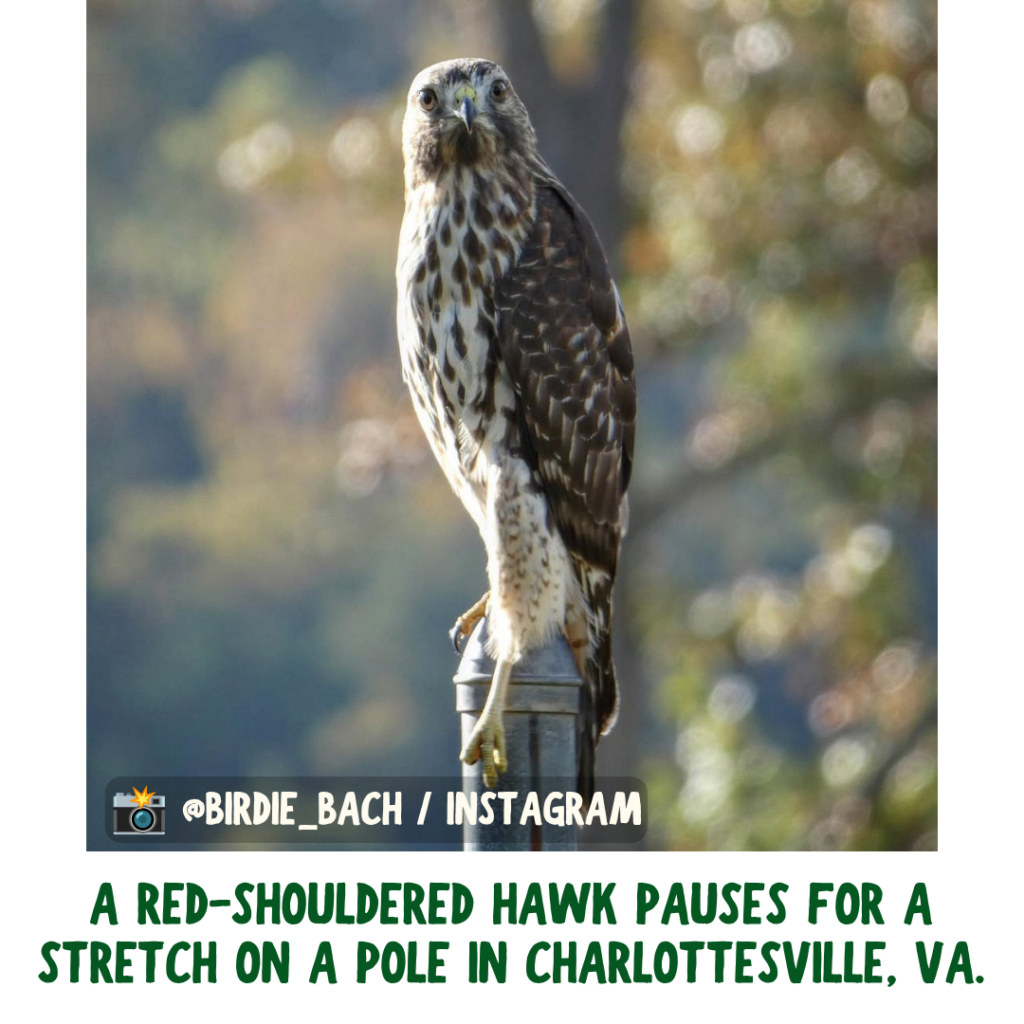
That means your window might just be a front-row seat to Red-shouldered Hawk family life! It all starts when a male hawk falls for a female…literally. 💘 When a male is courting a mate, he performs a “sky dance”: he soars, calls, and repeatedly dives to her before spiraling back up. Eventually, he’ll plunge straight onto her back. Romantic.
Then, they’re off to the races with nest-building. 🪹 Red-shouldered Hawks typically construct their nests below the tree’s canopy, against the trunk, lining the stick structures with moss, lichen, and fresh green leaves. Typically, the female incubates the eggs for nearly the entire 30–40 days it takes for them to hatch. That’s because, like most raptors, female Red-shouldered Hawks are about 30% larger than their male mates. Her larger size helps her keep the whole nest warm and keep predators away, while the smaller male uses his agility to find food to bring back home.
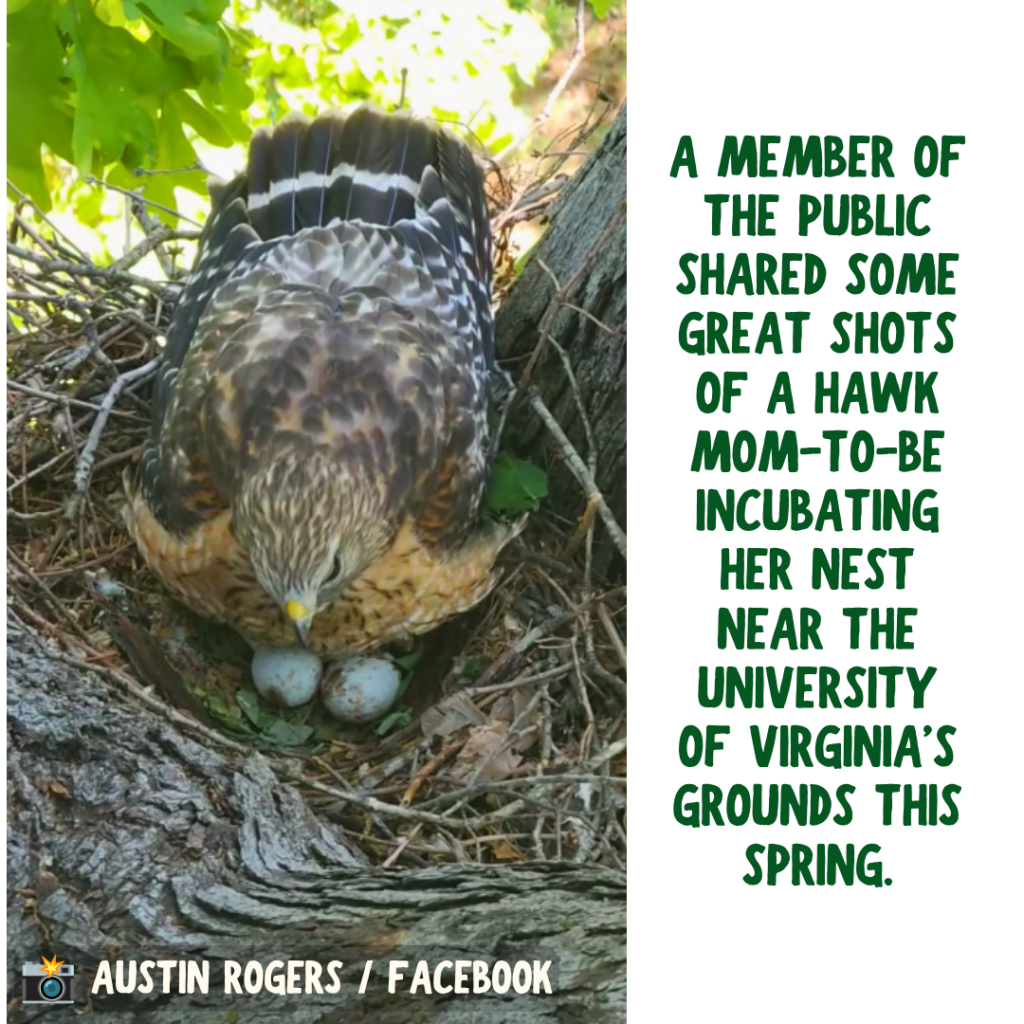
At long last, fuzzy little heads start popping up and the adorable process of chick-rearing begins! Mom and dad are highly attentive, tearing prey into bite-sized pieces for their new babies. They’re fiercely protective of the nest, dive-bombing potential threats.
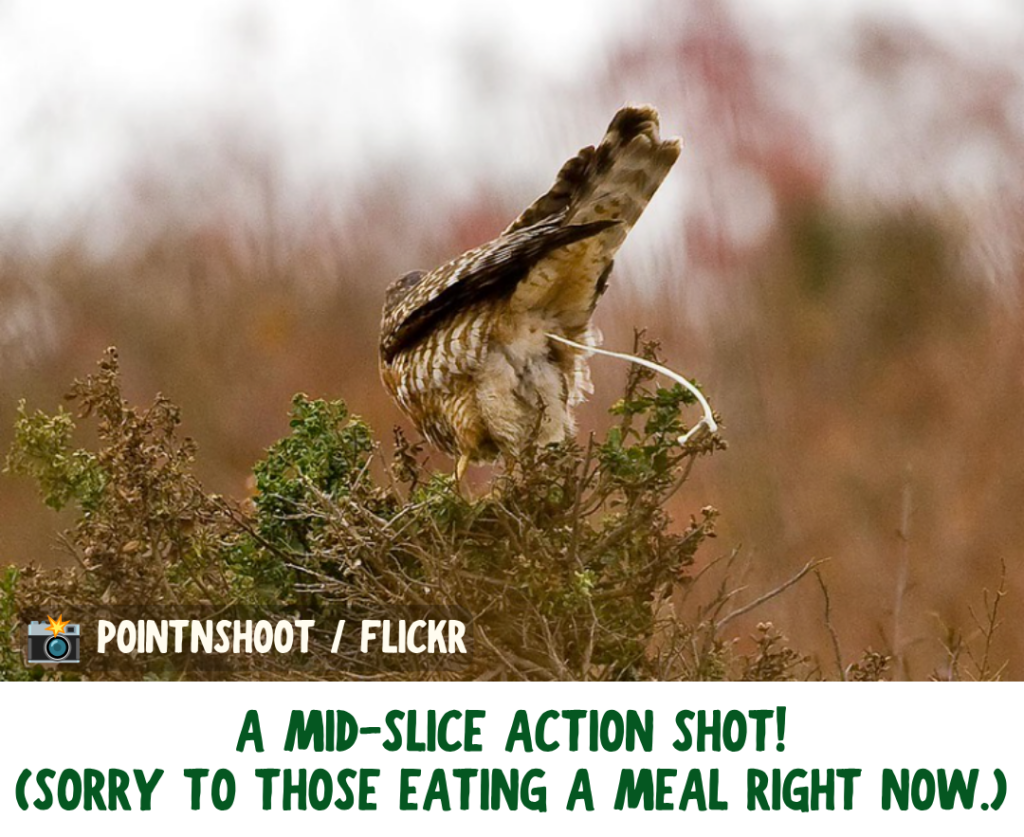
Babyhood is also when young hawks begin practicing a particularly iconic behavior known as slicing.
Within just five days of hatching, nestlings are capable of projectile pooping several feet out of the nest. The liquid feces travels with such speed and force that it looks like it’s slicing straight through the air. (Please accept our apologies if you’re reading this while eating breakfast.) If you’re on a walk and notice a wide ring of white spots on the ground, look up – you’re probably under a hawk nest! And then walk away from the splash zone very quickly. 🏃♀️😅
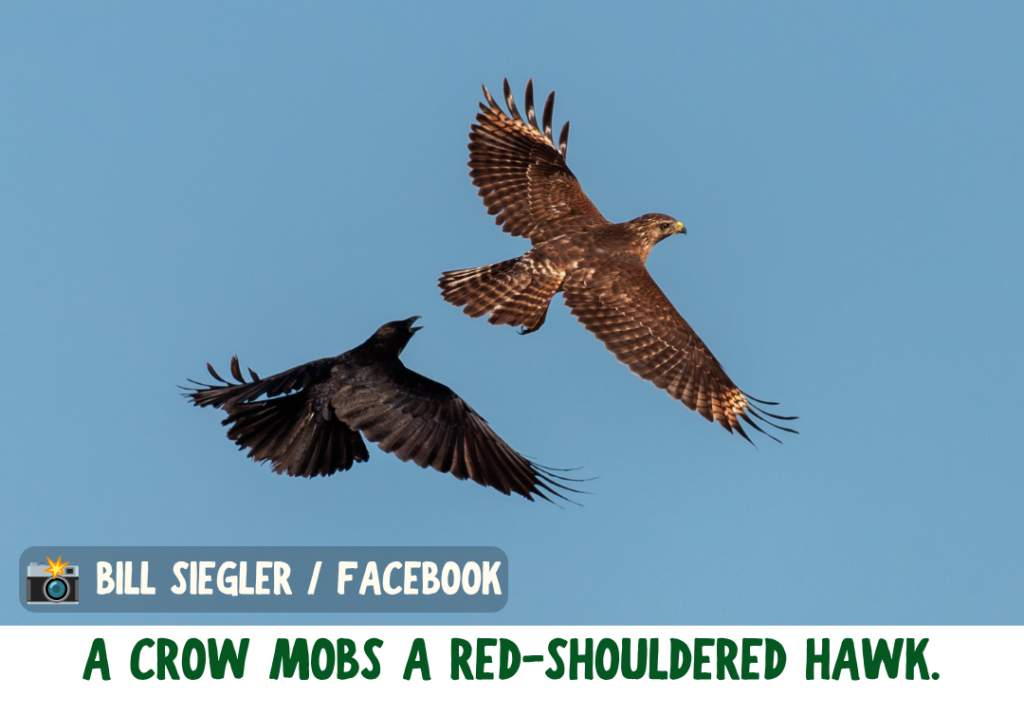
Speaking of behaviors: ever heard a bunch of crows squawking, only to spy a hawk flying in their midst? This behavior is called mobbing. Smaller birds, like American Crows, Blue Jays, and Northern Mockingbirds, may harass and dive-bomb predators like hawks to chase them away from their nests. However, predator and prey sometimes team up! American Crows and Red-shouldered Hawks occasionally mob Great Horned Owls together. 🦉 These huge owls are known to snatch hawklets and baby songbirds, so they can make a great team to get that owl out of their territory…before resuming their regularly scheduled hostilities.
Assuming predators are kept at bay, young Red-shouldered Hawks become independent around 5 months old. That first year can be tough – about 50% of chicks will not survive it. Those who do make it typically begin looking for their own mate after about two years. Red-shouldered Hawks are monogamous, like most raptors, and can live up to 20 years. The oldest known wild individual was nearly 26 years old! 😲
While we hope you only ever encounter happy, healthy birds from a safe distance, our patient admissions serve as a reminder: ’tis the season for finding young raptors on the ground! If you come across a Red-shouldered Hawk or other bird of prey sitting on the ground, first determine if it’s a nestling or fledgling. (You can always contact RWS if you’re unsure!)
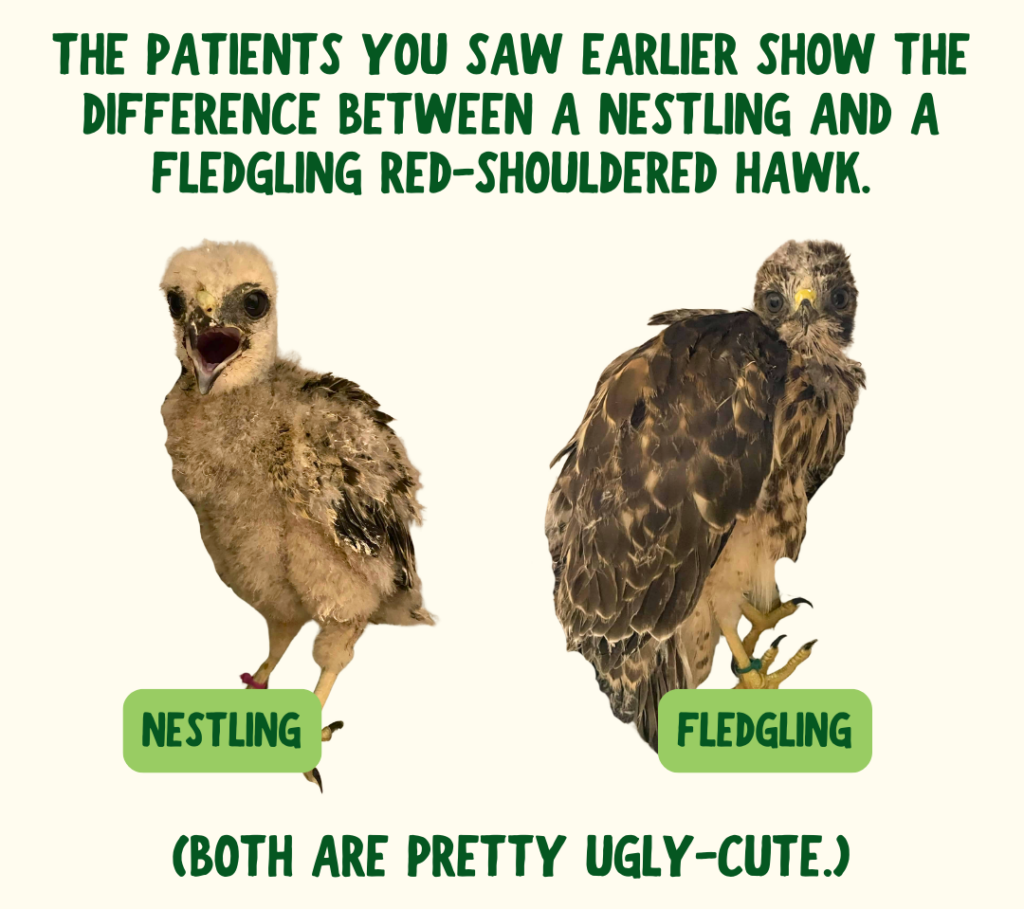
As long as the bird is alert, responsive, and has no signs of injury, keep the following tips in mind.
Help! I’ve found a nestling! 🐣
- Look for any sign of a nest in the trees above you. It might not be in the nearest tree!
- If you see a nest, do your best to get it back into the nest. If you cannot reach the nest…
- Create a nest by strapping a small tub or basket to the tree, as close to the nest as you can. Line it with some sticks and leaves. Put the chick inside and monitor for evidence of parental care. If the baby remains active, bright, and defecating, you’ve successfully re-nested the chick!
- If you cannot find any evidence of a nest or parents nearby or if the baby declines in condition, call RWS.
Help! I’ve found a fledgling! 🐦
- Is it alert, active, and standing/walking normally? Monitor from afar!
- Check frequently over a period of 3–4 hours, if possible. Watch for parents coming to feed the baby or perching in a nearby tree. Check for fresh feces – but remember the feces will be a few feet from the fledgling!
- If the baby becomes lethargic, unable to stand, or is not being tended to by its parents, call RWS.

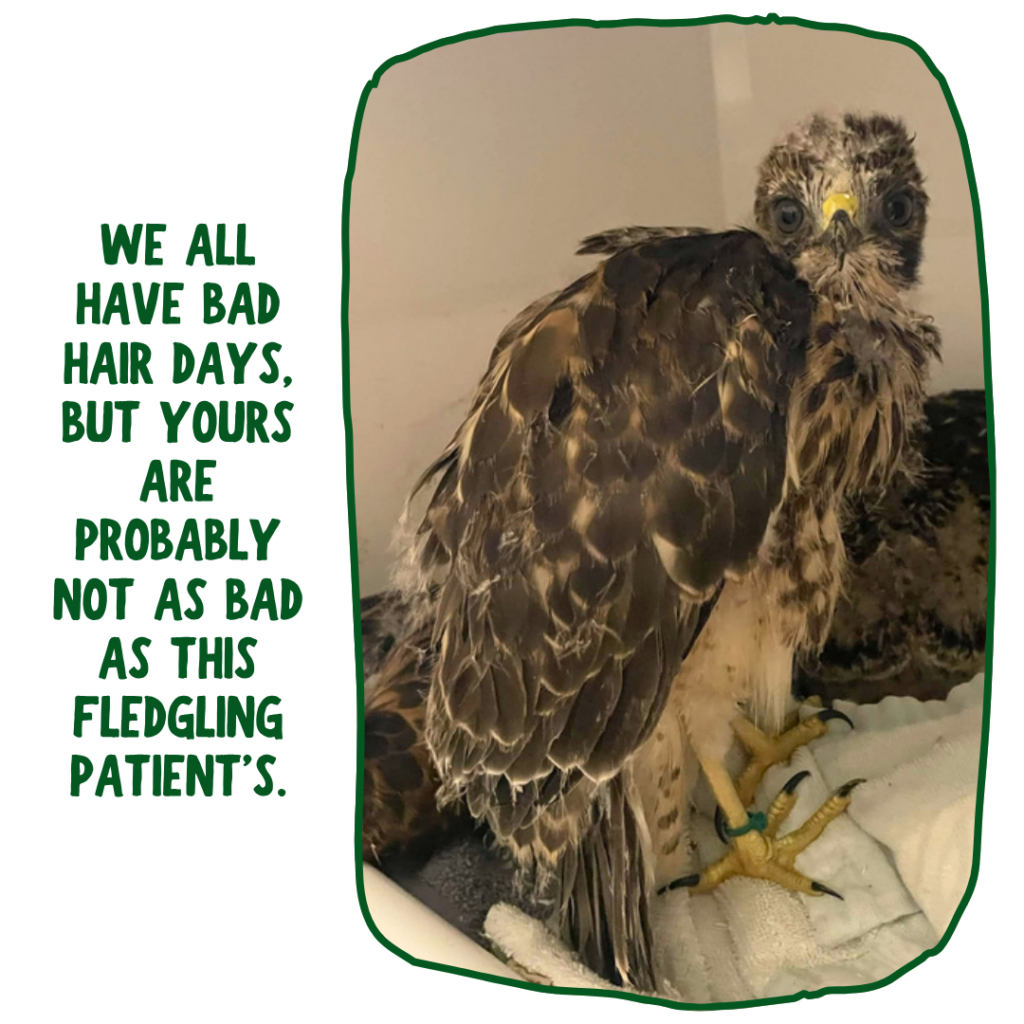
When in doubt, contact your nearest licensed wildlife rehabber. ☎️ That’s what we’re here for! And with time, compassion, and care at RWS, that hawklet can get its second chance – just like these orphans did last season:
Now, we’ve got to get back to feeding babies and dodging “slices,” if you know what we mean. Thank you for reading this month’s Critter Corner! 🐾
If you’d like to help us care for patients like these Red-shouldered Hawklets, please consider donating to our Silent Auction or buying a sponsorship for our Mountain View Magic event. ⬇️ Thank you for your support!
May 31, 2026
Published:


Be the first to comment!