


Most Americans are familiar with the iconic national symbol, the turkey – but have you seen baby Wild Turkeys before?
Our staff was lucky to admit three adorable turkey poults this week. Though we care for a handful of these native birds each year, they always require some extra special care. That said, we’re happy to share that our featured patients this month are Wild Turkeys 26-488, 489, and 490!
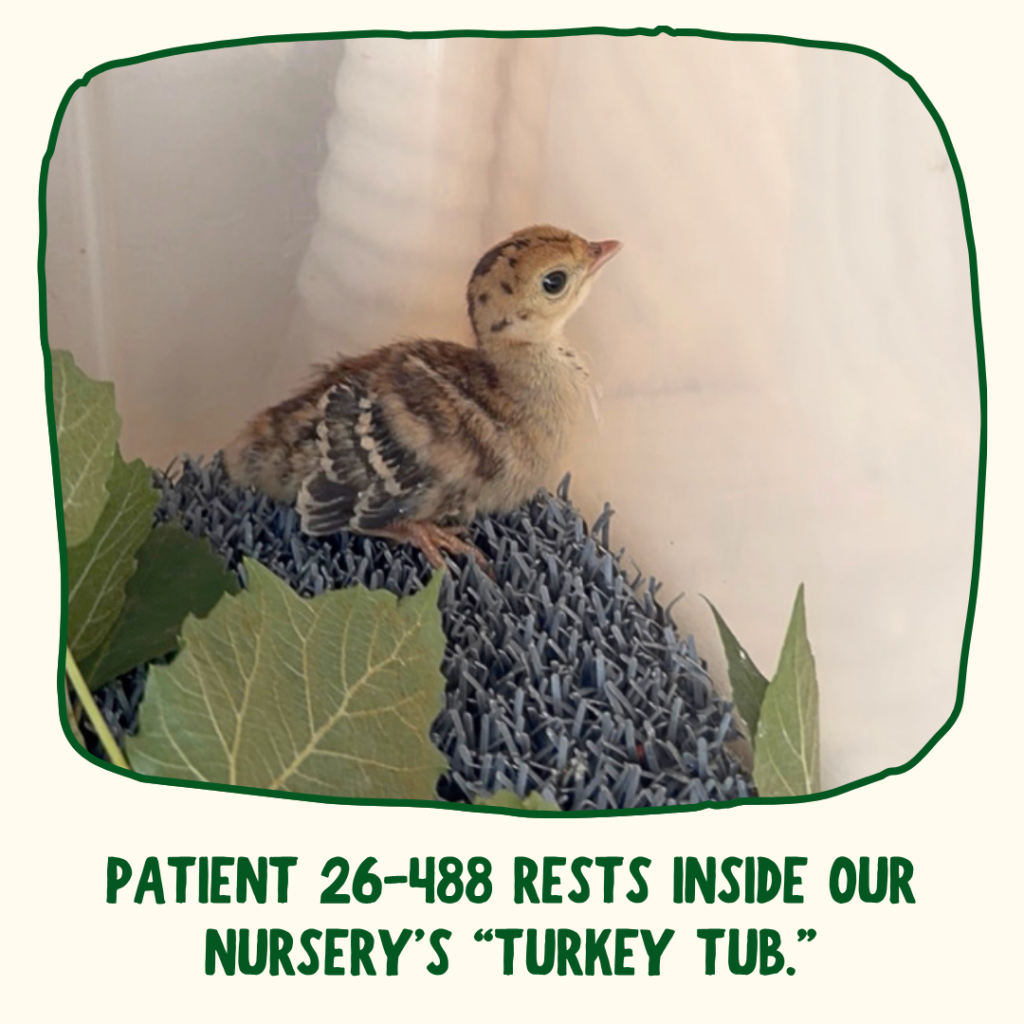
These three teeny poults arrived earlier this week after a community member found them while hiking in rural Amherst County. 🥾 They stumbled upon the three chicks alone, with no mother in sight. At roughly 2 weeks old, the baby turkeys should be with their mother constantly since they cannot fly and lack the ability to thermoregulate or waterproof their feathers. Their rescuer searched high and low within a half-mile radius for any signs of their mother or another flock, but sadly, the babies appeared to be truly orphaned. 😞
Their rescuer provided the babies with a brooder heater to keep them cozy overnight, but they did not provide any food or water – which is exactly right! They simply kept the babies warm and brought them to our professional care the next morning. 🚗
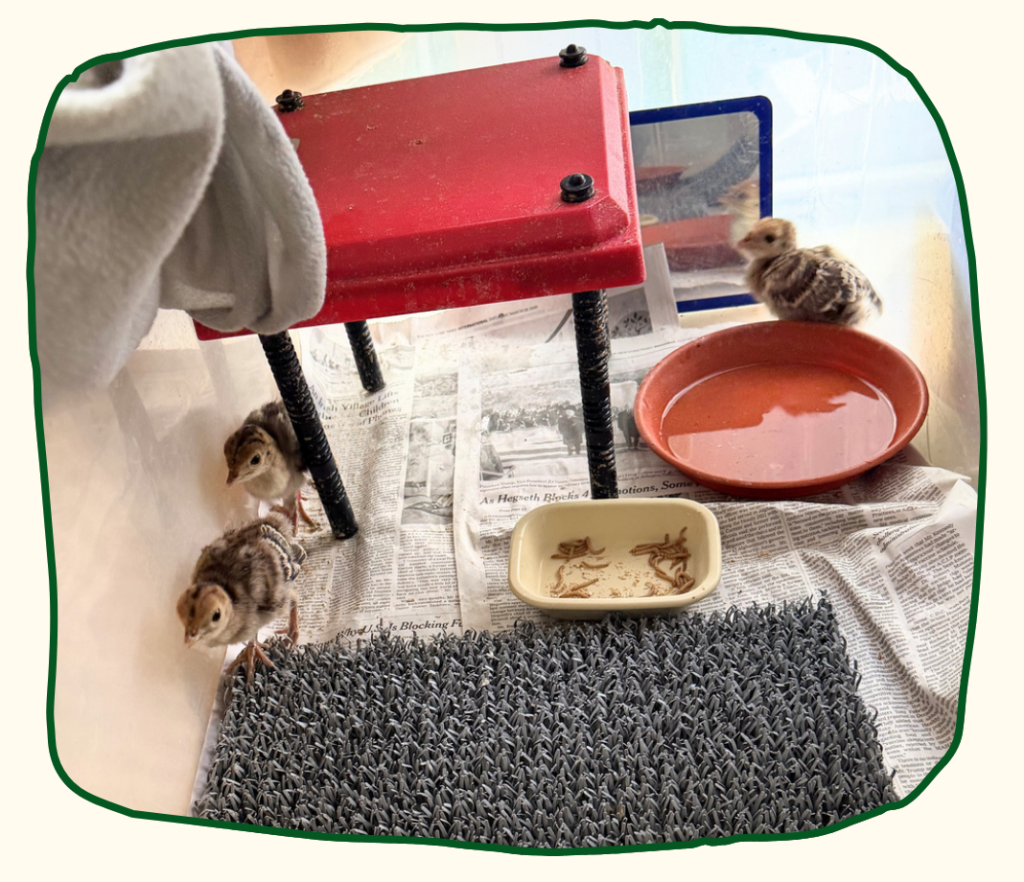
We don’t have many other photos to share of these patients, but for good reason. 📸 Wild Turkeys are an extremely stress-sensitive species to rehabilitate. As highly social prey animals, they’re evolutionarily programmed to rely on one another and fear any sign of a threat – which humans sure do represent to them!
In fact, Wild Turkeys are prone to developing capture myopathy. ⚠️ This is a life-threatening condition in which muscles are damaged due to extreme stress or exertion, often leading to deadly cardiac events. Prey species like cottontails, deer, and turkeys are at high risk for capture myopathy, which is why it’s absolutely essential that their care be left to trained professionals like our team at RWS.
While we don’t take photos of patients unnecessarily in the first place, we maintain a strict “no peeking” rule for these higher-stress species! 🫣 Unless you are actively changing or feeding these patients, which we try to do all at once each day, they are not to be viewed, disturbed, or photographed.
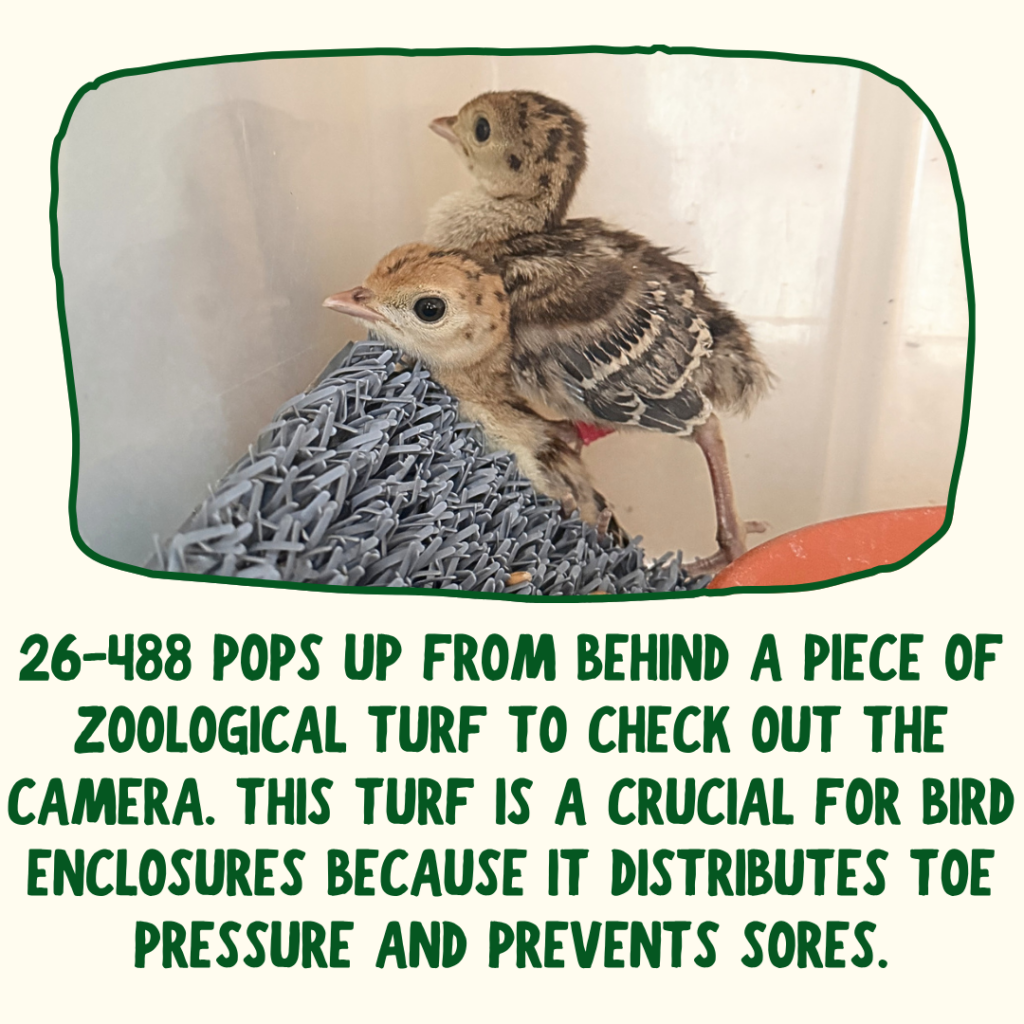
To reduce stress for patients 26-488, 489, and 490 even further, we incorporate other tactics into their husbandry. These include:
- 🎧 A white noise machine in the nursery, along with enforcement of our usual no-talking rules while in the room with patients.
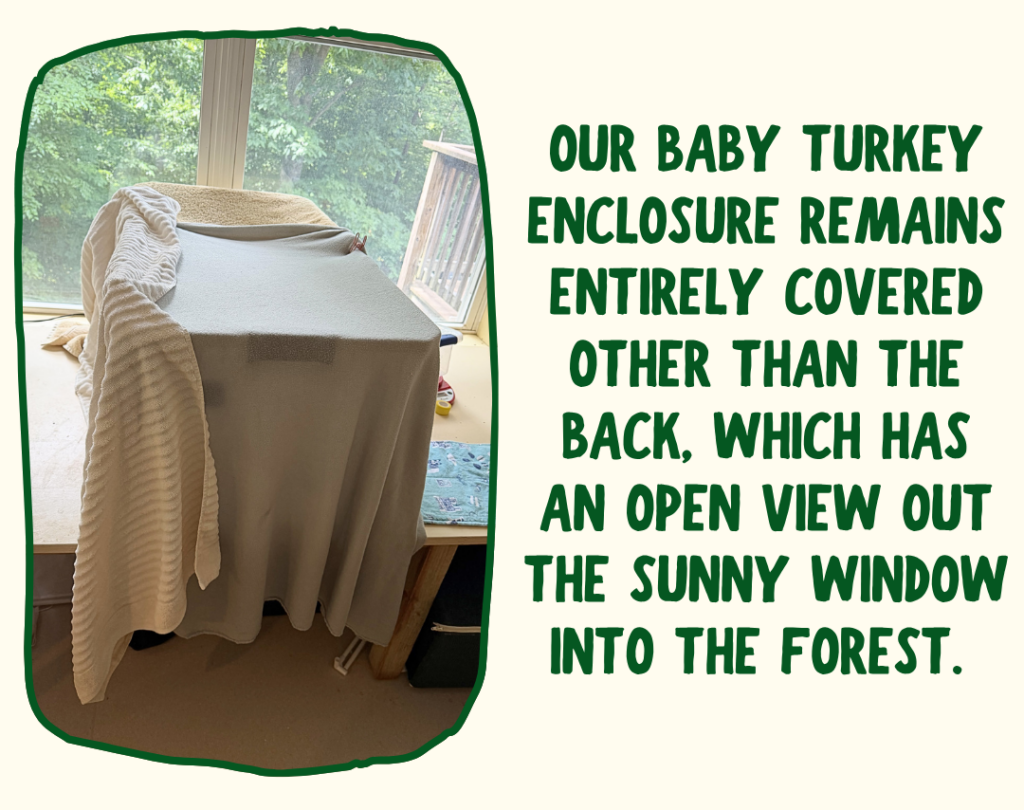
- 🪟 Completely covering the nursery tub, preventing the turkeys from seeing into the room while still letting enough natural light in through the window-facing side.
- ☀️ An overhead brooder heat system to mimic mom’s natural warmth above their heads while also providing them with a physical hiding place.
- 🪞 A mirror to provide the babies with the comfort of seeing “other” poults with them. While essential for lone orphans, this is still helpful for highly flock-oriented species even when they arrive in small groups like this trio.
- ✋”Staff Only” status, meaning only our permanent rehabilitation team members can hand-feed these patients due to the speed and precision required to handle them. While we are a training facility for our student interns and volunteers, certain tasks simply require the most experienced hands!
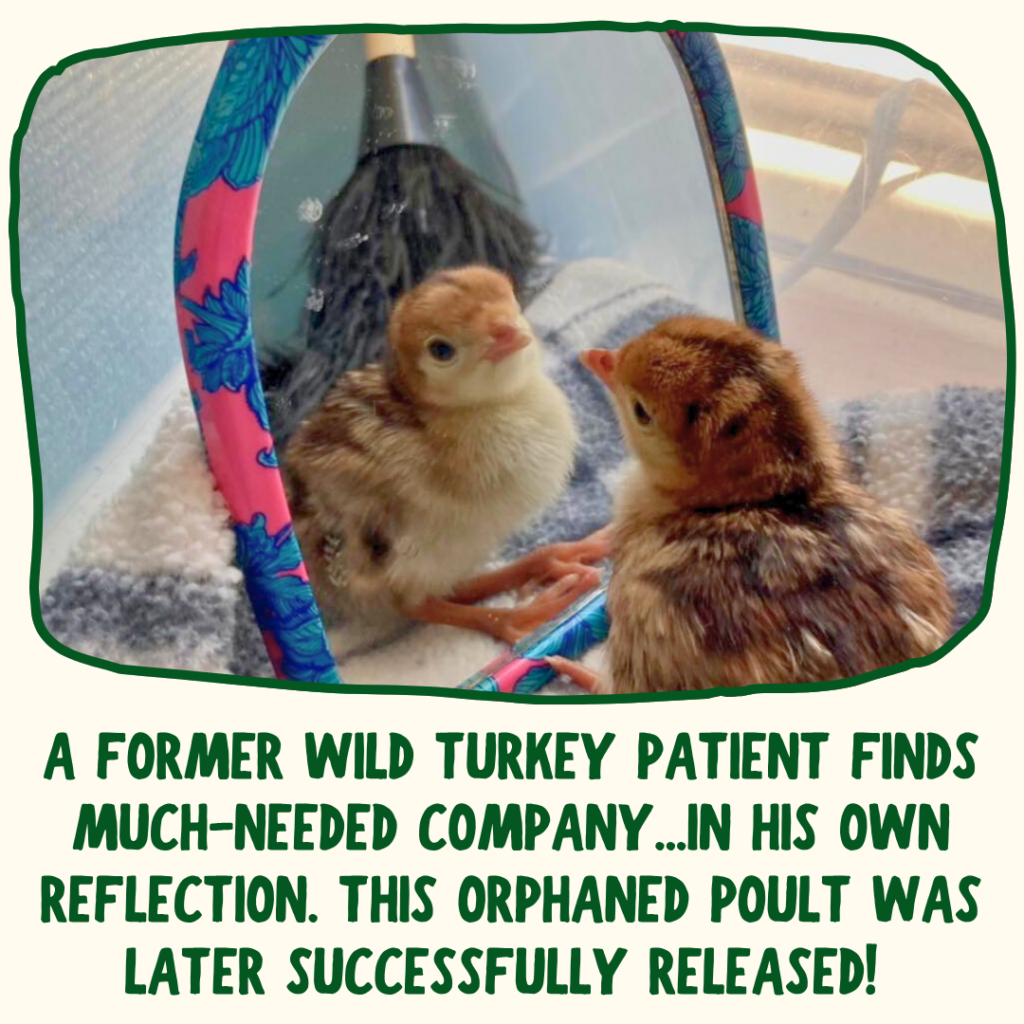
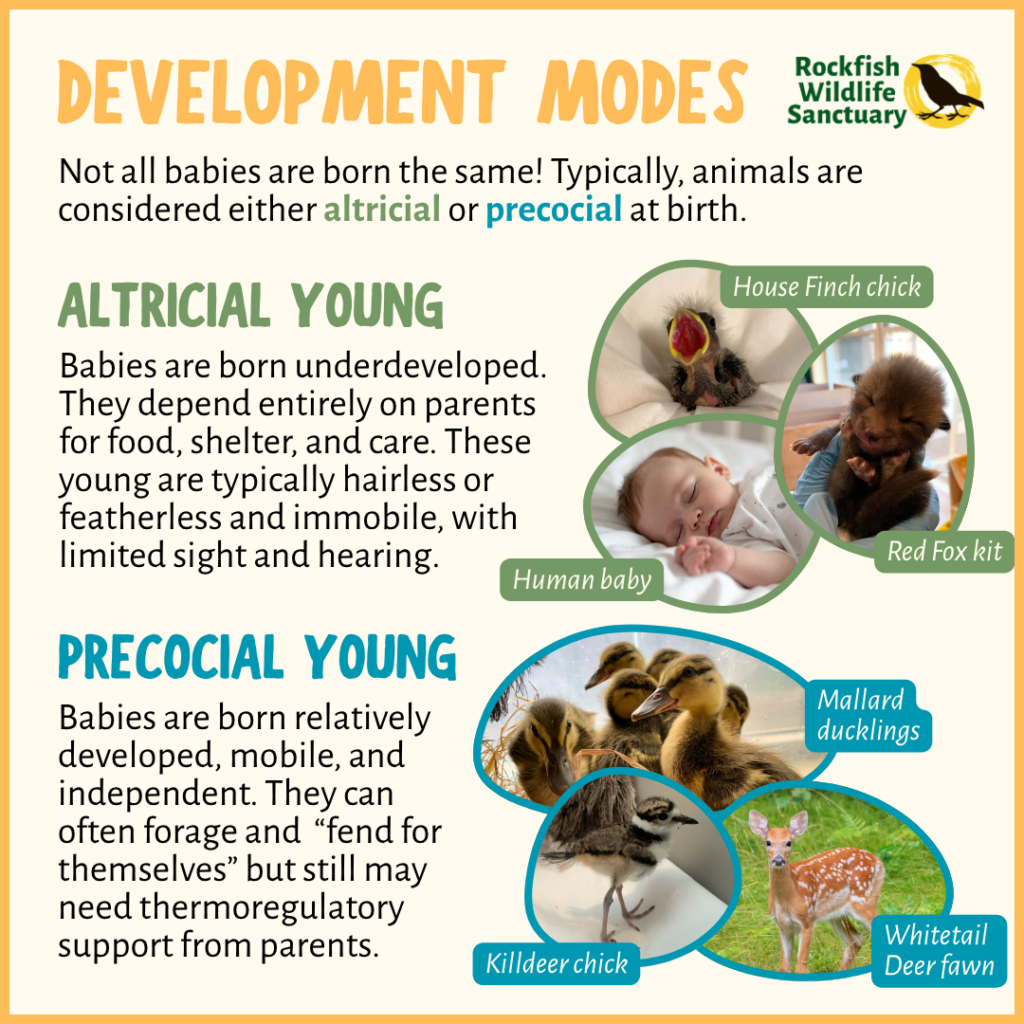
Luckily, the baby turkeys are beginning to feed themselves. That’s what we love to see in our precocial patients, meaning babies that are born with the ability to “fend for themselves.” They’re cautiously pecking at their array of seed and live mealworms throughout the day.
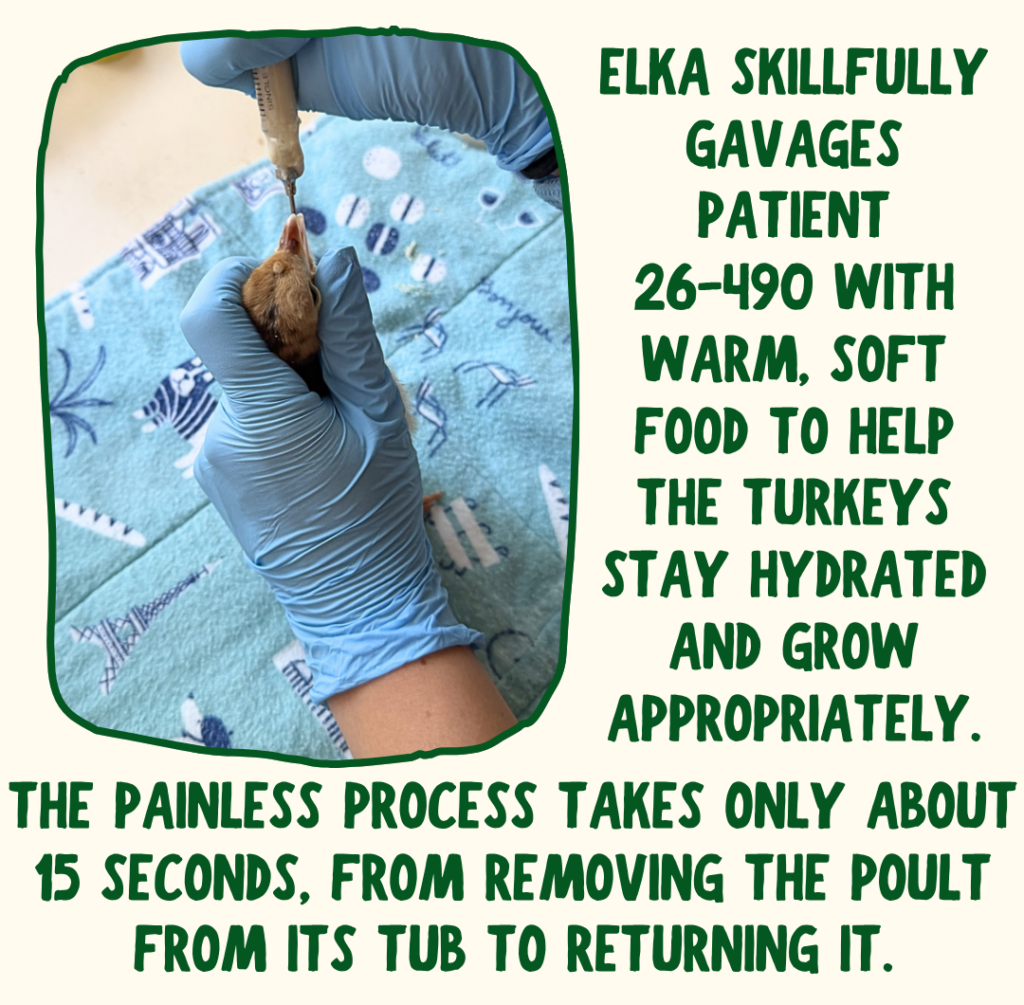
However, we have had to provide some hand-feedings – which looks much different than giving a mealworm to a mockingbird. 🪱 Given their small size (under 50 grams each!) and rapid growth rate, our team has been supplementing their tentative foraging with a high-protein turkey “formula” to kickstart their recovery. This mixture is gavage-fed to each poult. That means we gently guide a thin, curved tube into the bird’s crop, which is essentially a built-in food storage pouch.
While that sounds intense, the process is actually very quick and painless. ✅ It takes our skilled Rehabilitation Program Manager, Elka, only about 15 seconds to safely gavage-feed each poult. Elka safely holds the poult so it cannot jump or injure itself, and she puts the poult back into its enclosure with a full, warm belly. While this feeding protocol will help make up for the nutrition deficit these babies experienced before being rescued, we hope they will be totally self-feeding soon.
With so many more “needs” than your typical happy-go-lucky Carolina Wren patient, some may be wondering: why bother rehabbing Wild Turkeys? It might not seem like it, but turkeys are incredibly important to our ecosystems. 🌳 Turkeys help distribute native seeds, control insect and pest populations, and cycle nutrients by scratching at decaying leaf litter and, of course, by pooping. Not to mention, we love a challenge here at RWS!
Though our prognosis remains guarded given the unpredictable nature of working with this species, we hope to be able to move the turkey trio to a small outdoor flight enclosure within two weeks. There, the gobblers will experience what makes RWS so special: true peace and quiet, tucked into lush native woods that teem with life. They’ll be able to spread their wings, take their first flights, and gain crucial foraging skills thanks to the enrichment activities our staff will design.
We hope to release them back to the wild, just as we did with these three turkey poults featured in this “vintage” RWS clip from 2014. 💗⬇️
Thanks for learning about our Patients of the Month!
If you’d like to help support the recovery of babies like these turkeys, please consider sponsoring our fall event or donating a piece (or service) to our silent auction! Learn about both opportunities on our website. ⬇️
June 18, 2026
Published:


Be the first to comment!