


As our busy season treks on, it’s always interesting when our team has the opportunity to care for an unusual patient – especially a species that some people don’t even know exists! 👀
In mid-June, a family was driving here in Nelson County when they unfortunately witnessed a fox being struck by a vehicle. After getting out to investigate, the rescuers found that the fox had sadly died before spotting a juvenile kit nearby. Thankfully, they were able to safely contain the baby and bring it to the Sanctuary for care in the morning. This wasn’t a typical Red Fox, though – they had found an orphaned Gray Fox! 😲
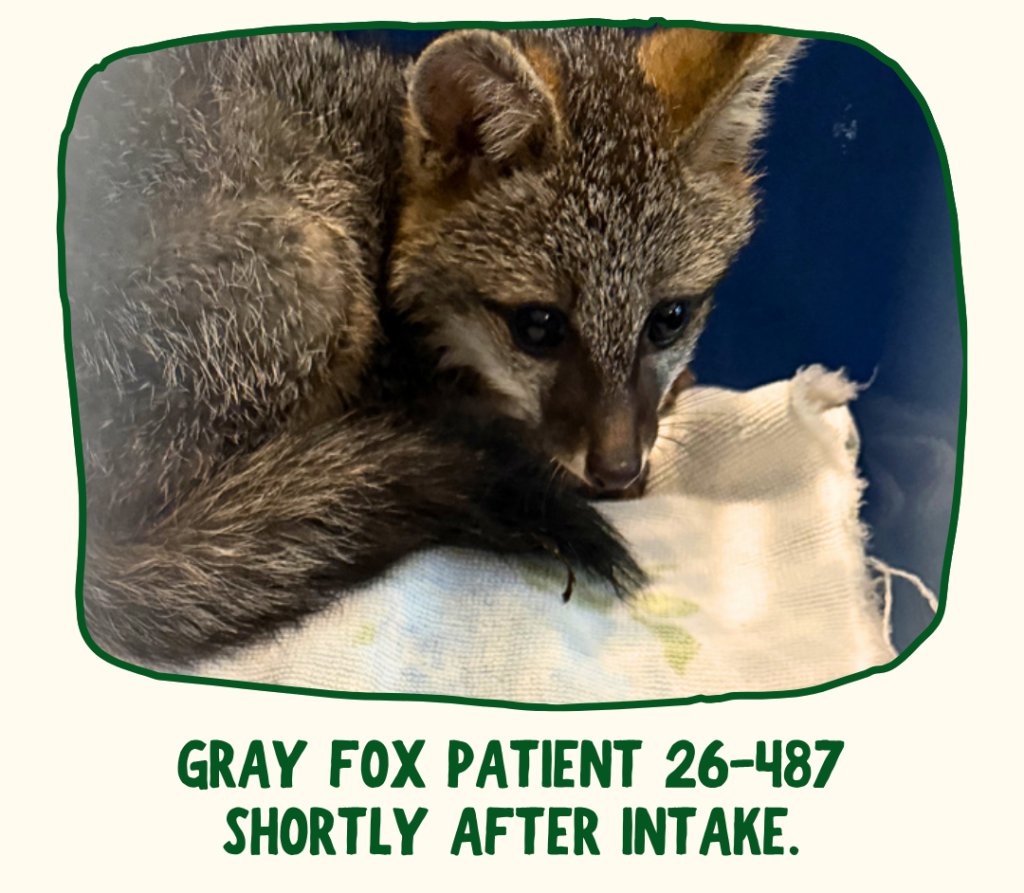
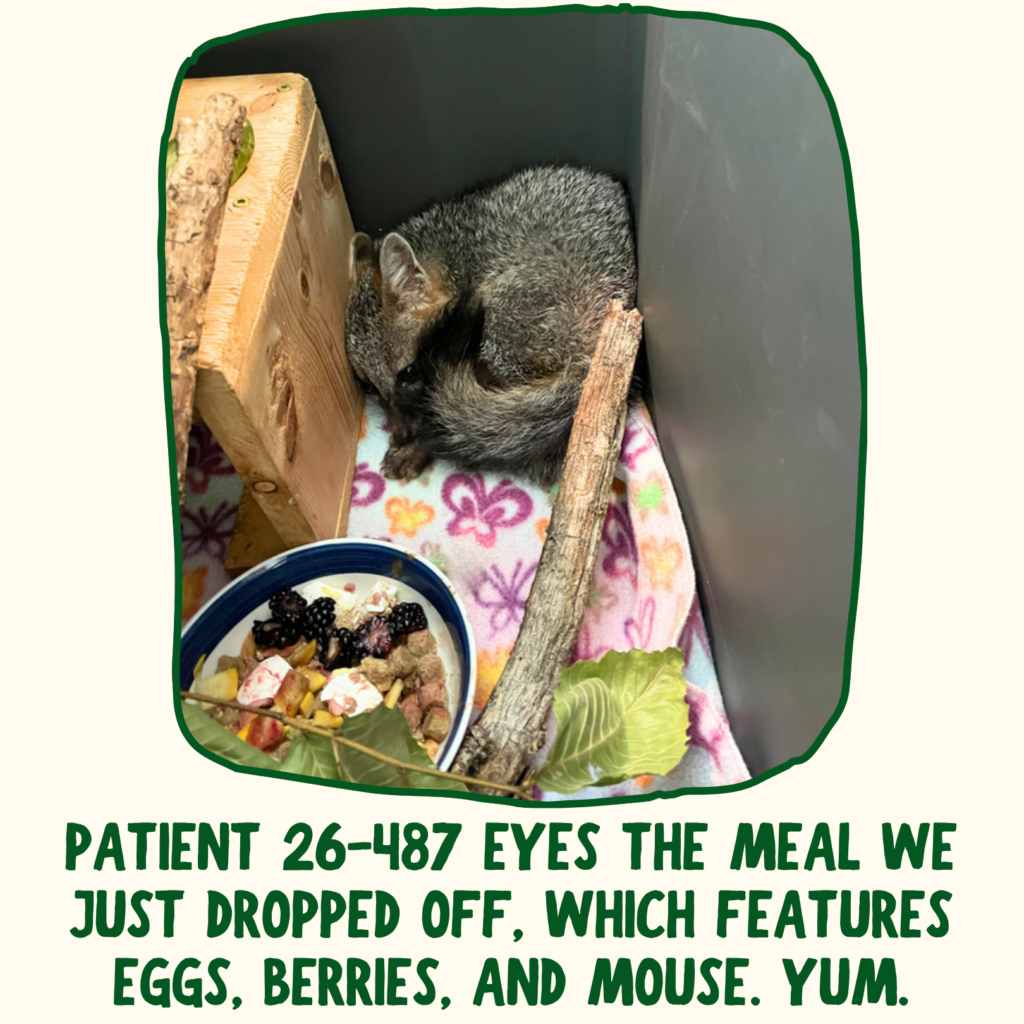
Our team got to work ensuring Gray Fox patient 26-487 received the care she needed. Starting with fluid therapy and heat support, the little kit rested in our quiet Rabies-Vector Species nursery at the Sanctuary. Her appetite was thankfully impressive right from the start. 💪 She plowed through her meals and continued to grow in size and muscle mass over the past two weeks in care!
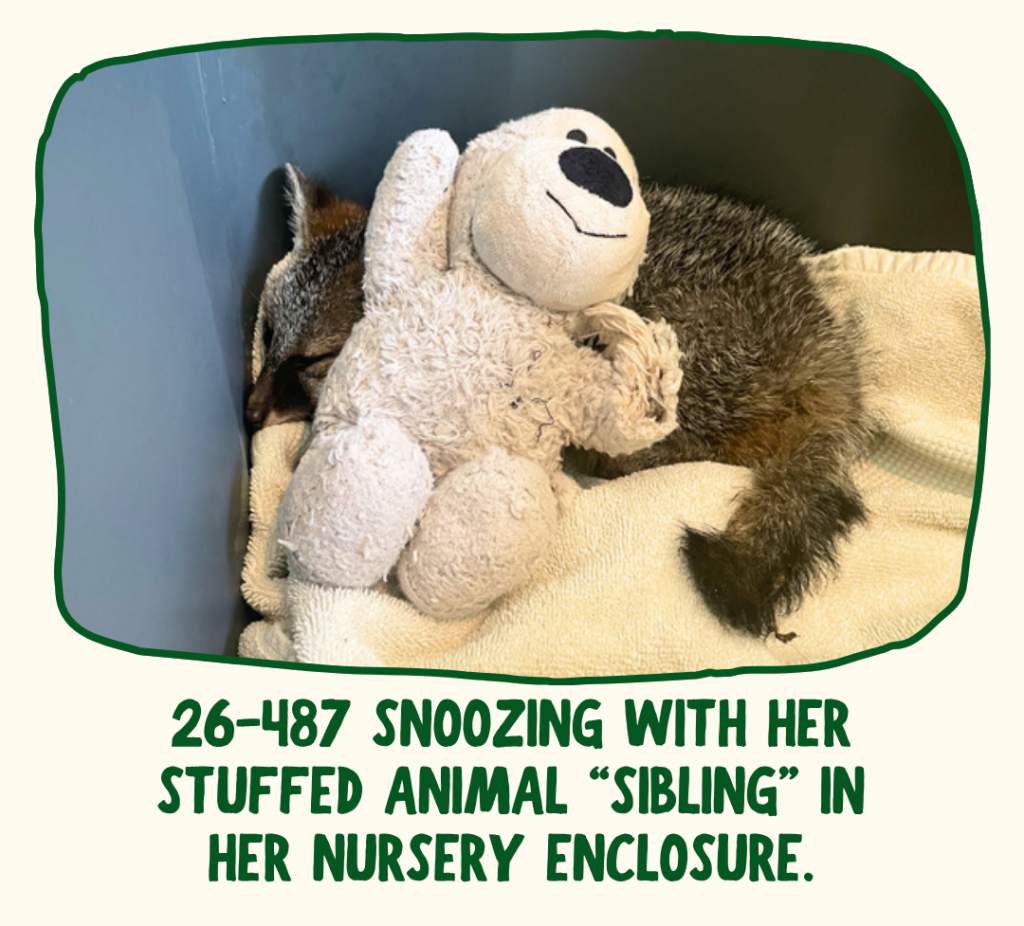
Though admitting a Gray Fox kit was a surprise, she arrived with a couple of less welcome surprises. Our team noted late last week that she had two botfly larvae in her skin. Yup – ew. 🥴 The fly eggs must have been laid weeks before she arrived in our care but eventually became apparent as they got bigger. Our team carefully removed them right away and began treating the exit wounds.
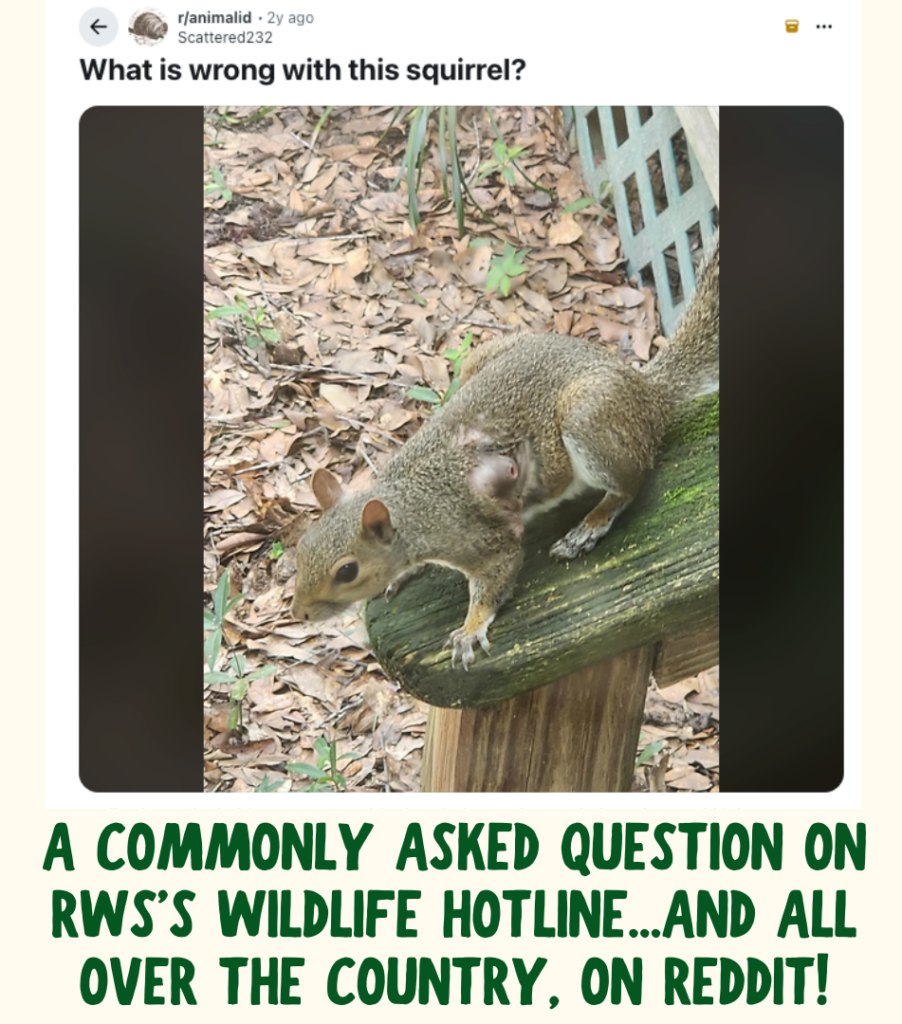
Without getting too graphic, botfly larvae are a very common parasite in Virginia’s wildlife. We commonly see them in squirrels in particular, whose lumpy look can alarm folks and lead to them calling our hotline for advice. ☎️ We’re then happy to share the good news that, usually, the host animals heal up just fine after the larvae leave.
However, given this little kit’s young age, we wanted to be safe! We transferred the Gray Fox kit to our veterinarian friends at Wildlife Center of Virginia yesterday so she can receive further wound care and prescription antibiotics while the site heals. 🩹 We hope to welcome the sweet kit back at the Sanctuary for long-term rehabilitative care once she’s medically cleared. Thank you, WCV!
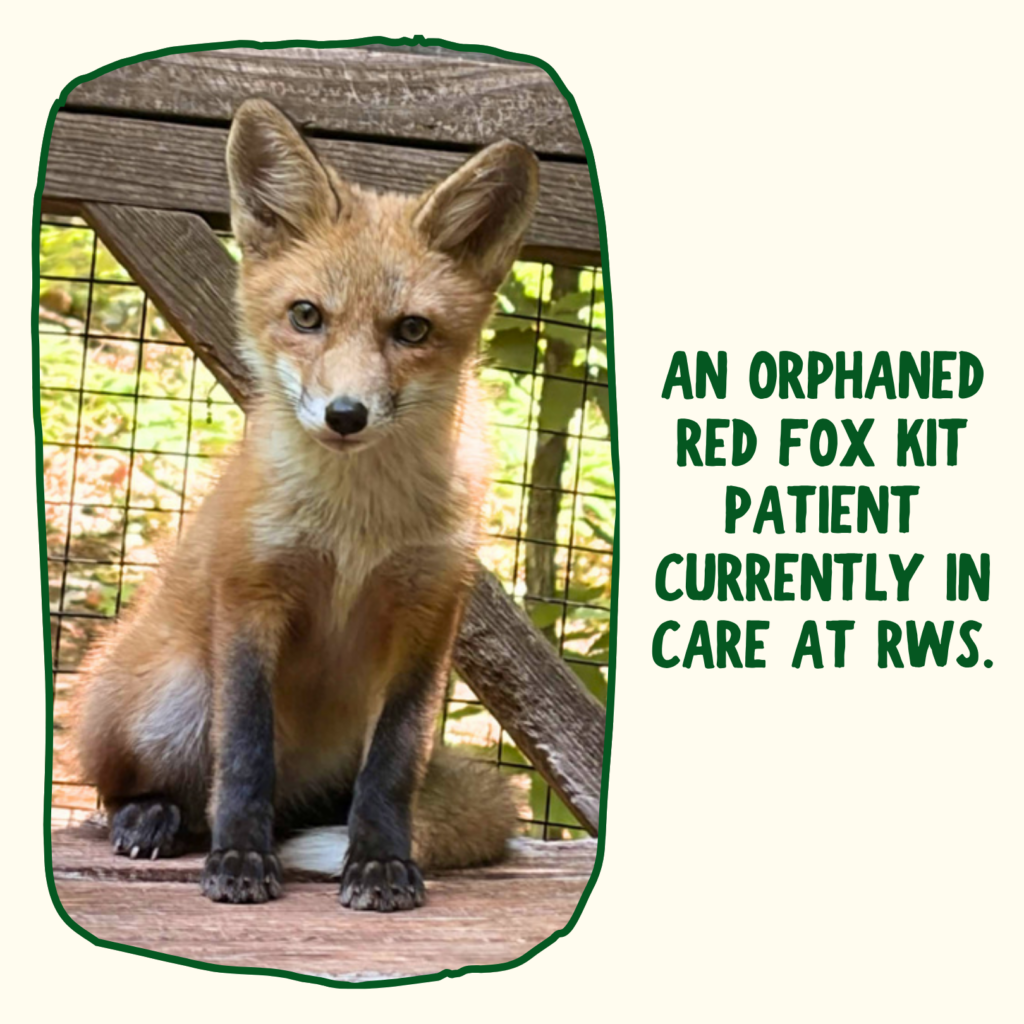
We love caring for foxes at RWS, and as one of the few organizations in Virginia that treats kits from rescue through release, we receive a lot of them. However, the vast majority of the dozens of kits that arrive for care each year are Red Foxes. That makes sense: the population of these striking red critters is considered stable, and they have adapted relatively well to the urbanized areas where most Virginians live. In fact, the Red Fox is the species almost anyone will picture in their heads when asked to imagine a fox. 🦊
Gray Foxes? Not so much. Researchers believe the Gray Fox is a species in decline, largely from a mix of habitat loss, predation, and disease. The Virginia Department of Wildlife Resources reports that Gray Fox sightings by hunters have declined by 66% in the past two decades. Virginia Tech Ph.D. candidate Victoria Monette is currently hard at work on a sweeping, multi-year mapping survey to better understand where these secretive animals live and how their numbers have changed over time. Monette’s goal is that data from the Virginia Gray Fox Project will be able to better guide conservation efforts to protect this vulnerable species

So for this month’s Critter Corner, we wanted to raise awareness about the fascinating Gray Fox. 🩶
Whether you’d never heard of them before reading this or you’re a fox pro, we hope you’ll learn a thing or two about some of our shyest, most surprising wild neighbors.
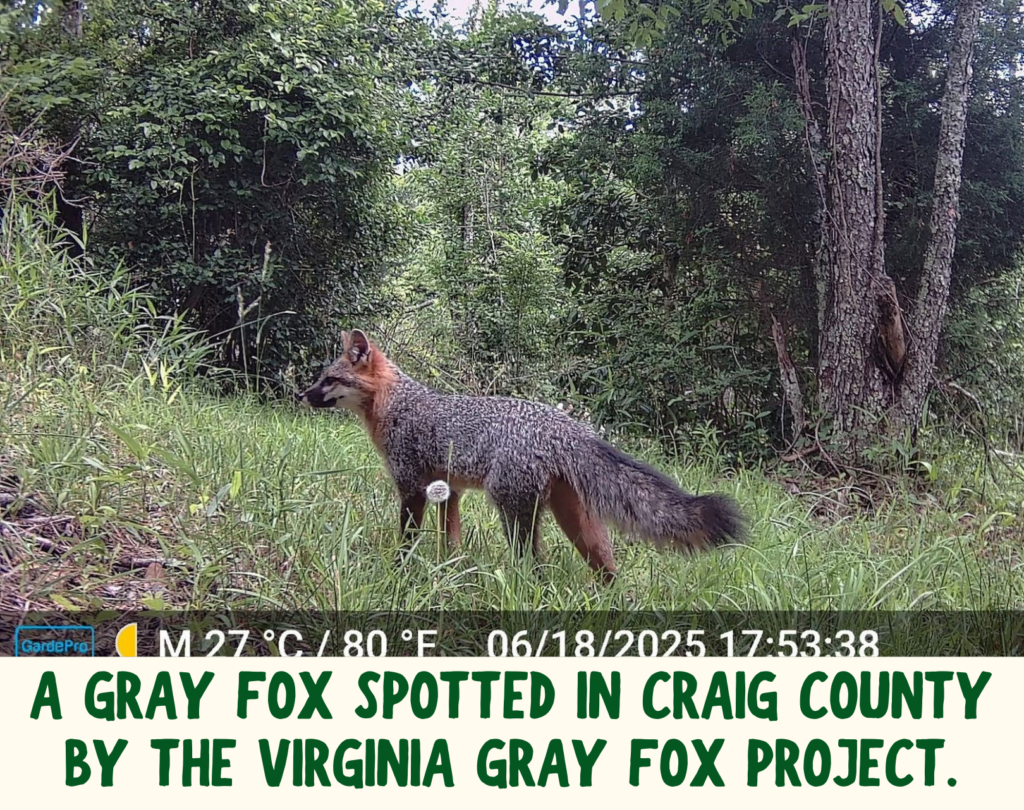
For starters, the Gray Fox isn’t actually a “true” fox! They are not members of the Vulpes genus like Red Foxes (Vulpes vulpes) are. In fact, they’re only distantly related to Red Foxes and represent one of the oldest living lineages of creatures in the Canidae family. 🐺 The Gray Fox split off from the ancestors of wolves, coyotes, and foxes millions of years ago and are thought to have remained relatively unchanged for the last 3 million years. Red Foxes, on the other hand, emerged a sprightly 400,000 or so years ago.
So, what are they?! The Latin name for the Gray Fox is Urocyon cinereoargenteus – say that five times fast! These curious critters are Virginia’s sole members of the genus Urocyon. They’re almost the world’s sole Urocyon species, except for the aptly-named Island Fox which lives only on California’s Channel Islands.
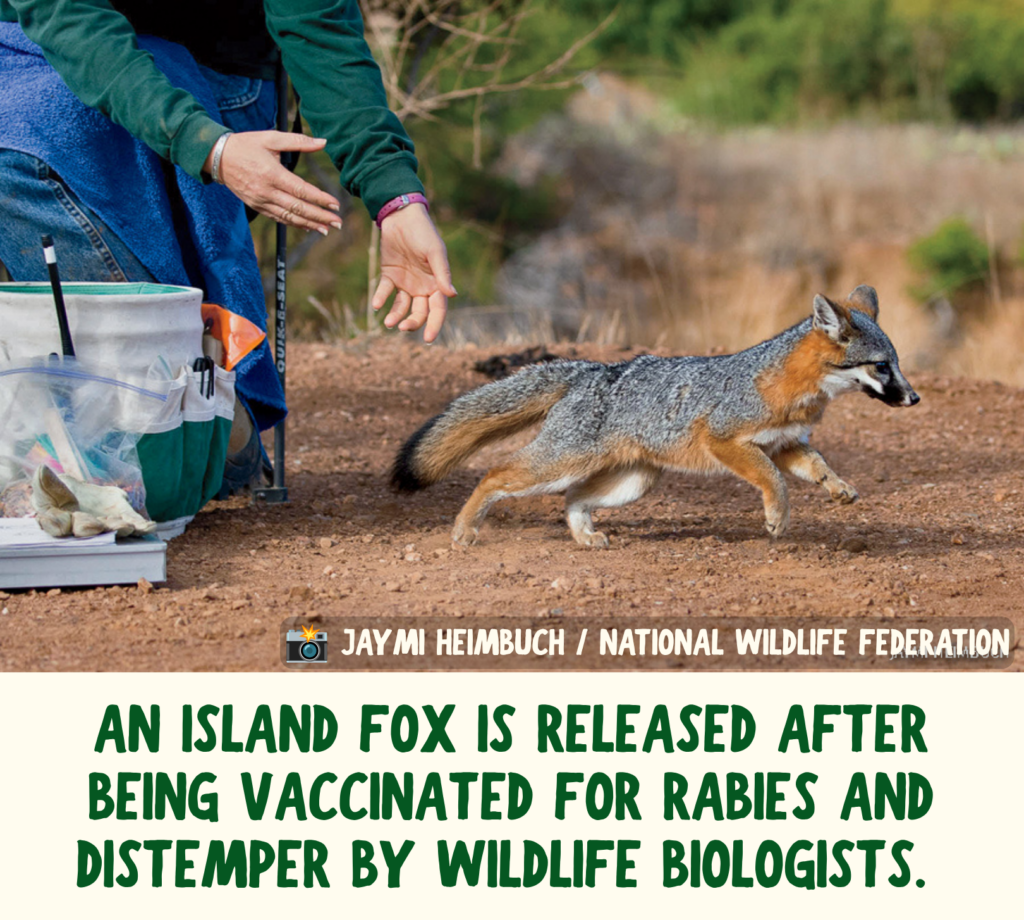
That long Latin name roughly translates to “ashen silver-tailed dog,” which pretty much nails their physical appearance. These creatures have a thick, silvery frosted charcoal coat, but their necks and legs are splashed with cinnamon-orange fur and their bellies are bright white. Their size also helps them stay incognito. 🥸
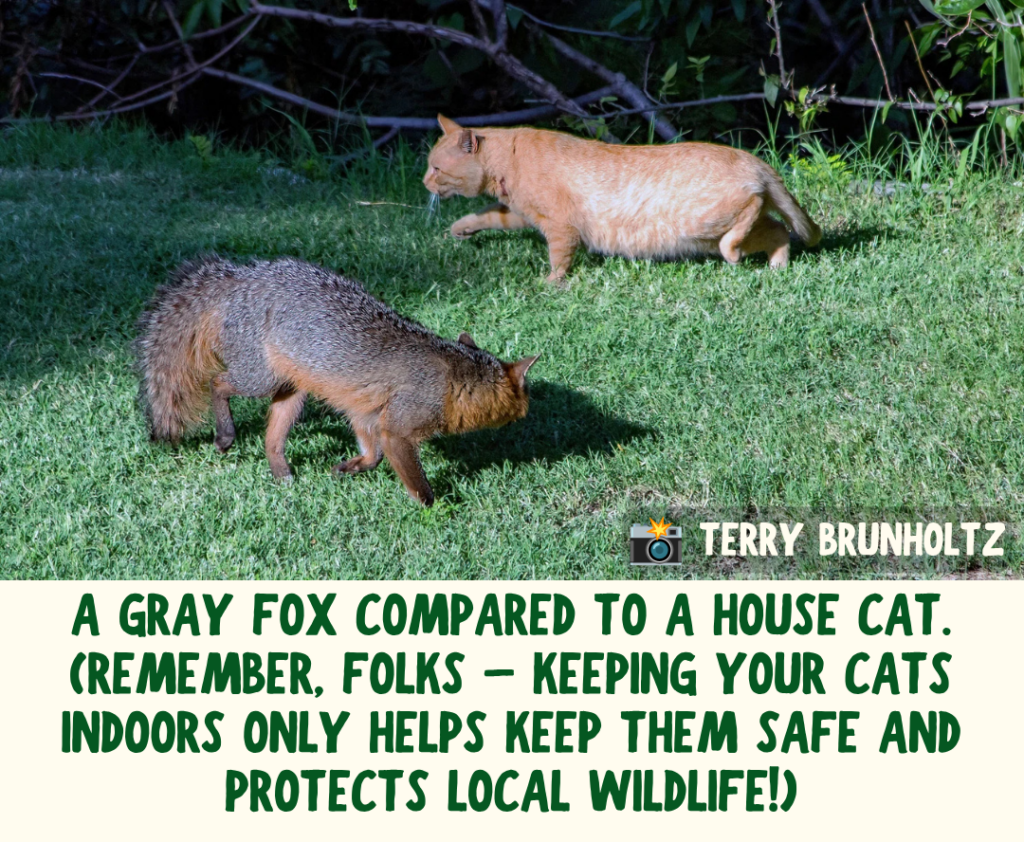
They’re smaller than Red Foxes, typically about the size of a house cat. 🐈 They also differ from Red Foxes in that they have oval pupils, like a domestic dog’s, rather than the slitted pupils of those in the “true fox” family. You likely won’t get close enough to one to be using pupil shape as an identification tool, but now you have another fun fact to whip out at your next dinner party.
If you think about it, the Gray Fox’s colors are actually quite similar to an Eastern Gray Squirrel’s. This makes sense, since both species need to blend into the same kind of environment: trees. 🌳
Gray Foxes are semi-arboreal and are incredibly talented at climbing. 🧗♀️ We’re not talking about a little hop off the ground, either. Gray Foxes can scale a 60-foot tree! In fact, they are the only North American canid that regularly climbs trees. Their Alex Honnold-esque free soloing talent comes from some neat evolutionary adaptations. Their claws are hooked and semi-retractable, like a cat’s, so they can keep their nails super sharp and avoid grinding them against the ground when not needed. Mirroring a squirrel again, the Gray Fox also has impressively flexible ankles that help them grip thicker trunks.
Climbing helps Gray Foxes survive in a variety of ways. They can escape predators, sleep on a comfy branch all day long, and search for lots of different foods. Check out this video of a Gray Fox easily climbing up a large tree to snag a delicious cicada! ⬇️
As you might have guessed, the Gray Fox’s preferred habitat is the forest. While Red Foxes are often creatures of open spaces, where they can watch for prey like rabbits and voles from afar, Gray Foxes rely on dense brush and tree cover to survive. They can sleep during the day, camouflaged into shadowy tree branches, and then emerge at night to forage for, well, pretty much anything they can find!
Scouring the trees and forest floor, Gray Foxes chow down on crickets, eggs, small birds, squirrels, mice and voles, beetles, cottontail rabbits, slugs, berries, grasses, and even carrion (dead animals). In doing so, they help disperse native seeds, regulate populations, and reduce agricultural pests. 🐛🐭🌱
As they say, though, it’s a dog-eat-dog world out there…literally! 😅 Despite their own crafty hunting skills and sharp teeth, they are still firmly in the middle of the food chain. Gray Foxes are preyed upon by larger canids like Coyotes and occasionally domestic dogs, as well as Bobcats and large birds of prey.
Interestingly, scientists have found that sometimes Gray Foxes are simply killed by a predator…but not eaten. This indicates a potential phenomenon called intraguild predation. This means that a larger predator, like a Coyote or Bobcat, might kill a Gray Fox just to eliminate a competitor for prey sources. Nature is pretty tough!
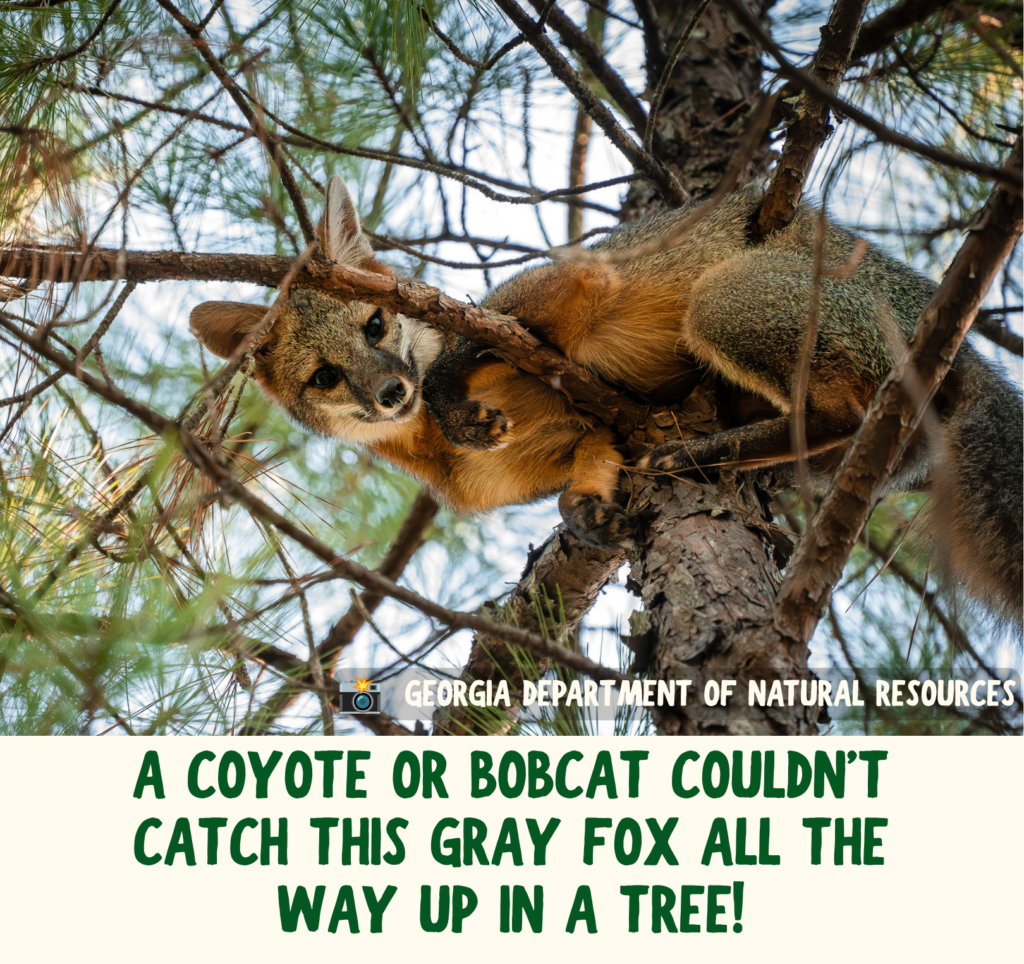
In between climbing trees, munching on the forest’s broad menu, and avoiding predators, Gray Foxes still make time to find love. 💕 Using powerful scent markers and some, uh, interesting calls, males and females link up into monogamous pairs in early spring. They then establish a den, often above ground in brush piles, tree cavities, rock crevices, or even abandoned structures.
After about two months, the adorable little kits are born! While mom stays close to the den nursing and protecting the youngsters, dad takes on the role of provider, bringing meals back to his family. By summer, curious kits begin following their parents on short hunting trips. At four months, a young Gray Fox can hunt on its own.
That doesn’t mean they take off right away, though. 🏃 While the juvenile males typically do disperse in the fall to find their own territories, the young females typically stick around and may only disperse within a mile or two from their natal den. If a young Gray Fox can survive its first year, they can enjoy a natural wild lifespan of 6–10 years.

That is, if they can also avoid the biggest predator of all: humans.
As Patient 26-487’s story illustrates, vehicle collisions pose a grave risk to Gray Foxes. Cars are especially dangerous to inexperienced juveniles who are simply looking for their new home base. 🚙
The Gray Fox is ultimately considered a bellwether species for forest ecosystem health. 🚨 Ongoing canopy loss and construction in rural areas might make landscapes that are good enough for Red Foxes and Coyotes, but not Gray Foxes. Scientists have proven that a decline in tree cover in rural spaces leads to a decreased ability for Gray Foxes to coexist with larger predators. When Gray Fox populations decline, it’s safe to assume that so do countless other species whose survival depends on having a densely-forested home.

What can we do to support our most elusive canid neighbors? You’ve got options!
- 🌳 Remove problematic invasive trees, like Ailanthus (Tree of Heaven), that choke out struggling native species.
- 🪵 Leave up snags (dead trees) whenever possible as potential den sites for the Gray Fox – and roosting sites for bats!
- 🚸 Support wildlife corridors. Check out the Virginia Safe Wildlife Corridors Collaborative, of which RWS is a partner, to discover how you can support the implementation of wildlife crossing research and construction in your community.
- 🚜 Learn about development threats to the rural ecosystems Gray Foxes depend on, like the proposed Valley Link Transmission Line.
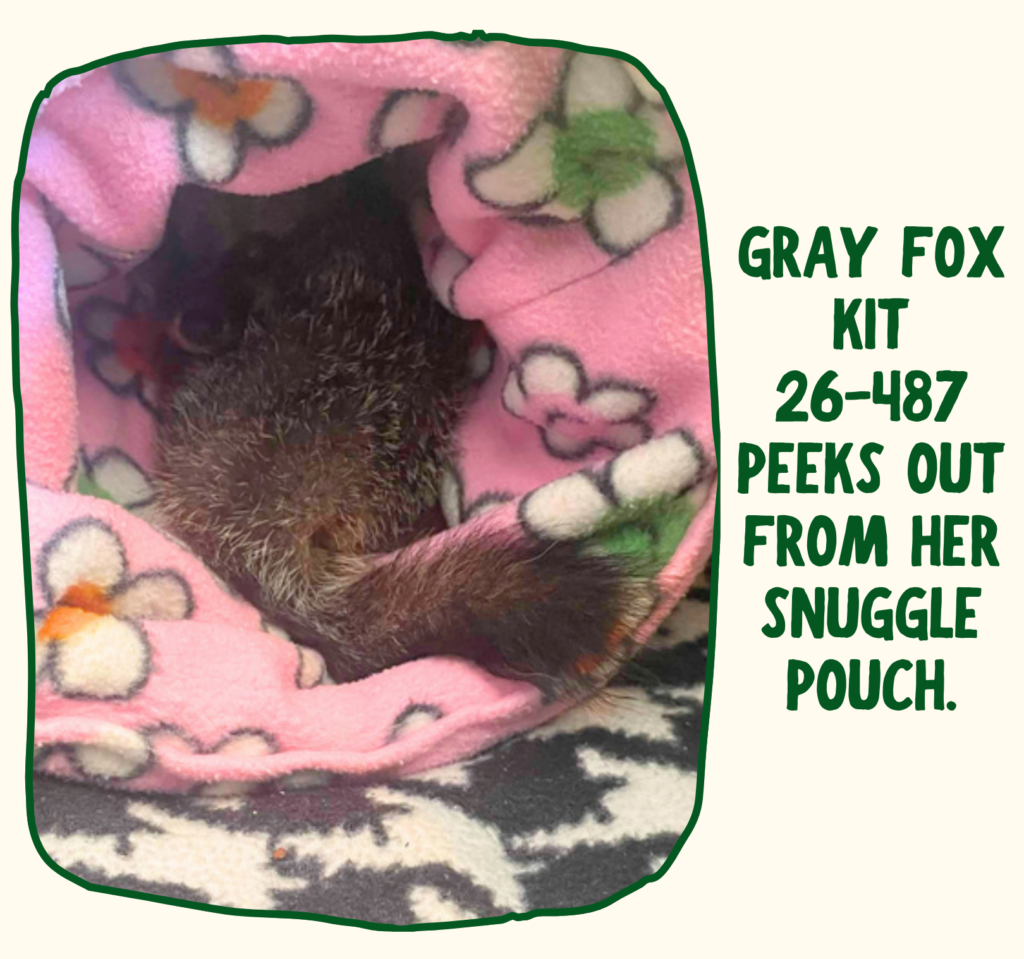
We hope our little Gray Fox patient will heal up nicely with our friends at WCV and soon be back at the Sanctuary to continue growing into the forest acrobat she was born to be. When it comes to species in decline like the Gray Fox, every single individual we can help matters.
Thank you for learning about these fascinating animals in this month’s Critter Corner!
If you’d like to support the many fox kits we have in care right now, please make a tax-deductible donation today. Just $5 helps feed a fox patient for a day!
June 30, 2026
Published:


Just saw a small grey fox trot across my back yard this morning. What a treat! I live above the woods that back up on Long Branch stream. Fun to read your article about them above.
What a treat indeed! They are so elusive – most of our team has never seen one in the wild. Hopefully your fox neighbor is living its best life out there. Thanks for reading our posts and following our work, Judy!