


We always enjoy sharing happy updates on former featured patients. This August, we’re celebrating a particularly interesting recovery story! 👀
Red-shouldered Hawk 26-383 was a Patient of the Month back in May. After 11 weeks of care, we were thrilled to release this beautiful bird in early August – thanks to an extra-special procedure that helped restore their perfect flight. ✈️
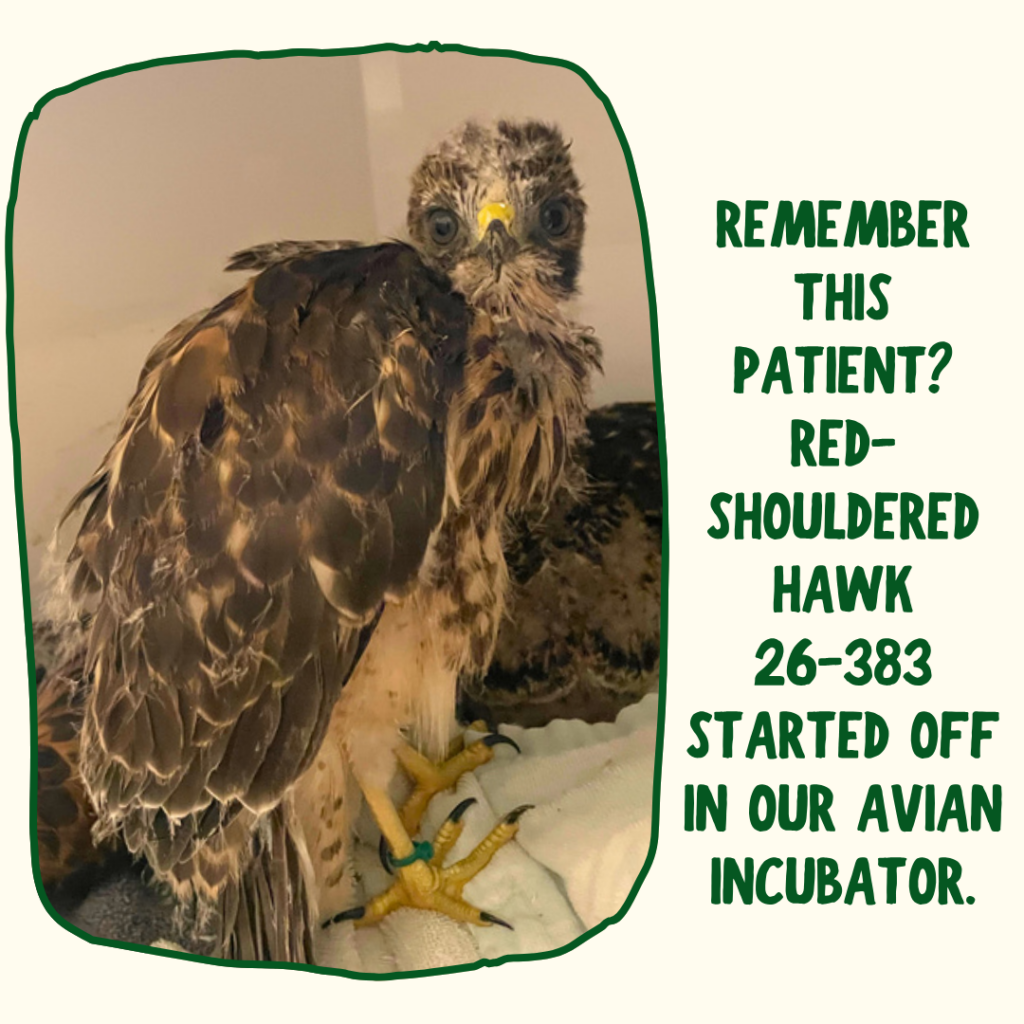
Patient 26-383 arrived at RWS in late May when our friends at Chickahominy Wildlife transferred them to us for long-term care. The young bird came with seven other Red-shouldered Hawks, all rescued from different parts of Richmond. This patient in particular had been found on the ground in a city backyard, with no sign of parental care. 😞
Patient 26-383 initially received intensive care in one of our avian incubators. With fluid therapy and proper nutrition, they started to thrive! They were often the most alert of the hawklets, standing above (and sometimes on top of) their “siblings.”
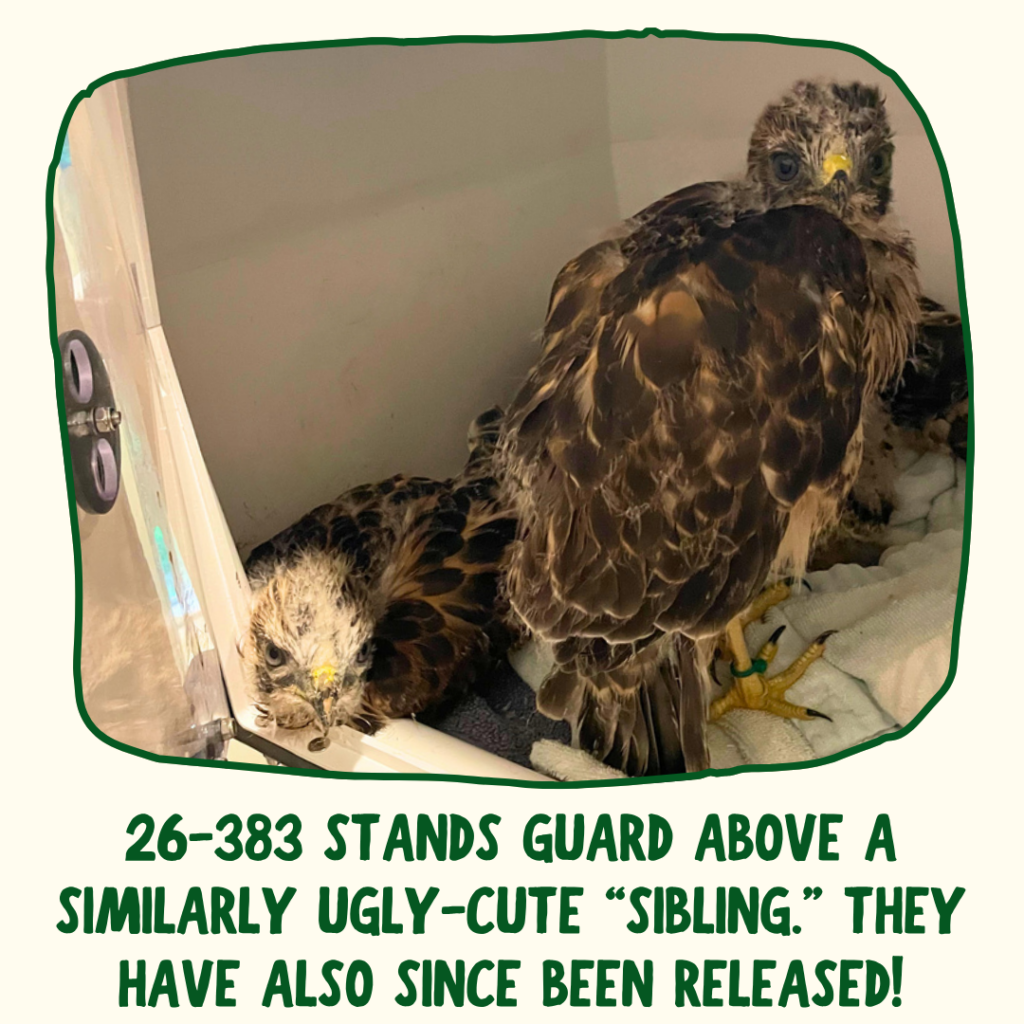
As 26-383 continued to progress, we noticed that several of their tail feathers had been damaged. Though we work diligently to protect the feather health of all of our avian patients through careful enclosure husbandry, broken feathers can still happen. That’s especially true when you’re working with clumsy juveniles, which we specialize in caring for at RWS. 🐣 This whole “flying” thing is hard to figure out, after all!
A raptor relies on all of their primary and tail feathers for successful flight. Multiple broken feathers can make flying more difficult or even impossible! Tail feathers, called rectrices, are particularly important for steering, braking, and staying stable in unexpected wind. Rectrices are also often important in courtship displays. 👩❤️💋👨
Luckily, patient 26-383 was flying well overall in our largest flight enclosure with their cohort. To ensure their best possible chance for long-term survival, though, we wanted to make sure those tail feathers were in excellent condition. ✨
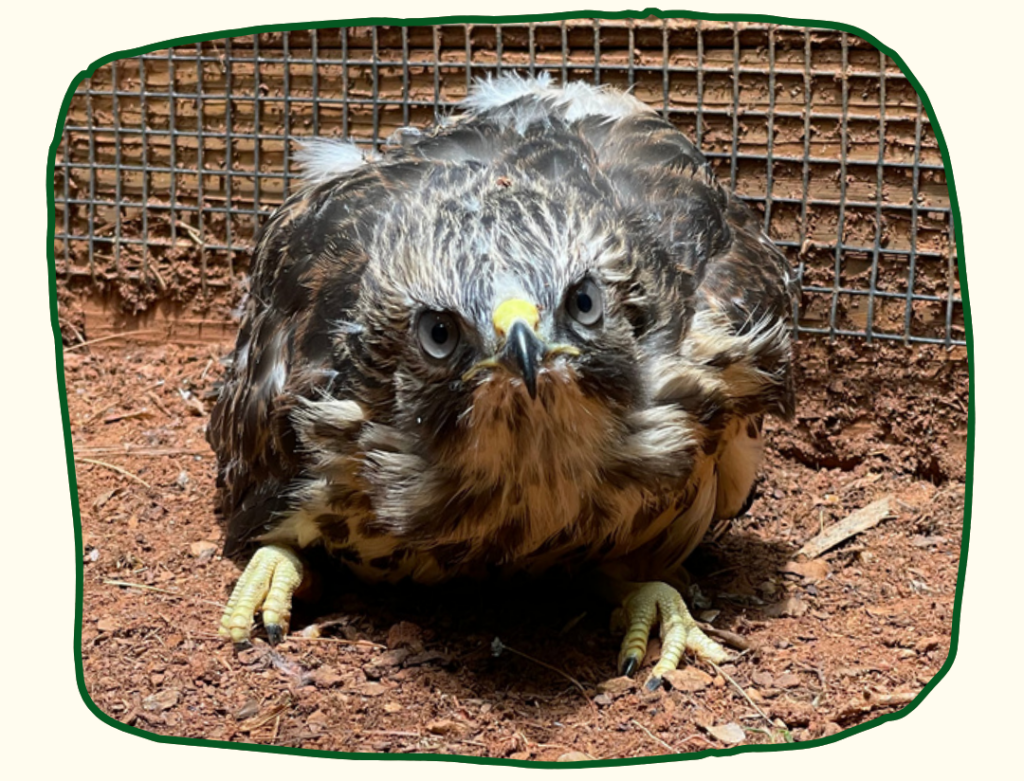
Feathers can’t heal themselves. Like human hair and nails, feathers are made of keratin and are considered “dead” structures. Ultimately, the bird needs to replace the feather by molting, a process where seasonal or hormonal changes trigger old feathers to fall out and a beautiful new feather steadily grows in. This process can take months, since feathers are typically only molted one or two at a time. After all, if a bird suddenly lost more feathers than that, they couldn’t fly!
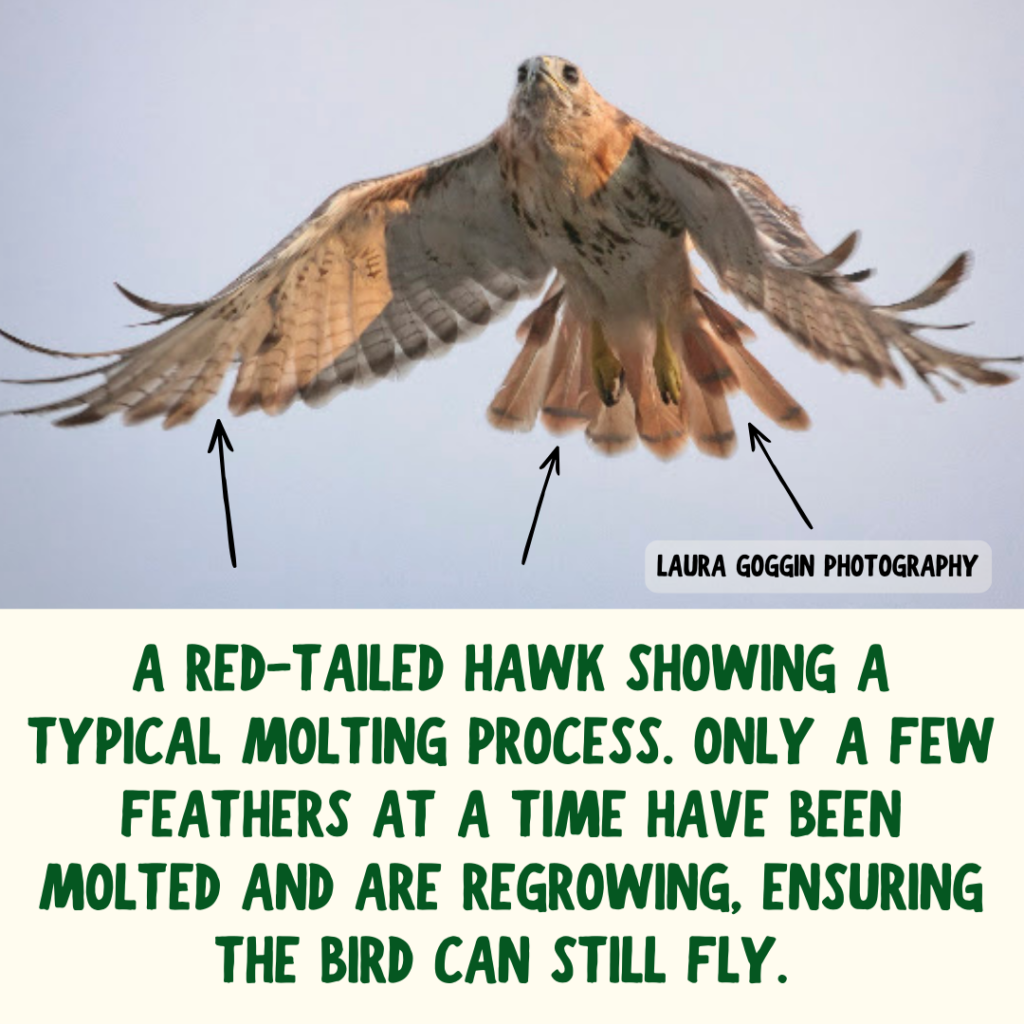
For 26-383 to naturally replace those broken feathers, we would have needed to keep them in care through molting. However, young Red-shouldered Hawks typically do not molt their juvenile plumage for 18 months! ⏰ It was simply not an option to keep this patient for that long, given the inherent stress of rehabilitation – especially since 26-383 passed all of their release-ready milestones with flying colors. (You thought you’d get through an entire RWS newsletter without a pun?!)
To release this handsome bird and ensure their flight was top-notch, our rehabilitation team decided to imp 26-383’s tail feathers.
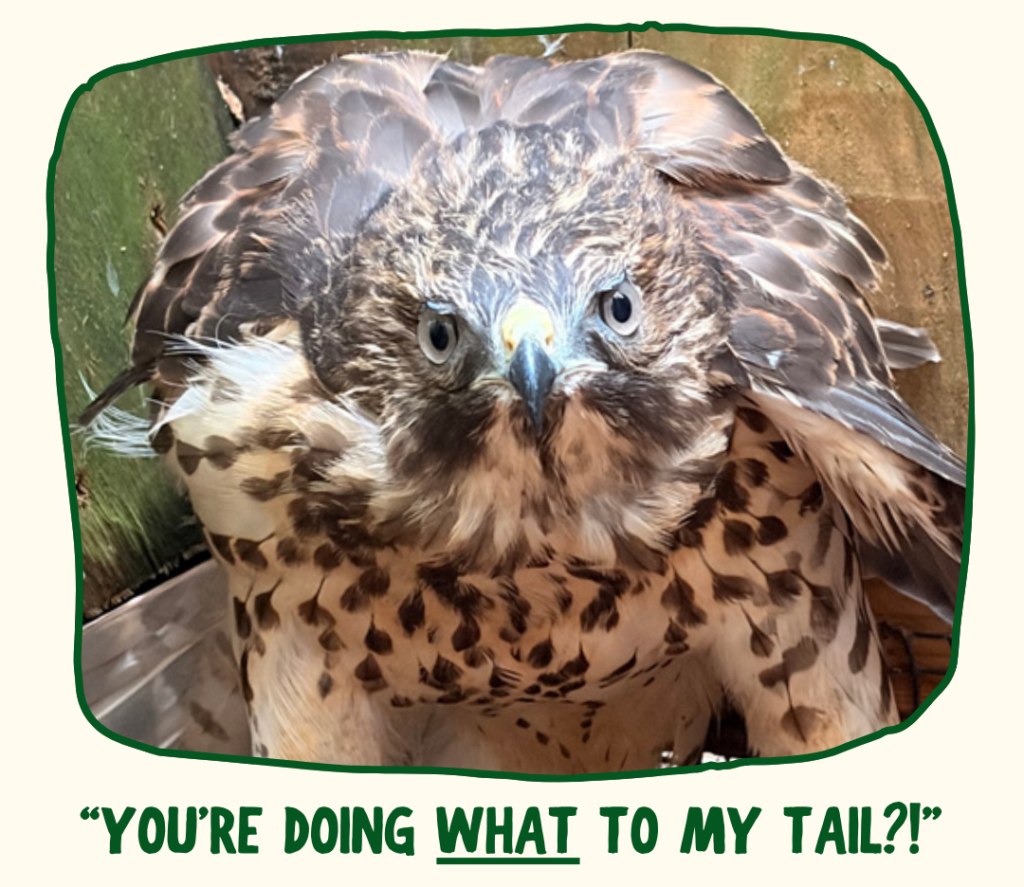
Imping is a tried-and-true method of painlessly transplanting healthy feathers from a donor bird into the feather shafts of a bird in need.
Imping has been practiced for hundreds of years. The first known reference to the procedure dates to 1240, with the Holy Roman Emperor Frederick II of Hohenstaufen’s De Arte Venandi Cum Avibus, or The Art of Hunting with Birds. 📖 This 500-page tome on birds and falconry uses the term imponere to describe the process of repairing damaged feathers. (We do firmly believe that more world leaders should be bird nerds like Frederick II clearly was! 🤓)
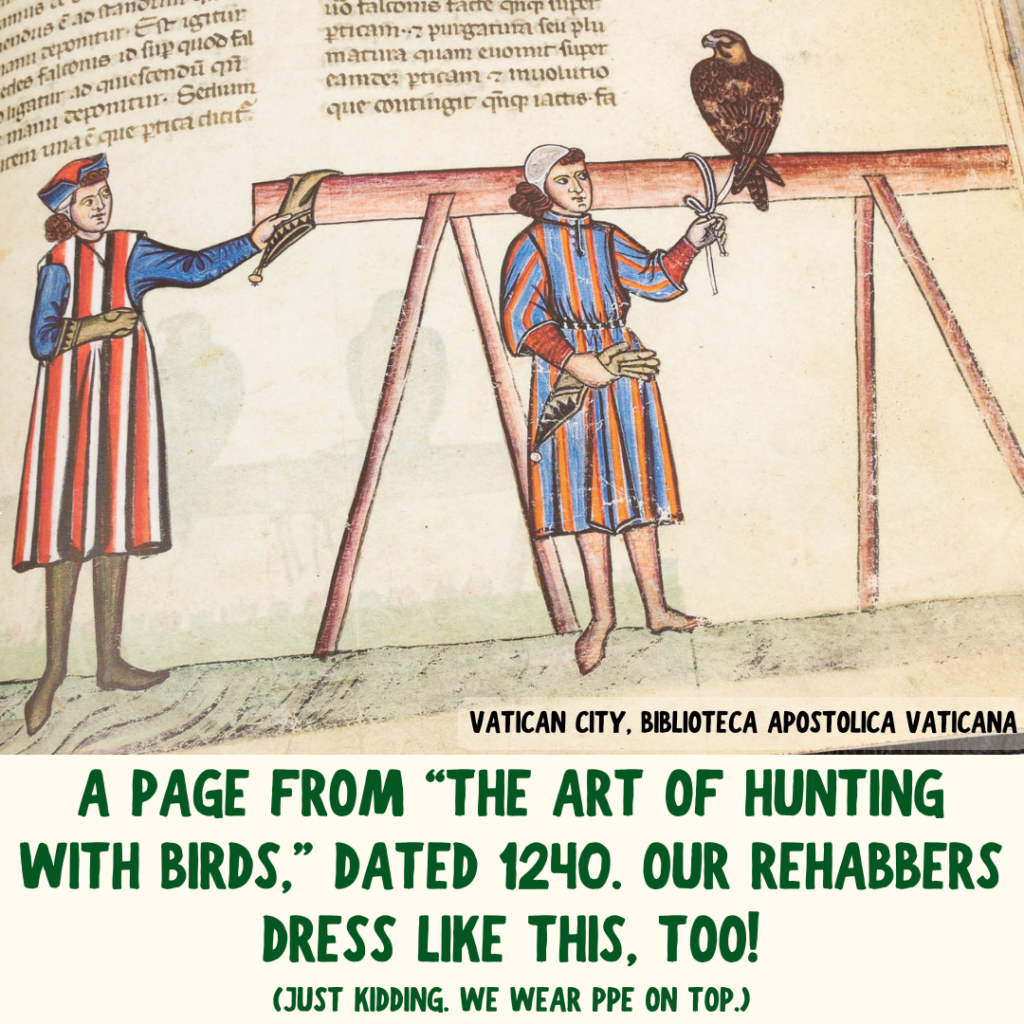
Though the tools used in imping have thankfully improved over time, the general process remains the same. The damaged feather is trimmed off, and a healthy feather from a donor bird is transplanted into the feather shaft using a splint. It’s secured with quick-drying epoxy, and voilà! 💅
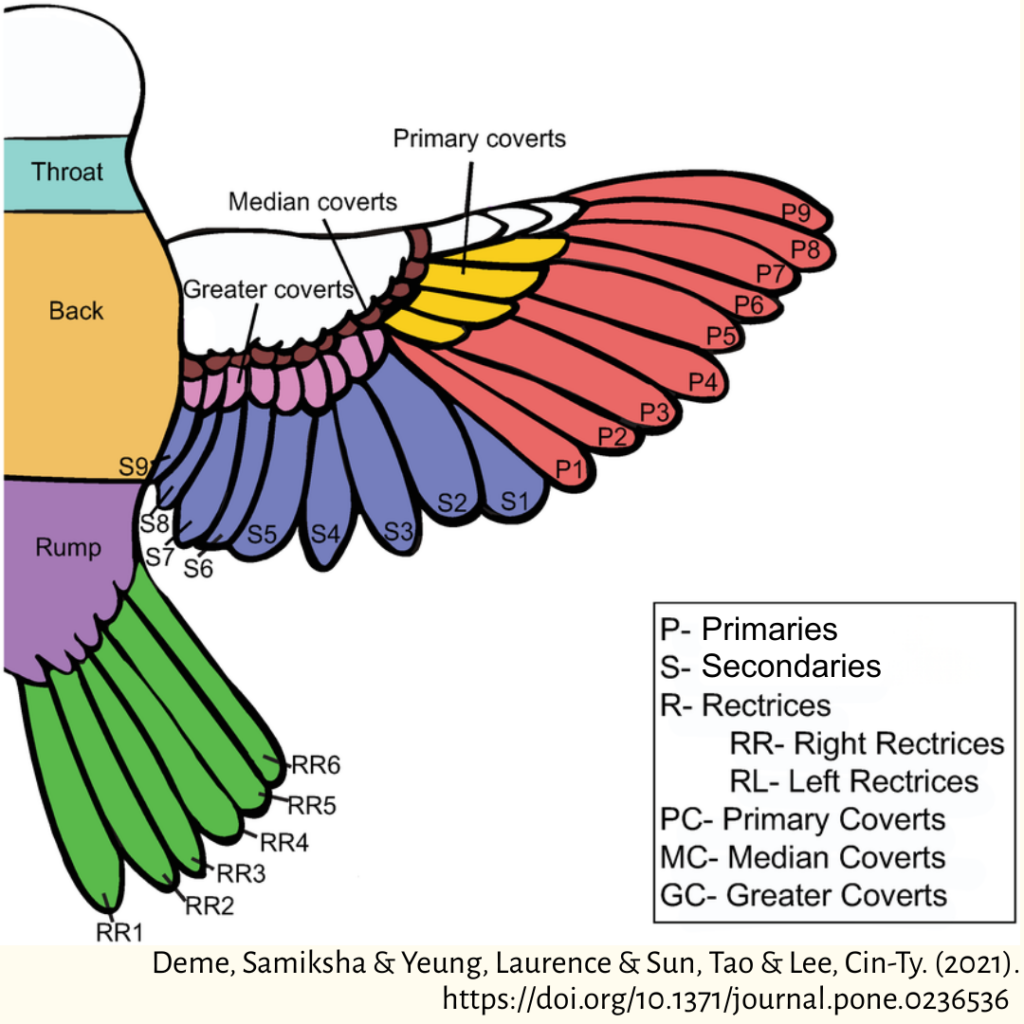
Though the process sounds easy in theory, it takes a great deal of skill and attention to detail to imp feathers effectively. 🔍 Every single feather has evolved to serve a specific purpose, from flight to thermoregulation to camouflage. That means a donor feather must be an exact anatomical match for the damaged feather it’s replacing. Here’s how bird feathers are generally labeled:
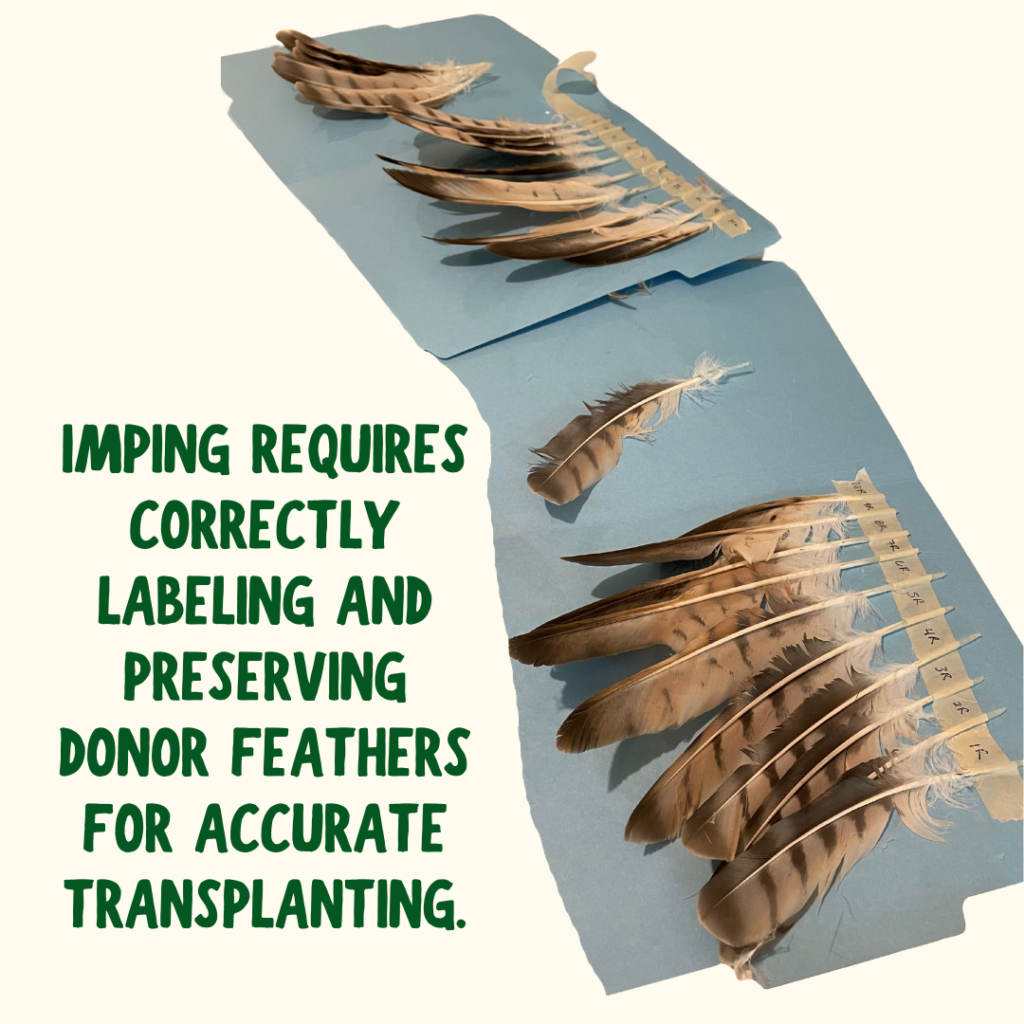
To imp patient 26-383, we first identified the broken feathers and selected the correct donor feathers to replace them. RWS maintains a small collection of donor feathers from patients who unfortunately did not survive. It is a difficult fact that some patients arriving for rehabilitative care do not make it, often because of severe illness or injuries that leave them with little chance of recovery. We are grateful, though, that their feathers can live on in the wild, helping a fellow patient soar to freedom. ♥️
Imping is often done under anesthesia to ensure the bird keeps still. RWS specializes in caring for clinically healthy orphans and, without an attending veterinarian on staff, we do not have on-site access to controlled medications like inhaled anesthetics. However, we determined that capturing this bird and transporting them to another facility for the procedure would likely cause more prolonged stress than performing it at the Sanctuary. We caught 26-383 in our large flight enclosure and used a special wrap technique to cover their eyes and secure their wings, keeping them snug and calm for the brief procedure. 26-383 was a perfect patient! 🤩
With 26-383 and the necessary donor feathers in place, our team got to work. Under the expert guidance of Rehabilitation Program Manager Elka, team members Chandler and Rita successfully trimmed off the broken feathers, measured and trimmed the appropriate donor feathers, and used a special glue and a small dowel to secure each donor feather inside the recipient feather shaft. The process is done one feather at a time, ensuring each feather is appropriately placed and angled. The process is painless, since feathers have no blood supply when they’re fully grown. It’s just like getting a haircut! 💇
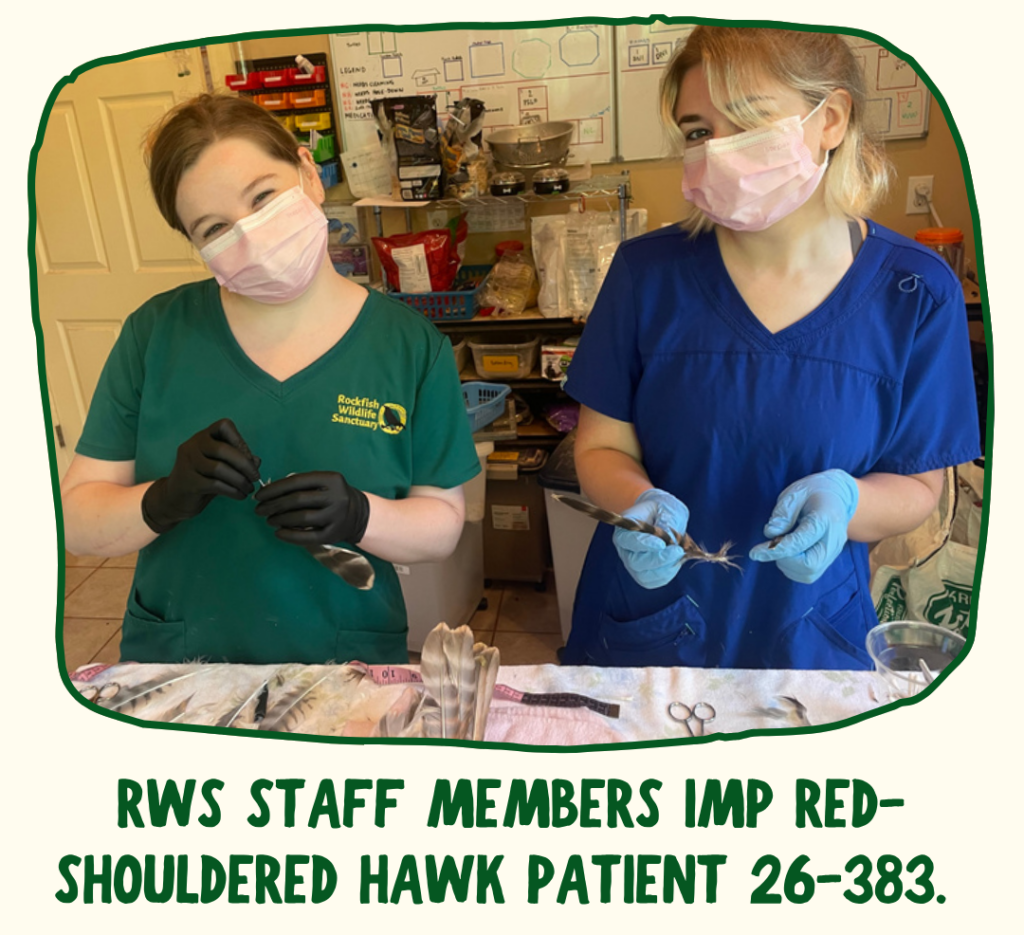
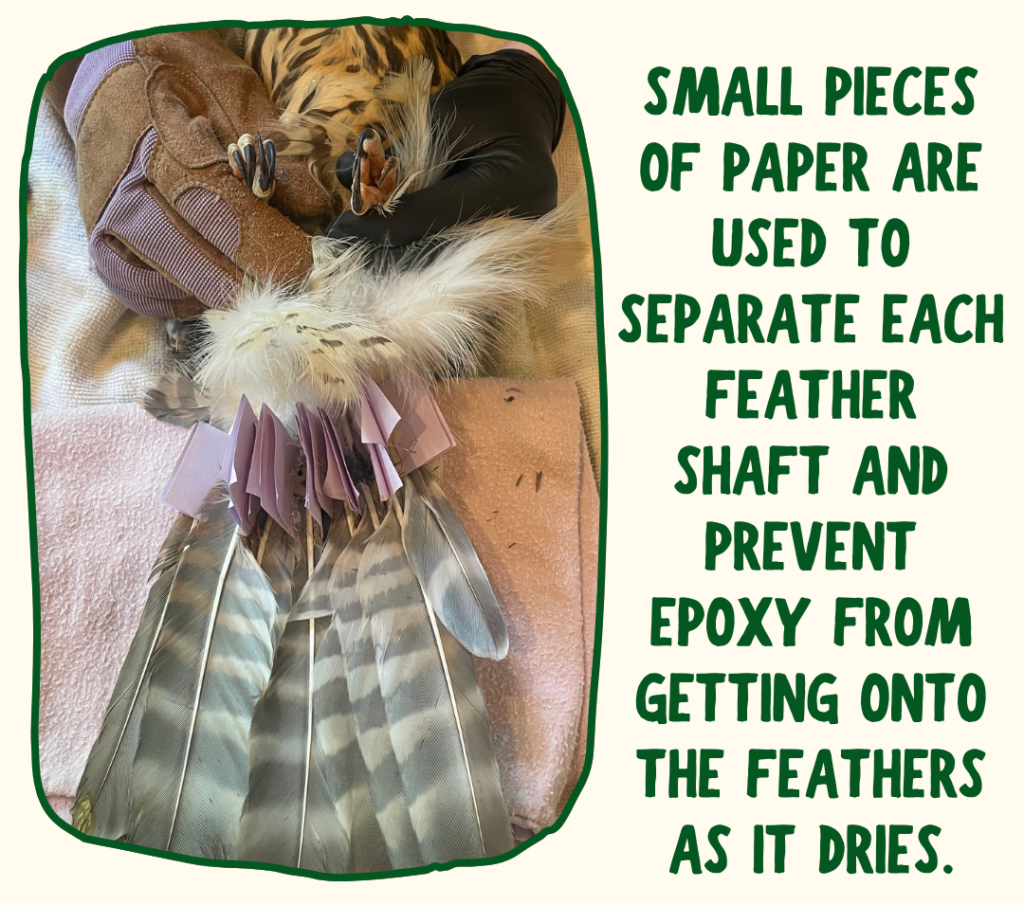
And just like that, Red-shouldered Hawk 26-383 had a beautiful “new” tail!
We monitored their flight over the next 24 hours to make sure all was well before release. Since they had met all other release-ready criteria, like being able to hunt and thermoregulate, we sure didn’t want to keep them waiting any longer than necessary.
We had the pleasure of releasing this gorgeous hawk back to the wild on private property in Nelson County. Check out their “freedom flight” below. 🥹👇
There’s nothing quite like watching a patient take to the skies again! We’re so grateful to our dedicated staff, our generous supporters, and the donor patients who came before for making this special release possible. 💚
This is exactly the kind of magic we’ll be celebrating this October! 🪄 We hope you’ll join us at Mountain View Magic for a spellbinding evening in support of RWS.
Secure your Early Bird tickets today. ⬇️

August 17, 2026
Published:


Be the first to comment!